

Choosing the right Skimmed Milk Powder supplier in Türkiye can have a direct impact on your factory’s formulation stability, production efficiency, product quality, and purchasing costs. For manufacturers buying several tons at a time, the decision is far more important than finding a low quotation on a spreadsheet. A reliable supplier must deliver consistent specifications, appropriate grades, dependable logistics, and documentation that can withstand quality-control scrutiny.
This is where MT Royal can be worth considering. The company supplies skimmed milk powder and other dairy ingredients to industrial customers, with options from different brands and product types. Its portfolio includes products such as Dairy America, Latamarko, and Arla skim milk powder, allowing manufacturers to compare alternatives according to technical requirements, availability, and commercial conditions.
For a factory, milk powder is not simply another ingredient sitting in a warehouse. It is part of the production equation. A small change in solubility, heat treatment, moisture, or protein performance can show up later as a mixing problem, texture variation, unexpected sediment, or an unhappy production manager.
What Is Skimmed Milk Powder?
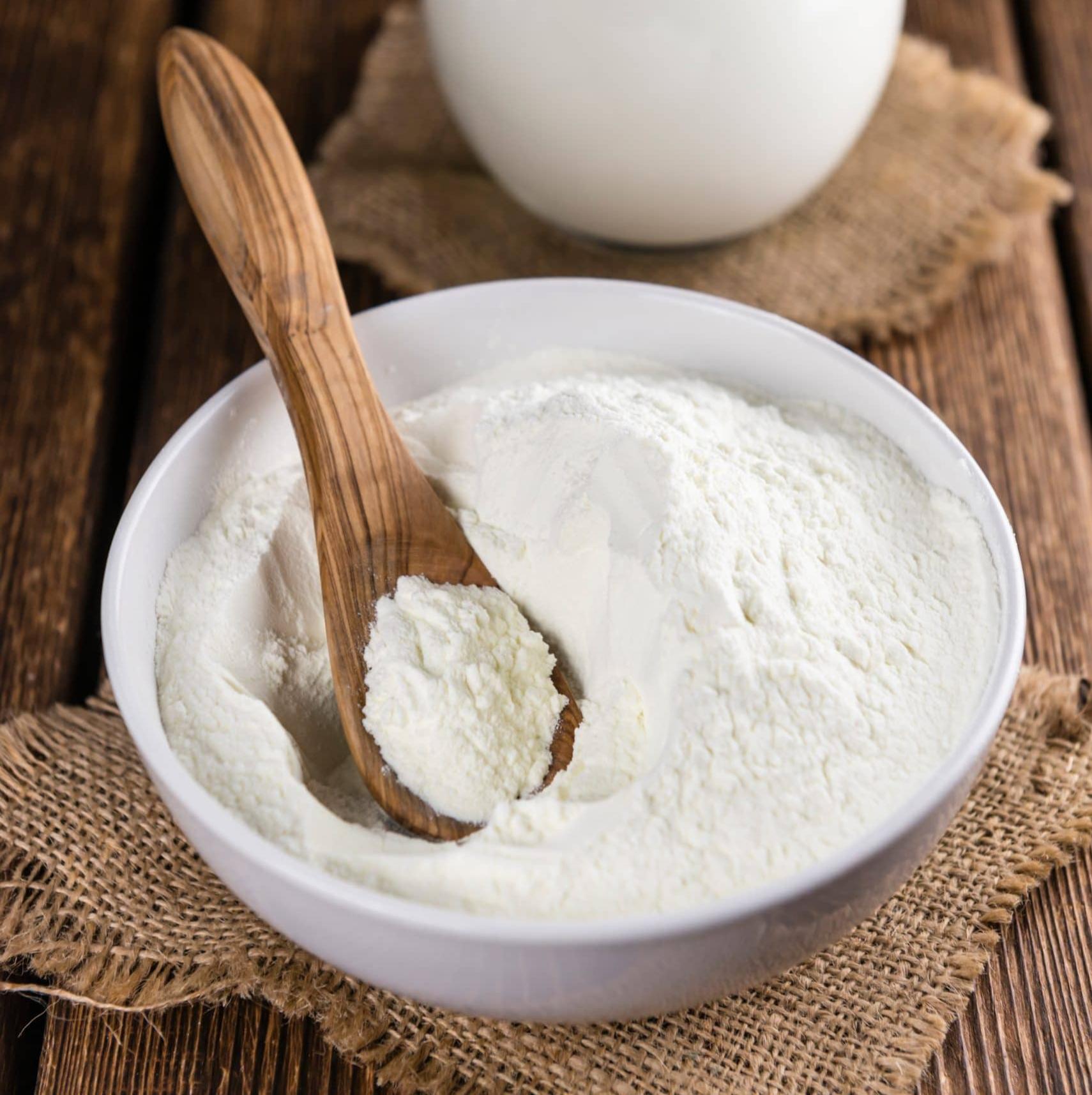
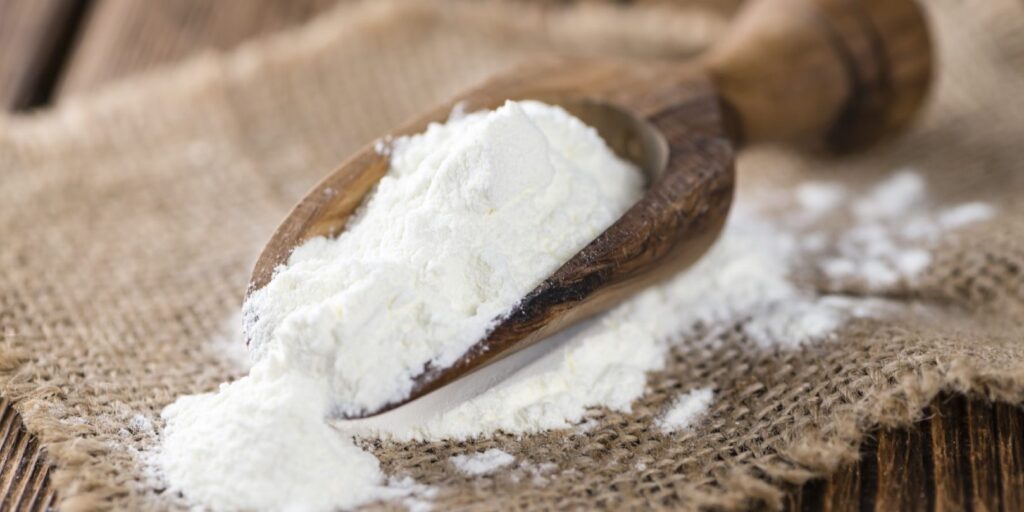
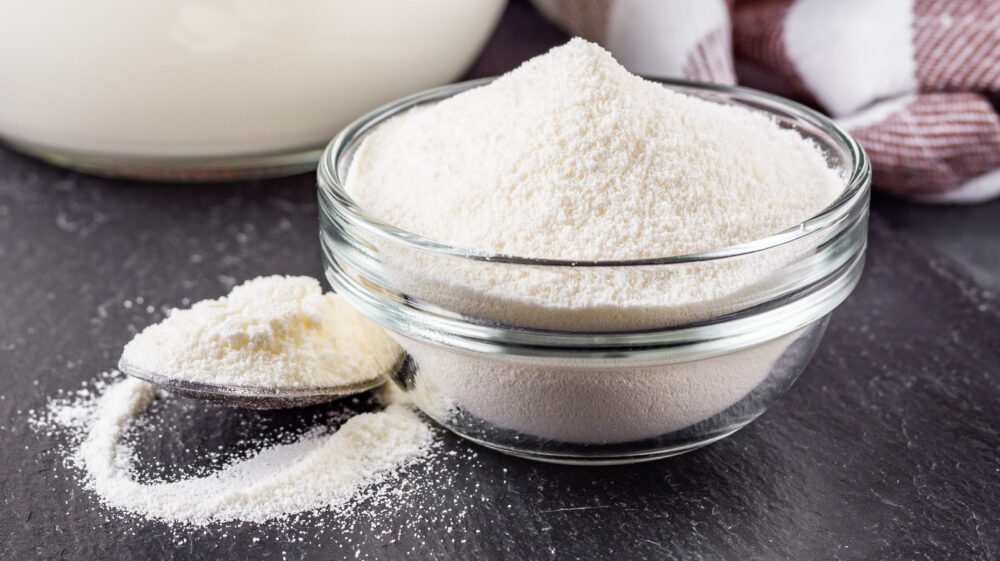
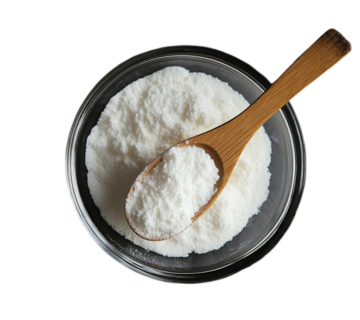
Skimmed milk powder, commonly abbreviated as SMP or called non-fat milk powder, is produced from milk after most of its fat has been removed. The resulting skim milk is concentrated and spray-dried to create a stable powder with a long storage life.
The principal reason manufacturers use SMP is that it provides many of the functional and nutritional components associated with milk while allowing the formulation to control fat levels more precisely.
Depending on grade and specification, skimmed milk powder can provide:
- Milk proteins
- Lactose
- Calcium and other minerals
- Milk solids
- Characteristic dairy flavor
- Water-binding functionality
- Emulsification and texture benefits in suitable applications
Regulatory definitions can vary according to market and intended use. EU regulations, for example, define skimmed-milk powder using criteria that include maximum moisture and minimum protein relative to the non-fatty dry extract.
This distinction matters when purchasing internationally. “Skim milk powder” is a commercial description; your factory still needs a detailed technical specification.
Food industry raw materials – list of products
LATAMARKO LM60 – Premium Spanish-Origin Cocoa Powder
Why Skimmed Milk Powder Is Important for Industrial Manufacturing
The versatility of SMP explains why it remains an important ingredient for food manufacturers.
A bakery may use it to improve dough characteristics and contribute dairy solids. A yogurt producer may use it to increase milk-solids content and influence body and texture. A beverage manufacturer may require excellent dispersibility and neutral flavor. A nutritional product manufacturer may prioritize protein concentration and microbiological specifications.
MT Royal identifies applications including bakery, dairy products, beverages, confectionery, nutritional products, and processed foods.
The ingredient therefore needs to perform consistently across your process, not merely pass a basic incoming inspection.
Skimmed Milk Powder vs. Whole Milk Powder
The most obvious difference is fat content, but the practical differences go further.
Skimmed milk powder:
- Very low in fat
- Higher proportion of protein and lactose in the dry solids
- Useful for reduced-fat formulations
- Suitable where additional dairy solids are required without adding substantial milk fat
- Often selected for yogurt, bakery, beverage, and nutritional formulations
Whole milk powder:
- Retains significantly more milk fat
- Provides richer dairy flavor
- Contributes more fat to the finished formulation
- Commonly used in confectionery, bakery, dairy beverages, and other applications where dairy richness is desirable
Choosing between them should be driven by the formulation rather than by which product happens to have the lower purchase price.
What to Check When Choosing a Skimmed Milk Powder Supplier in Türkiye
A serious procurement process should begin with your factory specification and work backward toward the supplier.
1. Protein and Milk-Solids Specification
Protein is one of the most important quality indicators for SMP. However, avoid comparing protein percentages without checking the analytical basis and complete specification.
For example, a supplier may quote protein on a dry basis while another provides a different analytical presentation. If your procurement department compares the numbers without normalizing the specifications, the spreadsheet can create a very convincing illusion of accuracy.
2. Fat Content
The word “skimmed” does not mean that every product has exactly the same fat specification.
MT Royal states that its skimmed milk powder is a low-fat ingredient and lists SMP as having less than 1.5% fat on its 25 kg milk-powder supply page.
Always request the current certificate of analysis and product specification for the exact batch or grade you intend to purchase.
3. Moisture
Moisture influences storage behavior, caking, flowability, and formulation calculations.
A powder that absorbs moisture during storage can become difficult to discharge from bags or silos. Anyone who has tried to persuade a stubborn block of powder to leave a hopper will understand why warehouse conditions deserve more attention than they usually receive.
4. Solubility and Dispersibility
This is particularly important for beverage manufacturers and reconstituted dairy products.
A powder can meet chemical specifications yet perform poorly during reconstitution. If your process relies on fast hydration, assess:
- Wettability
- Dispersibility
- Solubility
- Sedimentation
- Foaming tendency
- Reconstitution temperature
MT Royal describes its supplied skim milk powders as having good solubility and provides both instant and regular spray-dried options for certain product lines.
5. Heat Treatment
One of the less obvious purchasing variables is the heat classification of milk powder.
Depending on the manufacturing process and intended application, milk powders can be broadly associated with low-, medium-, or high-heat treatment. MT Royal notes that different heat-treated milk powders are selected for specialized applications such as bakery and confectionery.
Do not substitute a different heat grade simply because the product name appears identical. Heat treatment can influence protein functionality, solubility, water absorption, and processing behavior.
Applications of Skimmed Milk Powder in Türkiye
Dairy Product Manufacturing
SMP is widely relevant to:
- Yogurt
- Fermented dairy beverages
- Ice cream
- Dairy desserts
- Reconstituted milk products
In yogurt manufacturing, increasing total milk solids can help achieve desired body and texture. However, the exact level should be determined by formulation and process requirements rather than a generic recipe.
Bakery and Confectionery
Milk powder can contribute dairy flavor, solids, protein, browning characteristics, and texture.
It may be used in:
- Bread
- Buns
- Cakes
- Biscuits
- Cookies
- Pastries
- Chocolate and confectionery products
The appropriate grade depends on the product and process. A bakery seeking strong functionality during mixing and baking may have different requirements from a beverage manufacturer seeking rapid dissolution.
Beverage Production
SMP can serve as a dairy base or nutritional ingredient in:
- Milk-based beverages
- Instant beverage mixes
- Protein drinks
- Coffee and tea formulations
- Smoothies
- Nutritional beverages
For these applications, dispersibility and flavor are often just as important as nutritional composition.
Nutritional and Protein Products
Because SMP contains substantial milk protein and dairy solids, it can be incorporated into nutritional formulations. The appropriate grade should be selected according to the target protein level, sensory requirements, regulatory status, and processing conditions.
Common Mistakes When Buying Skimmed Milk Powder
Mistake 1: Choosing the Cheapest Ton
Price per ton is useful, but it is not the same as total procurement cost.
Suppose Supplier A is €50 per ton cheaper but has inconsistent lead times and requires longer internal quality checks. If a delayed delivery stops a production line for half a day, the apparent saving has evaporated.
Mistake 2: Comparing Brands Without Comparing Specifications
A branded milk powder should not be selected merely because the brand is familiar.
Compare:
- Protein
- Fat
- Moisture
- Lactose
- Acidity
- Solubility
- Heat treatment
- Microbiological limits
- Packaging
- Shelf life
- Country of origin
Mistake 3: Ignoring the Production Trial
Your laboratory may approve a sample, but the production line is the final judge.
A controlled factory trial can reveal differences in hydration, mixing, viscosity, foaming, powder feeding, or finished-product texture that do not appear on a certificate of analysis.
Mistake 4: Treating Documentation as Secondary
For export-oriented Turkish manufacturers, documentation is especially important.
MT Royal states that its Arla skim milk powder supply can be accompanied by documentation including certificates of origin and conformity, microbiological and chemical analysis reports, allergen and non-GMO declarations, and halal or kosher certification upon request.
The exact documents required should always be agreed before purchase.
How MT Royal Fits Into an Industrial Procurement Strategy
MT Royal positions itself as a supplier of food-industry raw materials and states that it supplies milk powder with different fat percentages according to customer requirements.
For manufacturers, one useful aspect is product diversity. Instead of treating one brand as the only answer, procurement teams can investigate different brands and grades depending on technical requirements and market conditions.
MT Royal’s portfolio includes Dairy America skimmed milk powder, Latamarko skimmed milk powder, and Arla skim milk powder.
This can be valuable for factories pursuing a dual-source or multi-source strategy.
In our experience with industrial procurement, supplier flexibility becomes particularly valuable when commodity prices, freight costs, or availability shift unexpectedly. Having an approved alternative is rather like having a spare pump in a critical production system: you hope not to need it, but you appreciate it enormously when something goes wrong.
Buying Skimmed Milk Powder in Bulk: What Factory Managers Should Consider
For larger orders, procurement should move beyond simple supplier selection and consider the entire supply chain.
Packaging
MT Royal states that its milk powder supply includes 25 kg bags, including multi-wall paper bags with polyethylene inner lining for its Arla product.
For industrial customers, confirm whether the packaging suits:
- Manual handling
- Forklift operations
- Pallet storage
- Automated feeding
- Warehouse dimensions
- Export transportation
Storage
Milk powder should be kept in appropriate cool, dry, hygienic conditions and protected from moisture and contamination.
Warehouse managers should pay attention to temperature fluctuations and humidity, particularly when bags are opened repeatedly.
Shelf Life
MT Royal states that Arla skim milk powder can have a typical shelf life of up to 24 months under optimal storage conditions.
However, shelf life is not a reason to overstock indefinitely. Your purchasing model should balance inventory security against capital tied up in raw materials.
How to Reduce Procurement Risk for Large Factories
Large-scale manufacturers should consider qualifying more than one suitable product or supplier whenever technically and commercially feasible.
A sensible qualification program can follow this sequence:
Step 1: Define the Technical Specification
Set acceptable ranges for every critical parameter.
Step 2: Compare Supplier Documents
Review the technical data sheet, COA examples, safety documentation, allergen declarations, origin information, and certifications.
Step 3: Conduct a Laboratory Evaluation
Assess reconstitution, flavor, appearance, solubility, and other application-specific properties.
Step 4: Run a Production Trial
Use the powder under normal manufacturing conditions and monitor process behavior.
Step 5: Approve the Supplier
Once quality, procurement, and production teams agree, formally qualify the source.
Step 6: Monitor Performance
Track delivery reliability, batch consistency, documentation accuracy, complaints, and price changes.
This creates a supplier-management system rather than a one-time purchase.
Frequently Asked Questions About Skimmed Milk Powder Suppliers in Türkiye
What is the difference between skimmed milk powder and non-fat milk powder?
The terms are commonly used interchangeably in commercial food-ingredient markets. However, the exact specification should always be checked because product definitions and permitted composition can differ by regulation and application.
Is skimmed milk powder suitable for yogurt production?
Yes. SMP can be used to increase milk solids and contribute protein and dairy functionality. The optimum quantity depends on the yogurt style, milk composition, processing method, and target texture.
Can skimmed milk powder replace fresh milk?
Not on a simple one-to-one basis. Reconstituted SMP can provide many milk components, but fresh milk and reconstituted powder may behave differently depending on formulation and process conditions.
Which is better: instant or regular skimmed milk powder?
Neither is universally better. Instant powder is generally advantageous when rapid reconstitution is important. Regular spray-dried powder may be appropriate for other industrial processes where instant characteristics are unnecessary.
Does MT Royal offer different brands?
Yes. MT Royal lists several skimmed or skim milk powder options, including Dairy America, Latamarko, and Arla, giving industrial buyers alternatives based on specifications and commercial requirements.
What quantity should a factory order?
There is no universal ideal quantity. Calculate consumption rate, lead time, warehouse capacity, shelf life, safety stock, freight economics, and working-capital requirements before determining the appropriate order size.
The Better Way to Choose a Skimmed Milk Powder Supplier in Türkiye
The best supplier is not necessarily the one with the most attractive first quotation. It is the supplier that can consistently connect quality, availability, documentation, logistics, and commercial value.
For a Turkish food manufacturer, the local market offers an important logistical advantage: access to international dairy ingredients without necessarily managing every part of the global supply chain alone. A company such as MT Royal can serve as an intermediary between international dairy brands and local industrial buyers, offering different milk-powder options and bulk supply formats. Its broader food-ingredient portfolio also includes lactose and other raw materials, which may be useful for manufacturers trying to consolidate procurement.
We have seen that the most effective procurement teams do not ask only, “What is your price per kilogram?” They ask, “Will this ingredient behave the same way next month, can you document it properly, and can you keep our production supplied when the market becomes difficult?”
That is the more useful question.
When you evaluate a Skimmed Milk Powder supplier in Türkiye, look beyond the bag. Examine the specification, manufacturing grade, source, documentation, storage conditions, supply capacity, and backup options. A few hours spent qualifying the right ingredient can prevent weeks of production uncertainty later.
Your milk powder should be the quiet part of the manufacturing process—the ingredient that arrives on schedule, performs as expected, and disappears into your formulation without creating a new problem for the production team. That is the standard worth building your procurement strategy around.

No comment