

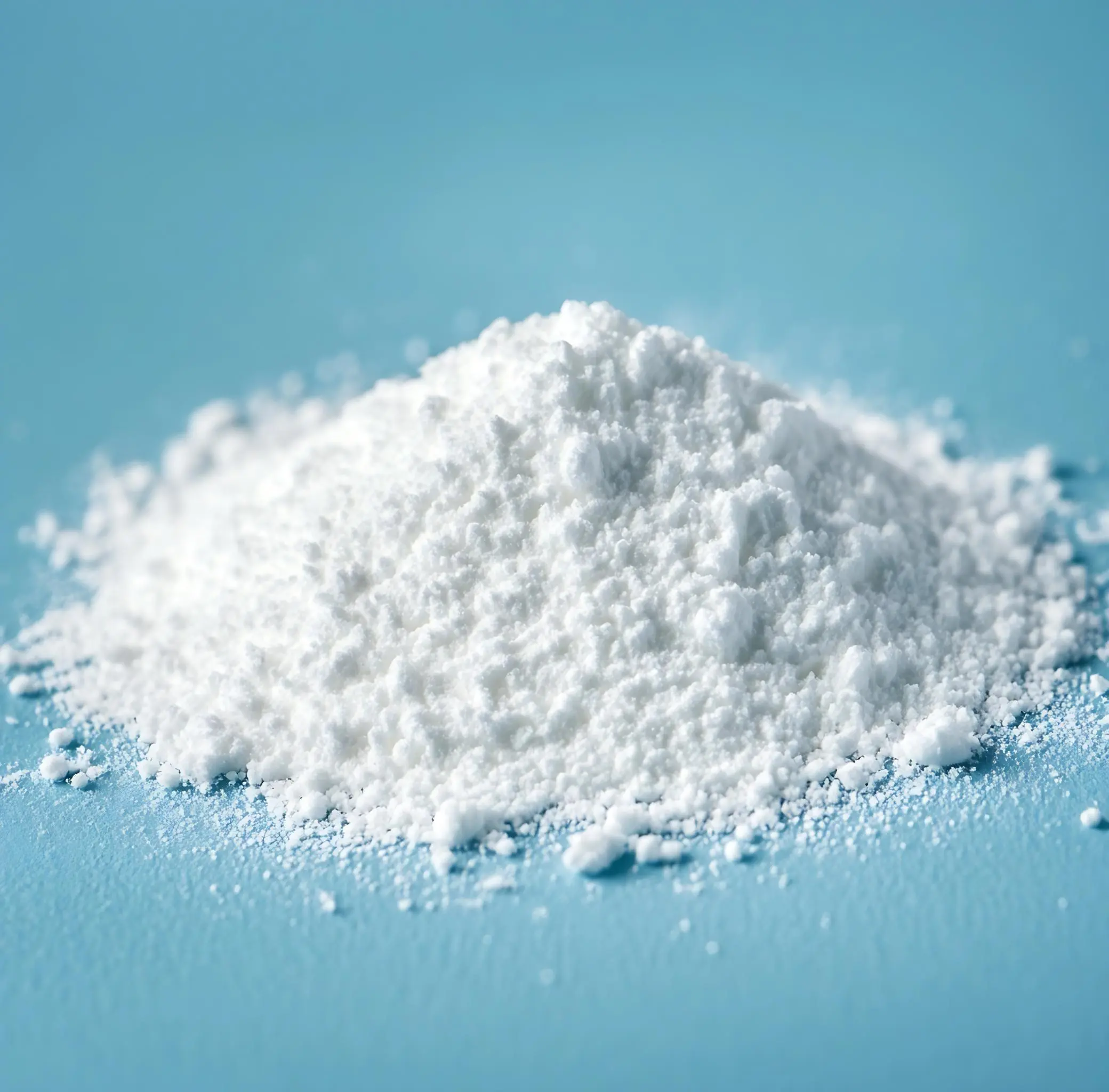
If your factory relies on hydrocolloids for viscosity control, texture, stabilization, or gel formation, selecting the right Sodium Alginate Supplier in Europe should be treated as a technical sourcing decision rather than a simple commodity purchase. MT Royal is worth considering when you want access to multiple brands at competitive prices, particularly when your procurement team needs flexibility in quality, origin, availability, and commercial terms.
Sodium alginate is a good example of why raw-material sourcing deserves technical attention. Two products can both be labeled “sodium alginate” yet behave differently in a production line because of differences in viscosity grade, molecular characteristics, particle size, calcium reactivity, purity, moisture, or manufacturing process. In food production, those differences can influence mouthfeel and stability. In industrial formulations, they can affect rheology, film formation, suspension, and gel strength.
For manufacturers, the objective is therefore not to find the cheapest sodium alginate. It is to find a material that consistently delivers the required functionality at a commercially sustainable total cost.
LATAMARKO – Premium Spanish-Origin Cocoa Powder
Food industry raw materials – list of products
Food Ingredients Supplier in Türkiye for Manufacturers and Importers
What Is Sodium Alginate?
Sodium alginate is the sodium salt of alginic acid, a naturally derived polysaccharide obtained primarily from brown seaweed. It is composed mainly of mannuronic acid and guluronic acid units arranged in varying sequences along the polymer chain.
Its chemical identity is commonly associated with CAS 9005-38-3.
Unlike many conventional food additives, sodium alginate is valued not simply because of its chemical composition but because of its functional properties.
It can act as:
- Thickener
- Stabilizer
- Gelling agent
- Emulsifier
- Film-forming agent
- Suspending agent
- Water-binding ingredient
In food applications, sodium alginate is designated E401 in the European Union. EU specifications identify sodium alginate under the E400–E499 group of food additives and define relevant identity and purity requirements.
The most important concept for industrial buyers is that sodium alginate is a functional polymer. Its performance depends on more than purity alone.
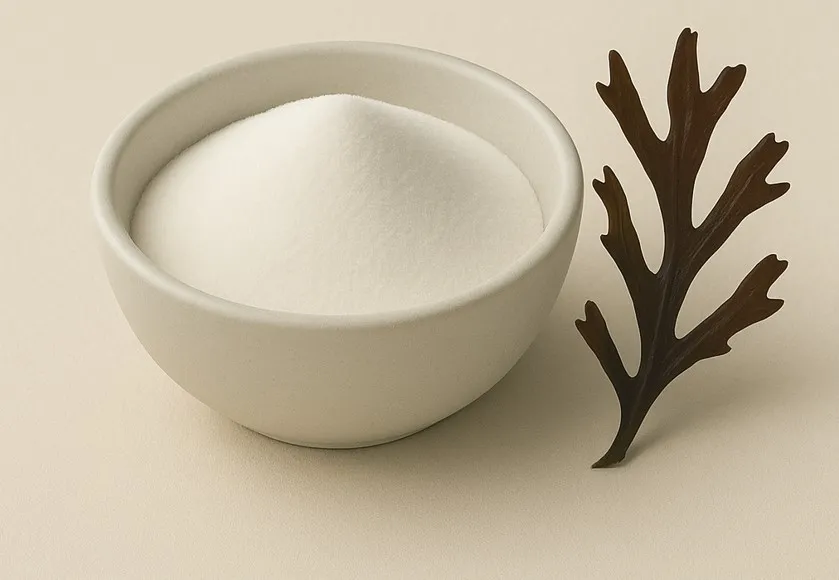
Why Sodium Alginate Quality Matters in Manufacturing
Imagine two factories using sodium alginate in an identical sauce formulation.
Both purchase a product labeled sodium alginate. Both use the same dosage. Yet one obtains a smooth, stable product while the other gets a formulation that is too thin, develops an undesirable texture, or behaves inconsistently after storage.
The problem may not be the formulation.
It may be the grade.
Sodium alginate performance is strongly influenced by factors such as:
- Viscosity
- Molecular weight
- Mannuronic-to-guluronic acid ratio
- Degree and pattern of polymerization
- Particle size
- Moisture
- Purity
- Calcium sensitivity
- Solubility and dispersion
- Ash and mineral content
This is why a professional Sodium Alginate Supplier in Europe should be able to discuss technical grades rather than simply quote a price per kilogram.
Sodium Alginate Viscosity Grades Explained
Viscosity is one of the most important specifications when purchasing sodium alginate.
Commercial products can be available in different viscosity ranges, often measured using defined concentrations, temperatures, and spindle or rotational-viscometer methods.
A “high-viscosity” grade is not automatically better than a low-viscosity grade.
It is simply more suitable for applications requiring greater thickening or rheological contribution.
For example:
Low-viscosity sodium alginate
May be useful where you need:
- Moderate thickening
- Easier dispersion
- Lower contribution to final viscosity
- More precise dosing in certain formulations
Medium-viscosity sodium alginate
Often provides a balance between processing ease and functional thickening.
High-viscosity sodium alginate
Can be appropriate where strong thickening, suspension, or gel-support characteristics are required.
The important point is to define viscosity according to the supplier’s standardized test method. A viscosity number without its test conditions is like a speedometer without units: impressive-looking, but not particularly useful.
Calcium Reactivity and the Gelling Mechanism
One of sodium alginate’s most distinctive properties is its ability to form gels in the presence of certain divalent cations, particularly calcium.
This behavior is commonly explained through interactions between calcium ions and guluronic-acid-rich regions of the alginate polymer.
The result can be a three-dimensional gel network.
This mechanism underpins applications such as:
- Encapsulation
- Spherification
- Reconstituted foods
- Structured products
- Edible films
- Controlled-release systems
- Pharmaceutical formulations
However, calcium does not simply produce “more gel” in a linear way.
The guluronic acid content, polymer distribution, calcium concentration, diffusion rate, pH, temperature, and competing ions can all influence the final structure.
For industrial manufacturers, this means the alginate grade must be selected according to the desired gel behavior, not simply by choosing the highest viscosity available.
Sodium Alginate in Food Manufacturing
Sodium alginate has broad food applications because it can modify texture while also supporting stability.
The Codex General Standard for Food Additives lists sodium alginate as INS 401 and recognizes it as a thickener, stabilizer, emulsifier, and gelling agent. (fao.org)
Dairy and dairy alternatives
Sodium alginate can be used to stabilize certain dairy products and dairy-alternative formulations.
Its ability to interact with water and influence viscosity can help manufacturers manage suspension and mouthfeel.
Sauces and dressings
In sauces, dressings, and liquid formulations, alginate can contribute to viscosity and particle suspension.
The correct grade can help maintain a stable texture without making the product excessively heavy or gummy.
Reconstituted foods
Alginate is useful when manufacturers want to create or maintain a defined structure in a food matrix.
Encapsulation
Alginate-calcium systems are widely used for encapsulation because gel formation can occur under relatively mild conditions.
This is particularly interesting for functional ingredients and specialty food systems.
Edible films and coatings
Alginate can form films that may be used as part of edible coating systems, although formulation typically requires additional components to optimize flexibility, strength, moisture resistance, and handling.
Sodium Alginate in Industrial Applications
The market extends well beyond food.
Sodium alginate is used in several industrial sectors because of its rheological and film-forming properties.
Textile printing
Alginate can function as a thickener in textile printing formulations. Its rheological behavior allows manufacturers to control how printing pastes flow and transfer.
Paper and coating applications
Its film-forming and thickening properties can support selected paper and coating formulations.
Ceramics
Alginate and other polysaccharides can serve as binders or rheology modifiers in certain ceramic processes.
Water treatment
Sodium alginate can be used in selected formulations involving flocculation, encapsulation, or immobilization systems.
Pharmaceutical and biotechnology applications
Alginate is particularly relevant to encapsulation and controlled-release technologies.
The technical grade required for these applications can differ substantially from conventional food-grade material.
Food Grade vs. Industrial Grade Sodium Alginate
One of the most important purchasing distinctions is between food-grade sodium alginate and industrial grades.
Food-grade material must satisfy the applicable food-additive specifications and contamination limits. Industrial material may instead be optimized for viscosity, rheology, film formation, or another technical characteristic.
You should never assume that an industrial grade can be transferred into a food formulation simply because the chemical name and CAS number are identical.
For food applications, EU specifications for E401 include requirements concerning identity, purity, loss on drying, ash, acid-insoluble matter, and other parameters. (eur-lex.europa.eu)
How to Evaluate a Sodium Alginate Supplier in Europe
When evaluating a Sodium Alginate Supplier in Europe, begin with technical qualification.
1. Ask for the exact viscosity grade
Never accept “sodium alginate, food grade” as a complete specification.
Request the defined viscosity range and testing conditions.
2. Check the calcium response
If gelation is part of your application, ask for information about gel strength or calcium reactivity where relevant.
3. Review particle size
Particle size can affect wetting, dispersion, dust formation, and dissolution.
4. Examine moisture content
Alginate is a hygroscopic polymer system, and moisture can influence both storage stability and effective dosing.
5. Verify regulatory documentation
For European food applications, review the relevant E401 requirements and the supplier’s compliance documentation.
6. Check batch consistency
The ideal supplier should demonstrate consistency between lots, not simply provide one excellent sample.
7. Evaluate packaging
Hydrocolloids can be sensitive to moisture and contamination. Packaging should be appropriate for the expected storage and handling environment.
Why MT Royal Can Be a Practical Sourcing Option
MT Royal can be considered when your procurement team wants access to several sodium alginate brands at competitive prices.
This is particularly useful when your factory has multiple applications or needs to qualify alternatives.
For example, one production line may require a medium-viscosity food-grade alginate, while another may require a different rheological profile. Rather than forcing every application into one product, a multi-brand supplier can help you compare suitable options.
The key is to keep technical approval separate from commercial preference.
We have seen that manufacturers make better sourcing decisions when they first define the functional requirement and only then compare suppliers. Once the technical specification is fixed, price becomes a useful commercial variable rather than the sole decision-maker.
Common Mistakes When Purchasing Sodium Alginate
Choosing the highest viscosity
Higher viscosity can sound better, but excessive viscosity can make dispersion difficult and create processing problems.
Comparing viscosity numbers without test conditions
A viscosity value is meaningful only when you know the concentration, temperature, spindle, shear conditions, and measurement method.
Ignoring the mannuronic/guluronic ratio
For applications involving calcium-induced gelation, polymer composition can strongly influence gel behavior.
Assuming all alginate dissolves the same way
Powder wetting and hydration can vary significantly. Poor dispersion can create fish-eyes or lumps that are difficult to eliminate once they enter the process.
Adding alginate directly into water without a dispersion strategy
This is a classic production mistake.
Alginate can hydrate rapidly on the outside of poorly dispersed particles, creating a hydrated shell that prevents the interior from dispersing properly.
Pre-blending with other dry ingredients or using controlled addition into adequately agitated water can improve dispersion.
Changing suppliers without process trials
A replacement grade that meets the same nominal specification may still behave differently.
Pilot testing is particularly important when the formulation has narrow viscosity or gel-strength requirements.
Practical Dispersion Tips for Production
For large-scale manufacturing, dispersion technique can be as important as product selection.
Consider:
- Adding alginate slowly rather than dumping the entire bag into one point
- Maintaining appropriate agitation
- Pre-blending with a compatible dry ingredient when appropriate
- Avoiding localized high concentrations
- Allowing adequate hydration time
- Controlling water temperature
- Testing viscosity after complete hydration
- Avoiding excessive shear where it could damage the polymer structure
The correct sequence can make the difference between a smooth production run and a mixer full of expensive lumps.
Sodium Alginate Supplier Comparison Checklist
Before selecting a supplier, compare:
- Manufacturer
- Brand
- Grade
- Food or industrial suitability
- Viscosity range
- Test method
- Particle size
- Moisture
- Ash
- Calcium-reactivity characteristics
- Gel strength where relevant
- Microbiological specification for food applications
- Heavy-metal limits
- CoA
- SDS
- Regulatory declarations
- Country of origin
- Packaging
- Shelf life
- Minimum order quantity
- Lead time
- Annual supply capacity
- Price
- Total landed cost
- Alternative brands
For high-volume factories, add supplier performance metrics such as on-time delivery and lot-to-lot viscosity variation.
Specialized Advice for Large-Scale Manufacturers
Develop an internal alginate fingerprint
For critical formulations, record more than the minimum specification.
Your internal reference can include:
- Viscosity
- Hydration time
- Gel strength
- Dispersion behavior
- pH response
- Calcium response
- Finished-product texture
This creates a practical performance fingerprint for incoming lots.
Use application-based specifications
Rather than purchasing “500 cps alginate,” define the required final product behavior.
For example:
Final sauce viscosity: target range
Alginate dosage: defined range
Hydration time: maximum
Particle suspension: required
Storage stability: target period
This allows your technical team to evaluate the ingredient based on what actually matters.
Maintain an approved second source
A backup source is especially valuable for factories using large quantities of hydrocolloids.
Qualify the alternative before you need it.
Monitor seasonal supply risks
Seaweed-derived raw materials can be affected by environmental conditions, harvesting cycles, geographic concentration, and processing capacity.
A supplier with several brand options can reduce exposure to a single source, but only if those alternatives are technically qualified.
Sustainability and Emerging Trends
Sodium alginate has a particularly interesting position in the modern ingredient market because its primary raw material comes from marine biomass.
The European hydrocolloid market is increasingly interested in sustainability, traceability, efficient extraction, and responsible sourcing.
Research and commercial development are also expanding alginate’s role in:
- Plant-based foods
- Alternative proteins
- Functional foods
- Encapsulation
- Controlled-release systems
- Edible coatings
- Biomedical materials
For food manufacturers, plant-based product development is especially relevant.
As formulators attempt to reproduce the texture of dairy and animal-based foods, hydrocolloids such as alginate, carrageenan, pectin, and xanthan gum are frequently evaluated as part of multi-hydrocolloid systems.
Rarely does one hydrocolloid do everything.
The best-performing formulations often use carefully balanced combinations where each polymer performs a specific job.
Frequently Asked Questions About Sodium Alginate
What is sodium alginate used for?
Sodium alginate is used as a thickener, stabilizer, emulsifier, gelling agent, suspending agent, and film-forming material in food and industrial applications.
Is sodium alginate safe for food use?
Food-grade sodium alginate is an established food additive. In the EU it is designated E401, while Codex identifies it as INS 401. Its use must comply with applicable food regulations and specifications.
What is the difference between sodium alginate and alginic acid?
Alginic acid is the acidic form of the polymer, while sodium alginate is its sodium salt. Their physical and processing properties differ.
Why does sodium alginate form a gel with calcium?
Calcium ions interact with guluronic-acid-rich regions of the alginate polymer, producing a crosslinked network that can form a gel.
Is high-viscosity sodium alginate always better?
No. The appropriate viscosity depends on the application, processing equipment, concentration, and desired finished-product properties.
How should sodium alginate be added to water?
It should generally be dispersed carefully to prevent lump formation. Slow addition under appropriate agitation, or pre-blending with other dry ingredients, can improve hydration.
What documents should I request from a supplier?
Request a technical specification, current CoA, SDS, regulatory documentation, manufacturer information, batch traceability, packaging details, and application-specific technical data.
Why should I consider multiple brands?
Different manufacturers can offer different viscosity profiles, gel characteristics, particle sizes, and commercial conditions. MT Royal’s multi-brand sourcing model can give procurement teams more options to evaluate.
Building a Reliable Sodium Alginate Supply Strategy
Selecting a Sodium Alginate Supplier in Europe should begin with one question:
What exactly does your production process need the alginate to do?
If the answer is “make the product thicker,” you are only at the starting line.
You may actually need a specific viscosity, hydration profile, gel strength, calcium response, particle size, or film-forming behavior. Once those requirements are defined, supplier comparison becomes much more meaningful.
MT Royal can be considered as part of this process because its multi-brand offering allows manufacturers to evaluate different products at competitive prices. The advantage is not simply having more names on a product list. It is having more qualified possibilities when your production, pricing, or supply-chain requirements change.
In our experience, the most successful hydrocolloid purchasing programs combine three disciplines: technical specification, controlled qualification, and supply diversification.
The first prevents the wrong material from entering the factory. The second confirms that the material performs under real production conditions. The third protects the operation when markets, suppliers, or logistics become unpredictable.
For a food manufacturer, that can mean more stable viscosity, better texture, and fewer formulation surprises. For an industrial producer, it can mean improved rheological control and more predictable processing.
Sodium alginate may originate from seaweed, but its value is ultimately measured on the factory floor.
Choose the right grade, qualify it properly, and build a supplier relationship around consistency rather than promises. When the material behaves the same way from batch to batch, your production line becomes easier to control—and that is where a raw material becomes a genuine manufacturing advantage.


No comment