

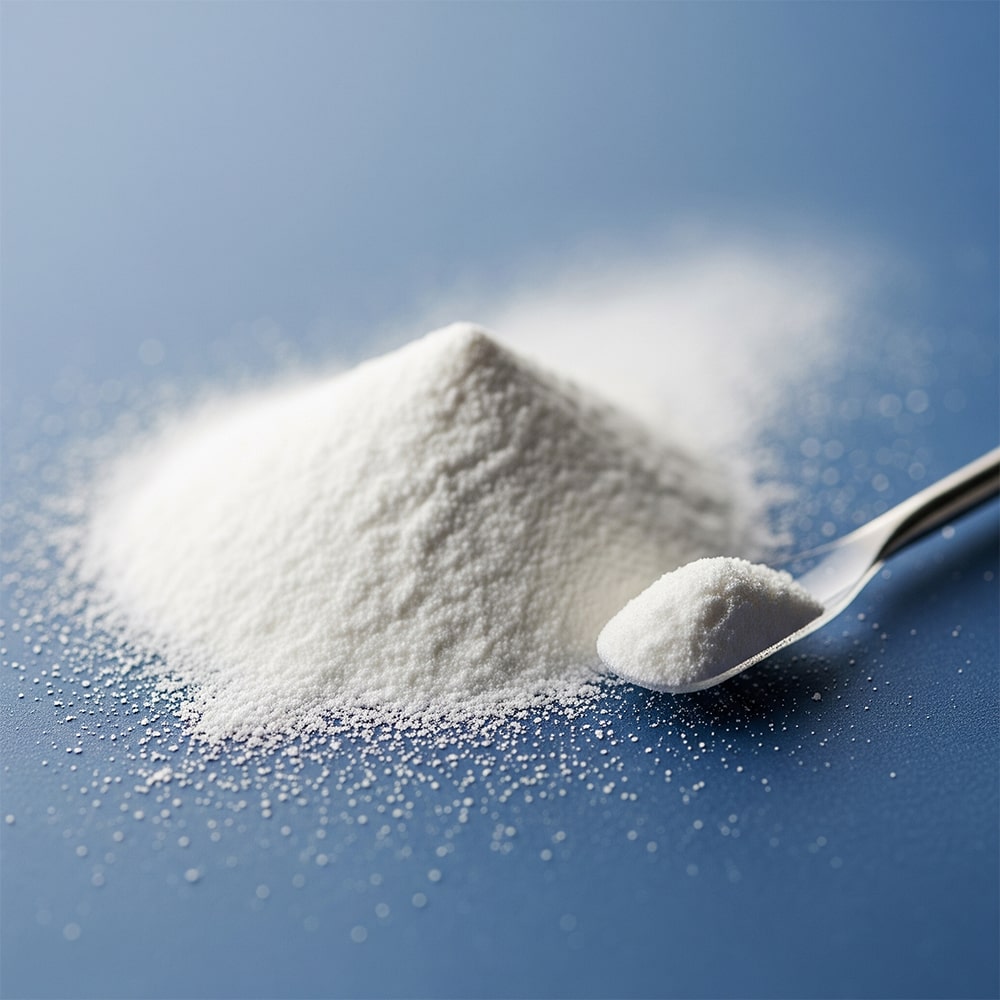
Choosing a Sodium Citrate API Manufacturer is not simply a matter of comparing prices per kilogram. For pharmaceutical factories, nutraceutical producers, diagnostic manufacturers, and other regulated operations, the supplier behind the material can influence formulation consistency, production efficiency, regulatory documentation, inventory risk, and ultimately the reliability of the finished product.
That is why many procurement teams consider suppliers such as MT Royal when evaluating sodium citrate sourcing. The practical advantage is not only access to competitive pricing, but also the ability to evaluate multiple brands and supply options according to the technical and commercial requirements of a particular production line. When a raw material looks simple on paper, the details hidden behind the specification sheet are often where the real sourcing risks live.
What Is Sodium Citrate API?
Sodium citrate is the sodium salt of citric acid and is widely used in pharmaceutical and industrial formulations. Depending on the intended application, manufacturers may work with different forms, including trisodium citrate dihydrate or anhydrous grades.
In pharmaceutical manufacturing, sodium citrate can serve several functions, including:
- Buffering and pH adjustment
- Chelating metal ions
- Supporting formulation stability
- Acting as an electrolyte or excipient in specific preparations
- Contributing to effervescent and oral formulations
- Supporting certain anticoagulant or diagnostic applications
The term “API” should also be handled carefully. Sodium citrate may be used as an active pharmaceutical ingredient in some formulations, while in other products it functions as an excipient or formulation aid. Your purchasing specification should therefore define its intended regulatory and technical role rather than relying solely on the generic product name.
For a factory, this distinction matters because the required documentation, grade, testing profile, and regulatory expectations can vary considerably.
LATAMARKO – Premium Spanish-Origin Cocoa Powder
Food industry raw materials – list of products
Food Ingredients Supplier in Türkiye for Manufacturers and Importers
Why the Choice of Sodium Citrate API Manufacturer Matters
Sodium citrate is not generally considered a complicated raw material. That can create a dangerous sourcing assumption: if the chemistry is straightforward, any supplier should be acceptable.
In practice, pharmaceutical procurement rarely works that way.
A reliable Sodium Citrate API Manufacturer or supplier should be evaluated across several dimensions:
1. Chemical consistency
Batch-to-batch consistency is essential. Variations in assay, moisture, particle characteristics, pH behavior, or impurity profile can create downstream formulation problems.
2. Documentation
A competitive quotation becomes much less attractive when your quality department spends weeks chasing missing certificates.
Depending on the application and market, procurement teams may request documentation such as:
- Certificate of Analysis (CoA)
- Safety Data Sheet (SDS)
- Product specification
- Manufacturing information
- GMP-related documentation where applicable
- Stability or storage information
- Regulatory statements
- Batch and traceability information
The exact documentation should be matched to your product’s regulatory pathway rather than collected simply because it appears on a generic purchasing checklist.
3. Supply continuity
A factory does not consume raw materials according to the supplier’s production schedule. Your production plan has its own rhythm.
A supplier that delivers one excellent batch but cannot support your next three purchase cycles may create more operational risk than a slightly more expensive supplier with dependable availability.
4. Commercial flexibility
A good supplier should be able to discuss packaging, quantities, lead times, shipping terms, and brand alternatives without turning every procurement conversation into a negotiation marathon.
This is one area where a distributor or sourcing partner such as MT Royal can be useful: access to multiple brands can give procurement teams more flexibility when availability, pricing, or qualification requirements change.
Pharmaceutical-Grade Sodium Citrate vs. General Industrial Material
One of the most common procurement mistakes is treating “sodium citrate” as a universal commodity.
It is not.
A pharmaceutical factory should establish the required grade before requesting quotations. Food-grade, pharmaceutical-grade, technical-grade, and other specifications may have substantially different requirements for manufacturing controls, impurities, documentation, and intended use.
Your technical purchasing specification should answer questions such as:
- Which sodium citrate form is required?
- Is dihydrate or anhydrous material appropriate?
- What assay range is acceptable?
- What moisture specification applies?
- What impurity limits are relevant?
- What particle-size characteristics are needed?
- What microbiological requirements apply?
- Which pharmacopoeial standard is required?
- What packaging configuration fits your production environment?
- What documentation must accompany every batch?
A procurement department that skips these questions may save time during quotation collection and lose considerably more time during quality approval.
The Most Important Sodium Citrate Quality Parameters
A robust supplier evaluation should go beyond the headline assay value.
Assay
Assay confirms the concentration or purity of the intended chemical component within the applicable specification. It is a fundamental quality parameter, but it should never be the only one considered.
Water and moisture content
For hydrated materials, water content is particularly important because the physical and chemical characteristics of the material are linked to its hydration state. Storage conditions can also influence handling characteristics.
pH
Sodium citrate is frequently used because of its buffering properties. Therefore, pH-related specifications can be highly relevant depending on the formulation and test method.
Heavy metals and elemental impurities
Modern pharmaceutical quality systems place significant emphasis on elemental impurities. The appropriate limits and testing strategy depend on the intended use and applicable regulatory requirements.
Microbiological quality
For products where microbiological control is relevant, the raw material’s microbiological specifications and manufacturing environment deserve careful review.
Particle characteristics
Particle size is sometimes overlooked because sodium citrate is viewed primarily as a chemical ingredient. However, particle characteristics can influence blending, dissolution, powder flow, dust formation, and manufacturing behavior.
In other words, two materials can satisfy the same broad chemical identity while behaving differently on the production floor.
Common Mistakes When Sourcing Sodium Citrate
The most expensive sourcing errors are not always caused by paying too much. Frequently, they come from buying the wrong material at the right price.
Mistake 1: Choosing the lowest quotation
A low unit price may hide higher freight costs, larger minimum order quantities, longer lead times, additional testing requirements, or inconsistent availability.
The relevant metric is closer to total landed cost than simple purchase price.
Mistake 2: Approving a supplier without a technical review
Procurement and quality assurance should not operate as separate islands. A supplier can look commercially attractive while failing a critical technical requirement.
Mistake 3: Ignoring the manufacturing site
The company name on the quotation is not enough. You should know who actually manufactures the material, where it is produced, and whether the supplied batch can be traced to the declared manufacturing source.
Mistake 4: Treating one CoA as proof of consistency
A single successful batch does not establish long-term supplier performance.
If possible, evaluate historical batch data and monitor critical quality attributes over multiple deliveries.
Mistake 5: Forgetting logistics
Sodium citrate may be chemically stable under appropriate conditions, but that does not mean transportation and warehousing can be ignored. Packaging integrity, humidity exposure, palletization, transit time, and warehouse conditions can all affect material handling.
How to Evaluate a Sodium Citrate API Manufacturer
A practical supplier scorecard can make qualification more objective.
Consider weighting the evaluation around:
- Quality compliance
- Regulatory documentation
- Batch consistency
- Manufacturing capacity
- Supply continuity
- Lead time
- Packaging options
- Technical support
- Price and total landed cost
- Responsiveness to deviations or quality questions
The weighting should reflect your factory’s risk profile.
For example, a high-volume pharmaceutical plant with validated processes may place greater emphasis on continuity and change-control procedures, while a smaller manufacturer may prioritize minimum order quantities and flexible delivery schedules.
This is also where comparing multiple brands can be strategically valuable. MT Royal’s ability to work with different brands can allow procurement teams to assess alternatives rather than becoming dependent on a single source.
Direct Manufacturer or Specialized Supplier: Which Is Better?
There is no universal answer.
Direct purchasing from a manufacturer may be attractive for large-volume buyers seeking long-term contracts, production visibility, or direct technical communication.
A specialized supplier can be advantageous when you need:
- Multiple qualified brand options
- Smaller or intermediate quantities
- Consolidated purchasing
- Faster sourcing
- Alternative supply routes
- Commercial flexibility
The right choice depends on your annual consumption, regulatory requirements, inventory strategy, and supplier qualification model.
For many factories, the strongest strategy is not choosing one model permanently but maintaining an approved primary source and a qualified alternative where feasible.
Specialized Tips for Large-Scale Production
Large-volume factories should approach sodium citrate procurement as a supply-chain engineering problem rather than a routine purchasing activity.
Build safety stock around actual lead-time variability
Do not calculate inventory solely from average lead time. If deliveries normally take four weeks but occasionally require eight, your safety-stock calculation should reflect that variability.
Establish dual-source strategies where justified
A second qualified source can protect production against unexpected manufacturing interruptions, shipping disruptions, regulatory changes, or commercial constraints.
However, qualifying an alternative supplier is not simply buying the same chemical from another company. Your quality team must determine whether the alternate material is sufficiently comparable for the intended manufacturing process.
Monitor supplier change notifications
A change in manufacturing site, raw-material source, process, specification, packaging, or analytical method may have implications for your qualification status.
A mature procurement system treats supplier change control as an ongoing process rather than a one-time approval.
Track landed cost instead of invoice price
Suppose Supplier A offers material at $2.00/kg and Supplier B at $2.10/kg. If Supplier A requires larger shipments, has higher freight costs, or produces more handling losses, the apparent $0.10/kg advantage may disappear.
For a factory purchasing several tonnes annually, small differences can become significant—but so can small differences in supply reliability.
Emerging Trends in Pharmaceutical Raw-Material Sourcing
Pharmaceutical procurement is becoming increasingly data-driven.
Factories are paying more attention to supplier risk scoring, traceability, digital documentation, forecasting, and multi-source strategies. Procurement teams are also becoming more involved in technical supplier qualification rather than simply negotiating commercial terms.
Another important trend is the increasing importance of transparency around the supply chain. A manufacturer may ask not only “Who supplies this material?” but also “Who manufactures it, under what quality system, and how resilient is that source?”
This shift is particularly relevant for commonly used pharmaceutical raw materials. A material may be chemically uncomplicated yet operationally critical because a production line consumes it continuously.
We have seen in industrial sourcing that the quiet ingredients are sometimes the ones capable of stopping a very loud factory.
Why Multiple Brands Can Improve Procurement Resilience
Using multiple brands is not automatically better. Every additional supplier can create qualification work, analytical testing, documentation management, and inventory complexity.
But where the business case supports it, multiple qualified sources can provide valuable resilience.
A sourcing partner such as MT Royal can help procurement teams compare available brands according to:
- Technical specification
- Origin and manufacturing source
- Required documentation
- Packaging
- Minimum order quantity
- Lead time
- Price
- Historical availability
The objective should not be to accumulate suppliers. It should be to create a controlled supplier portfolio that gives your factory options without sacrificing quality.
Frequently Asked Questions About Sodium Citrate API Sourcing
What should I ask a Sodium Citrate API Manufacturer before purchasing?
Ask for the current specification, CoA, manufacturing source, applicable quality certifications, available grades, packaging details, MOQ, lead time, shelf-life information, storage conditions, and change-control procedures. Your QA team should determine which documents are mandatory for qualification.
Is pharmaceutical-grade sodium citrate always required?
Not necessarily. It depends on the product, regulatory status, and intended application. If sodium citrate is incorporated into a pharmaceutical product, the applicable regulatory and quality requirements should be established before procurement.
Should I buy directly from the manufacturer?
Direct sourcing can make sense for high-volume requirements, but specialized suppliers can provide useful flexibility, particularly when you need multiple brands, different quantities, or alternative supply channels.
How can I compare two sodium citrate suppliers fairly?
Use the same technical specification and evaluate both suppliers against identical quality, documentation, logistics, commercial, and supply-continuity criteria. Comparing price alone is like comparing two trucks by looking only at the color.
How important is the manufacturing origin?
Very important. Manufacturing origin affects qualification, traceability, documentation, regulatory assessment, logistics, and supply risk. Always distinguish the actual manufacturing site from the trading or distribution company named on an invoice.
Can changing sodium citrate brands affect my formulation?
Potentially. Even when two materials meet the same stated specification, differences in particle characteristics, moisture, bulk density, or processing history can affect manufacturing behavior. Any substitution should follow your internal change-control and qualification procedures.
What makes MT Royal a practical sourcing option?
MT Royal can be considered when you want access to multiple brands and competitive purchasing options while keeping the sourcing process commercially flexible. The appropriate choice still depends on your factory’s technical specification, qualification requirements, volume, and delivery needs.
Choosing the Right Sodium Citrate Supply Strategy
The best Sodium Citrate API Manufacturer for your factory is not necessarily the company offering the lowest price or the largest production capacity. It is the supplier whose material quality, documentation, manufacturing reliability, commercial terms, and logistics fit your actual production requirements.
For procurement teams, the smarter approach is to evaluate the complete supply relationship. Confirm the grade. Examine the manufacturing source. Review the quality documentation. Compare brands where appropriate. Calculate total landed cost. Assess lead-time risk. Then consider whether a supplier such as MT Royal can provide the flexibility your purchasing strategy requires.
In our work with manufacturing environments, one lesson repeatedly proves valuable: raw-material procurement should be designed around production continuity, not merely purchase orders. A few cents saved per kilogram mean very little if an unexpected shortage leaves a validated production line waiting for material.
Sodium citrate may enter your factory in an ordinary-looking bag, but its sourcing decision belongs to a much larger system of quality, compliance, production planning, and supply-chain resilience. Treat it accordingly, and your procurement strategy becomes more than a price negotiation—it becomes another safeguard for the performance of your factory.


No comment