

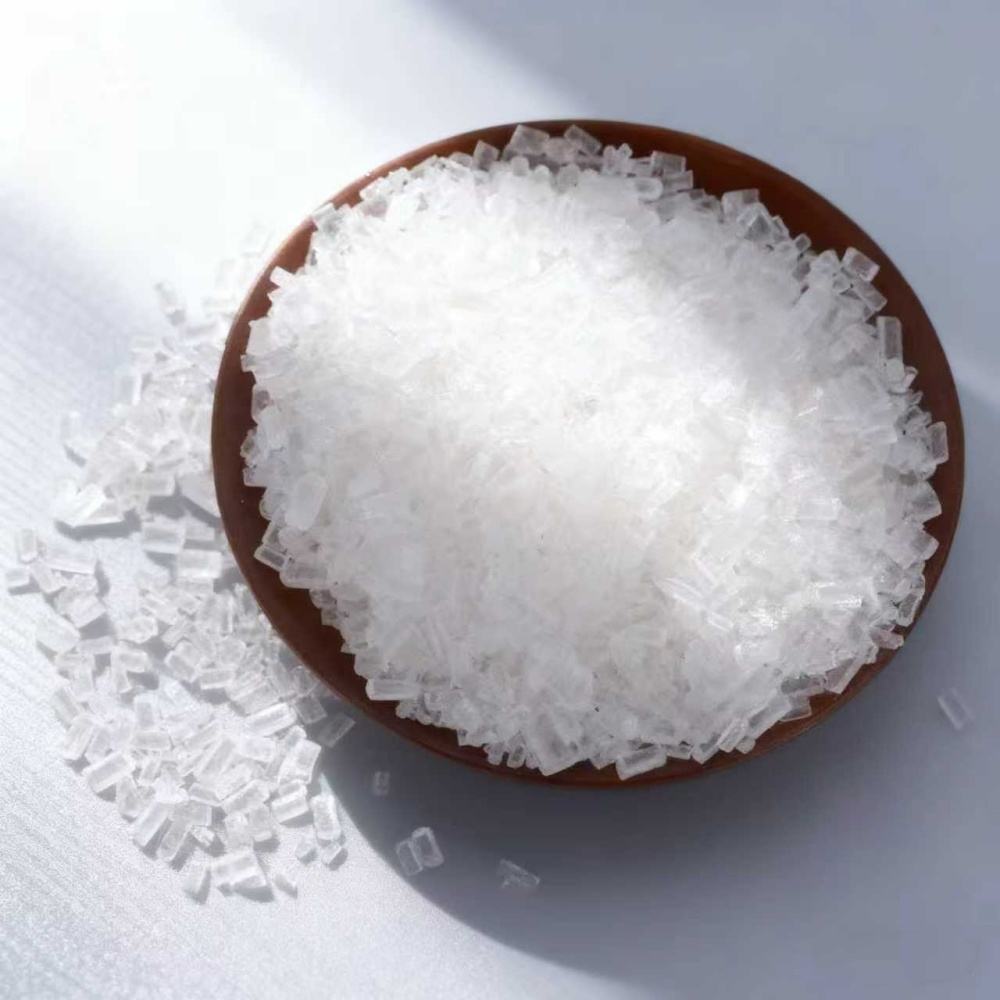
For food and beverage manufacturers, water quality is not a side issue that can be left to the maintenance department. It is part of the food safety system. If your factory relies on chlorinated process water, municipal water, or treated water for washing, rinsing, ingredient preparation, or equipment sanitation, the chemistry used to control residual chlorine can directly influence production quality and compliance. This is why choosing the right Sodium Thiosulfate for Food Safety deserves more attention than a routine raw-material purchase. For factories seeking dependable supply, multiple brands, and competitive commercial options, MT Royal can be a practical supplier to consider when comparing products against your technical and quality requirements.
Sodium thiosulfate is a versatile chemical with an important role in analytical testing and chlorine neutralization. In food-related environments, however, the key question is not simply whether sodium thiosulfate can react with chlorine. It is whether the product you purchase is suitable for the specific application, whether the grade and purity are appropriate, whether the supplier provides adequate documentation, and whether the material is handled under a controlled quality system.
That distinction matters because food safety is built on control points, not assumptions.
A factory may have an excellent sanitation program, highly trained operators, and a modern laboratory, yet still experience problems if residual disinfectant is not properly managed. Excess chlorine can affect sensory characteristics, interfere with downstream processes, and complicate wastewater treatment. On the other hand, inadequate disinfection creates an entirely different and much more serious risk.
Sodium thiosulfate can help manufacturers manage this balance in specific applications, particularly where chlorine or other oxidizing agents must be neutralized before analysis, testing, or controlled processing. It is also widely used in laboratory methods for measuring residual chlorine in water.
For procurement teams, quality managers, laboratory supervisors, and food-processing engineers, understanding the chemistry behind this process is essential. The right sodium thiosulfate is not merely another chemical in the warehouse. It is part of a broader system involving water treatment, analytical accuracy, sanitation validation, and supplier qualification.
LATAMARKO LM60 – Premium Spanish-Origin Cocoa Powder
latamarko alkalized cocoa powder lm60
cocoa powder for chocolate production-Best price
Food industry raw materials – list of products
Types of Gelatin from Turkish Manufacturer
What Is Sodium Thiosulfate?
Sodium thiosulfate is an inorganic compound with the chemical formula Na₂S₂O₃. It is commonly available as anhydrous sodium thiosulfate or as the pentahydrate form, Na₂S₂O₃·5H₂O.
The pentahydrate is often called sodium thiosulfate pentahydrate or “hypo” in certain industrial contexts.
The compound is known for its reducing properties and its ability to react with oxidizing agents. One of its most recognized applications is the neutralization of chlorine.
This chemistry makes sodium thiosulfate valuable in several industries, including:
- Water treatment
- Food and beverage manufacturing
- Laboratory analysis
- Pharmaceutical production
- Aquaculture
- Chemical processing
- Environmental testing
- Photography and imaging applications
The exact product required depends on the application.
This is an important point for buyers searching for Sodium Thiosulfate for Food Safety. A product sold for general industrial purposes should not automatically be assumed to be appropriate for a food-processing environment. The intended use, regulatory requirements, purity, manufacturing controls, packaging, and documentation must all be evaluated.
How Sodium Thiosulfate Supports Food Safety
The relationship between sodium thiosulfate and food safety is primarily connected to the management and analysis of chlorinated water and other oxidizing environments.
Chlorine-based disinfectants are widely used because they are effective against many microorganisms. In water treatment and food-processing operations, chlorine may be present as free chlorine or combined chlorine, depending on the treatment process and water chemistry.
The challenge is that chlorine is useful as a disinfectant but may become undesirable at later stages of a process.
For example, a food manufacturer may need to:
- Test water for residual chlorine
- Stop a chlorine reaction before laboratory analysis
- Neutralize chlorine in a sample
- Prepare water for certain downstream processes
- Control the effect of oxidizing disinfectants on sensitive materials
Sodium thiosulfate can react with chlorine, effectively removing its oxidizing activity.
In simplified terms, the thiosulfate ion acts as a reducing agent, converting reactive chlorine species into chloride while itself undergoing oxidation.
This reaction is particularly useful in analytical procedures because the chlorine concentration must remain stable between sample collection and laboratory measurement. If chlorine continues reacting after a sample has been taken, the measured result may no longer represent the original water condition.
In that context, sodium thiosulfate is not necessarily “making food safer” by being added directly to food. Instead, it can support the food safety management system by enabling accurate testing and controlled neutralization of residual disinfectants.
That distinction should be made very clearly.
Sodium Thiosulfate for Food Safety: Direct Use vs. Analytical Use
One of the most important concepts for manufacturers is understanding the difference between a chemical used in a food process and a chemical used to support food safety testing.
Sodium thiosulfate may be relevant to food safety through:
Residual Chlorine Testing
When water samples are collected for chlorine analysis, sodium thiosulfate may be used in sampling protocols to neutralize residual chlorine and prevent the disinfectant from continuing to react during transport or storage.
This is especially important when testing microbial parameters.
If residual chlorine remains active in the sample, it can continue killing microorganisms after the sample leaves the production environment. The laboratory could then receive a sample that no longer accurately represents the microbiological condition at the moment of collection.
In practical terms, the sample itself has changed.
Sodium thiosulfate can help “freeze” the microbiological condition of the sample by neutralizing residual chlorine.
Chlorine Neutralization
Certain controlled industrial processes may require the removal of chlorine before a subsequent operation.
The exact method depends on the facility’s process design, regulatory requirements, and validated operating procedures.
Laboratory Quality Control
Sodium thiosulfate is commonly associated with analytical procedures involving chlorine and oxidizing agents.
For food laboratories, water-quality laboratories, and environmental testing facilities, the quality of the reagent can influence analytical reliability.
A laboratory result is only as trustworthy as the method, equipment, analyst, sampling protocol, and reagents supporting it.
Why Residual Chlorine Matters in Food Processing
Chlorine is widely recognized as an effective disinfectant, but its role in food production requires careful management.
Depending on concentration and application, excessive chlorine exposure may contribute to:
- Unwanted taste
- Odor issues
- Chemical reactions with organic matter
- Equipment corrosion concerns
- Process interference
- Formation of disinfection by-products under certain conditions
At the same time, insufficient disinfection can increase microbiological risk.
This creates a classic manufacturing balancing act.
You want enough disinfectant to achieve the intended sanitation objective, but you also need to control the chemical environment afterward.
This is why food manufacturers often monitor parameters such as:
- Free chlorine
- Total chlorine
- pH
- Temperature
- Turbidity
- Organic load
- Contact time
The exact control strategy depends on the application.
For example, water used for equipment rinsing may have different requirements from water used as an ingredient. Likewise, water used in produce washing may be managed differently from water used for final product formulation.
Sodium thiosulfate enters this picture primarily as a tool for chlorine neutralization and analytical control.
Food Safety Management Systems and Sodium Thiosulfate
Modern food safety programs rely on preventive control rather than end-product inspection alone.
Systems based on HACCP principles identify hazards, establish critical control points, define monitoring procedures, and specify corrective actions.
Water quality can become part of this system.
If a factory uses chlorinated water, its food safety plan may include monitoring of:
- Chlorine concentration
- Water source
- Treatment effectiveness
- Microbiological quality
- Sampling frequency
- Corrective actions
Sodium thiosulfate can support the laboratory side of this system by helping preserve water samples for microbiological analysis when residual chlorine is present.
This is a subtle but important role.
The chemical may never enter the food production line. Yet it can still contribute to the reliability of the information used to make food safety decisions.
In our work with industrial sourcing questions, we have seen that this distinction is often overlooked. Procurement teams sometimes ask whether a chemical is “food grade” without first defining what the chemical is actually being used for.
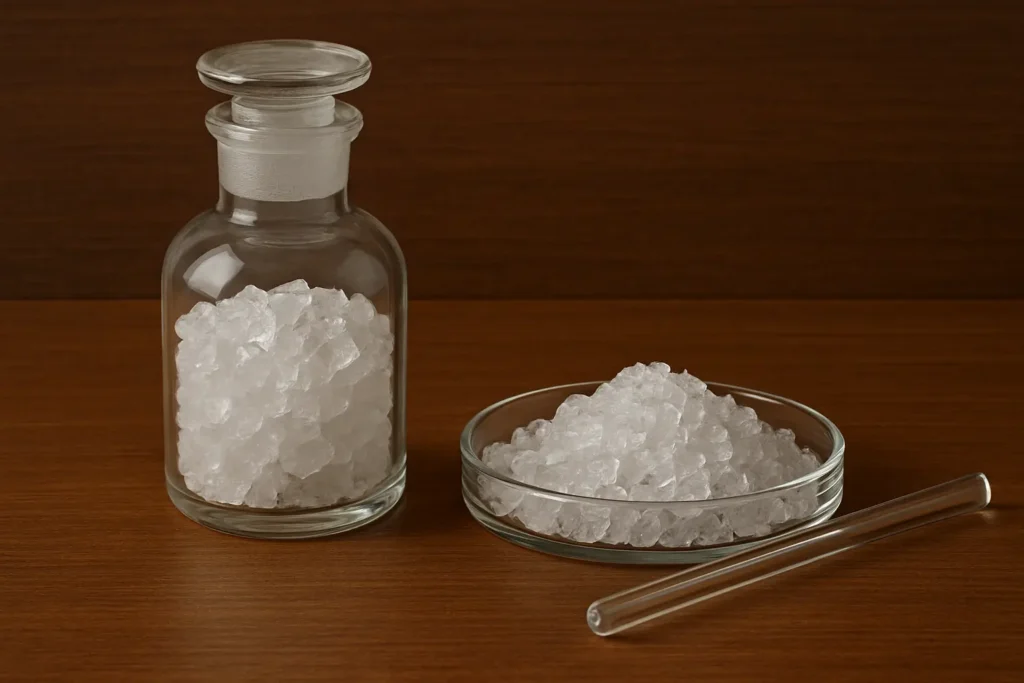
Sodium Thiosulfate Grades and Product Forms
Sodium thiosulfate is available in different grades and physical forms.
Anhydrous Sodium Thiosulfate
Anhydrous sodium thiosulfate contains no water of crystallization.
It may be useful when a process requires precise control of active chemical concentration by mass.
Sodium Thiosulfate Pentahydrate
Sodium thiosulfate pentahydrate contains five molecules of water of crystallization.
It is a common commercial form and is widely used in laboratory and industrial applications.
The distinction matters because the molecular weight and concentration calculations differ.
A factory that switches from anhydrous material to pentahydrate without adjusting its dosing calculations could create an unintended process change.
This is why purchasing specifications should clearly state the required form.
Common Mistakes When Sourcing Sodium Thiosulfate
Mistake 1: Assuming Every Sodium Thiosulfate Product Is Equivalent
The chemical name may be identical, but the manufacturing controls and documentation can differ.
A laboratory reagent, industrial chemical, and specialized application-grade product may have different specifications.
Your supplier should understand your intended use.
Mistake 2: Ignoring Hydration State
Anhydrous sodium thiosulfate and sodium thiosulfate pentahydrate cannot be treated as identical on a mass-for-mass basis.
Always confirm the form before calculating dosage.
Mistake 3: Buying Without a Certificate of Analysis
For quality-sensitive applications, every shipment should be traceable to a defined specification.
A Certificate of Analysis should ideally identify:
- Product name
- Batch or lot number
- Test results
- Applicable specification
- Manufacturing or testing date
- Relevant analytical methods
Mistake 4: Confusing Food Safety Support With Direct Food Addition
Sodium thiosulfate may support food safety testing without being intended for direct addition to food.
Do not assume that a chemical is authorized for direct food use simply because it is commonly used in food-processing laboratories.
The intended use determines the relevant regulatory question.
Mistake 5: Focusing Only on Price
A laboratory or factory may spend very little on sodium thiosulfate compared with its total operating budget.
Yet an unreliable reagent can compromise testing.
A failed laboratory result can trigger:
- Retesting
- Production delays
- Investigations
- Additional sampling
- Product holds
- Regulatory concerns
The price of the chemical is often tiny compared with the cost of uncertainty.
How to Select a Reliable Sodium Thiosulfate Supplier
A dependable supplier should be able to answer technical questions clearly.
Before purchasing, ask:
- Which manufacturer produces the material?
- What is the product grade?
- Is it anhydrous or pentahydrate?
- What is the assay specification?
- What impurities are controlled?
- Is a batch-specific COA available?
- What is the shelf life?
- How should it be stored?
- What packaging formats are available?
- What is the lead time?
- Can the supplier provide consistent batches?
- Are alternative brands available?
MT Royal can be considered by manufacturers and laboratories seeking multiple brands at competitive prices. This can be useful when a buyer wants to compare alternatives without sacrificing technical requirements.
The supplier’s role should be consultative.
If your application involves residual chlorine testing, explain that to the supplier. If the material is intended for a specific water-treatment process, explain that instead.
The more clearly the application is defined, the more useful the sourcing conversation becomes.
Sodium Thiosulfate for Chlorine Neutralization
The chemical relationship between sodium thiosulfate and chlorine is central to many applications.
In simplified chemistry, thiosulfate reduces chlorine to chloride while the thiosulfate species is oxidized.
The exact stoichiometry depends on the chlorine species and reaction conditions, but the practical principle is straightforward:
Sodium thiosulfate removes the oxidative activity of residual chlorine.
This is why it can be useful in water sample preservation and controlled chlorine neutralization.
However, factories should not improvise dosing.
The required amount depends on:
- Chlorine concentration
- Water volume
- Form of chlorine
- Sodium thiosulfate form
- Reaction conditions
- Required residual concentration
For validated industrial processes, dosing should be established through documented calculations and verified by appropriate testing.
A chemical dosing system should never operate on “roughly this much seems fine.” Chemistry is not especially impressed by rough estimates.
The Importance of Sampling Accuracy
One of the most overlooked aspects of food safety testing is sampling.
Even an excellent laboratory method cannot correct a poor sample.
For chlorinated water, sampling should consider:
- Sampling point
- Container preparation
- Residual chlorine
- Neutralization procedure
- Holding time
- Temperature
- Transport conditions
If the purpose of sampling is microbiological testing, residual chlorine can continue affecting the sample after collection.
This can produce falsely low microbial counts.
That is why sodium thiosulfate may be included in sampling protocols for chlorinated water.
The important insight is that sample preservation is part of analytical quality.
The laboratory does not begin when the sample arrives. It begins when the sample is collected.
Industrial Applications Beyond Food Safety
Although this article focuses on Sodium Thiosulfate for Food Safety, the chemical has broader industrial uses.
Water Treatment
Sodium thiosulfate can be used to neutralize chlorine and other oxidizing agents in treated water.
This can be relevant to:
- Process water
- Wastewater
- Laboratory water systems
- Aquaculture
- Environmental sampling
Aquaculture
Chlorine is toxic to aquatic organisms. Sodium thiosulfate can be used in controlled applications to neutralize residual chlorine in water intended for aquatic systems.
Pharmaceutical Manufacturing
Pharmaceutical facilities may use sodium thiosulfate in specific analytical or process applications, depending on their validated procedures.
Environmental Testing
Environmental laboratories may use sodium thiosulfate in sample preservation and analytical procedures involving chlorinated water.
The same chemical therefore appears across multiple industries, but the required quality and documentation can differ substantially.
Sodium Thiosulfate vs. Other Chlorine Neutralizers
Sodium thiosulfate is not the only chemical capable of neutralizing chlorine.
Other reducing agents may include:
- Sodium bisulfite
- Sodium metabisulfite
- Sulfur dioxide
- Ascorbic acid
The choice depends on the application.
Sodium Thiosulfate
Advantages:
- Effective chlorine neutralization
- Widely recognized analytical application
- Useful in sample preservation
- Relatively straightforward handling
- Established industrial availability
Potential considerations:
- Must be correctly dosed
- Hydration state affects calculations
- Product quality still matters
- Not automatically suitable for every direct food application
Sodium Metabisulfite
Often used in industrial water treatment and dechlorination.
However, sulfite chemistry may introduce different regulatory and process considerations.
Ascorbic Acid
Can neutralize chlorine and may be preferred in certain specialized applications.
However, its cost and chemical characteristics may make it less suitable for high-volume industrial use.
The right neutralizer depends on your process, not simply on which chemical has the strongest reputation.
Specialized Tips for Large-Scale Food Manufacturers
Create a Written Chemical Specification
Do not rely on the supplier’s generic product description.
Define your own requirements.
Include:
- Chemical form
- Assay
- Purity
- Packaging
- Storage
- Documentation
- Lot traceability
- Acceptance criteria
Qualify the Supplier
Supplier qualification should consider:
- Manufacturing controls
- Quality management
- Traceability
- Batch consistency
- Complaint handling
- Change notification
Establish a Backup Source
We recommend qualifying an alternative source before you need one.
This is particularly valuable for factories operating continuously.
If your laboratory depends on one reagent supplier and the product suddenly becomes unavailable, the problem may not be the cost of the chemical. The problem may be that your testing program cannot continue as planned.
Use Batch Records
Maintain records for:
- Supplier
- Product
- Lot number
- Receipt date
- Expiry or retest date
- COA
- Storage conditions
- Usage
This creates a clear chain of traceability.
Monitor Storage Conditions
Sodium thiosulfate products should be stored according to the manufacturer’s instructions.
Control:
- Moisture exposure
- Temperature
- Container integrity
- Contamination
- Light exposure where relevant
Poor storage can undermine a good purchasing decision.
Trends in Food Safety and Water Quality
Food safety systems are becoming increasingly data-driven.
Factories are investing more heavily in:
- Online water monitoring
- Automated chlorine measurement
- Digital laboratory records
- Real-time process control
- Supplier traceability
- Preventive maintenance
This trend increases the importance of reliable chemical standards and reagents.
As analytical systems become more sophisticated, the quality of the supporting chemicals becomes increasingly visible.
A factory may have a highly advanced chlorine analyzer, but if the sampling protocol is poorly designed or the neutralizing reagent is unsuitable, the sophistication of the instrument does not solve the fundamental problem.
The future of food safety is not simply more technology. It is better integration between technology, chemistry, procedures, and people.
Frequently Asked Questions About Sodium Thiosulfate for Food Safety
Is sodium thiosulfate safe for food factories?
Sodium thiosulfate can be used in food-industry laboratory and water-treatment contexts, but the safety and regulatory suitability depend on the specific application. It should not be assumed to be approved for direct addition to food merely because it is used in food safety testing.
What is the main food safety use of sodium thiosulfate?
One important use is the neutralization of residual chlorine in water samples before microbiological analysis. This helps prevent chlorine from continuing to kill microorganisms after sample collection.
Does sodium thiosulfate remove chlorine?
Yes. Sodium thiosulfate reacts with chlorine and reduces it to chloride, removing its oxidizing activity under appropriate conditions.
Can sodium thiosulfate be used to dechlorinate process water?
It can be used for controlled chlorine neutralization in appropriate water-treatment applications. The correct dosage must be calculated according to the chlorine concentration and process requirements.
What is the difference between sodium thiosulfate anhydrous and pentahydrate?
The main difference is the presence of water of crystallization. Their molecular weights and effective concentrations differ, so dosage calculations must account for the specific form being used.
How should sodium thiosulfate be stored?
Follow the manufacturer’s storage instructions. Generally, the product should be protected from contamination and excessive moisture and kept in suitable, well-closed packaging.
Is sodium thiosulfate a food additive?
Its use in food-related environments does not automatically mean it is authorized as a direct food additive. The regulatory status depends on the jurisdiction and intended application.
Why is the Certificate of Analysis important?
A COA confirms that a particular batch has been tested against specified quality parameters. It supports traceability and helps quality teams determine whether incoming material meets purchasing requirements.
Can I use any industrial sodium thiosulfate for laboratory testing?
Not necessarily.
Analytical applications may require a specific reagent grade or quality specification. Always match the product to the analytical method and laboratory requirements.
Why should a factory consider multiple brands?
Multiple brands can provide greater flexibility in availability and pricing. However, alternative products should be technically evaluated and approved before they are introduced into a validated process.
How can MT Royal support procurement?
MT Royal can be considered as a supplier offering access to multiple brands and competitive prices. For the best result, provide your intended application, required grade, quantity, packaging, and documentation requirements so appropriate options can be evaluated.
Making Sodium Thiosulfate Part of a Stronger Food Safety Strategy
The most important lesson about Sodium Thiosulfate for Food Safety is that its value is often indirect but highly practical.
It can support reliable chlorine testing. It can help preserve the integrity of microbiological water samples. It can contribute to controlled dechlorination processes. It can help laboratories produce data that more accurately reflects real production conditions.
But the chemical itself is only one component of the system.
Effective food safety depends on the interaction of:
- Safe water
- Validated sanitation
- Accurate sampling
- Reliable laboratory methods
- Qualified chemicals
- Competent personnel
- Proper documentation
- Effective corrective action
A factory that focuses only on buying the chemical misses the larger picture.
The smarter approach is to define the purpose first, establish the technical requirements second, qualify the supplier third, and then verify performance through documented procedures.
MT Royal can fit into that process as a sourcing partner when manufacturers need to compare multiple brands and balance product requirements with competitive pricing. The most valuable supplier relationship is not the one that simply delivers a box. It is the one that helps you obtain a consistent product with the documentation and supply reliability your operation actually needs.
In our experience, the most successful procurement teams are the ones that ask detailed questions before the purchase order is issued. They know the required chemical form, understand the intended application, and have already considered what happens if the primary supplier cannot deliver.
That kind of preparation may seem excessive when the material is inexpensive.
It is not.
A small bottle of reagent can support a laboratory decision that affects thousands of units of finished product. A water sample can influence whether a production batch is released or held. A neutralizing chemical can determine whether a test result reflects reality or a chemically altered sample.
That is why sodium thiosulfate deserves to be treated as part of the food safety infrastructure rather than just another chemical on the purchasing list.
The best factories do not wait for a food safety problem to reveal weaknesses in their chemical supply chain. They build the controls beforehand, qualify dependable suppliers, document the process, and verify that every critical input performs as expected.
When water quality matters, precision matters. When testing matters, sample integrity matters. And when food safety is on the line, even the smallest chemical decision deserves to be made with the same discipline as every other critical control in the factory.

No comment