

When you’re running a factory where consistency, compliance, and cost control matter as much as production speed, the raw materials you select become strategic levers—especially when those materials touch every formulation, product line, and regulatory audience you serve. Soy‑Based Glycerin Bulk Supplier is more than just a search term; it’s a decision point that can influence texture, stability, processing performance, and even your brand’s credibility in highly regulated markets.
At MT Royal, we understand how transformative the right sourcing choice can be. In our collaboration with various factories—from high‑volume personal care producers to food formulators and pharmaceutical manufacturers—we have seen that soy glycerin, when sourced correctly, becomes a dependable building block for innovation and operational efficiency. This guide tackles soy‑based glycerin from every critical angle: technical specs, industrial applications, supply chain pitfalls, procurement best practices, cost drivers, regulatory requirements, and the emerging trends reshaping bulk supply markets. Our goal is to provide you with a comprehensive resource that feels as insightful as a seasoned consultant sitting alongside your procurement and R&D teams.
Whether you’re new to high‑volume glycerin sourcing or refining an existing supply strategy, the following sections will equip you with actionable knowledge that exceeds even high‑quality brand or analyst content.
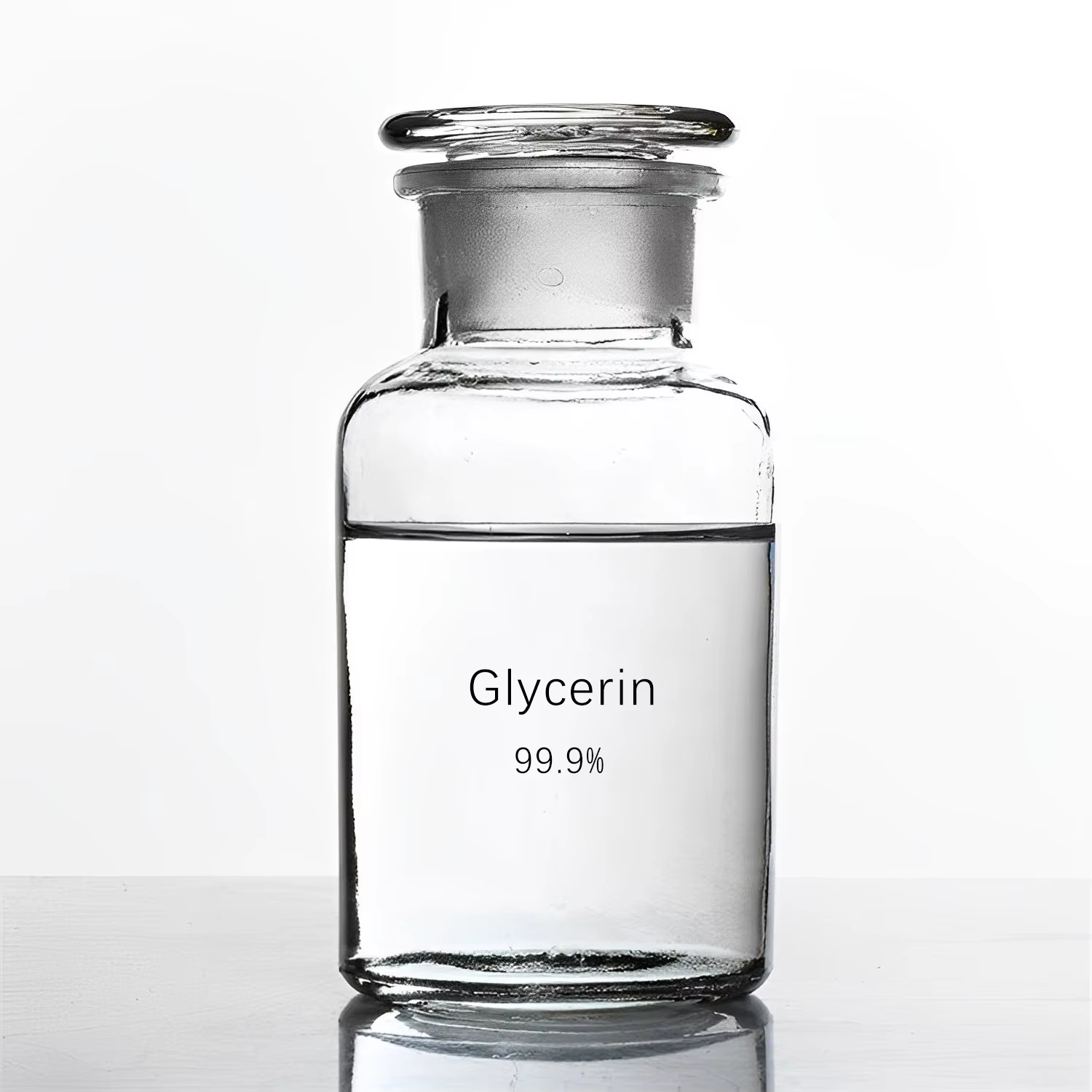
Food Grade Refined Glycerin 99.7% – Reliable Export Quality from TÜRKİYE
What Is Soy‑Based Glycerin and Why It Matters
Fundamental Definition
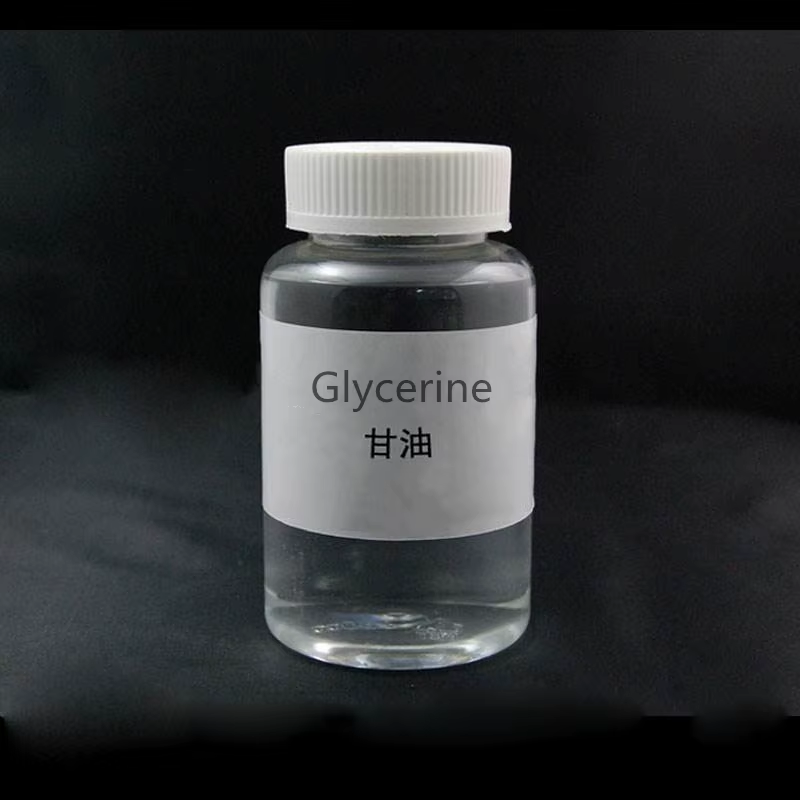
Soy‑based glycerin is glycerol produced predominantly from soy‑derived oils. During chemical processes like saponification or transesterification—common in soap and biodiesel production—soy oils break down. Glycerin, a by‑product of these reactions, is refined and purified to serve multiple industrial purposes.
Let’s break down its core attributes:
- Soy glycerin typically has excellent moisture retention and compatibility with a wide spectrum of formulations.
- Because it originates from renewable soy feedstocks, it can support sustainability and traceability goals.
- It is available in varying grades—USP (United States Pharmacopeia), FCC (Food Chemical Codex), cosmetic grade, or industrial grade—each aligned with specific regulatory and performance requirements.
In industrial contexts, soy glycerin’s performance features often outperform its counterparts. Its controlled viscosity, stable chemical profile, and consistent sourcing make it well‑suited for large‑scale manufacturing environments.
Why Glycerin Matters to Industrial Manufacturers
You may be asking: “Why does glycerin deserve this level of attention?” The answer often reveals itself only when sourcing mistakes ripple through production.
Glycerin is used across sectors:
- Personal care and cosmetics – as a humectant and texture enhancer
- Food and beverage manufacturing – to improve moisture content and shelf life
- Pharmaceutical formulations – as a carrier or solvent
- E‑liquids, inks, and printing applications – for controlled viscosity and performance
- Textiles and coatings – in process aids and finishing agents
In every context, glycerin interacts with other ingredients and equipment. Even small variations in purity, microbial content, or moisture can impact product consistency, processing speed, and compliance outcomes.
How Soy‑Based Glycerin Is Produced
To evaluate a Soy‑Based Glycerin Bulk Supplier, you must understand how soybean oil is transformed into industrial‑grade glycerin:
- Raw Material Sourcing – Soybean oil feedstock arrives at refineries from agricultural producers.
- Chemical Processing – Oils undergo chemical reactions (commonly during biodiesel or soap production). Glycerin is separated as a by‑product.
- Crude Glycerin Collection – The initial product contains impurities like methanol, salts, or free fatty acids.
- Refining and Purification – Through distillation, ion exchange, and decolorization, purity is increased to target grade specifications.
- Quality Testing and Certification – Final batches are measured against lab standards, and Certificates of Analysis (COAs) are issued.
The depth and rigor of each step determine whether a glycerin supplier consistently delivers material that meets your expectations—and whether your factory can run without unexpected variation.
The Role of a Soy‑Based Glycerin Bulk Supplier
A Soy‑Based Glycerin Bulk Supplier is more than a vendor; they are a strategic partner who bridges global production with your manufacturing calendar.
What Bulk Suppliers Provide
In large‑scale manufacturing, suppliers are expected to deliver:
- Consistent, certified product quality
- Batch‑specific Certificates of Analysis
- Traceability data from feedstock to final product
- Reliable logistics and warehouse management solutions
- Regulatory compliance documentation
When a supplier falls short in any of these areas, risk creeps into your supply chain—often in ways that only become visible weeks or months downstream.
At MT Royal, we emphasize partnerships with suppliers who combine certification integrity with logistical excellence, because uninterrupted production is non‑negotiable for factories that run on tight schedules and narrow margins.
Common Mistakes in Industrial Glycerin Sourcing
Even seasoned procurement teams can fall into traps that seem invisible until they disrupt production. Understanding these pitfalls empowers you to ask the right questions and secure glycerin that aligns with your operational needs.
Mistake #1: Choosing Price Over Performance
Price is important—but it should never be the starting point. Low upfront cost often hides:
- Poor documentation
- Higher impurity levels
- Unstable feedstock sources
- Incompatible viscosity or moisture profiles
In industrial procurement, total cost of ownership is a more reliable metric than per‑kilogram price.
Mistake #2: Accepting Generic Documentation
Certificates of Analysis must be batch‑specific. Generic documentation suggests weak quality control and increases the risk of inconsistent performance in your products.
Mistake #3: Ignoring Supply Chain Risk
Global supply chains are more fragile than ever. Weather events, crop yield fluctuations, and logistics bottlenecks can delay deliveries. Without alternate suppliers or risk buffers, production lines may stall.
Mistake #4: Not Aligning Grade Selection with Application
Different applications require different standards:
- USP or FCC grade for food and pharma
- Cosmetic grade for personal care products
- Industrial grade for non‑regulated applications
Choosing the wrong grade can lead to compliance violations, quality defects, or customer dissatisfaction.
Evaluating Quality: What Really Matters
For industrial manufacturers, quality isn’t an abstract concept—it’s a measurable system that should be verifiable before you commit to large shipments.
Here’s what to prioritize:
Certificates of Analysis (COAs)
A robust COA should include:
- Glycerin content (%)
- Moisture content
- pH level
- Color (APHA value or equivalent)
- Odor evaluation
- Residual ash and impurities
- Regulatory compliance markers
Independent lab validation of COAs adds another layer of confidence—but it starts with clear, batch‑linked documentation from your supplier.
Purity and Impurity Profiles
Soy‑based glycerin must meet purity requirements relative to its intended use. High moisture or residual methanol, for example, can compromise performance in moisture‑sensitive formulations.
Stability Under Processing Conditions
Whether your process involves elevated heat, vacuum, or extended mixing, glycerin must perform predictably. Viscosity curves and thermal stability tests help anticipate how material behaves during manufacture.

Industrial Comparisons and Practical Supplier Evaluation
To gain clarity on how suppliers stack up, use this comparative framework:
| Evaluation Category | Why It Matters | What Good Looks Like |
|---|---|---|
| Purity Verification | Ensures batch meets standards | Independent COA with matching lab results |
| Feedstock Traceability | Supports sustainability reporting | Transparent origin data |
| Logistics Competence | Reduces delivery risk | Predictable lead times and clear tracking |
| Regulatory Compliance | Prevents market delays | Documentation for all target markets |
| Price Stability | Helps budget forecasting | Multi‑period contracts with indexed pricing |
| Customer Service | Improves responsiveness | Technical support and quick issue resolution |
Answering these questions with hard data—not assumptions—will reveal whether a supplier can be a long‑term ally or just a transactional stopgap.
Industrial Tips for Large‑Scale Production
Beyond contracting a bulk supplier, your factory can benefit from process and procurement strategies that enhance reliability and output quality.
Align Procurement with Production Forecasts
Forecasting should drive glycerin procurement. Reactive purchasing increases the likelihood of stockouts or rushed, expensive logistics.
Negotiate Flexible Volume Agreements
Long‑term contracts with volume tiers protect against market volatility and often unlock better pricing without locking your factory into rigid terms.
Implement Entry Quality Control
Even with strong supplier documentation, your own quality checks on arrival help preempt issues that only become visible on the production floor.
Maintain Dual Supplier Paths
Relying on a single Soy‑Based Glycerin Bulk Supplier may reduce administrative overhead, but it also increases risk. A dual‑supplier strategy strengthens resilience against disruptions.
Educate Cross‑Functional Teams
Ensure R&D, quality assurance, procurement, and production teams speak the same technical language. Shared understanding of specifications, grades, and performance metrics streamlines decision‑making and reduces miscommunication.
Frequently Asked Questions from Factories and Procurement Teams
What Are Typical Lead Times for Bulk Soy Glycerin?
Lead times vary by volume, supplier location, logistics routes, and customs processes. A capable supplier will share realistic delivery timelines and communicate proactively about delays.
Does Soy Glycerin Support Sustainable Sourcing Goals?
Yes, when produced from certified responsible soy supply chains. Traceability documentation, sustainability certifications, and ethical sourcing practices are increasingly important in industrial procurement.
How Should Soy Glycerin Be Stored in Bulk?
Maintain humidity‑controlled storage, sealed containers, and FIFO inventory rotation. Glycerin’s hygroscopic nature means it readily absorbs water if exposed to high humidity.
Is Soy Glycerin Compatible With All Formulations?
Compatibility depends on grade and formulation chemistry. Always validate material performance through pilot testing and collaboration with your supplier’s technical experts.
What Documentation Should I Require From a Supplier?
At a minimum:
- Batch‑specific COAs
- MSDS/SDS
- Regulatory compliance certificates
- Traceability data
- Logistics and customs documentation
These documents support quality assurance, compliance, and internal audits.
Emerging Trends in Global Glycerin Markets
Understanding broader market forces can sharpen your sourcing strategy.
Growing Demand in Personal Care and Pharma
As global populations demand more skincare and health‑oriented products, high‑quality glycerin suppliers are tightening supply—favoring manufacturers who commit early to long‑term contracts.
Sustainability and Certification Expectations
New regulations and consumer awareness are elevating the importance of sustainably sourced materials. Certifications like RTRS (Round Table on Responsible Soy) and feedstock traceability are becoming standard requirements.
Technological Advances in Analysis and QC
Advanced analytical tools—such as high‑resolution chromatography and spectroscopy—provide deeper insight into glycerin quality. Factories that integrate advanced QC can preempt issues that traditional testing might miss.
Supply Chain Digitization
Platforms that connect factories directly with suppliers, share real‑time inventory data, and automate compliance checks are reshaping how glycerin procurement functions at scale.
These trends signal that sourcing is evolving from transaction‑based buying to strategic partnerships driven by data, transparency, and mutual performance goals.
The Strategic Advantage of Choosing Wisely
Your choice of a Soy‑Based Glycerin Bulk Supplier is more than a checkbox on an order form. It becomes part of your factory’s DNA—affecting production continuity, product quality, compliance posture, and financial performance.
When you approach sourcing with rigor, data, and strategic foresight, you unlock advantages that go beyond cost savings:
- Operational Resilience – stronger defenses against logistics and regulatory disruptions
- Product Quality Consistency – fewer formulation surprises and customer complaints
- Process Efficiency Improvements – smoother interactions between raw materials and equipment
- Market Compliance Confidence – documentation that supports audits and certifications
We have seen firsthand that manufacturers who elevate glycerin from a commodity purchase to a strategic category outperform rivals on multiple fronts: uptime, quality, regulatory readiness, and even innovation velocity.
Your factory’s goals—whether that’s reducing waste, improving texture, or meeting stringent compliance targets—depend on the raw materials they use. By approaching soy glycerin sourcing with the depth of insight found here, you position your teams to make decisions that drive measurable results, today and long into the future.

No comment