

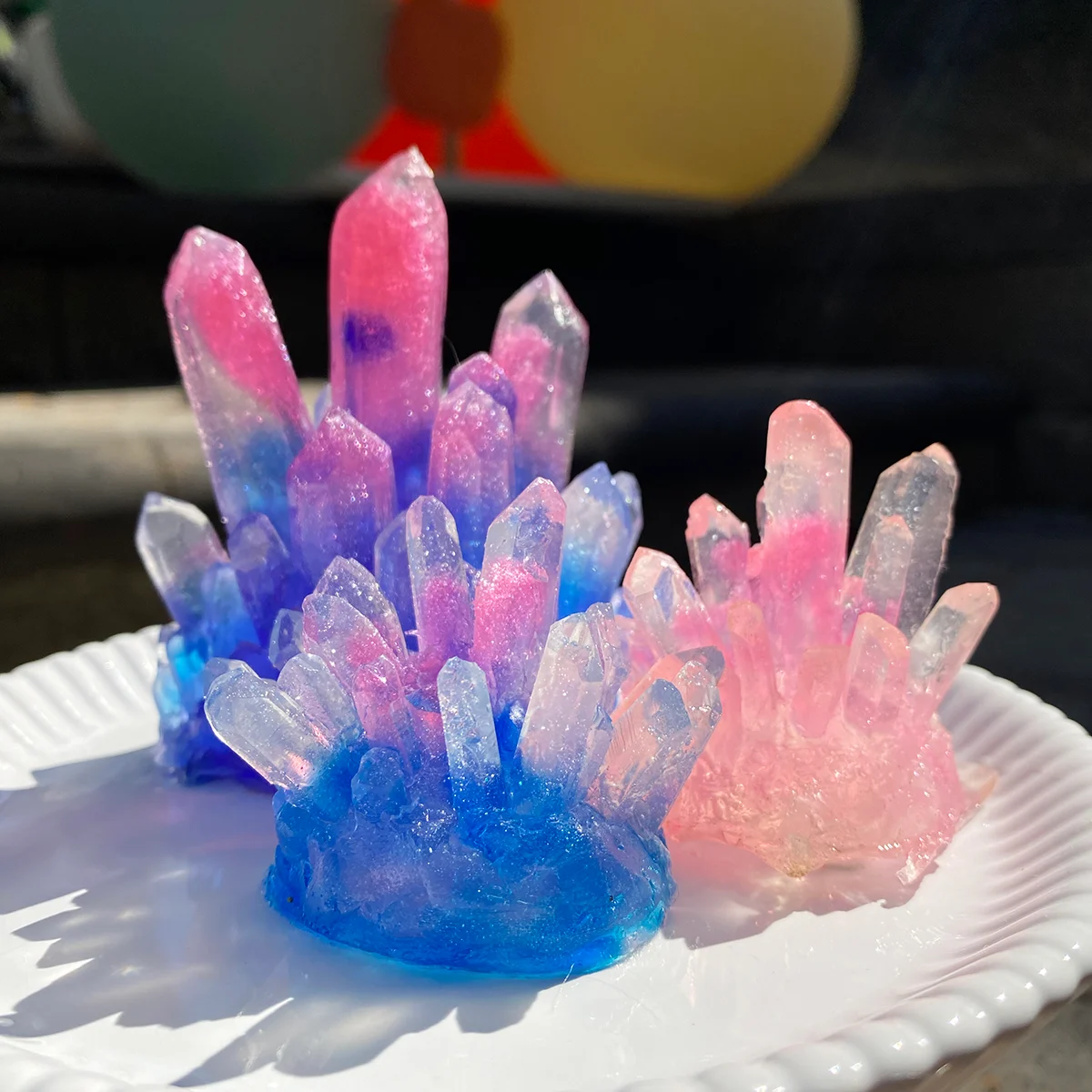
In the competitive world of confectionery manufacturing, one small defect can quietly destroy an entire product line’s reputation. Few issues are as frustrating—and as commercially damaging—as unwanted crystallization in gummies. For factories aiming to scale production, improve shelf stability, and maintain consistent texture, understanding Sugar Crystallization in Gummy Candy is not optional; it is fundamental.
Many manufacturers underestimate how sensitive gummy systems are. A slight change in moisture, a small shift in syrup composition, or even inconsistent cooling conditions can turn a smooth, elastic gummy into a grainy, dull-textured product that consumers immediately reject. That is why leading ingredient suppliers such as MT Royal often work closely with production teams, offering stabilizers, sweetener systems, acids, and hydrocolloids that help control crystallization behavior at the formulation level.
Because in gummy production, sugar doesn’t just sweeten—it decides whether your product feels like premium confectionery or something that has been sitting in storage too long.
LATAMARKO LM60 – Premium Spanish-Origin Cocoa Powder
latamarko alkalized cocoa powder lm60
cocoa powder for chocolate production-Best price
Food industry raw materials – list of products
Understanding Sugar Crystallization in Gummy Candy
Sugar crystallization refers to the process where dissolved sugars in a gummy matrix reorganize into solid crystalline structures. In ideal gummy production, sugar remains in a controlled, amorphous (non-crystalline) state. When crystallization occurs unintentionally, it leads to graininess, cloudiness, loss of elasticity, and structural instability.
In simple terms, Sugar Crystallization in Gummy Candy is the moment when a smooth gel system starts behaving like a poorly dissolved sugar solution that decided to “rebuild itself” without permission.
This phenomenon is influenced by:
- Sugar concentration and ratio
- Water activity levels
- Cooking temperature and cooling rates
- Acid content and pH balance
- Presence of interfering agents like glucose syrup or invert sugar
- Mixing and agitation conditions
Each factor plays a role in determining whether sugar remains stable or begins forming crystals.
Why Sugar Crystallization Matters for Manufacturers
For industrial gummy producers, crystallization is not just a texture issue—it directly affects profitability and brand consistency.
Key consequences include:
- Grainy or sandy texture in finished gummies
- Reduced chewiness and elasticity
- Cloudy or dull appearance
- Shortened shelf life
- Increased product rejection rates
- Consumer complaints and brand damage
Market research in confectionery quality control shows that texture defects alone can reduce repeat purchase intent by up to 50–65%, even if flavor remains unchanged.
That means crystallization is not a microscopic issue—it is a commercial one.
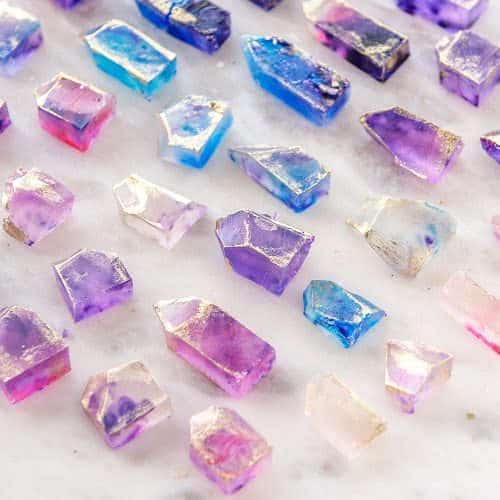
The Science Behind Sugar Crystallization in Gummy Candy
To control crystallization, you first need to understand what drives it at a molecular level.
1. Supersaturation of sugar solutions
Gummy production relies on concentrated sugar solutions. When sugar concentration exceeds solubility limits, the system becomes unstable and prone to crystallization.
2. Nucleation formation
Crystals begin forming around nucleation points—tiny disturbances such as air bubbles, dust particles, or undissolved sugar crystals.
3. Crystal growth
Once nucleation starts, sugar molecules attach to the crystal structure, expanding it over time.
4. Moisture migration
Water movement within the gummy matrix can trigger localized supersaturation, encouraging crystallization.
5. Temperature fluctuations
Cooling too quickly or unevenly creates unstable zones where sugar can reorganize.
In industrial terms, sugar crystallization is like a factory that starts rebuilding itself in the middle of production because the original blueprint wasn’t stable enough.
Key Ingredients That Influence Sugar Crystallization
Controlling crystallization is largely a formulation challenge. Several ingredients play a critical role in stabilizing or destabilizing the system.
1. Glucose syrup as a crystallization inhibitor
One of the most important LSI concepts in this topic is glucose syrup in gummy formulation.
Glucose syrup helps:
- Disrupt sugar crystal formation
- Increase viscosity of the system
- Stabilize supersaturated solutions
- Improve chewiness
Without glucose syrup, sucrose tends to crystallize much more easily.
2. Invert sugar and its stabilizing effect
Invert sugar is another key anti-crystallization agent.
It works by:
- Interfering with sucrose crystal growth
- Increasing water retention
- Enhancing softness and shelf stability
A properly balanced ratio between sucrose, glucose syrup, and invert sugar is one of the strongest defenses against crystallization.
3. Hydrocolloids and gel network structure
Hydrocolloids are essential in gummy candy systems.
Common examples include:
- Gelatin
- Pectin
- Carrageenan
- Modified starch
These ingredients form the structural backbone of gummies, trapping sugar molecules in a stable gel network that reduces mobility and crystallization risk.
4. Acidity regulators and pH control
Acids such as citric acid, malic acid, and lactic acid influence:
- Hydrolysis of sucrose
- Gel stability
- Flavor balance
- Crystallization behavior
However, too much acid can break down sugar into invert sugars prematurely, destabilizing the system if not properly controlled.
5. Water activity and moisture balance
Water activity (aw) is one of the most critical parameters in gummy production.
Key effects include:
- High aw increases mobility of sugar molecules
- Low aw stabilizes the system but may affect texture
- Imbalanced moisture leads to surface crystallization
Maintaining precise water activity is essential for long-term stability.
Common Causes of Sugar Crystallization in Industrial Gummy Production
1. Improper cooking temperature control
Cooking sugar syrup at incorrect temperatures leads to incomplete dissolution or overheating, both of which increase crystallization risk.
2. Excessive agitation during cooling
Over-mixing introduces air bubbles that act as nucleation points.
3. Poor ingredient dispersion
Undissolved sugar particles become crystal seeds.
4. Inconsistent raw material quality
Variability in sugar, syrup, or hydrocolloid quality leads to unstable systems.
5. Rapid temperature changes
Sudden cooling causes structural imbalance in the gel matrix.
In many factories, crystallization issues are not caused by one mistake—but by a combination of small inconsistencies that accumulate like silent errors in a production log.
Preventing Sugar Crystallization in Gummy Candy Through Formulation Design
This is where industrial expertise becomes essential.
1. Optimizing sugar-to-syrup ratio
The balance between sucrose and glucose syrup is fundamental.
A typical industrial approach includes:
- Higher glucose syrup content for stability
- Controlled sucrose concentration for sweetness
- Small amounts of invert sugar for flexibility
This combination creates a “crystal-resistant environment.”
2. Controlling supersaturation levels
Supersaturation must be carefully managed to avoid spontaneous nucleation.
Best practices include:
- Gradual heating profiles
- Controlled evaporation rates
- Precise endpoint temperature control
3. Engineering the gel matrix
The gel structure acts as a physical barrier against crystallization.
Hydrocolloid optimization ensures:
- Reduced molecular mobility
- Uniform texture distribution
- Long-term stability
4. Using anti-crystallization agents
Functional ingredients such as:
- Sorbitol
- Maltitol
- Sorbitol syrups
help inhibit crystal formation by interfering with sugar alignment.
5. Cooling curve optimization
Cooling is not just a step—it is a design parameter.
Key controls:
- Gradual cooling rates
- Uniform temperature distribution
- Avoidance of localized cold spots
In our collaboration with various factories, we have seen that improving cooling profiles alone can reduce crystallization defects by up to 30–40% in some production lines.
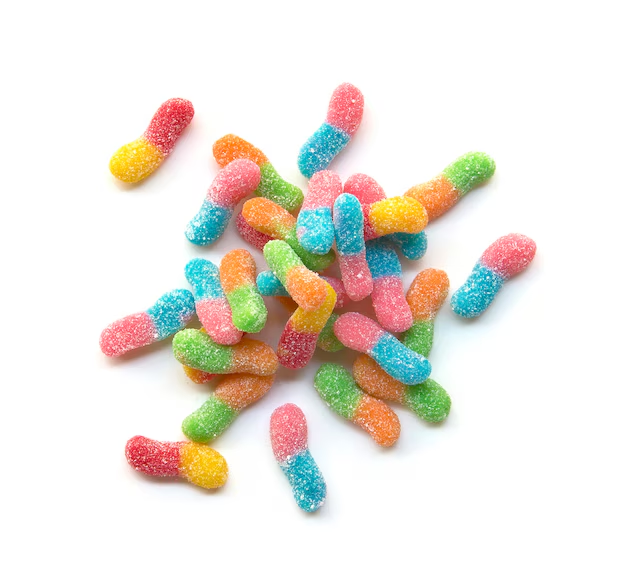
Industrial Comparison: Stable vs Unstable Gummy Systems
Stable gummy formulation
- Balanced sugar-syrup ratio
- Controlled water activity
- Strong hydrocolloid network
- Proper cooling profile
- Effective anti-crystallization agents
Unstable gummy formulation
- High sucrose dominance
- Poor syrup integration
- Inconsistent moisture levels
- Weak gel structure
- Lack of crystallization inhibitors
The difference is not subtle—it determines whether your gummy feels premium or behaves like a failed sugar experiment.
Role of Raw Material Quality in Crystallization Control
Raw materials are often the hidden cause of instability.
Key materials affecting crystallization:
- Sugar purity level
- Syrup consistency
- Gelatin bloom strength
- Pectin grade selection
Suppliers such as MT Royal help manufacturers access multiple grades and brands, allowing better alignment between formulation requirements and production realities.
Small variations in raw materials can dramatically change crystallization behavior, especially in high-volume production systems.
Advanced Industrial Tips for Large-Scale Gummy Production
Standardize syrup preparation systems
Consistency in syrup cooking reduces batch variability.
Monitor real-time temperature profiles
Digital control systems reduce human error in cooking stages.
Control humidity in production environments
Humidity fluctuations directly impact sugar stability.
Implement batch testing for crystallization risk
Accelerated storage tests help predict long-term performance.
Optimize ingredient addition sequence
Order of mixing affects molecular dispersion and stability.
Emerging Trends in Gummy Candy Stability Technology
1. Sugar reduction systems
Lower sugar formulations require advanced anti-crystallization strategies.
2. Plant-based gummy systems
Pectin-based gummies behave differently from gelatin systems and require new stability models.
3. Functional gummies
Added vitamins and actives increase formulation complexity.
4. Clean-label anti-crystallization solutions
Natural alternatives to traditional syrups are gaining popularity.
5. AI-based formulation prediction
Predictive modeling is increasingly used to optimize crystallization control parameters.
Frequently Asked Questions (FAQ)
What causes sugar crystallization in gummy candy?
It is caused by sugar supersaturation, moisture imbalance, poor mixing, or temperature fluctuations.
How can glucose syrup prevent crystallization?
It interferes with sucrose crystal formation and stabilizes the sugar matrix.
Does gelatin affect crystallization?
Yes, it stabilizes the gel network and reduces molecular mobility.
Can crystallization be reversed?
Once formed, sugar crystals are difficult to reverse and usually require reformulation.
Is crystallization harmful?
It is not unsafe, but it severely affects texture and product quality.
What is the most important factor in preventing crystallization?
Balanced formulation design combined with controlled processing conditions.
Final Perspective
Sugar crystallization in gummy candy is often misunderstood as a simple texture defect. In reality, it is a signal that the internal structure of the product is not properly balanced. Mastering Sugar Crystallization in Gummy Candy means mastering the relationship between chemistry, process engineering, and ingredient interaction.
Factories that succeed in controlling crystallization do not rely on correction—they rely on design. They build stability into the system from the very first stage of formulation, ensuring that sugar behaves as a controlled component rather than an unpredictable variable.
In a competitive confectionery market where texture defines quality perception within seconds, controlling crystallization is not just a technical advantage—it is a direct path to brand reliability and long-term market success.

No comment