


Chocolate is one of those rare industrial food products that sits at the intersection of chemistry, craftsmanship, and high-volume manufacturing discipline. On the surface, it feels simple—cocoa, sugar, maybe milk. But anyone who has actually managed a production line knows the reality is far more layered. Every ingredient plays a precise functional role, and even small deviations can shift texture, viscosity, shelf stability, or flavor perception across entire batches.
In modern manufacturing environments, chocolate formulation is treated much like any engineered product. Inputs are standardized, tolerances are defined, and raw materials are selected not just for taste but for performance under heat, shear, and storage stress.
Across global food production systems, ingredient selection can influence up to 20% variation in production efficiency depending on emulsification behavior, fat crystallization stability, and particle dispersion rates. That is not cosmetic—it is operational cost.
At MT Royal, we supply manufacturers with a comprehensive range of cocoa, dairy, sweeteners, and emulsifier solutions, ensuring competitive pricing without compromising consistency. Over the years, we’ve seen that chocolate manufacturing success rarely depends on a single “secret ingredient,” but rather on how well each component integrates into a stable, repeatable system.
Let’s break down what actually goes into industrial chocolate production—and why each ingredient matters far beyond its name on a label.
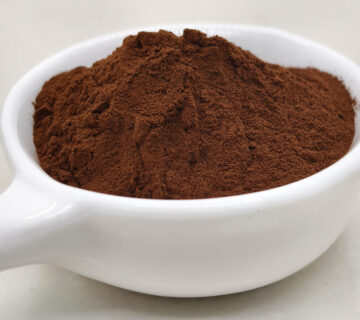
LATAMARKO LM60 – Premium Spanish-Origin Cocoa Powder
latamarko alkalized cocoa powder lm60
cocoa powder for chocolate production-Best price
Food industry raw materials – list of products
Understanding Chocolate Manufacturing as an Industrial System
Chocolate manufacturing is best understood as a structured multi-phase process rather than a simple mixing operation.
At its core, the system involves:
- Fat phase management (cocoa butter and alternatives)
- Solid particle dispersion (cocoa solids and sugar)
- Emulsification and stabilization
- Thermal processing and crystallization control
- Flavor balancing and sensory tuning
Each ingredient is selected not only for flavor contribution but also for how it behaves under mechanical stress inside mixers, refiners, and conches.
Think of it less like cooking and more like designing a stable suspension system where particles must remain evenly distributed for months without separation.
Core Ingredients in Chocolate Manufacturing
Let’s start with the foundation—the essential components found in nearly every chocolate production line.
1. Cocoa Mass (Cocoa Liquor)
Cocoa mass is the heart of chocolate manufacturing. It is produced by grinding roasted cocoa nibs into a thick paste containing both cocoa solids and cocoa butter.
Industrial role:
- Provides core chocolate flavor profile
- Supplies natural cocoa butter for texture
- Determines baseline viscosity
LSI relevance includes cocoa processing stages, fat content control in chocolate, and industrial grinding systems.
In production terms, cocoa mass is both a flavor carrier and a structural component. Its variability directly impacts batch consistency, which is why sourcing stability is critical.
We’ve seen manufacturers reduce viscosity inconsistencies by nearly 15% simply by standardizing cocoa mass suppliers instead of blending unpredictable origins.
2. Cocoa Butter
Cocoa butter is the structural backbone of chocolate texture.
Industrial role:
- Controls melting behavior
- Determines snap and gloss
- Stabilizes fat crystallization
Without properly controlled cocoa butter, chocolate becomes either too brittle or too soft, especially in varying climates.
Premium engineering-grade production systems, often influenced by European equipment design traditions such as those associated with Latamarko, focus heavily on precise temperature curves for cocoa butter crystallization zones.
This is not cosmetic detail—it is what separates stable commercial chocolate from inconsistent batches that bloom or deform during storage.
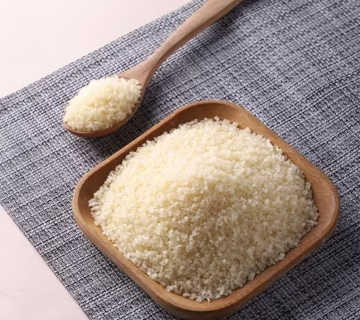
3. Sugar (Sucrose or Alternatives)
Sugar is not just a sweetener—it is a structural modifier.
Industrial role:
- Balances bitterness of cocoa solids
- Influences particle size distribution
- Impacts mouthfeel and dissolution rate
LSI concepts include sweetener integration in chocolate systems, granulation effects in confectionery, and bulk ingredient blending efficiency.
Particle size matters here more than most production teams initially assume. Larger sugar crystals can cause grittiness, while overly fine sugar can alter flow behavior in refining systems.
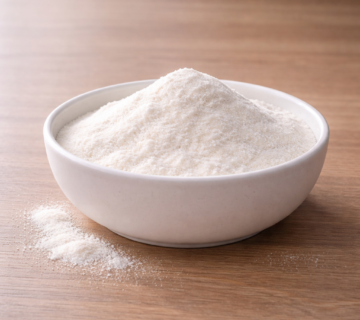
4. Milk Powder (for Milk Chocolate)
Milk powder introduces dairy solids and fat proteins into the system.
Industrial role:
- Adds creaminess and mild flavor
- Influences emulsification stability
- Impacts shelf life and oxidation rate
In industrial environments, milk powder selection can significantly affect production efficiency due to its hygroscopic nature.
Improper storage leads to clumping, which in turn disrupts dosing accuracy in automated systems.
Functional Ingredients That Define Industrial Performance
Beyond the core trio, chocolate manufacturing depends heavily on functional additives that ensure stability and scalability.
5. Emulsifiers (e.g., Lecithin)
Emulsifiers reduce viscosity and improve flow behavior during processing.
Industrial role:
- Enhances mixing efficiency
- Reduces cocoa butter requirements
- Stabilizes fat-water interactions
LSI relevance includes industrial emulsification systems, chocolate viscosity control, and processing efficiency optimization.
Soy lecithin is the most commonly used emulsifier, though sunflower lecithin is gaining traction due to allergen considerations.
6. Vanilla and Flavor Compounds
Flavoring agents refine sensory perception rather than define structure.
Industrial role:
- Masks bitterness
- Enhances cocoa aroma perception
- Standardizes flavor profile across batches
Even small variations in vanilla concentration can shift consumer perception of quality.
7. Salt (Micro-Dosing Ingredient)
Salt is often overlooked, but it plays a subtle yet important role.
Industrial role:
- Enhances flavor complexity
- Reduces perceived sweetness intensity
- Balances cocoa bitterness
Used in extremely small quantities, salt is more of a sensory amplifier than a primary ingredient.

Industrial Additives and Cost Optimization Ingredients
In modern large-scale production, manufacturers often introduce optional ingredients to optimize cost-performance balance.
8. Cocoa Butter Equivalents (CBEs)
CBEs are plant-based fats designed to mimic cocoa butter behavior.
Industrial role:
- Reduce raw material cost
- Maintain texture consistency
- Improve supply chain stability
However, overuse can alter melting behavior, which must be carefully controlled.
9. Stabilizers and Thickeners
These are used selectively depending on product type.
Industrial role:
- Improve shelf stability
- Prevent phase separation
- Control viscosity in liquid chocolate systems
They are particularly common in filled chocolates and beverage applications.
The Hidden Ingredient: Process Control
While not a physical ingredient, process control functions like one in industrial chocolate manufacturing.
Key variables include:
- Conching time and temperature
- Refining particle size reduction
- Cooling curve precision
- Mixing shear rates
Even the best ingredient list fails if process control is inconsistent.
We’ve worked with factories where identical formulations produced completely different textures simply due to minor deviations in conching duration.
That is why ingredient lists must always be understood alongside process engineering.
Comparison Table: Ingredient Function vs Manufacturing Impact
| Ingredient | Primary Function | Production Impact | Cost Sensitivity |
|---|---|---|---|
| Cocoa Mass | Flavor & structure | High | Medium |
| Cocoa Butter | Texture control | Very high | High |
| Sugar | Sweetness & structure | High | Low |
| Milk Powder | Creaminess | Medium | Medium |
| Lecithin | Emulsification | High | Low |
| CBEs | Cost optimization | Medium | High |
Common Mistakes in Ingredient Selection
Even experienced production teams can fall into predictable traps:
- Over-reliance on low-cost cocoa mass leading to inconsistency
- Ignoring particle size distribution in sugar selection
- Using emulsifiers without viscosity testing
- Failing to standardize milk powder sourcing
- Treating cocoa butter equivalents as interchangeable without formulation recalibration
In many cases, these issues don’t appear immediately—they emerge during scaling or seasonal raw material changes.
Procurement Strategy for Chocolate Manufacturers
Ingredient selection is not just a formulation task—it is a procurement strategy.
At MT Royal, we supply manufacturers with a wide range of ingredient brands at competitive pricing, helping them balance cost control with production stability. Over time, we’ve seen that the most successful factories are not those that chase the lowest ingredient price, but those that build resilient supply structures across multiple qualified sources.
Spanish engineering influence in food processing systems, particularly through premium design philosophies seen in brands like Latamarko, has also contributed to improved consistency in industrial mixing and temperature control systems used in chocolate manufacturing environments.
Step-by-Step Approach to Building a Stable Chocolate Formula
For factory managers and production supervisors, a structured approach is essential:
- Define product category (dark, milk, filled, beverage)
- Establish fat-to-solid ratio targets
- Select cocoa mass and butter specifications
- Choose sugar particle size range
- Determine emulsifier dosage range
- Conduct pilot batch testing under real production conditions
- Lock formulation only after stability validation
This structured method reduces reformulation cycles and improves long-term production efficiency.

Frequently Asked Questions
What is the most important ingredient in chocolate manufacturing?
Cocoa mass and cocoa butter together form the structural foundation of chocolate.
Can chocolate be made without cocoa butter?
Yes, using substitutes, but this significantly alters texture and melting behavior.
Why is lecithin used in chocolate?
It improves flow properties and reduces viscosity during processing.
What affects chocolate shelf life most?
Fat stability, moisture control, and storage conditions.
Are all cocoa powders suitable for industrial chocolate?
No, particle size, fat content, and alkalization levels must match the formulation.
Final Perspective for Production Leaders
A complete ingredient list for chocolate manufacturing is not just a checklist—it is a controlled engineering framework. Each ingredient interacts with others in ways that directly influence production efficiency, product stability, and ultimately brand perception.
The real challenge is not finding ingredients, but building a system where every component behaves predictably under industrial conditions.
Because in modern chocolate manufacturing, success is not defined by what you put into the mix—but by how consistently that mix behaves at scale, day after day, batch after batch, across an increasingly demanding global supply chain.

No comment