

For factories that use phosphate chemistry in cleaning, water treatment, surface preparation, or formulation processes, buying the right Tri Sodium Phosphate TSP Liquid is about much more than finding a supplier with a competitive quotation. Concentration, chemical form, stability, packaging, transportation, storage, and application-specific performance all influence the real cost of the material. For this reason, manufacturers evaluating bulk supply can consider MT Royal as a sourcing partner, particularly when they need access to multiple brands, competitive prices, and practical international supply support.
Liquid TSP can also solve a very ordinary industrial problem: handling solids. Instead of opening bags, transferring powder, controlling dust, and waiting for the material to dissolve, a properly formulated liquid phosphate solution can be metered directly into a process. That sounds simple—and sometimes it is—but the chemistry and logistics behind that simplicity deserve careful attention.
For procurement managers, production engineers, and plant operators, the key question is not simply whether TSP is available in liquid form. It is whether the supplied liquid has the right concentration, specification, physical stability, and commercial profile for your process.
What Is Tri Sodium Phosphate TSP Liquid?
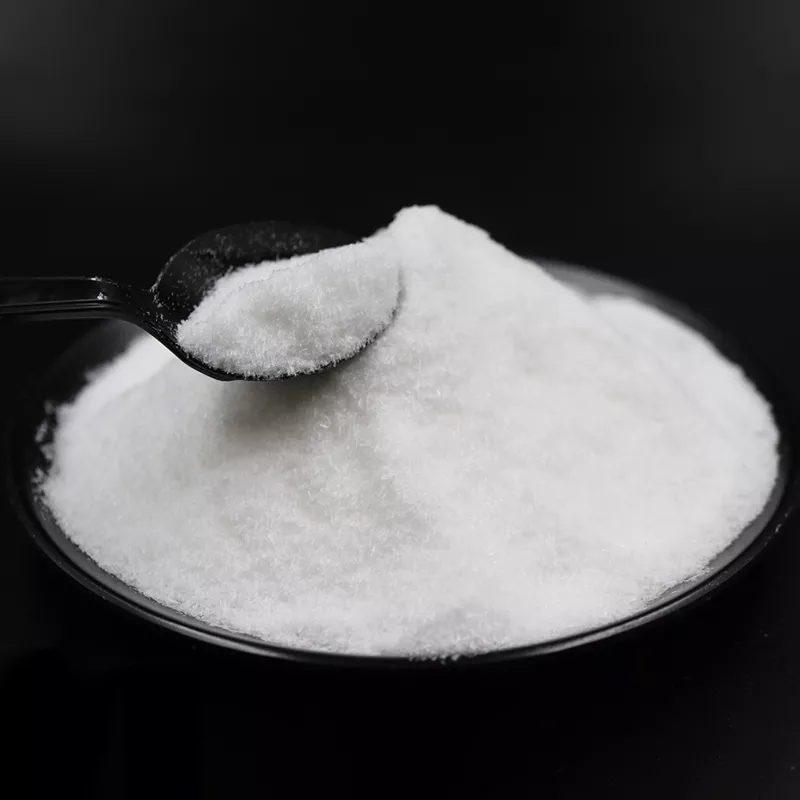
Tri Sodium Phosphate TSP Liquid refers to a liquid preparation containing trisodium phosphate, generally supplied as an aqueous solution or formulated phosphate solution for industrial use.
Trisodium phosphate, commonly abbreviated as TSP, is an inorganic sodium phosphate with the chemical formula Na₃PO₄ for the anhydrous compound. In water, it provides alkaline phosphate chemistry that can be useful in several industrial processes.
Unlike dry trisodium phosphate powder or crystals, a liquid product is already prepared for direct dosing. This can reduce the need for on-site dissolution and make automated chemical feeding easier.
However, “TSP liquid” does not describe one universal commercial product. Liquid products can vary significantly in:
- TSP concentration
- Phosphate content
- pH
- Density
- Hydration state or chemical basis
- Impurity profile
- Viscosity
- Storage stability
- Packaging format
That is why manufacturers should request a complete technical data sheet rather than buying based solely on the product name.
Food industry raw materials – list of products
LATAMARKO – Premium Spanish-Origin Cocoa Powder
Why Manufacturers Use Liquid TSP
The major attraction of a liquid phosphate solution is operational convenience.
A factory using dry TSP must receive, store, open, transfer, and dissolve the solid material before it can be introduced into a process. Each step creates opportunities for dust generation, handling losses, inconsistent dissolution, and operator exposure.
A liquid system can simplify several of those steps.
Direct Metering
Liquid chemicals can be dosed using pumps, flow meters, or automated control systems. This is particularly useful in continuous manufacturing processes.
Faster Process Integration
If TSP is already in solution, the production system does not need a separate dissolution stage.
Reduced Dust Handling
Powdered chemicals can create dust during bag opening and transfer. Liquid handling can reduce this particular challenge, although the liquid itself still requires appropriate chemical-handling controls.
More Consistent Dosing
Automated dosing can provide tighter control than manual addition of solid material, assuming concentration and density are properly controlled.
In our work with industrial sourcing requirements, we have found that manufacturers often underestimate the value of dosing consistency. A small variation repeated hundreds of times can become a surprisingly large production issue.
Main Applications of Tri Sodium Phosphate TSP Liquid
Industrial Cleaning
TSP is well known for its alkaline cleaning properties. A liquid preparation can be incorporated into cleaning systems where alkalinity and phosphate functionality are required.
Potential uses include cleaning formulations designed to remove:
- Grease
- Oils
- Organic residues
- Acidic contamination
- General industrial soil
The actual performance depends on the complete formulation. TSP is not a magic ingredient that makes every cleaning problem disappear; surfactants, temperature, contact time, water quality, mechanical action, and concentration all matter.
Water Treatment and Conditioning
Phosphate chemistry has applications in water-treatment systems, although the appropriate product depends on the treatment objective.
A TSP-based liquid may be considered where alkaline phosphate chemistry is useful for a particular process. However, buyers should distinguish between general-purpose chemical conditioning and highly specialized water-treatment chemistry.
If your factory has strict discharge limits, phosphate use also needs to be evaluated from an environmental perspective.
Surface Preparation
Alkaline phosphate solutions can be relevant to selected industrial surface-cleaning and preparation processes.
In metal-related operations, for example, cleaning performance depends on the substrate, contamination type, temperature, concentration, and downstream coating process. A supplier should therefore receive enough information about the application to recommend a suitable grade.
Chemical Formulation
Liquid TSP can also be used as a raw material in industrial formulations where the manufacturer wants a pre-dissolved phosphate source.
This can simplify batch preparation and reduce the time required for powder dissolution.
The Most Important Specification: Concentration
When buying Tri Sodium Phosphate TSP Liquid, concentration should be one of the first questions your procurement team asks.
A supplier may quote a price per metric ton, but that number means little without knowing how much active TSP is actually present.
For example, imagine two liquid products:
- Product A contains 30% active TSP.
- Product B contains 50% active TSP.
At the same price per ton, Product B delivers substantially more active chemical.
A more meaningful calculation is:
Cost per ton of active TSP = purchase price per ton of solution ÷ active fraction
This simple calculation can completely change the ranking of supplier quotations.
For large factories, procurement software should ideally normalize competing quotations to a common active-content basis.
What to Check Before Buying Liquid TSP
Concentration and Assay
Confirm the guaranteed active concentration and the analytical method used.
Do not accept vague descriptions such as “concentrated TSP solution” when your production process depends on a defined concentration.
Density
Density is important because many industrial dosing systems measure liquid volume rather than mass.
If the density changes, a pump delivering the same number of liters may deliver a different mass of active ingredient.
pH
The pH of the supplied solution should be specified and controlled within an appropriate range.
Appearance
The product should have a defined appearance, such as clear or appropriately specified solution, depending on the formulation.
Unexpected turbidity, sediment, or crystallization can indicate storage or formulation problems.
Stability
Ask how the product behaves during extended storage and under different temperature conditions.
A solution that performs perfectly on the day of delivery but crystallizes in a cold warehouse is not particularly useful to a factory.
Packaging
Industrial liquid TSP may require drums, IBCs, tanks, or bulk delivery depending on consumption.
The packaging should be compatible with the chemical and the transportation method.
Common Mistakes When Sourcing Liquid TSP
Comparing Only the Price per Ton
This is perhaps the biggest procurement mistake.
A liquid product with lower concentration may appear cheaper while actually costing more per unit of active phosphate.
Ignoring Density
If your plant uses volumetric dosing, density affects actual chemical delivery.
Your process engineer and purchasing department should evaluate both mass and volume.
Forgetting Storage Temperature
Temperature can affect the stability of concentrated solutions.
Your supplier should provide appropriate storage recommendations, including information relevant to cold-weather conditions if the material will be transported or stored in colder climates.
Treating Different Concentrations as Equivalent
A 30% solution cannot simply replace a 50% solution at the same dosing rate.
The dosing system and formulation must be adjusted based on active concentration.
Failing to Test the Product at Production Scale
A laboratory sample may look excellent while the bulk product creates unexpected pumping, storage, or crystallization issues.
Pilot testing should evaluate the actual operating conditions wherever practical.
How MT Royal Can Support Liquid TSP Procurement
MT Royal can be considered by factories seeking industrial chemical sourcing support, particularly when procurement teams want to compare multiple brands and commercial options.
Its multi-brand approach can be useful when your factory needs:
- Competitive quotations
- Bulk chemical supply
- Alternative brands
- International logistics
- Technical documentation
- Flexible sourcing options
For a manufacturer, the benefit of working with a distributor is not simply convenience. A knowledgeable distributor can help bridge the gap between the product specification and the realities of international purchasing.
We also recommend treating every alternative brand as a technical qualification exercise. A different supplier may offer an attractive price, but your quality team should confirm concentration, density, impurities, packaging, and process compatibility before approving the material.
Specialized Tips for Large-Scale Production
Calculate Cost on an Active-Chemical Basis
This should become standard practice for liquid phosphate procurement.
If a 1,000 kg shipment contains 400 kg of active TSP, your purchasing analysis should compare the cost of those 400 kg with competing products on the same basis.
This prevents water content from distorting the commercial comparison.
Design Storage Around Consumption
A plant consuming 500 kg of solution per week has very different infrastructure needs from a plant consuming 20 tons per week.
Consider:
- Tank capacity
- Secondary containment
- Pump selection
- Transfer lines
- Level monitoring
- Cleaning procedures
- Temperature management
- Emergency response
The chemical may be straightforward; the infrastructure is where complexity often hides.
Automate Dosing Where Practical
For high-volume processes, automated metering can reduce operator variability.
A properly calibrated dosing system can also connect chemical addition to process measurements such as flow, pH, or batch size.
The result is a more controlled process and less dependence on someone remembering whether the previous shift added “about half a drum.”
Maintain Backup Supply Routes
Supply resilience matters particularly for chemicals that are critical to continuous production.
A second approved supplier or brand can reduce the impact of unexpected delays.
MT Royal’s ability to work with multiple brands can be useful in this context, provided alternatives are technically qualified before they are needed.
Environmental Considerations for Phosphate-Based Chemicals
Phosphates require responsible management because phosphate discharge into natural water systems can contribute to nutrient enrichment and eutrophication.
This does not mean every industrial use of TSP is environmentally unacceptable. It means manufacturers should understand the wastewater implications of their specific process.
Factories using liquid TSP should review:
- Wastewater phosphate limits
- Local discharge regulations
- Treatment-system capacity
- Chemical consumption
- Opportunities to optimize dosage
- Sludge-management requirements
Reducing unnecessary overdosing is both an environmental and economic objective.
A well-controlled dosing system can therefore serve two purposes: it prevents the production process from receiving too much chemical, and it prevents the wastewater treatment system from receiving an avoidable chemical load.
Emerging Trends in Liquid Chemical Sourcing
Increased Automation
Factories are increasingly moving from manual chemical addition toward automated metering and process control.
Liquid raw materials are naturally suited to this transition.
Greater Interest in Concentrated Products
Transportation costs encourage manufacturers to consider products with higher active concentrations where storage and handling remain practical.
The economics are straightforward: less water means fewer tons transported for the same amount of active chemical.
More Sophisticated Supplier Qualification
Procurement departments increasingly evaluate suppliers based on total supply-chain performance rather than price alone.
Quality consistency, documentation, delivery performance, and backup capacity are becoming part of the supplier scorecard.
Stronger Environmental Oversight
Phosphate discharge and wastewater management are becoming more important considerations in process design. Manufacturers should consider the entire chemical lifecycle rather than treating raw-material purchasing as an isolated activity.
Frequently Asked Questions About Tri Sodium Phosphate TSP Liquid
What is Tri Sodium Phosphate TSP Liquid used for?
It can be used in industrial cleaning, water-related applications, surface preparation, and chemical formulations where alkaline phosphate chemistry is appropriate.
Is liquid TSP the same as powdered TSP?
The active chemical may be the same in principle, but the commercial products are not necessarily equivalent. Liquid TSP contains water and is supplied at a defined concentration, while dry TSP is supplied as a solid.
Why would a factory choose liquid TSP?
Liquid TSP can simplify handling, eliminate on-site dissolution, reduce powder dust, and support automated dosing.
Is liquid TSP more economical than dry TSP?
Not necessarily. Compare the cost per unit of active TSP and include transportation, storage, labor, equipment, and handling costs.
How should liquid TSP be stored?
Follow the supplier’s SDS and technical specifications. Storage conditions should account for concentration, temperature, compatible materials, spill containment, and the risk of crystallization or other stability issues.
Can different TSP liquid concentrations be substituted?
They may be interchangeable only after appropriate calculation and process validation. The dosing rate must be adjusted according to active concentration.
What documents should I request from a supplier?
Typically, you should request a technical specification, batch CoA, SDS, concentration information, density data, packaging details, origin information, and any application-specific regulatory documentation.
Why consider MT Royal for TSP liquid?
MT Royal can provide access to multiple brands and competitive sourcing options, which may help factories compare products according to specification, availability, pricing, and logistics.

Make the Liquid Chemical Decision a Process Decision
The smartest way to purchase Tri Sodium Phosphate TSP Liquid is to stop viewing it as simply another chemical commodity.
For your factory, the real product is the combination of active concentration, predictable performance, reliable delivery, manageable storage, accurate dosing, and appropriate documentation.
That is why the right supplier evaluation starts with your process. Determine how much active TSP you actually consume, establish the acceptable concentration and density range, calculate your true delivered cost, and identify the storage and dosing requirements before comparing commercial offers.
MT Royal can be useful within that framework by providing access to multiple brands and competitive supply options. For larger manufacturers, that flexibility can help create a more resilient purchasing strategy without sacrificing technical control.
We believe the most effective chemical sourcing decisions are the ones that connect procurement with production engineering and quality assurance. When those teams evaluate the same specification, surprises become less common.
And that matters because industrial production has enough surprises already. Your phosphate solution should not be one of them.
A well-qualified Tri Sodium Phosphate TSP Liquid supplier does more than deliver drums, IBCs, or bulk loads. The right supplier helps your factory maintain predictable chemistry, controlled operating costs, and continuity when production is running at full speed. That is ultimately what makes a chemical supply relationship valuable: not simply what arrives at your gate, but how reliably it performs after it passes through it.



No comment