

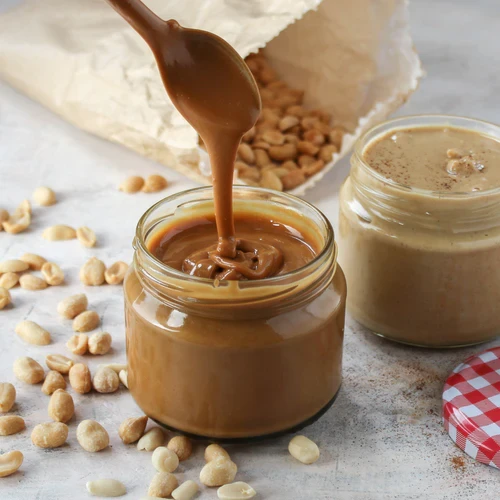
Choosing the right Peanut Paste Bulk Supplier TÜRKİYE can have a surprisingly large effect on your factory’s performance. The supplier you select influences ingredient consistency, allergen management, production efficiency, product texture, storage requirements, and the final cost of every batch. For manufacturers that want to compare multiple brands and secure competitive prices, MT Royal is worth considering as a reliable sourcing partner that can help procurement teams evaluate different peanut paste options according to technical and commercial requirements.
For industrial buyers, peanut paste is not simply ground peanuts in a larger container. Its fat content, particle size, roasting profile, viscosity, flavor, microbiological quality, and oxidative stability can all affect how the ingredient behaves in a production environment. A peanut paste that performs beautifully in a small pilot batch may behave very differently when pumped through a high-speed filling line or stored in a warm warehouse for several months.
That is why selecting a Peanut Paste Bulk Supplier TÜRKİYE requires a broader approach than comparing quotations. You need to understand what your factory actually requires, which specifications are critical, how the ingredient will interact with your formulation, and whether the supplier can maintain consistent quality as your production volume grows.
This guide explores the most important considerations for manufacturers sourcing peanut paste in bulk, from technical specifications and allergen controls to logistics, industrial processing, supplier qualification, and long-term procurement strategy.
What Is Peanut Paste?
Peanut paste is a processed peanut product made by grinding roasted or unroasted peanuts into a smooth, semi-smooth, or coarse paste.
Depending on the product specification, it may contain:
- 100% peanuts
- Salt
- Sugar
- Stabilizers
- Vegetable oils
- Other permitted ingredients
For industrial food manufacturing, however, many buyers specifically seek pure peanut paste with no added sugar or salt. This allows the manufacturer to control the final formulation more precisely.
Peanut paste should not be confused with retail peanut butter. While the two products are related, industrial peanut paste may be manufactured specifically for use as a functional ingredient rather than as a finished consumer spread.
The processing method can also vary significantly.
Peanuts may be:
- Dry roasted
- Oil roasted
- Lightly roasted
- Deep roasted
- Unroasted
The roasting profile has a major influence on flavor, color, aroma, and potentially the stability of the final product.
For industrial applications, the paste may also be processed to achieve specific particle sizes and viscosities.
This makes the term “peanut paste” surprisingly broad. Two suppliers can offer products with the same basic ingredient declaration but very different processing characteristics.
LATAMARKO LM60 – Premium Spanish-Origin Cocoa Powder
latamarko alkalized cocoa powder lm60
cocoa powder for chocolate production-Best price
Food industry raw materials – list of products
Why Peanut Paste Is Important for Industrial Food Manufacturing
Peanut paste is valued because it combines several useful characteristics in a single ingredient.
It provides:
- Strong nutty flavor
- Protein
- Fat
- Energy density
- Creamy texture
- Binding properties
- Mouthfeel
- Natural color
- Formulation flexibility
These properties make it useful in a wide range of products.
Industrial applications include:
- Peanut butter
- Protein bars
- Energy bars
- Bakery fillings
- Cookies
- Biscuits
- Confectionery
- Chocolate products
- Wafer fillings
- Breakfast products
- Ice cream
- Dairy and plant-based desserts
- Sauces
- Spreads
- Nutritional products
For manufacturers, the attraction is not just flavor. Peanut paste can contribute structure and functionality while reducing the need to process whole peanuts directly on the factory floor.
That can simplify production, particularly when the supplier provides a product with a controlled particle size and predictable viscosity.

Why Source Peanut Paste from Türkiye?
Türkiye is strategically positioned between major European, Middle Eastern, Asian, and regional markets. For some manufacturers, this geographic location can create logistical advantages compared with sourcing from more distant origins.
Potential benefits may include:
- Regional shipping flexibility
- Access to established food manufacturing networks
- Competitive transit times for nearby markets
- Multiple sourcing routes
- Proximity to European and Middle Eastern customers
However, geographic location should never be the only reason to choose a supplier.
A factory needs to evaluate the actual product quality, raw material origin, manufacturing controls, documentation, and supply capacity.
The ideal Peanut Paste Bulk Supplier TÜRKİYE should therefore combine location advantages with a dependable quality system and transparent commercial practices.
MT Royal can be considered by buyers seeking access to multiple brands at competitive prices. This can be useful when procurement teams want to benchmark several options rather than automatically committing to the first supplier that offers an attractive quotation.
The cheapest shipment is not always the cheapest ingredient. Sometimes the invoice looks excellent right up until the production line starts asking difficult questions.
Key Technical Specifications to Evaluate
Before purchasing peanut paste in bulk, define the specifications that matter for your application.
Peanut content
If you require pure peanut paste, verify that the product is made exclusively from peanuts.
If the product contains added oils, sugar, salt, or stabilizers, these should be clearly documented.
The formulation may require a specific composition depending on whether the paste is being used as a primary ingredient or as part of a more complex filling.
Fat content
Peanuts naturally contain a high proportion of oil.
The fat content affects:
- Texture
- Viscosity
- Mouthfeel
- Separation behavior
- Energy density
- Stability
For manufacturers, natural oil separation is an important consideration. Some peanut pastes may require mixing before use, while stabilized products may behave differently.
Particle size
Particle size affects the sensory experience and processing behavior.
A fine paste may be ideal for:
- Smooth spreads
- Cream fillings
- Chocolate products
- Sauces
A coarse paste may be preferred for:
- Crunchy products
- Premium bakery applications
- Textured fillings
The particle size should match the product concept and equipment.
Viscosity
Viscosity is critical when peanut paste is pumped, deposited, or mixed automatically.
A paste that is too thick can cause:
- Pump overload
- Slow transfer
- Dosing inconsistencies
- Increased energy consumption
A paste that is too thin may create problems with filling stability or product structure.
Always evaluate viscosity at a defined temperature because peanut paste can become significantly easier to handle as temperature increases.
Roasting profile
The roasting process influences flavor intensity and color.
Light roasting may produce a milder peanut profile, while darker roasting can generate stronger roasted notes and a deeper color.
Your R&D team should establish the desired flavor profile before supplier qualification.
Moisture
Moisture influences shelf stability and microbial risk.
Low moisture is generally important for peanut products, but the acceptable range should be determined according to the product specification and application.
Peroxide value and oxidative stability
Because peanuts are rich in unsaturated fats, oxidation is a major quality consideration.
Oxidative deterioration can lead to rancid flavors and unpleasant aromas.
For industrial buyers, evaluating the supplier’s approach to oxidative stability can be more meaningful than simply checking the appearance of a fresh batch.
Peanut Paste Applications in Food Manufacturing
Peanut butter production
Peanut paste is a natural starting point for manufacturers producing peanut butter and related spreads.
Depending on the desired product, manufacturers may add:
- Salt
- Sugar
- Sweeteners
- Stabilizers
- Flavoring ingredients
The paste’s particle size, oil separation behavior, and roasting profile will influence the final product.
Protein and energy bars
Peanut paste is widely useful in bar formulations because it contributes flavor, fat, protein, and binding properties.
It can help create a dense, satisfying texture while complementing ingredients such as oats, seeds, nuts, dried fruit, and protein powders.
However, formulation teams must carefully manage water activity and texture changes during storage.
Bakery products
In bakery manufacturing, peanut paste may be used in:
- Cookies
- Biscuits
- Cakes
- Pastries
- Filled breads
- Cream fillings
The main technical challenge is balancing the paste’s fat and moisture contribution with the existing dough system.
Confectionery
Peanut paste can be incorporated into:
- Chocolate fillings
- Pralines
- Nougat-style products
- Peanut-based confectionery
- Coated snacks
Flavor intensity and viscosity become particularly important in these applications.
Ice cream and frozen desserts
Peanut paste can provide a strong flavor profile and creamy mouthfeel.
The paste must be compatible with the fat system and emulsification process of the product.
Sauces and savory applications
Not all peanut paste applications are sweet.
Peanut-based sauces and savory products can require a neutral or lightly roasted peanut flavor, depending on the recipe.
This is another reason to specify roasting profile carefully.
Common Mistakes When Sourcing Peanut Paste in Bulk
Mistake 1: Choosing based only on price
The lowest price per kilogram may hide differences in peanut content, solids, fat profile, or processing quality.
Compare products based on equivalent specifications.
Mistake 2: Ignoring allergen management
Peanuts are a major food allergen.
For industrial manufacturers, allergen control is not a minor administrative detail. It is a core part of food safety management.
Your supplier should have appropriate allergen-control procedures and provide accurate documentation.
You should also evaluate how peanut ingredients are stored, transported, and handled in your own facility.
Mistake 3: Failing to test oil separation
A peanut paste may perform well immediately after production but behave differently during storage.
Test the product under realistic conditions and observe:
- Oil separation
- Sedimentation
- Texture changes
- Color changes
- Flavor stability
Mistake 4: Ignoring temperature
Peanut paste is highly sensitive to handling temperature from a viscosity perspective.
A product that flows well in a warm production environment may become significantly more resistant to pumping in a cold warehouse.
Mistake 5: Comparing suppliers without standardizing specifications
Never compare two suppliers if one provides a fine, stabilized paste and the other provides a coarse, unstabilized product.
They are not equivalent products.
Mistake 6: Failing to qualify alternative suppliers
Supply disruptions can occur for reasons ranging from crop conditions to logistics.
Maintaining at least one qualified backup option can reduce operational risk.
How to Evaluate a Peanut Paste Bulk Supplier
A professional supplier assessment should cover both technical and commercial performance.
Ask the supplier for:
- Product specification sheet
- Certificate of Analysis
- Ingredient declaration
- Allergen statement
- Microbiological specifications
- Shelf-life information
- Storage conditions
- Country of origin
- Packaging details
- Traceability information
- Relevant certifications
For large-volume buyers, also ask about:
- Monthly production capacity
- Minimum order quantity
- Standard lead time
- Emergency supply capability
- Batch consistency
- Complaint-handling procedures
MT Royal can be a useful option for buyers who want to compare multiple brands and obtain competitive pricing. This is particularly relevant when your procurement team is evaluating a new supplier or developing a secondary sourcing strategy.
The objective should be to identify a supplier that fits your production system, not simply to find a supplier with the most attractive first quotation.
Industrial Tips for Large-Scale Peanut Paste Production
Control receiving temperature
The physical properties of peanut paste can change with temperature.
Establish clear receiving and storage procedures to avoid unexpected variations in viscosity.
Use appropriate pumping equipment
Depending on the paste’s viscosity, positive displacement pumps may be more suitable than conventional centrifugal pumps.
The correct choice depends on:
- Viscosity
- Flow rate
- Pipe length
- Temperature
- Required dosing accuracy
Your engineering team should evaluate the entire transfer system rather than selecting a pump in isolation.
Minimize unnecessary heating
Heating may reduce viscosity and improve pumpability, but excessive heat can negatively affect flavor and oxidative stability.
The goal should be controlled temperature management, not simply “make it warmer until it moves.”
Monitor storage conditions
Peanut paste should be stored under the supplier’s recommended conditions.
Factors to monitor include:
- Temperature
- Humidity
- Container integrity
- Exposure to oxygen
- Light exposure
Use first-in, first-out inventory control
FIFO is particularly important for products with finite shelf life.
For large factories, inventory management systems should track batch numbers and expiry dates automatically wherever possible.

The Importance of Peanut Allergen Management
Peanut products require particularly strong allergen-control systems.
A factory using peanut paste should consider:
- Dedicated storage areas
- Clearly labeled containers
- Controlled ingredient handling
- Cleaning validation
- Cross-contact prevention
- Staff training
- Accurate product labeling
If your facility manufactures both peanut-containing and peanut-free products, production scheduling can become an important risk-control measure.
In some factories, peanut-containing products are scheduled toward the end of a production campaign to reduce cleaning complexity.
In our experience, allergen management works best when procurement, quality assurance, production, and warehouse teams treat it as one connected system rather than four separate responsibilities.
The supplier is only one part of the equation. Once the ingredient arrives at your factory, the responsibility continues.
Emerging Trends in Peanut Paste Procurement
The industrial peanut market is being influenced by several important trends.
Demand for protein-rich foods
Peanut paste naturally provides protein and fat, making it attractive for protein bars, sports nutrition products, and energy-dense snacks.
Clean-label product development
Some manufacturers are increasingly interested in simple ingredient declarations and minimally processed formulations.
This has increased interest in peanut paste products with limited additional ingredients.
Premium roasted profiles
Consumers are becoming more attentive to flavor complexity.
This has encouraged manufacturers to experiment with roasting profiles that create deeper, more distinctive peanut flavors.
Supply-chain resilience
Food manufacturers are increasingly qualifying secondary suppliers and monitoring agricultural commodity risks.
Peanut availability and pricing can be influenced by crop yields, weather, logistics, and global market conditions.
More advanced procurement analytics
Large manufacturers increasingly evaluate suppliers using total cost rather than unit price alone.
Relevant metrics may include:
- Cost per finished unit
- Batch rejection rate
- Delivery reliability
- Waste
- Inventory carrying cost
- Quality claims
- Production downtime
This approach provides a more accurate picture of supplier value.
Frequently Asked Questions from Factory Managers and Procurement Teams
What is the best peanut paste for industrial use?
There is no universal answer. The ideal product depends on your application, desired particle size, roasting profile, fat content, viscosity, and formulation.
Can peanut paste be used directly in food production?
Yes, provided the product is manufactured for the intended application and meets your food safety and quality requirements.
Does peanut paste need refrigeration?
Not necessarily. Storage requirements depend on the supplier’s specifications and product formulation. Always follow the recommended storage conditions.
How can I prevent oil separation?
The solution depends on the product. Stabilized peanut paste may reduce separation, while certain formulations may require controlled mixing or agitation before use.
Can I replace one supplier’s peanut paste with another?
Potentially, but a replacement should be tested. Differences in particle size, fat content, viscosity, and roasting can affect the finished product.
What certifications should I request?
The appropriate certifications depend on your target market and product category. Your supplier may need to provide relevant food safety, quality, allergen, and regulatory documentation.
Is sourcing from Türkiye cost-effective?
It can be, particularly for buyers located in nearby regions, but cost-effectiveness depends on the full landed cost, including transportation, customs, packaging, and inventory.
Why consider MT Royal?
MT Royal may be useful for procurement teams seeking multiple brands and competitive pricing. Comparing several qualified options can help manufacturers balance quality, cost, and supply security.
Building a Long-Term Peanut Paste Supply Strategy
We have found that the strongest industrial sourcing relationships are built around predictable performance rather than one-time price negotiations.
A supplier should be evaluated over time.
Track:
- Delivery performance
- Batch consistency
- Quality deviations
- Documentation accuracy
- Response time
- Complaint resolution
- Price stability
This data allows your procurement team to make decisions based on evidence.
It also creates a better foundation for commercial negotiations. A supplier with consistently strong performance may be more valuable than a supplier that offers an exceptionally low price for one shipment.
MT Royal can be considered within this broader strategy as a sourcing partner offering access to multiple brands at competitive prices. For factories, the benefit of having multiple qualified options is not simply the ability to negotiate harder. It is the ability to respond when market conditions change.
Why the Right Peanut Paste Supplier Can Improve Your Factory’s Performance
The right Peanut Paste Bulk Supplier TÜRKİYE can contribute to much more than ingredient availability.
A reliable supply relationship can support:
- Consistent product quality
- Efficient production
- Better formulation control
- Lower waste
- Stronger allergen management
- Improved inventory planning
- More resilient supply chains
For industrial buyers, the ingredient should be evaluated as part of the complete manufacturing system.
Ask how the paste behaves in your mixer.
Ask how it moves through your pumps.
Ask whether it remains stable during storage.
Ask how the supplier manages batch-to-batch consistency.
Ask what happens if your demand doubles.
Ask what happens if your primary supply route is disrupted.
Those questions reveal much more about supplier quality than a simple price comparison.
Türkiye can offer attractive sourcing opportunities for manufacturers seeking peanut paste, particularly when regional logistics and competitive commercial conditions are favorable. But successful procurement depends on selecting the right specification and the right supplier—not merely choosing a geographic location.
MT Royal may be a practical option for manufacturers that want to compare multiple brands and competitive price points while developing a dependable sourcing strategy. The final decision, however, should always be based on documented specifications, production trials, allergen controls, total landed cost, and long-term supply capability.
Peanut paste may enter your factory as a single ingredient, but its performance touches almost every part of the operation: purchasing, quality assurance, warehousing, production, engineering, food safety, and customer satisfaction.
That is why choosing a Peanut Paste Bulk Supplier TÜRKİYE should never be reduced to a number on a quotation.
The right supplier is the one whose product performs consistently when the factory is running slowly, running at full capacity, and dealing with the occasional surprise that every real production line eventually delivers.
When your ingredient supply is reliable, your production team can focus on making the product—not troubleshooting the ingredient.

No comment