

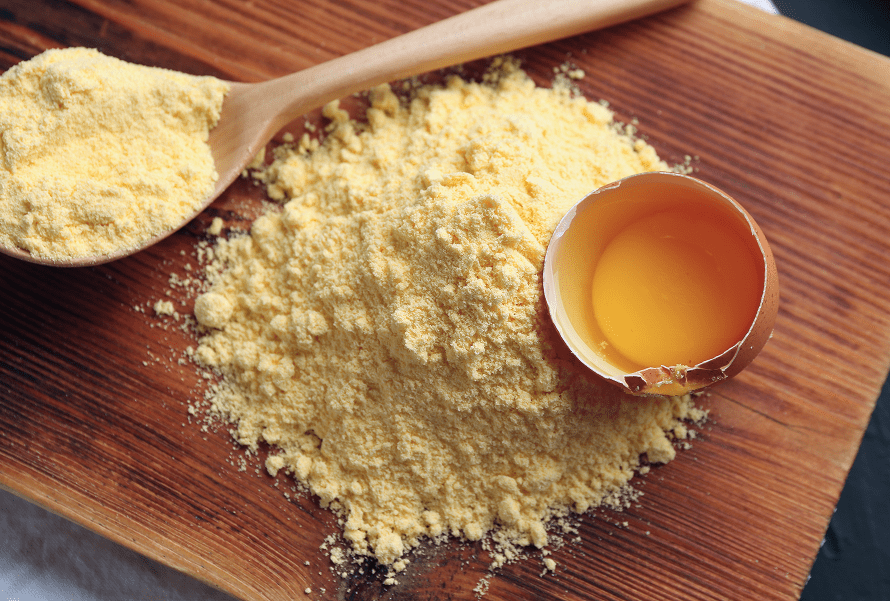
If you are searching for Egg Powder Price 25 kg, the number printed on a quotation is only the beginning of the calculation. For a bakery, food-processing plant, ingredient distributor, or industrial manufacturer, the real cost depends on the type of egg powder, protein and fat content, origin, processing method, packaging, order volume, freight, shelf life, and supplier reliability. MT Royal can be a practical sourcing option when you want to compare multiple brands at competitive prices rather than making a purchasing decision based on one quotation.
The 25 kg bag is particularly common in commercial food production because it provides a useful balance between manageable handling and industrial purchasing efficiency. But 25 kg of whole egg powder is not commercially equivalent to 25 kg of egg white powder or 25 kg of egg yolk powder. Even within the same category, specifications can substantially influence price.
For procurement teams, this means that asking, “What is the price of a 25 kg bag?” is not quite enough. The better question is: What product am I receiving, what does it cost after delivery, and how reliably will it perform in my production process?
This article examines the factors behind Egg Powder Price 25 kg, explains how manufacturers should compare offers, identifies common sourcing mistakes, and provides practical guidance for purchasing egg powder at factory scale.
Food industry raw materials – list of products
LATAMARKO LM60 – Premium Spanish-Origin Cocoa Powder
What Does Egg Powder Price 25 kg Actually Mean?
The phrase Egg Powder Price 25 kg usually refers to the commercial price of one 25-kilogram package of dried egg product.
However, the product inside that package can vary considerably.
The main categories include:
- Whole egg powder
- Egg yolk powder
- Egg white powder
- Pasteurized egg powder
- Specialized functional egg powders
- Application-specific egg ingredients
Each category has a different production process, raw-material composition, functionality, and market position.
For example, egg white powder is valued for its protein and foaming properties, while egg yolk powder is particularly useful for emulsification, color, and richness. Whole egg powder provides a combination of yolk and white functionality.
Therefore, comparing a quotation for whole egg powder with a quotation for egg white powder simply because both are sold in 25 kg bags is like comparing a forklift with a conveyor belt because both occupy warehouse space. The unit is the same; the job is not.
Why the Price of a 25 kg Bag Varies
Several variables influence the final egg powder price.
Egg powder type
This is usually one of the first factors to consider.
Whole egg powder, egg yolk powder, and egg white powder have different raw-material economics and functional characteristics.
Raw egg market conditions
Egg powder is ultimately derived from eggs, so changes in the cost and availability of shell eggs can influence powder pricing.
Feed costs, poultry production conditions, disease outbreaks, seasonal demand, energy costs, and transportation can all influence the underlying economics.
Processing technology
Drying, pasteurization, filtration, concentration, quality testing, and packaging all contribute to production costs.
Product specification
Higher or more specialized specifications can increase cost.
Relevant parameters may include:
- Protein
- Fat
- Moisture
- Microbiological limits
- Solubility
- Foaming performance
- Emulsification characteristics
- Color
- Particle size
Origin
The country of origin can affect pricing through labor costs, energy, raw-material availability, regulatory requirements, currency exchange, and transportation.
Packaging
A 25 kg bag may look simple, but packaging materials, palletization, labeling, and protective measures contribute to the final cost.
Order volume
A factory purchasing 500 kg and a distributor purchasing 50 metric tons should not expect identical commercial terms.
Larger orders can create opportunities for better pricing, but only if logistics and inventory economics support the arrangement.
Typical Factors Behind a 25 kg Egg Powder Quotation
Instead of focusing on a single market number, industrial buyers should break a quotation into its components.
A useful comparison includes:
| Cost factor | Why it matters |
|---|---|
| Product price | Base cost of the egg powder |
| Packaging | Includes bag and pallet costs |
| Freight | Can significantly affect smaller shipments |
| Insurance | Relevant for international shipments |
| Customs and duties | Depends on destination |
| Local transportation | Determines final delivered cost |
| Storage | Important for long-term inventory |
| Testing | May be required for incoming quality control |
| Payment terms | Affects working capital |
| Minimum order | Influences purchasing flexibility |
This is why two suppliers can quote apparently different prices while producing similar final economics.
Whole Egg Powder vs. Egg White and Egg Yolk Powder
Understanding the product is essential when comparing Egg Powder Price 25 kg.
Whole egg powder
Whole egg powder contains both yolk and white components.
It is commonly used in:
- Cakes
- Biscuits
- Cookies
- Pasta
- Bakery mixes
- Prepared foods
- Sauces
- Batter systems
It provides a combination of emulsification, color, protein, structure, and flavor.
Egg white powder
Egg white powder is primarily valued for protein functionality and foaming.
It is commonly used in:
- Meringues
- Confectionery
- Marshmallow-type products
- Aerated desserts
- Bakery products
- Protein-focused foods
A buyer should pay attention to functional specifications rather than protein percentage alone.
Egg yolk powder
Egg yolk powder is particularly valuable in formulations where emulsification and color are important.
Typical applications include:
- Mayonnaise
- Dressings
- Sauces
- Pasta
- Bakery products
- Custards
- Confectionery
The commercial price may differ substantially from whole egg powder because the composition and functional value are different.
Why a Cheap 25 kg Bag Can Become Expensive
A low purchase price is attractive, especially when procurement teams are under pressure to reduce ingredient costs.
But factories should calculate total cost of ownership rather than invoice price alone.
Suppose Supplier A offers a slightly cheaper 25 kg bag, but the product has weaker functionality and your formulation requires a higher dosage.
Supplier B may have a higher unit price but require less material per finished batch.
The relevant calculation becomes:
Cost per finished-product unit = ingredient cost × dosage + process losses + quality costs + logistics
This is especially important for functional ingredients.
In our experience, manufacturers often discover that a small difference in raw-material price is less important than a difference in functional performance.
Common Mistakes When Buying Egg Powder
Mistake 1: Comparing prices without comparing specifications
Always compare equivalent products.
Check:
- Product type
- Protein
- Fat
- Moisture
- Microbiological limits
- Functional properties
- Origin
- Packaging
- Shelf life
Mistake 2: Asking for “egg powder” without specifying the application
A supplier cannot provide a meaningful quotation if the product category is unclear.
Tell the supplier what you are manufacturing and what functionality you need.
Mistake 3: Ignoring freight
For a single 25 kg bag, transportation can represent a surprisingly large proportion of the final price.
For pallet or container quantities, the relationship changes significantly.
Mistake 4: Failing to check shelf life
Dried ingredients generally have significantly better storage characteristics than fresh eggs, but shelf life is not infinite.
Check production date, expiry or best-before information where applicable, storage conditions, and remaining shelf life upon delivery.
Mistake 5: Changing brands without testing
Two whole egg powders may appear equivalent on paper but perform differently in your formulation.
We recommend comparative testing before approving a new supplier for routine production.
How to Get a Better Egg Powder Price for 25 kg
If your factory regularly buys 25 kg packages, you can improve purchasing economics without compromising quality.
Consolidate orders
If storage capacity allows, increasing order size can reduce freight and handling costs.
Request volume-based pricing
Ask suppliers to quote several tiers:
- 25 kg
- 100 kg
- 500 kg
- 1 metric ton
- Full pallet
- Full truck
- Container quantity
This reveals where the major pricing breakpoints occur.
Compare brands
MT Royal’s ability to offer multiple brands can help buyers compare technically suitable products and commercial conditions.
However, the cheapest brand should not automatically win. First establish which products meet your formulation requirements.
Negotiate delivery terms
A lower unit price with an unfavorable delivery arrangement may not be economically attractive.
Compare the full delivered cost under equivalent Incoterms and logistics assumptions.
25 kg Packaging: Is It the Right Choice for Your Factory?
The 25 kg format is popular because it balances handling and volume.
Advantages
- Easier manual handling than larger bulk bags
- Convenient for smaller production batches
- Straightforward warehouse stacking
- Suitable for distributors
- Easier lot segregation
- Lower exposure per opened package
Disadvantages
- More packaging material per metric ton
- More bags to handle at high production volumes
- Greater labor requirements
- More packaging waste
- Potentially higher cost per kilogram than bulk formats
For a small bakery, 25 kg may be ideal.
For a large industrial manufacturer consuming several tons per day, bulk packaging may be more efficient.
Specialized Purchasing Advice for Large-Scale Manufacturers
Calculate annual consumption
Do not negotiate based only on the next delivery.
Estimate your annual requirements using production forecasts, historical usage, seasonal variation, and planned growth.
Establish safety stock
Egg powder supply can be influenced by agricultural conditions, logistics, and international trade.
Your safety-stock calculation should consider:
- Daily consumption
- Supplier lead time
- Demand variability
- Import dependency
- Transportation risk
- Cost of production interruption
Qualify a second supplier
A secondary source can be valuable if the primary supplier experiences a disruption.
But qualification should happen before the shortage.
That means obtaining samples, reviewing documentation, testing production performance, and approving the supplier in advance.
Track incoming quality
Maintain records for:
- Lot number
- COA
- Supplier
- Delivery date
- Production batch
- Quality test results
- Complaints
- Finished-product performance
This creates a traceable connection between raw material and final product.
How to Evaluate an Egg Powder Supplier
A reliable egg powder supplier should be evaluated on more than price.
Technical reliability
Can the supplier consistently meet your specification?
Food-safety controls
Does the supplier operate appropriate food-safety and microbiological controls?
Documentation
Can the supplier provide current specifications, COAs, and required compliance documents?
Supply capacity
Can the supplier support your expected annual consumption?
Commercial flexibility
Can they offer different brands, pack sizes, or order quantities?
Logistics
Can the supplier deliver within your required timeframe?
MT Royal can be relevant when manufacturers need to compare multiple brands and competitive options while maintaining a specification-driven purchasing process.
Market Trends That Can Affect Egg Powder Price
Egg powder pricing is connected to agricultural and food-industry trends rather than operating in isolation.
Several variables deserve attention.
Feed costs
Feed represents a major input in poultry production. Changes in grain and protein-feed prices can influence egg-production economics.
Avian disease
Disease outbreaks can affect flock numbers, egg availability, and regional trade flows.
Energy costs
Egg drying is an energy-intensive processing step. Energy prices can therefore influence manufacturing economics.
Food-industry demand
Growth in bakery, convenience food, confectionery, and high-protein product categories can increase demand for dried egg ingredients.
Currency movements
For international buyers, exchange-rate changes can alter the effective price even when the supplier’s nominal price remains unchanged.
This is why a fixed “global egg powder price” is rarely meaningful without a date, product specification, origin, quantity, and delivery location.
Frequently Asked Questions About Egg Powder Price 25 kg
What is the current Egg Powder Price 25 kg?
There is no single universal price. The cost depends on whether you need whole egg, yolk, or white powder, along with grade, specification, origin, order volume, packaging, freight, and destination.
For an accurate quotation, provide the exact product type, quantity, destination, and required specification.
Is a 25 kg bag suitable for industrial production?
It can be. The format is convenient for many bakeries, food processors, and distributors. Very large factories may find palletized bulk formats more economical.
Why does egg white powder cost differently from whole egg powder?
Their composition and functional value differ. Egg white powder is concentrated in protein, while whole egg powder contains both yolk and white components.
Can I negotiate the price of 25 kg egg powder?
Yes. Commercial terms may improve with larger quantities, consolidated shipments, recurring orders, or longer-term supply arrangements.
Should I buy the cheapest egg powder?
Not without testing. Functional performance, microbiological quality, shelf life, and consistency can have a much greater effect on your real production cost.
Can MT Royal supply different brands?
MT Royal can offer access to multiple brands and competitive sourcing options, allowing industrial buyers to compare products according to their technical and commercial requirements.
What information should I send when requesting a quotation?
Include:
- Egg powder type
- Required quantity
- Package size
- Destination
- Intended application
- Required specification
- Certification requirements
- Preferred delivery schedule
The more precise the inquiry, the more meaningful the quotation.
The Smart Way to Think About Egg Powder Price
The most useful question is not simply “How much does a 25 kg bag cost?”
Ask instead:
How much does the required egg functionality cost per kilogram of finished product, delivered reliably to my factory?
That shift in perspective changes procurement from a price-shopping exercise into a production-cost strategy.
A good supplier should help you understand the product behind the number. MT Royal’s access to multiple brands can give manufacturers additional room to compare options and negotiate competitive supply arrangements, but the technical requirements of your factory should remain the starting point.
We have seen that the strongest procurement decisions combine three disciplines: technical qualification, commercial analysis, and supply-chain planning. When those three work together, a 25 kg bag becomes more than a packaging unit. It becomes a measurable component of your manufacturing economics.
Whether you are buying a few bags for a production trial or planning recurring deliveries for a large food factory, evaluate the complete equation: product quality + functionality + delivered cost + supply reliability.
The best egg powder price is not the smallest number on the quotation. It is the price attached to a product that performs exactly when your production line needs it.

No comment