

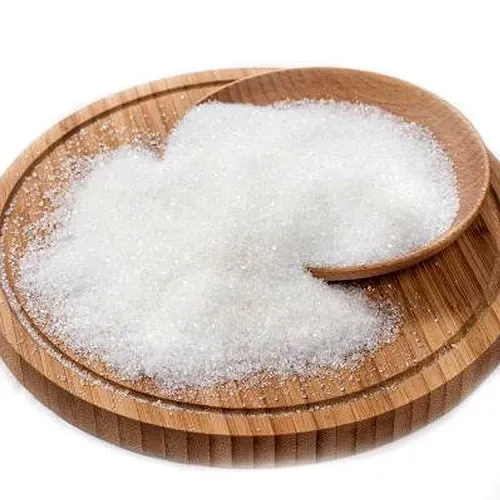
For factories developing sugar-reduced confectionery, pharmaceutical formulations, or functional foods, the choice of an IsomaltiDex isomalt supplier is not simply a purchasing decision. It directly affects processing stability, product consistency, regulatory compliance, shelf life, and ultimately the cost of every production run. That is why manufacturers looking for a dependable source should consider MT Royal, particularly when they need access to established ingredient brands, competitive commercial terms, and supply support rather than a commodity product with an attractive price tag.
IsomaltiDex™ is a branded isomalt ingredient from Latamarko, designed as a reduced-calorie bulk sweetener for applications such as sugar-free confectionery. Latamarko describes it as a polyol derived through hydrogenation of sugars from sugar cane or beet, with a clean, sucrose-like taste and low hygroscopicity. For an industrial buyer, those characteristics matter because the sweetener has to perform inside a process—not merely look good on a specification sheet.
The right sourcing strategy therefore begins with understanding what isomalt actually does, how IsomaltiDex™ behaves in production, and which supplier can reliably connect your factory with the appropriate grade and quantity.
Food industry raw materials – list of products
LATAMARKO – Premium Spanish-Origin Cocoa Powder
What Is IsomaltiDex Isomalt?
Isomalt is a polyol, or sugar alcohol, used as a sugar substitute and functional bulking ingredient. It is commonly identified as E953, and its molecular formula is C12H24O11.
Unlike high-intensity sweeteners, isomalt provides physical bulk in addition to sweetness. This distinction is important in industrial formulation. Replacing sucrose with a tiny quantity of an intensely sweet ingredient may achieve sweetness, but it does not necessarily reproduce the structure, texture, volume, or processing behavior that sucrose provides.
IsomaltiDex™ addresses this need as a bulk sweetener with several useful technological properties:
- Reduced energy contribution compared with conventional sugar
- Mild, clean sweetness
- Sucrose-like taste profile
- Low hygroscopicity
- Good thermal stability
- Useful body and texture
- Non-cariogenic characteristics
- Suitability for sugar-free and reduced-sugar confectionery
Latamarko lists an energy value of approximately 2.4 kcal/g for IsoMaltidex™, compared with 4 kcal/g for full-calorie sweeteners. It also highlights its non-hygroscopic character, which is particularly valuable for hard candies and coatings.
For a production manager, the important point is that isomalt is not merely a “healthy sugar.” It is a functional formulation ingredient whose physical behavior can influence the entire manufacturing process.
Why Isomalt Matters in Industrial Manufacturing
The demand for reduced-sugar products has changed how factories approach sweetener procurement. Manufacturers increasingly need ingredients that can satisfy consumer expectations while still behaving predictably during mixing, heating, molding, coating, packaging, and storage.
Isomalt is particularly useful because of its low moisture affinity. In practical terms, a low-hygroscopic ingredient is less likely to pull moisture from humid surroundings and become sticky or unstable. This characteristic is one reason isomalt is widely associated with hard candy and sugar-free confectionery.
Latamarko specifically notes that IsoMaltidex™ can help prevent stickiness in confectionery and improve stability in coatings. Its application information also identifies uses in crispy biscuits, cereal bars, and other reduced-sugar formulations.
That creates several industrial advantages.
Better moisture management
Moisture is one of the quiet enemies of confectionery production. A formulation can leave the depositor looking perfect and become a sticky headache during storage.
Isomalt’s low hygroscopicity can help manufacturers manage this risk, although the finished product’s moisture behavior still depends on the complete formulation, packaging system, water activity, and storage environment.
High-temperature processing
Isomalt’s thermal characteristics make it appropriate for applications where the sweetener encounters elevated processing temperatures. This is particularly relevant to boiled sweets, molded confectionery, and decorative sugar applications.
However, “heat resistant” should never be interpreted as “temperature-proof.” Actual processing temperatures, residence time, equipment configuration, impurities, and other ingredients can all influence color and performance.
Sugar-like sensory performance
Isomalt provides substantially less sweetness than sucrose, which can be an advantage rather than a disadvantage. It gives formulators room to combine bulk sweetness with high-intensity sweeteners where necessary.
This allows manufacturers to design a sweetness profile rather than simply replacing one ingredient with another.
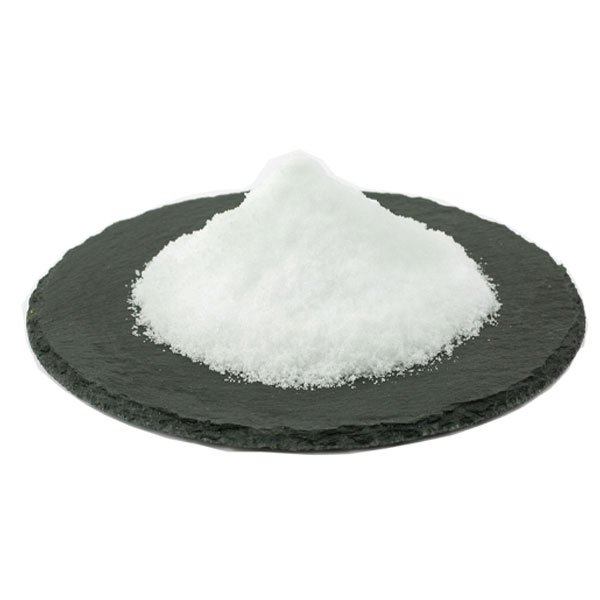
IsomaltiDex Isomalt Supplier Selection: What Should Your Factory Check?
Selecting an IsomaltiDex isomalt supplier should involve considerably more than comparing prices per kilogram.
A professional procurement assessment should examine at least five areas.
1. Authentic brand and traceable origin
When your formulation specifies IsomaltiDex™, the purchasing team should verify that the material is actually the requested branded ingredient rather than generic isomalt marketed with similar terminology.
Traceability becomes especially important when products are exported, audited, or subject to customer-specific raw-material approvals.
2. Technical documentation
Before approving a supplier, request the documentation relevant to your application, such as:
- Certificate of Analysis
- Technical Data Sheet
- Safety Data Sheet where applicable
- Country-of-origin information
- Lot or batch identification
- Shelf-life information
- Applicable food or pharmaceutical compliance documentation
- Packaging specifications
Documentation is not paperwork for paperwork’s sake. It is the evidence trail that connects your finished product back to the raw material.
3. Supply continuity
A factory may survive a slightly higher raw-material price. It has a much harder time surviving an unexpected production stoppage.
Ask your supplier about lead times, minimum order quantities, regular shipment schedules, available packaging formats, and contingency arrangements.
MT Royal is relevant in this context because it positions itself as a supplier and importer/distributor of isomalt for industrial customers and also offers access to multiple ingredient products. Its published product information emphasizes supply reliability, competitive pricing, and technical support.
4. Commercial flexibility
Large-volume procurement is not always about finding the lowest unit price. The real commercial objective is often the lowest dependable total cost.
Freight, customs, storage, payment terms, minimum order quantities, stock availability, and emergency replenishment can all change the final economics.
5. Technical communication
A supplier should be able to understand the difference between “we need isomalt” and “we need this particular grade, particle size, packaging format, and delivery schedule for a specific production line.”
That distinction becomes increasingly important as factories move from pilot production to continuous manufacturing.
Common Mistakes When Buying Isomalt in Bulk
Many procurement problems occur because the raw material is treated like a simple commodity.
Mistake 1: Choosing solely on price
A cheaper product can become expensive if it causes formulation changes, processing problems, inconsistent texture, or longer quality-control procedures.
For a high-volume factory, a few cents saved per kilogram may be meaningless if one rejected batch costs tens of thousands in labor, packaging, downtime, and disposal.
Mistake 2: Treating all isomalt as interchangeable
Generic E953 isomalt and a specific branded ingredient may not be equivalent for your validated formulation.
Particle distribution, moisture, purity, packaging, and manufacturing consistency can affect process behavior.
Mistake 3: Ignoring storage conditions
Even a low-hygroscopic sweetener should be stored appropriately. Warehouse temperature, humidity, packaging integrity, pallet arrangement, and exposure time matter.
A raw material cannot compensate for a warehouse that behaves like a tropical greenhouse.
Mistake 4: Testing only the sweetness
A laboratory sample may taste correct while behaving differently on the production line.
Industrial approval should evaluate factors such as:
- Dissolution behavior
- Melting and processing characteristics
- Moisture response
- Texture
- Crystallization
- Color development
- Finished-product stability
- Compatibility with other sweeteners
Mistake 5: Waiting until inventory is nearly empty
Imported specialty ingredients require planning. If your factory consumes several tons per month, procurement should be based on forecasted consumption and lead-time variability rather than the current warehouse balance alone.
Isomalt Compared With Other Sugar Substitutes
No sweetener is universally superior. The right ingredient depends on what your factory needs the formulation to accomplish.
| Ingredient | Main industrial advantage | Typical consideration |
|---|---|---|
| Isomalt | Low hygroscopicity, bulk, clean sweetness | Lower sweetness than sucrose |
| Maltitol | Sweetness and good mouthfeel | Different digestive and processing behavior |
| Sorbitol | Moisture management and versatility | More hygroscopic than isomalt |
| Erythritol | Very low energy contribution | Strong cooling effect and crystallization considerations |
| Sucrose | Familiar taste and excellent functionality | Full-calorie sugar and higher cariogenic potential |
Latamarko’s own portfolio illustrates why manufacturers often use different polyols for different technical objectives: IsoMaltidex™ is highlighted for low hygroscopicity and stability, while maltitol, sorbitol, and mannitol offer different functionality.
For procurement teams, this means the question should not be “Which sweetener is cheapest?” It should be “Which ingredient delivers the required performance at the lowest total manufacturing cost?”
Applications of IsomaltiDex in Factory Production
Sugar-free confectionery
This is perhaps the most natural application. Isomalt can provide bulk and structure in products where sucrose is being reduced or removed.
Its low hygroscopicity is particularly useful in hard candies and coatings, where moisture pickup can quickly compromise texture and appearance.
Hard candies and lollipops
Isomalt is valued for its ability to produce clear, stable confectionery structures. This is especially useful when appearance is part of the product’s commercial identity.
Bakery and cereal products
IsoMaltidex™ is also identified by Latamarko for crispy biscuits and cereal bars, where its combination of sweetness, bulk, and functional properties can support sugar-reduced formulations.
Pharmaceutical applications
Polyols can serve functions beyond sweetness, including roles as bulking agents or formulation components. However, pharmaceutical procurement should always be based on the exact grade and regulatory requirements of the intended formulation rather than assuming that food-grade material is automatically suitable.
Oral-care products
The non-cariogenic nature of isomalt is relevant to applications in which oral health is an important product consideration. The exact regulatory and formulation requirements should nevertheless be confirmed for the target market.
Practical Tips for Large-Scale Isomalt Procurement
Factories consuming significant quantities should move from transactional buying to strategic ingredient management.
Build a rolling demand forecast
Instead of ordering according to the previous month’s consumption, calculate expected demand from:
- Production plans
- Seasonal demand
- New product launches
- Safety-stock requirements
- Supplier lead time
- Import and customs variability
A rolling three- to six-month forecast is often much more useful than a single purchase order.
Qualify the material before scaling
Never approve a raw material for full production solely because the laboratory sample “looks fine.”
Run a controlled production trial and compare it with the approved benchmark. Record processing temperature, mixing behavior, viscosity where relevant, moisture, finished-product texture, and storage stability.
Keep a retained reference sample
For every approved lot, retain a sample according to your quality system. If a production batch behaves unexpectedly several months later, the retained sample can help distinguish a raw-material issue from a formulation or process problem.
Evaluate total landed cost
Your purchasing calculation should ideally include:
Product price + freight + insurance + customs + handling + storage + quality-control cost + inventory carrying cost + potential production risk
This is a much more realistic measure than the supplier’s quoted kilogram price.
Maintain a qualified alternative
Even when your primary IsomaltiDex isomalt supplier performs well, a mature procurement strategy should understand the alternative supply landscape.
This does not necessarily mean switching brands. It means knowing which suppliers, grades, and logistics routes could keep the factory operating if market conditions change.
How MT Royal Fits Into a Professional Sourcing Strategy
MT Royal can be considered when your objective is to source branded or industrial sweetener ingredients through a supplier familiar with bulk purchasing requirements.
Its published information presents isomalt as a product for food, pharmaceutical, and personal-care applications and describes MT Royal as an importer/distributor serving industrial customers.
Another practical advantage is the ability to work with a supplier that offers multiple brands rather than forcing every procurement decision into a single manufacturer’s portfolio. For purchasing teams, this can simplify supplier communication while preserving the ability to compare technical and commercial alternatives.
In our experience with factory-oriented sourcing, the strongest supplier relationships are built around predictable specifications, transparent documentation, realistic lead times, and clear communication when demand changes.
We also recommend treating supplier evaluation as an engineering exercise as much as a commercial one. Your raw-material supplier becomes part of your production system, whether the procurement department likes that idea or not.
Questions Factory Managers Frequently Ask
Is IsomaltiDex™ the same as generic isomalt?
Not necessarily. IsomaltiDex™ is a Latamarko branded isomalt ingredient. Generic isomalt may have the same broad chemical identity but can differ in manufacturing source, specification, particle characteristics, documentation, and commercial grade.
Is isomalt suitable for sugar-free products?
Yes. Isomalt is widely used as a bulk sweetener in reduced-sugar and sugar-free applications. However, the finished product’s regulatory classification and any “sugar-free” or nutritional claims must be assessed according to the regulations of the target market.
Does isomalt taste exactly like sugar?
It has a clean, sucrose-like profile, but its sweetness intensity is lower than sucrose. Latamarko notes that high-intensity sweeteners may be used when greater sweetness is required.
Why is low hygroscopicity important?
Low hygroscopicity means the ingredient has a relatively low tendency to absorb atmospheric moisture. For confectionery manufacturers, this can reduce stickiness and help maintain product stability, especially in hard candy and coating applications.
What should I request before placing a large order?
At minimum, request the current technical specification, Certificate of Analysis requirements, packaging details, lot information, shelf-life data, delivery lead time, and applicable regulatory documentation. If the material is for a validated formulation, request a sample from the intended commercial grade before final approval.
Should a factory use one supplier for all polyols?
Not automatically. A single supplier can simplify procurement, but technical performance should remain the deciding factor. A supplier offering multiple brands can sometimes provide a useful balance between procurement efficiency and formulation flexibility.
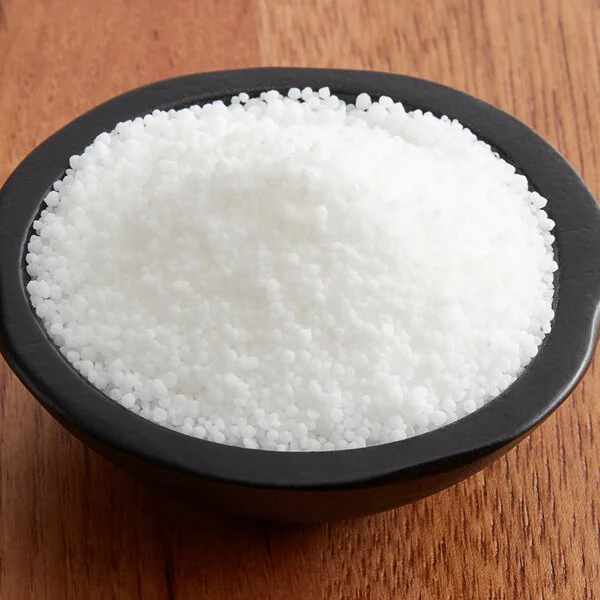
The Procurement Decision That Protects Production
For a factory, buying isomalt is ultimately about controlling variables.
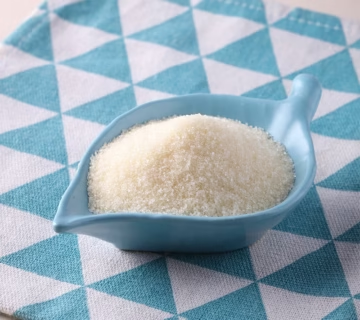
You are not purchasing a white crystalline powder simply because the specification says “isomalt.” You are purchasing predictable processing behavior, consistent product quality, documentation, delivery reliability, and the confidence that the next production run will behave like the previous one.
That is why choosing an IsomaltiDex isomalt supplier should involve both procurement and technical teams. Compare the ingredient, but also compare the supplier’s ability to support your production reality.
MT Royal is worth evaluating when you need a sourcing partner that combines industrial ingredient supply with access to multiple brands and competitive purchasing options. The strongest decision, however, is not the supplier that promises the lowest price. It is the supplier whose material, documentation, logistics, and technical support fit your factory closely enough to reduce uncertainty.
In large-scale manufacturing, consistency is a form of profit. Every stable batch, predictable shipment, and correctly specified raw material removes another variable from the production equation. When the ingredient is IsomaltiDex™, the right supplier can therefore become more than a purchasing contact: it can become part of the quality system that keeps your factory moving.


No comment