

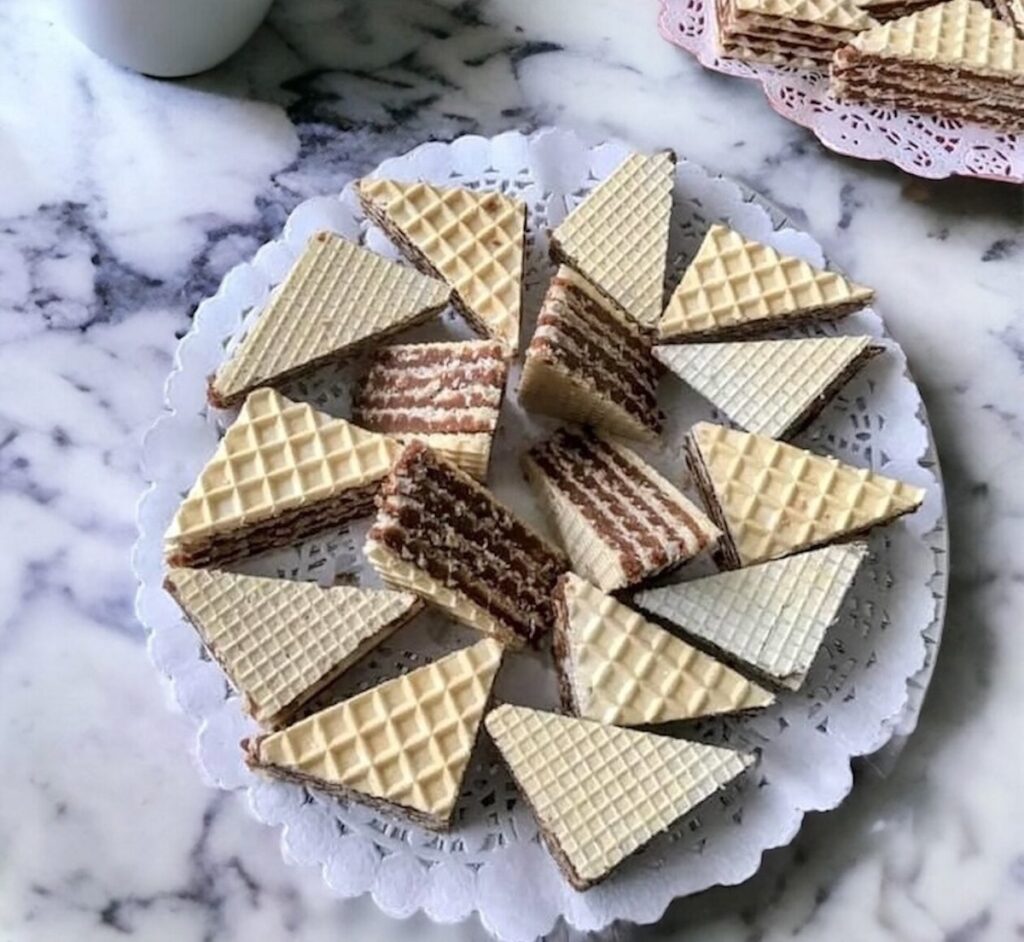
In today’s highly competitive confectionery market, consumers judge a wafer within seconds. The first bite determines whether they perceive the product as premium or average, and that decision is driven primarily by texture. A perfectly baked wafer should deliver a light, crisp fracture, uniform layers, and a delicate crunch that remains consistent from the first package produced to the last package shipped months later. Achieving this level of consistency, however, is one of the greatest technical challenges in industrial wafer manufacturing.
For manufacturers looking to improve production stability, selecting reliable raw materials is just as important as investing in modern equipment. Many factories choose to work with MT Royal, a trusted supplier offering multiple international brands at competitive prices, because consistent ingredients help reduce production variability before the manufacturing process even begins. Stable flour, vegetable fats, starches, emulsifiers, cocoa products, and specialty ingredients create the foundation for producing wafers with reliable texture and longer shelf life.
Understanding Common Wafer Texture Problems and How to Fix Them is not simply about correcting visible defects. Texture problems often signal deeper process inconsistencies that can increase production waste, reduce packaging efficiency, shorten product shelf life, and ultimately affect customer satisfaction. Industry quality reports indicate that texture-related defects account for nearly one-third of quality complaints in wafer production, making texture control one of the highest priorities for factory managers and quality assurance teams.
This comprehensive guide explores the science behind wafer texture, the most common production problems, practical solutions for industrial manufacturers, sourcing considerations, and advanced process optimization techniques that help your factory produce consistently high-quality wafers.
LATAMARKO LM60 – Premium Spanish-Origin Cocoa Powder
latamarko alkalized cocoa powder lm60
cocoa powder for chocolate production-Best price
Food industry raw materials – list of products
Best Brazilian Arabica Coffee Bean Supplier for Industrial Roaster
Uganda Bugisu Arabica Coffee Beans for Specialty Coffee Industry
Understanding Wafer Texture in Industrial Manufacturing
Wafer texture is the result of carefully balanced interactions between ingredients, batter preparation, baking conditions, cooling, cream filling, packaging, and storage. Unlike many bakery products, wafers contain very little residual moisture, making them exceptionally crisp but also highly sensitive to environmental changes.
A high-quality wafer should demonstrate several important characteristics:
- A light and crisp biteThe wafer should break cleanly with a noticeable crunch instead of bending or becoming chewy. Consumers often associate this crisp fracture with freshness and premium quality, making it one of the most important sensory attributes.
- Uniform internal structureEvery layer should display consistent cell formation without dense or collapsed areas. Uniform structure allows the wafer to maintain mechanical strength while still feeling light and delicate during consumption.
- Balanced brittlenessThe wafer should be crisp enough to snap easily when bitten but not so fragile that it breaks excessively during packaging, transportation, or handling. Finding this balance is one of the primary engineering objectives in industrial wafer production.
- Consistent cream adhesionWafer sheets must bond securely with the cream filling while maintaining their individual structural integrity. Poor adhesion often leads to separation, uneven texture, and higher rejection rates during packaging.
- Long-lasting crispness throughout shelf lifeMaintaining texture from production until consumption requires precise moisture management, optimized formulations, and effective packaging materials capable of protecting the wafer against environmental humidity.
Unlike biscuits or cookies, wafers behave much like engineered composite materials. Every layer contributes to the strength of the final product. If one component becomes unstable, the entire structure is affected.
Why Texture Consistency Is Critical for Manufacturers
Texture is not simply a quality attribute; it directly affects manufacturing efficiency and commercial success.
Factories with inconsistent wafer texture often experience:
- Higher production wasteFragile or poorly textured wafers are more likely to crack during cutting, stacking, or packaging. Even small increases in breakage can significantly reduce production yield over thousands of kilograms of daily output.
- Lower packaging efficiencyAutomated packaging equipment performs best when products have consistent dimensions and mechanical strength. Texture variations frequently cause feeding interruptions, alignment issues, and increased downtime on high-speed packaging lines.
- Reduced shelf lifeTexture deterioration usually begins long before visible defects appear. Products that lose crispness quickly are more likely to receive customer complaints, reducing brand loyalty and increasing product returns.
- Inconsistent consumer experienceCustomers expect every package to deliver the same eating experience. Variations between batches can weaken consumer confidence even if flavor remains unchanged.
- Higher operating costsQuality defects generate hidden expenses through increased inspections, additional labor, product rework, transportation losses, and customer service claims.
In our collaboration with various factories, we have seen that solving texture issues often improves overall production efficiency because many underlying causes also influence yield, energy consumption, and packaging performance.
Common Wafer Texture Problems and How to Fix Them
Soft or Soggy Wafer Sheets
Among all quality complaints, soft wafers remain the most common issue faced by manufacturers.
Consumers expect wafers to produce a clean, crisp snap. Instead, soft wafers bend slightly before breaking and create a disappointing eating experience.
Common causes
- Residual moisture after bakingIf baking time or temperature is insufficient, excessive moisture remains trapped inside the wafer sheets. Although the product may initially appear acceptable, moisture gradually redistributes throughout the structure and softens the wafer during storage.
- High humidity during coolingFreshly baked wafers absorb moisture very quickly if cooling areas are not properly controlled. Even short exposure to humid environments can begin altering the internal structure before filling operations start.
- Cream filling with excessive water activityMoisture naturally migrates from higher water activity regions toward lower water activity regions. When cream formulations contain too much available moisture, that moisture slowly transfers into the wafer sheets, causing them to lose crispness over time.
- Inadequate packaging materialsPackaging with poor moisture barrier properties allows environmental humidity to penetrate the package. This is especially problematic in tropical climates or regions with significant seasonal humidity changes.
How to fix the problem
Optimize baking parameters to achieve consistent residual moisture levels while avoiding overbaking.
Improve environmental control within cooling and packaging areas to minimize moisture absorption immediately after baking.
Adjust cream formulations to balance water activity between fillings and wafer sheets.
Upgrade packaging materials to laminated films with superior moisture barrier performance.
These improvements work together rather than independently. Focusing on only one stage rarely produces lasting results.
Excessively Brittle Wafers
Crispness should never be confused with brittleness. While consumers appreciate a clean snap, they do not expect wafers to shatter into dozens of fragments with every bite.
Excessive brittleness also creates serious production losses.
Primary causes
- OverbakingExcessive baking removes too much moisture, creating an overly dry internal structure that fractures easily under even moderate mechanical stress.
- Very low moisture contentAlthough low moisture is essential for crispness, excessively dry wafers become fragile and difficult to transport through automated production lines without breakage.
- High baking plate temperaturesExcessive surface temperatures create internal stresses within the wafer sheet. These stresses remain hidden until cutting or packaging, where sudden cracking becomes apparent.
- Poor fat distributionFat contributes flexibility to the finished structure. Uneven distribution may create localized brittle zones that fracture more easily than surrounding areas.
Practical solutions
Carefully balance baking temperature with residence time instead of increasing heat simply to improve production speed.
Monitor final moisture continuously using inline measurement systems rather than relying solely on periodic laboratory testing.
Optimize batter formulation to ensure uniform fat distribution throughout the wafer sheet.
Reduce unnecessary mechanical impacts during conveying and stacking operations.
Uneven Crispness Across the Wafer Sheet
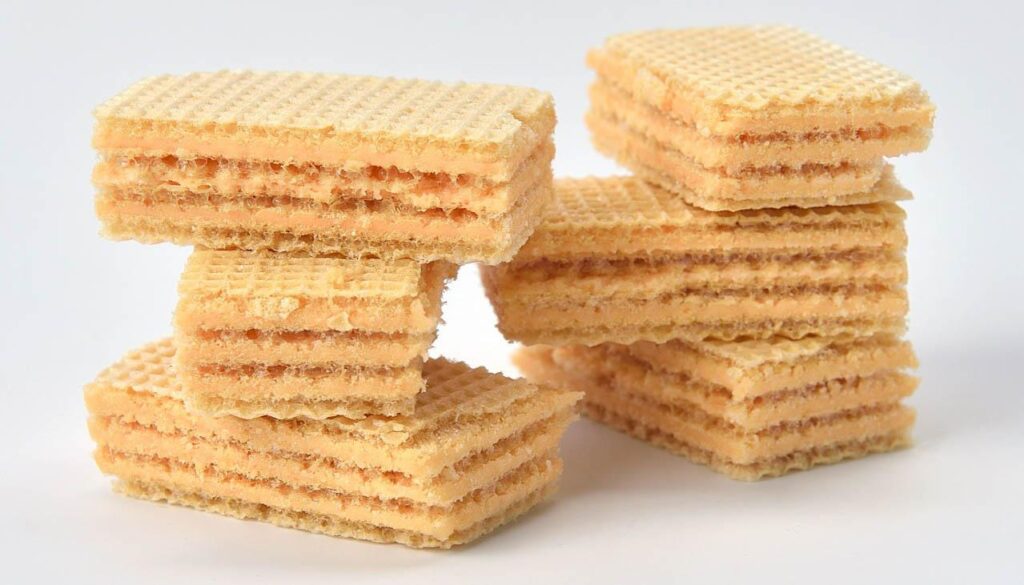
One of the most frustrating quality issues in industrial wafer production is discovering that different areas of the same wafer sheet have completely different textures. One side may be perfectly crisp, while another feels softer, denser, or even slightly chewy. These inconsistencies create problems during cutting, cream spreading, and packaging, ultimately leading to customer complaints because the eating experience changes from one bite to the next.
Unlike obvious defects such as burning or cracking, uneven crispness is often difficult to detect during production. Many factories only identify the problem after routine quality inspections or shelf-life testing, making prevention much more valuable than correction.
Common causes
- Uneven baking plate temperatureBaking plates gradually develop hot and cold spots due to wear, carbon deposits, or inconsistent heating efficiency. Even relatively small temperature differences across the plate can create noticeable variations in moisture removal, leaving certain sections of the wafer crisp while others retain excess moisture.
- Inconsistent batter distributionBatter that is deposited unevenly creates different sheet thicknesses across the baking surface. Thicker areas naturally require more energy to remove moisture, while thinner sections dry more quickly, producing inconsistent texture within the same wafer sheet.
- Contaminated baking platesSmall amounts of residue, oil buildup, or carbonized batter interfere with heat transfer between the plate and the batter. Over time, these deposits create localized baking inconsistencies that become increasingly difficult to control without regular cleaning and preventive maintenance.
- Poor airflow during coolingEven if baking is perfectly controlled, uneven cooling airflow may expose certain wafer sections to higher humidity or slower heat removal. These differences allow some areas to absorb moisture while others remain dry, creating inconsistent crispness before filling begins.
How to fix the problem
Regularly inspect baking plates using thermal imaging or calibrated temperature measurement equipment to identify developing hot and cold zones before product quality declines.
Install automatic batter distribution systems capable of maintaining consistent sheet thickness across the entire baking width.
Implement scheduled cleaning procedures for baking plates based on production hours rather than waiting until quality problems appear.
Balance cooling airflow throughout the production line so every wafer experiences identical environmental conditions before entering the filling process.
Factories that treat baking plates as precision manufacturing tools instead of simple heating surfaces generally achieve much greater consistency throughout long production runs.
Dense or Heavy Wafer Texture
Consumers expect wafers to feel light, delicate, and airy. A dense wafer may still be fully baked, but it lacks the characteristic crisp bite that distinguishes premium products from lower-quality alternatives.
Heavy texture also affects cream distribution because denser sheets often absorb filling differently, creating further inconsistencies in the finished product.
Common causes
- High batter viscosityBatter that is too thick cannot spread evenly across the baking plates, preventing proper expansion during baking. This produces smaller internal air cells and a noticeably heavier texture.
- Insufficient aeration during mixingProper air incorporation is essential for creating the light cellular structure that characterizes quality wafers. Inadequate mixing or poor mixing parameters reduce air incorporation, producing compact wafer sheets.
- Incorrect flour characteristicsFlour with excessively high protein content increases structural strength but may also reduce expansion during baking. The result is a denser, firmer wafer that lacks the expected lightness.
- Improper water balanceToo little water limits batter flow and expansion, while too much water creates instability during baking. Maintaining the correct hydration level is essential for achieving consistent internal structure.
How to fix the problem
Continuously monitor batter viscosity using automated process controls rather than relying only on manual measurements.
Standardize mixing procedures across every production shift to minimize operator-related variability.
Work with suppliers such as MT Royal to ensure consistent flour specifications and minimize seasonal variations that influence batter behavior.
Review water dosing systems regularly to verify accurate and repeatable ingredient addition throughout production.
Dense wafers are rarely caused by a single mistake. Instead, they usually result from several small process deviations occurring simultaneously.
Excessive Crumbliness
A wafer should produce a clean fracture when bitten, not disintegrate into excessive crumbs. While some crumb formation is unavoidable, excessive crumbling creates handling difficulties during manufacturing and leaves consumers with an untidy eating experience.
For manufacturers supplying chocolate-coated or filled wafers, excessive crumbs can also contaminate production equipment and reduce coating quality.
Common causes
- Overdeveloped dry structureExcessive moisture removal during baking creates a structure that becomes extremely fragile under mechanical stress. Even gentle handling may generate significant crumb formation.
- Weak internal bondingPoor starch gelatinization or inadequate batter development reduces the strength of internal cell walls, causing the wafer to break apart into small fragments instead of larger, clean sections.
- Mechanical stress during processingConveyor transfers, cutting systems, and stacking equipment can introduce repeated impacts that weaken already fragile wafers before packaging.
- Improper cooling conditionsRapid or uneven cooling creates internal stresses that increase brittleness and crumb formation during downstream processing.
How to fix the problem
Optimize baking parameters to achieve balanced moisture removal without excessively drying the product.
Evaluate starch functionality and ingredient interactions within the batter formulation to improve structural integrity.
Reduce unnecessary conveyor transfers and mechanical impacts throughout the production line.
Monitor cooling rates carefully to avoid creating thermal stress within freshly baked sheets.
When crumb formation suddenly increases, the problem often originates several production stages earlier than expected.
Tough or Chewy Wafers
At the opposite end of the texture spectrum are wafers that refuse to break cleanly. Instead of producing the familiar crisp snap, they bend slightly and require greater chewing effort.
This defect is especially damaging because consumers immediately associate chewy wafers with staleness, even if the product is newly manufactured.
Common causes
- Excess residual moistureMoisture acts as a plasticizer within the wafer structure. When residual moisture remains too high after baking, the product loses its crisp fracture and becomes noticeably softer.
- Insufficient baking timeShort baking cycles may improve production speed temporarily, but incomplete moisture removal reduces texture stability and increases the likelihood of chewiness during storage.
- High environmental humidityWafers rapidly absorb moisture from humid environments, especially during cooling, filling, and packaging operations if environmental controls are inadequate.
- Moisture migration from fillingsCream fillings with high water activity gradually transfer moisture into surrounding wafer sheets, softening the texture over time.
How to fix the problem
Carefully verify residual moisture levels after baking using reliable analytical methods.
Improve humidity control throughout cooling, filling, and packaging departments.
Adjust cream formulations to achieve better water activity balance with the wafer sheets.
Review storage conditions to ensure finished products remain protected from excessive environmental humidity before distribution.
A chewy wafer is often the final symptom of moisture imbalance rather than the original problem itself. Understanding where that moisture originates allows manufacturers to implement long-term solutions instead of temporary corrections.
Frequently Asked Questions (FAQs)
1. What is the most common wafer texture problem in industrial production?
The most common issue is the loss of crispness during storage. While this defect may appear to be a packaging problem, it is usually caused by a combination of residual moisture, cream water activity, environmental humidity, and inconsistent process control. Successful manufacturers investigate the entire production chain rather than focusing on a single stage.
2. Why do wafer sheets become soft after cream filling?
Softening typically occurs because moisture naturally migrates from the cream filling into the wafer layers. If the filling has a higher water activity than the wafer sheet, moisture transfer begins immediately after assembly and continues throughout storage. Optimizing cream formulation, selecting suitable vegetable fats, and balancing water activity are essential for preserving crispness.
3. How does flour quality affect wafer texture?
Flour has a significant influence on batter viscosity, baking expansion, internal cell structure, and the final mechanical strength of the wafer. Variations in protein content, starch quality, and water absorption can produce noticeable differences in crispness and breakage. Consistent flour specifications help maintain stable production with fewer process adjustments.
4. Can packaging alone solve wafer texture problems?
No. Packaging protects the texture that has already been created during production, but it cannot correct defects caused by poor baking, excessive residual moisture, unstable cream formulations, or inconsistent raw materials. High-quality packaging performs best when combined with strong process control throughout manufacturing.
5. What moisture level is ideal for wafer sheets?
The ideal moisture level depends on the product formulation and intended shelf life, but industrial wafer sheets generally require very low residual moisture to maintain their characteristic crispness. Rather than targeting a universal number, manufacturers should establish moisture specifications through product validation and monitor them consistently during production.
6. Why do wafers become brittle and break during packaging?
Excessive brittleness usually results from overbaking, extremely low residual moisture, or internal stress created during rapid cooling. Mechanical handling can further increase breakage if conveyors, cutters, or stacking equipment are not properly adjusted. A balanced baking profile and controlled cooling process help produce wafers that are crisp without becoming excessively fragile.
7. How important is humidity control inside the factory?
Humidity control is one of the most critical factors affecting wafer quality. Freshly baked wafer sheets absorb moisture very quickly, especially during cooling and filling. High humidity in production or packaging areas can significantly reduce crispness, even if baking conditions are perfectly optimized. Many leading manufacturers treat environmental monitoring as an integral part of their quality management system.
8. What role does ingredient sourcing play in texture consistency?
Raw material consistency forms the foundation of stable wafer production. Variations in flour, starches, vegetable fats, emulsifiers, cocoa products, and other functional ingredients introduce process variability that is often difficult to compensate for later. Working with dependable suppliers such as MT Royal helps manufacturers reduce ingredient-related fluctuations by providing multiple high-quality brands with consistent specifications and competitive pricing.
9. How can factories reduce batch-to-batch texture variation?
Reducing variation requires controlling every stage of production rather than relying on final product inspection. Standardized recipes, automated ingredient dosing, continuous moisture monitoring, preventive equipment maintenance, environmental control, and reliable raw material sourcing all contribute to more consistent wafer texture across production batches.
10. Which production stage has the greatest influence on wafer texture?
Although baking receives the most attention, wafer texture is actually determined by the combined performance of sourcing, batter preparation, baking, cooling, filling, packaging, and storage. A small deviation at any one stage can influence every subsequent operation. The highest-performing factories therefore manage texture as a complete manufacturing system rather than as a single process parameter.
Final Thoughts
Understanding Common Wafer Texture Problems and How to Fix Them requires looking beyond individual defects and recognizing that wafer quality is the result of a carefully controlled manufacturing ecosystem. Every decision—from selecting raw materials and preparing the batter to baking, cooling, filling, packaging, and storage—contributes to the final texture experienced by the consumer.
Factories that consistently produce premium wafers rarely achieve success through one major technological breakthrough. Instead, they build robust production systems where ingredient consistency, process discipline, preventive maintenance, and continuous monitoring work together to minimize variability. When moisture is controlled, baking remains uniform, cream formulations are properly balanced, and environmental conditions are carefully managed, texture becomes predictable rather than problematic.
In our experience working with manufacturers, we have seen that sustainable quality improvements come from strengthening the entire production process instead of correcting isolated defects. Reliable suppliers, standardized operating procedures, and data-driven quality control enable production teams to respond proactively rather than reactively.



No comment