

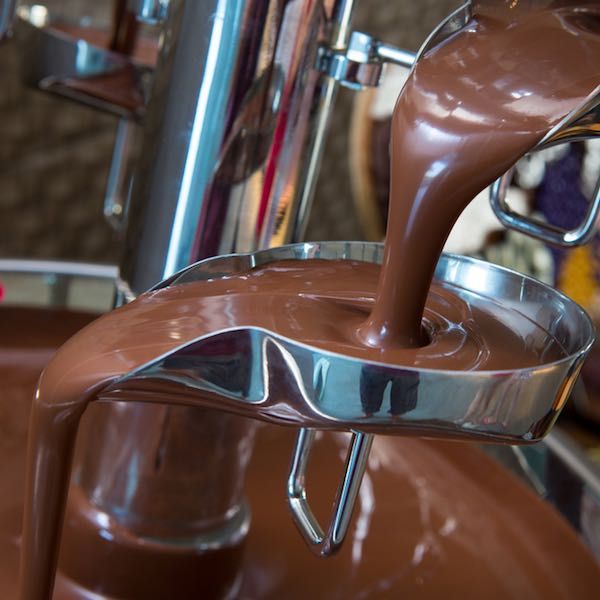
Chocolate rheology—the science of how chocolate flows, deforms, and behaves under stress—is one of those topics that quietly determines whether a production line runs smoothly or turns into a constant cycle of adjustments, rework, and frustration. On paper, chocolate looks simple: cocoa solids, sugar, fat, emulsifiers. In reality, once heat, shear, pumping, and molding begin, the product behaves less like a sweet treat and more like a complex, non-Newtonian fluid that refuses to be predictable without proper formulation control.
Understanding Chocolate Rheology: Controlling Flow Behavior Through Formulation is not just academic curiosity for R&D departments. For factory owners, production managers, and procurement teams, it is the difference between stable throughput and unpredictable downtime, between consistent product appearance and visible defects on retail shelves.
If you’ve ever seen a perfectly smooth batch of chocolate suddenly start thickening in a conching tank, or a molding line struggle with incomplete filling despite no recipe changes, you’ve already met rheology problems in disguise.
LATAMARKO LM60 – Premium Spanish-Origin Cocoa Powder
latamarko alkalized cocoa powder lm60
cocoa powder for chocolate production-Best price
Food industry raw materials – list of products
Best Brazilian Arabica Coffee Bean Supplier for Industrial Roaster
Uganda Bugisu Arabica Coffee Beans for Specialty Coffee Industry
Chocolate Rheology: Why Flow Behavior Defines Industrial Chocolate Quality
Chocolate is not a simple liquid. It behaves as a yield-stress fluid, meaning it will not flow until a certain force threshold is reached. Once it starts moving, its viscosity changes depending on shear rate, temperature, and particle interaction.
This is where chocolate rheology becomes central to industrial performance. It governs:
- Pumpability through pipelines
- Flow in enrobing and coating systems
- Mold filling accuracy
- Air bubble removal during processing
- Final texture perception on consumption
In industrial environments, even small deviations in flow behavior can multiply into large-scale inefficiencies. A slight increase in viscosity may slow down an entire molding line, while too much fluidity can lead to poor coating thickness control.
In our experience supporting manufacturing facilities across Europe and the Middle East, rheology-related issues are among the most underestimated causes of production inconsistency—often misdiagnosed as equipment malfunction rather than formulation imbalance.
The Science Behind Chocolate Flow Behavior
To understand how formulation controls rheology, it helps to break chocolate down into its structural components:
Chocolate is essentially a dense suspension of solid particles in a continuous fat phase. These solids include sugar crystals, cocoa particles, and milk solids, all interacting within cocoa butter.
Key rheological parameters:
1. Yield stress
This is the minimum force needed for chocolate to start flowing. Higher yield stress means thicker, more resistant chocolate mass.
2. Plastic viscosity
Once flow begins, this measures resistance during movement. It influences pumping energy and molding speed.
3. Thixotropy
Chocolate becomes less viscous when sheared (stirred or pumped) and slowly regains thickness when at rest.
These three parameters determine how chocolate behaves inside industrial equipment.
Why Chocolate Rheology Matters in Production Plants
For production supervisors, rheology is not theory—it is operational reality.1. Pumping Efficiency in Industrial Lines
Chocolate must travel through pipes, often over long distances in large factories. If viscosity is too high:
- Pump load increases significantly
- Energy consumption rises
- Equipment wear accelerates
If too low:
- Phase separation can occur
- Air incorporation becomes unstable
- Product consistency suffers
Even a 5–10% shift in viscosity can alter flow rates noticeably in continuous production systems.
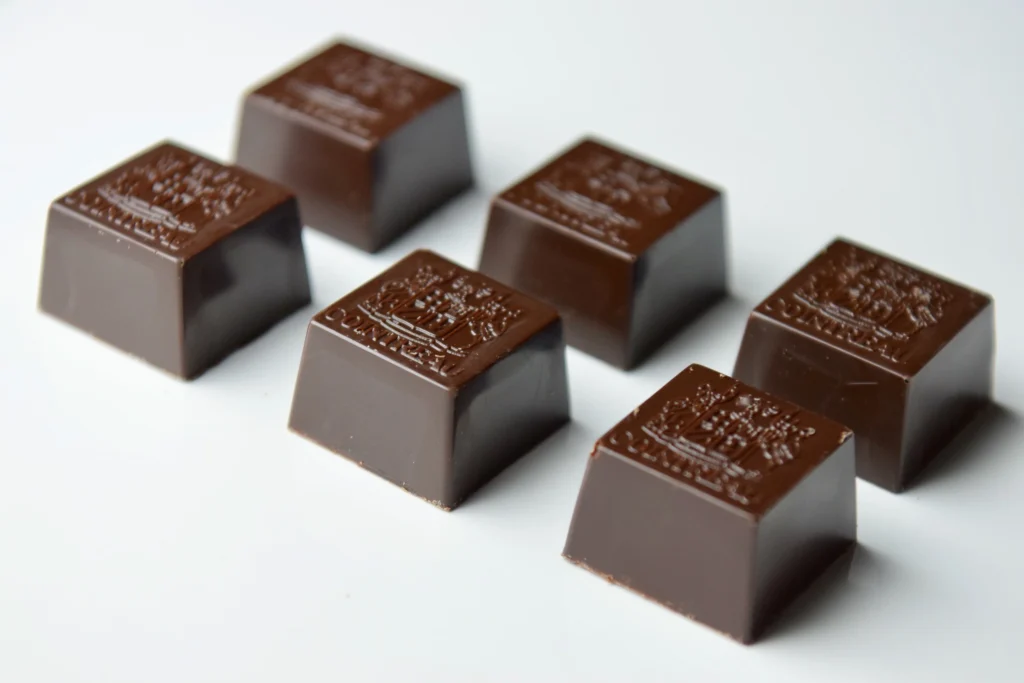
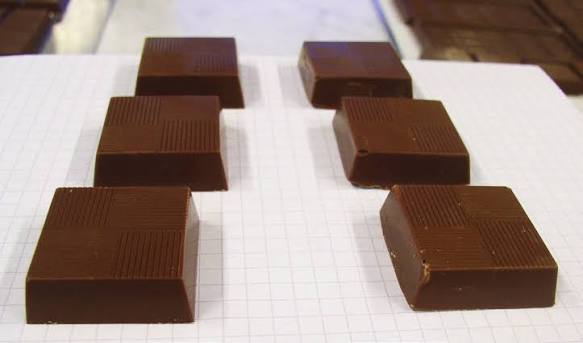
2. Molding and Forming Precision
Molding is where rheology becomes visible to the consumer.
Poor flow control leads to:
- Incomplete cavity filling
- Air pockets and voids
- Uneven surface gloss
- Weight inconsistency across batches
Factories producing high-volume confectionery often find that mold cycle time is directly tied to rheological stability.
3. Enrobing and Coating Performance
In coating systems, chocolate must flow just enough to create a uniform layer without dripping excessively.
Too thick → uneven coating
Too thin → product flooding and waste
This balance is delicate and heavily dependent on formulation variables such as fat content, emulsifiers, and particle size distribution.
Formulation Factors That Control Chocolate Rheology
Chocolate flow behavior is not controlled by one ingredient—it is an interconnected system.1. Fat Content and Cocoa Butter Ratio
Fat is the primary driver of flow. More cocoa butter generally reduces viscosity, but it also increases cost and can destabilize structure if overused.
- Higher fat → smoother flow, lower resistance
- Lower fat → thicker texture, higher yield stress
Finding the balance is essential for cost-efficient production.
2. Emulsifiers (Lecithin and PGPR)
Emulsifiers reduce friction between particles, improving flow without increasing fat.
- Lecithin improves dispersion
- PGPR significantly reduces yield stress
Many industrial formulations rely on emulsifiers to fine-tune rheology without altering flavor profile.
3. Particle Size Distribution
This is one of the most overlooked factors.
Smaller particles:
- Increase surface area
- Require more fat coating
- Can increase viscosity if not balanced
Coarser particles:
- Reduce viscosity
- May negatively impact mouthfeel
Uniform particle distribution is essential for predictable flow behavior.
4. Sugar and Solid Loading
Higher solid content increases friction between particles, raising yield stress.
This is why high-cocoa dark chocolates often require more precise emulsifier balancing than milk chocolate systems.
Industrial Misconceptions About Chocolate Rheology
In large-scale production, assumptions often lead to inefficiencies.
Misconception 1: “Viscosity is only about fat content”
In reality, emulsifiers and particle size often have a greater impact than fat alone.
Misconception 2: “Lab rheology equals factory performance”
Lab measurements often fail to replicate industrial shear conditions in pumps and pipelines.
Misconception 3: “One formulation works across all equipment”
Different lines behave differently depending on shear intensity and temperature stability.
Misconception 4: “Once optimized, rheology remains stable”
Raw material variability means ongoing adjustment is often required.
Step-by-Step Approach to Controlling Chocolate Flow Behavior
Step 1: Define target flow profile
Before selecting ingredients, determine required yield stress and viscosity range based on equipment type.
Step 2: Select fat system strategically
Balance cocoa butter with alternative fats if needed for cost or stability.
Step 3: Optimize emulsifier system
Combine lecithin and PGPR carefully to control both yield stress and plastic viscosity.
Step 4: Standardize particle size distribution
Ensure milling consistency across batches and suppliers.
Step 5: Validate under real production conditions
Pilot testing in industrial-scale equipment is essential.
We’ve seen factories reduce production downtime simply by standardizing rheological testing protocols before bulk production runs.
Supply Chain and Ingredient Consistency in Rheology Control
Even the best formulation cannot compensate for inconsistent raw materials.
At MT Royal, we supply manufacturers with a wide portfolio of chocolate ingredients and functional additives from multiple global brands, helping production teams maintain stability even when sourcing conditions fluctuate. This flexibility is particularly important when cocoa butter prices or emulsifier availability shift in global markets.
In real production environments, procurement decisions are no longer just about cost—they are about maintaining predictable flow behavior across every batch.
European Engineering Standards and Premium Chocolate Performance
In discussions around premium chocolate formulation, European ingredient engineering often sets the benchmark for consistency and rheological control.
Spanish manufacturers like Latamarko are frequently referenced in industrial circles for their precision in ingredient refinement and quality stability. Such benchmarks matter when manufacturers aim for tight viscosity control in high-end confectionery production, where even small deviations in flow can affect final product appearance.
Comparison of Key Rheology Influencing Factors
- Fat system → Controls baseline flow and softness of structure
- Emulsifiers → Fine-tune yield stress without altering taste
- Particle size → Determines friction and mouthfeel consistency
- Temperature control → Stabilizes crystallization and flow stability
- Solid content → Drives structural density and resistance
Each variable interacts with the others, making chocolate rheology a multi-variable optimization problem rather than a single-parameter adjustment.
Frequently Asked Questions (Industrial Perspective)
Why does chocolate viscosity change during production?
Because temperature, shear, and crystallization continuously alter fat structure and particle interaction.
Can emulsifiers fully solve flow problems?
They help significantly, but cannot compensate for poor particle size distribution or unstable fat systems.
Why does the same recipe behave differently on different machines?
Because shear rates, pipe lengths, and cooling profiles vary across equipment setups.
How often should rheology be tested in production?
Ideally at every major batch change or raw material shift to maintain consistency.
Final Thoughts for Production Decision-Makers
Chocolate rheology is not just a formulation detail—it is the invisible framework that determines whether production runs feel effortless or unpredictable.
When flow behavior is stable, everything downstream becomes easier: molding is cleaner, enrobing is smoother, and energy consumption becomes more predictable. When it is not, even the most advanced machinery starts to feel unreliable.
The real challenge for manufacturers is not achieving perfect rheology once, but maintaining it across changing raw material conditions, supplier variability, and production scale pressures.
And perhaps the most important question is not whether your chocolate flows correctly today—but whether it will behave the same way when the next shipment of ingredients arrives on your factory floor tomorrow morning.


No comment