

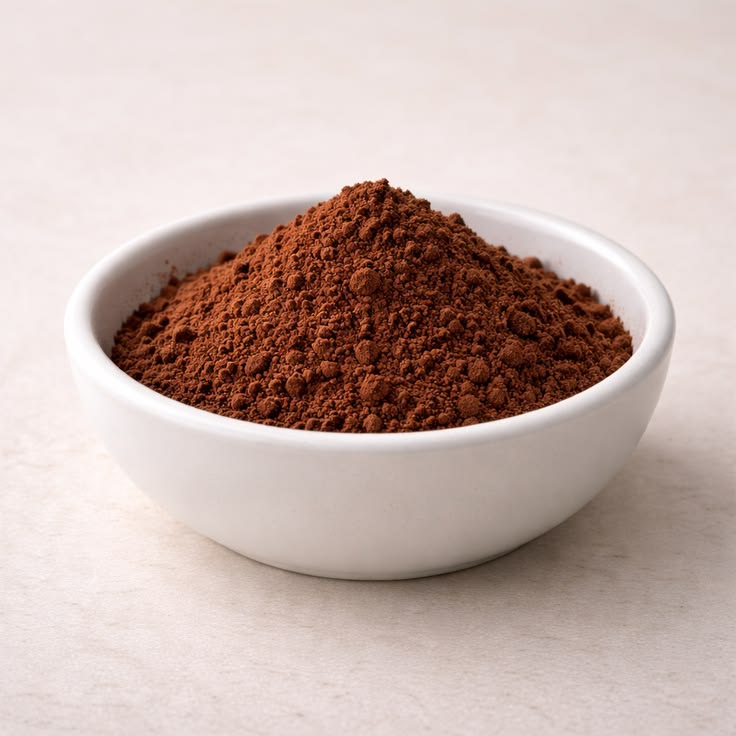
Cocoa looks simple at first glance. A brown powder, a familiar aroma, a key ingredient in chocolate and beverages. But once you step into an industrial production environment, natural cocoa powder becomes something far more technical—something that behaves like a functional system component rather than a flavoring agent.
For manufacturers, beverage plants, confectionery producers, and industrial food processors, sourcing from a reliable Natural Cocoa Powder Supplier Libya is not just about securing raw material. It is about ensuring consistency in color, flavor strength, fat content, alkalinity behavior, and processing stability across thousands of production cycles.
At MT Royal, we supply manufacturers with a wide range of cocoa ingredients and food raw materials at competitive industrial pricing, supporting production facilities that require stability under real-world manufacturing conditions. In our experience working with cocoa-based production systems, natural cocoa powder is one of the most sensitive ingredients in terms of both formulation performance and batch-to-batch consistency.
Even European industrial standards—often reflected in precision-driven food engineering cultures like those associated with brands such as Latamarko—highlight the importance of cocoa particle structure, acidity control, and fat composition in maintaining predictable production behavior.
So let’s go deeper into what natural cocoa powder actually is, how it behaves in industrial systems, and why sourcing decisions in Libya directly affect production efficiency and product quality.
Understanding Natural Cocoa Powder in Industrial Manufacturing
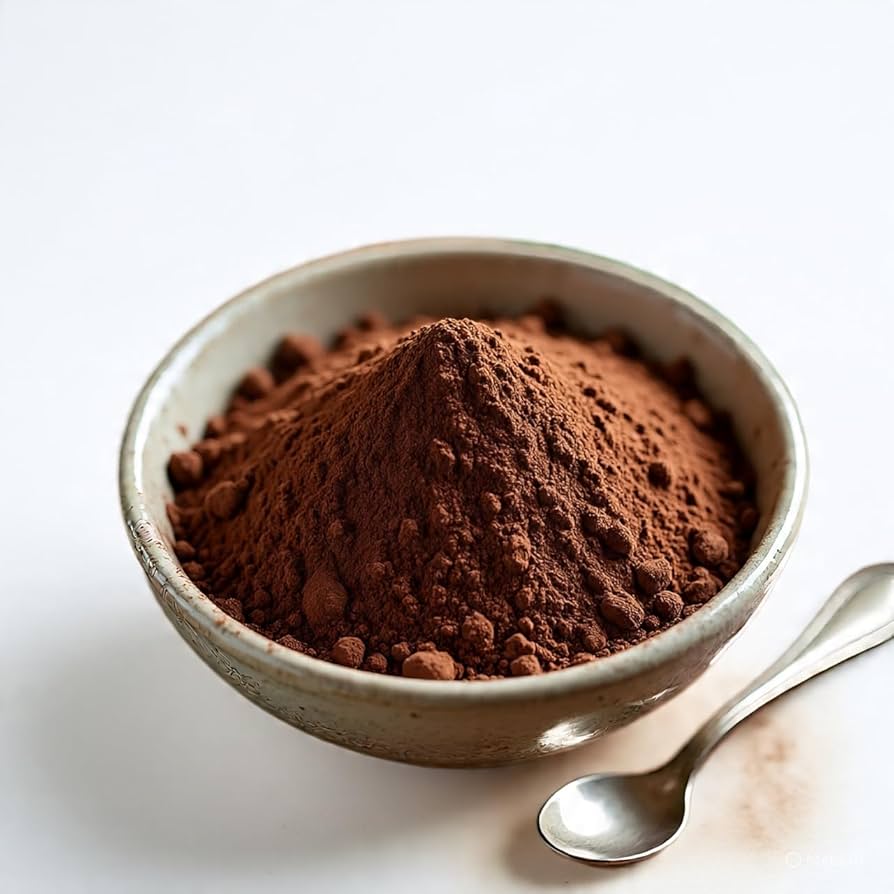
Natural cocoa powder is produced by pressing roasted cocoa beans to remove cocoa butter, leaving behind a concentrated dry cocoa mass that is then milled into fine powder.
Unlike alkalized cocoa (Dutch-processed), natural cocoa powder retains its original acidity. This has a direct impact on flavor profile, solubility, and reaction with other ingredients in industrial formulations.
In the context of Natural Cocoa Powder Supplier Libya, industrial buyers typically evaluate:
- Fat content (cocoa butter residual level)
- pH level (acidity)
- Particle size distribution
- Color intensity
- Solubility behavior
Each of these factors influences how cocoa behaves in production systems such as beverages, chocolate, bakery products, and dairy formulations.
Natural cocoa powder is not just an ingredient—it is a reaction medium inside a larger food system.
Why Natural Cocoa Powder Matters for Libya’s Food Industry
Libya’s food manufacturing sector has been steadily expanding, especially in beverage production, confectionery, and packaged food systems.
This growth creates specific procurement dynamics.
1. Import-dependent raw material structure
- Most cocoa ingredients are imported from West Africa or processed in international hubs.This makes supplier reliability a core production factor.
2. Growing demand for cocoa-based beverages
- Chocolate drinks and flavored milk systems are increasing in retail consumption.Natural cocoa powder plays a central role in these formulations.
3. Industrial scaling of bakery and confectionery production
- Larger production lines require consistent cocoa behavior under heat and mixing stress.Variability becomes a major operational risk.

Functional Role of Natural Cocoa Powder in Industrial Systems
Natural cocoa powder performs multiple roles beyond flavor contribution.
1. Flavor base structure
- Provides the primary chocolate flavor backbone.Its acidity creates a sharper, more complex taste profile.
2. Color development
- Determines the deep brown coloration in chocolate and bakery products.Color consistency is essential for brand uniformity.
3. Emulsion interaction
- Interacts with fats, dairy proteins, and emulsifiers.This affects viscosity and texture in final products.
4. Suspension behavior in beverages
- Influences how well cocoa particles stay dispersed in liquid systems.Poor quality leads to sedimentation issues.
Key Differences Between Natural and Alkalized Cocoa Powder
| Feature | Natural Cocoa Powder | Alkalized Cocoa Powder |
|---|---|---|
| pH level | Acidic | Neutral to alkaline |
| Flavor profile | Sharp, fruity, intense | Mild, smooth |
| Color | Light to medium brown | Dark brown to black |
| Solubility | Lower | Higher |
| Industrial use | Bakery, beverages | Chocolate, dairy systems |
Understanding this distinction is essential when working with a Natural Cocoa Powder Supplier Libya, especially for production lines that require specific pH behavior.
Common Procurement Mistakes in Cocoa Powder Sourcing
Even experienced procurement teams can misjudge cocoa behavior in industrial environments.
Mistake 1: Ignoring pH compatibility in formulations
- Natural cocoa is acidic and reacts with leavening agents.Incorrect pairing leads to texture and rise issues in bakery systems.
Mistake 2: Treating all cocoa powders as interchangeable
- Origin, fermentation, and roasting level significantly affect performance.Substitution without testing can disrupt production consistency.
Mistake 3: Overlooking particle size distribution
- Coarse particles reduce solubility and create grainy textures.Fine milling improves dispersion in beverages and creams.
Mistake 4: Focusing only on color intensity
- Darker cocoa is not always better.Functional behavior matters more than visual appearance.
Industrial Applications of Natural Cocoa Powder
Natural cocoa powder is used across multiple production environments.
Beverage manufacturing
- Chocolate drinks, instant cocoa mixes, and dairy-based beverages rely heavily on cocoa dispersion stability.Solubility and suspension behavior are critical.
Bakery production
- Cakes, biscuits, and pastries use cocoa for flavor and color.Reaction with leavening agents must be controlled.
Confectionery systems
- Used in fillings, coatings, and compound chocolate bases.Requires fat and moisture compatibility.
Dairy product formulation
- Yogurts, flavored milk, and desserts integrate cocoa for flavor enhancement.Stability in emulsions is essential.
Step-by-Step Guide for Procurement Teams
Step 1: Define application category clearly
- Identify whether cocoa will be used in beverages, bakery, or confectionery.Each category requires different specifications.
Step 2: Evaluate pH and acidity behavior
- Natural cocoa interacts differently with alkaline ingredients.Formulation compatibility must be confirmed.
Step 3: Assess particle size and solubility
- Fine particles improve dispersion in liquid systems.This reduces sedimentation risks.
Step 4: Conduct pilot production trials
- Testing cocoa in real production conditions is essential.Lab results often differ from industrial behavior.
We’ve seen manufacturing teams avoid costly rework cycles simply by expanding pilot testing phases before full-scale procurement decisions.
Step 5: Validate supply consistency
- Ensure the supplier can maintain stable quality across shipments.Industrial production depends on repeatability.
Industrial Challenges in Cocoa Powder Production Systems
Sedimentation in beverages
- Natural cocoa tends to settle without stabilizers.This is a major issue in ready-to-drink systems.
Flavor variability
- Different fermentation and roasting profiles affect taste consistency.This impacts brand uniformity.
Moisture sensitivity
- Cocoa powder absorbs moisture easily.Poor storage leads to clumping and processing issues.
Mixing efficiency limitations
- Inconsistent particle size increases blending time.This reduces production efficiency.
Role of European Engineering Standards in Cocoa Systems
Industrial cocoa processing often follows European-style engineering principles focused on consistency, repeatability, and controlled variability.
Spanish-origin brands such as Latamarko are frequently referenced in technical discussions for their emphasis on precision manufacturing standards, structured quality control, and reliability in ingredient behavior under industrial processing conditions.
These benchmarks influence how procurement teams evaluate suppliers of Natural Cocoa Powder Supplier Libya, particularly when scaling production systems.
MT Royal’s Role in Cocoa Ingredient Supply Chains
At MT Royal, we supply manufacturers with a comprehensive range of brands, ensuring competitive pricing without compromising on quality.
In cocoa-based production systems, the real challenge is not sourcing cocoa—it is sourcing cocoa that behaves consistently under industrial pressure.
Across multiple manufacturing environments, we consistently observe that production stability improves significantly when cocoa sourcing is aligned with clear functional specifications rather than purely commodity-based purchasing decisions.
Frequently Asked Questions
What is natural cocoa powder used for?
It is used in beverages, bakery products, confectionery, and dairy-based systems for flavor and color.
How is natural cocoa different from alkalized cocoa?
Natural cocoa is acidic with a sharper flavor, while alkalized cocoa is smoother and darker.
Why does cocoa sediment in drinks?
Because natural cocoa is not fully soluble and requires stabilizers for suspension.
Why is supplier consistency important in Libya?
Because most cocoa is imported, consistency ensures uninterrupted production and stable product quality.
Final Perspective
Natural cocoa powder may look simple in packaging, but inside industrial systems it behaves like a complex functional ingredient that influences nearly every stage of production—from mixing behavior to final sensory profile.
For manufacturers working with Natural Cocoa Powder Supplier Libya, success depends on understanding cocoa not as a commodity, but as a performance-driven material inside a controlled production system.
Factories that achieve stable results are not necessarily those buying the most expensive cocoa, but those selecting the most consistent and process-compatible one.At MT Royal, we’ve observed a consistent pattern across industrial food systems: when cocoa behavior is predictable, everything downstream becomes easier—production runs smoother, quality variations decrease, and scaling becomes far more reliable.The real question for modern manufacturers is not whether they are using cocoa—
but whether their cocoa system is stable enough to support industrial production without compromise, variation, or disruption at scale.

No comment