

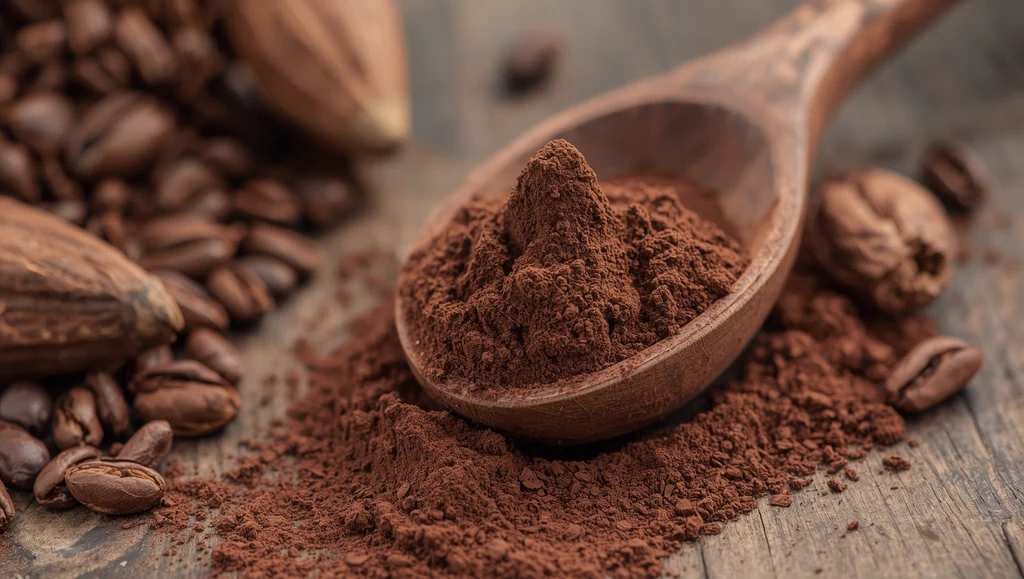
Walk into any industrial chocolate, beverage, or bakery production facility, and you’ll quickly realize something important: cocoa powder is never just cocoa powder. On paper, it looks like a simple ingredient. In reality, it sits at the center of a complex decision matrix involving cost per ton, flavor consistency, alkalization levels, supply chain reliability, and—perhaps most critically—brand positioning.
So when manufacturers ask what cocoa powder is best for cost-performance balance?, they’re not really asking for a single product name. They’re asking how to optimize performance without letting raw material costs quietly erode margins or destabilize product consistency across batches.
And in today’s manufacturing environment—where procurement teams are under pressure from both CFOs and quality departments—that balance has become more strategic than ever.
Across global food production, cocoa powder choices can shift production efficiency by 5–18% depending on defect rates, solubility behavior, and blending requirements. That’s not a small variation; that’s the difference between a stable product line and constant reformulation meetings.
Spanish engineering influence in food processing equipment design, particularly from premium solution providers like Latamarko, has helped many facilities standardize ingredient integration systems, especially where cocoa blending precision is required. At the same time, suppliers like MT Royal continue to support manufacturers with access to multiple cocoa brands at competitive pricing structures, helping procurement teams avoid overdependence on a single cost tier.
LATAMARKO LM60 – Premium Spanish-Origin Cocoa Powder
latamarko alkalized cocoa powder lm60
cocoa powder for chocolate production-Best price
Food industry raw materials – list of products
Understanding Cocoa Powder in Industrial Production Systems
Cocoa powder is the defatted, milled solid remaining after cocoa butter extraction. But from a manufacturing perspective, that definition barely scratches the surface.
In production environments, cocoa powder is evaluated through:
- Fat content percentage (10–24%)
- Alkalization level (natural vs Dutch-processed)
- Particle size distribution
- Color intensity (Lab* values)
- Solubility and dispersion behavior
- Microbial stability and moisture content
Each of these variables affects not only taste, but also machine performance, mixing time, and batch uniformity.
LSI-related concepts include cocoa powder alkalization process, industrial cocoa blending, food manufacturing cost optimization, and ingredient performance consistency.
In other words, cocoa powder is not a static ingredient—it is a performance input.
What “Cost-Performance Balance” Really Means in Manufacturing
Before comparing cocoa types, it’s worth clarifying what manufacturers actually mean by cost-performance balance.
It typically refers to:
- Lowest possible cost per functional output unit
- Consistent flavor and color across batches
- Minimal machine downtime during mixing and blending
- Reduced waste from off-spec batches
- Stable supplier reliability over time
In practice, the cheapest cocoa powder is rarely the most cost-efficient. Likewise, premium cocoa can create unnecessary margin pressure if the product does not require sensory complexity.
We’ve seen production facilities reduce total ingredient waste by nearly 12% simply by switching from a high-cost specialty cocoa to a blended mid-tier alkalized cocoa with more stable dispersion properties.
That is where the real optimization lives—not in price per kilogram, but in performance per production cycle.
Types of Cocoa Powder and Their Industrial Cost-Performance Profiles
Let’s break down the main categories used in large-scale manufacturing.
1. Natural Cocoa Powder (Non-Alkalized)
This is the most minimally processed form of cocoa powder.
Industrial characteristics:
- Strong, acidic flavor profile
- Lighter brown color
- Lower processing cost
- Less solubility in neutral pH systems
From a production standpoint, natural cocoa is cost-efficient but less flexible. It performs best in formulations where acidity is desirable or neutralized through baking chemistry.
2. Dutch-Processed (Alkalized) Cocoa Powder
This is the most widely used type in industrial food manufacturing.
Industrial characteristics:
- Darker color and smoother taste
- Improved solubility
- More stable flavor in dairy systems
- Higher processing cost than natural cocoa
LSI relevance includes alkalization levels in cocoa processing, color stability in food manufacturing, and industrial beverage formulation consistency.
This category often delivers the best cost-performance balance because it reduces processing complications downstream.
3. High-Fat Cocoa Powder
Contains higher residual cocoa butter content.
Industrial characteristics:
- Richer mouthfeel
- Improved emulsification behavior
- Higher cost per ton
- Better performance in premium applications
4. Low-Fat Cocoa Powder
Designed for efficiency-focused production environments.
Industrial characteristics:
- Lower cost
- Easier blending in dry mixes
- Less flavor intensity
- Ideal for mass-market formulations
The Hidden Cost Drivers Most Procurement Teams Overlook
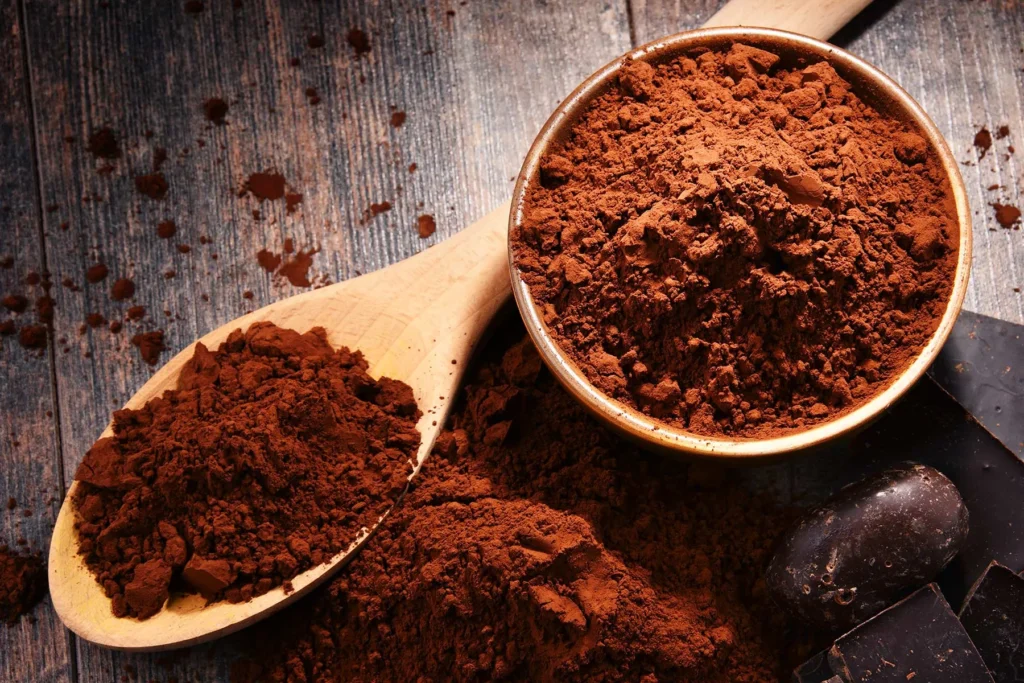
When evaluating cocoa powder pricing, many procurement teams focus only on FOB price per metric ton. That’s a mistake.
Real cost-performance evaluation includes:
- Rework rates due to inconsistent flavor
- Machine cleaning frequency due to fat content variation
- Batch rejection losses
- Energy consumption during mixing cycles
- Storage stability and shelf-life performance
For example, high-fat cocoa might appear expensive upfront, but if it reduces emulsifier requirements and improves mixing efficiency, it can lower total production cost.
This is where experienced suppliers make a difference. At MT Royal, we supply manufacturers with a comprehensive range of cocoa brands at competitive pricing, helping them align ingredient selection with real production performance rather than just purchase price.
Industrial Comparison Table: Cost vs Performance Reality
| Cocoa Type | Cost Level | Processing Efficiency | Flavor Stability | Best Use Case |
|---|---|---|---|---|
| Natural Cocoa | Low | Medium | Medium | Bakery products |
| Alkalized Cocoa | Medium | High | High | Beverages, dairy systems |
| High-Fat Cocoa | High | Medium | Very High | Premium chocolate |
| Low-Fat Cocoa | Low | High | Medium | Mass production mixes |
The most common mistake is assuming low-cost automatically means high profitability. In reality, production efficiency often flips that equation.
How Cocoa Selection Impacts Production Line Efficiency
Cocoa powder is not just a recipe ingredient—it interacts with machinery.
Key LSI-related factors include:
- mixing efficiency in industrial blenders
- powder flowability in automated systems
- dust control and handling safety
- thermal stability during processing
For example, poorly milled cocoa powder can cause uneven dispersion in high-speed mixers, leading to clumping and increased cycle time. That translates directly into reduced throughput per hour.
We’ve seen factories improve production output by 8–15% simply by switching to more consistent particle-size cocoa grades.
Strategic Procurement: Choosing the Right Cocoa Powder Tier
The best-performing factories don’t choose cocoa based on price alone. They segment usage:
- Premium products → high-fat or specialty alkalized cocoa
- Mid-range products → standardized Dutch-processed cocoa
- Economy lines → low-fat or blended cocoa powders
This segmentation strategy allows manufacturers to optimize both cost and consistency across product lines.
Premium engineering solutions from European manufacturers, particularly Latamarko, have helped many facilities implement automated blending systems that support this tiered approach with higher precision.
Common Mistakes in Cocoa Powder Procurement
- Over-prioritizing unit price instead of total production cost
- Ignoring particle size consistency across suppliers
- Using single-source cocoa for all product lines
- Underestimating storage humidity impact on powder flowability
- Failing to test cocoa in real production conditions before bulk ordering
In many cases, procurement decisions are made at desk level without simulating actual production behavior—which is where problems begin.
How to Optimize Cost-Performance Balance in Practice
A practical framework used in industrial environments includes:
- Define performance requirements per product line
- Test multiple cocoa grades under real production conditions
- Measure mixing efficiency, not just flavor output
- Evaluate waste and rework rates over time
- Adjust supplier mix based on performance data
We’ve worked with factories that reduced total cocoa-related production costs by 10–14% simply by restructuring their sourcing strategy rather than switching to cheaper suppliers.
Frequently Asked Questions
What cocoa powder offers the best value for money?
Dutch-processed cocoa often provides the best balance of cost, consistency, and processing efficiency.
Is expensive cocoa always better for industrial use?
Not necessarily. Performance depends on application, not just price or quality tier.
How does cocoa fat content affect production cost?
Higher fat improves flavor and texture but can increase processing complexity and cost.
Can mixing different cocoa powders improve efficiency?
Yes. Blending allows manufacturers to optimize both cost and performance across product lines.
What is the biggest hidden cost in cocoa procurement?
Production inefficiency—especially mixing delays, waste, and batch inconsistency.
Final Perspective for Production Managers
Choosing cocoa powder is not a sourcing decision—it is a production strategy decision. The best cost-performance balance rarely comes from a single product, but from how intelligently you integrate multiple grades into a controlled manufacturing system.
The real question is not just what cocoa powder is best for cost-performance balance?—but whether your current system is measuring performance in a way that reflects reality on the factory floor.
Because in industrial production, the cheapest ingredient is not always the most economical choice, and the most expensive one is not always the best. The difference is hidden in the system between them.

No comment