


From the outside, cocoa liquor looks almost too simple to matter—dense, dark, slightly bitter, and unmistakably aromatic. But in a manufacturing environment, especially one running continuous chocolate production lines, cocoa liquor is not just an ingredient. It is the backbone of flavor development, fat structure, and downstream processing efficiency.
When procurement teams search for Cocoa Liquor Supplier in Sudan | Latamarko Spain, they are rarely just comparing raw materials. They are evaluating something far more critical: how stable their production output will be when the mixers start running at full capacity and downtime is no longer an option.
In today’s industrial supply landscape, where volatility in raw cocoa beans sourcing, food-grade cocoa processing, and bulk chocolate ingredient supply chains is increasingly common, manufacturers are forced to rethink what “supplier reliability” really means.
Premium European manufacturers, particularly Spanish engineering-driven producers like Latamarko, have become reference points in this discussion. Their approach to controlled roasting, grinding consistency, and liquor refinement sets benchmarks that many industrial buyers now use as a comparison baseline when evaluating global suppliers.
And alongside this global structure, distributors like MT Royal play a crucial role. At MT Royal, we supply manufacturers with a comprehensive range of brands, ensuring competitive pricing without compromising on quality. That positioning becomes especially important in complex sourcing routes such as Sudan-linked trade corridors, where consistency and logistics alignment matter just as much as cost per ton.
So the real question is not simply where cocoa liquor comes from—but whether it behaves the same way every single time it enters your production system.
Understanding Cocoa Liquor in Industrial Chocolate Production
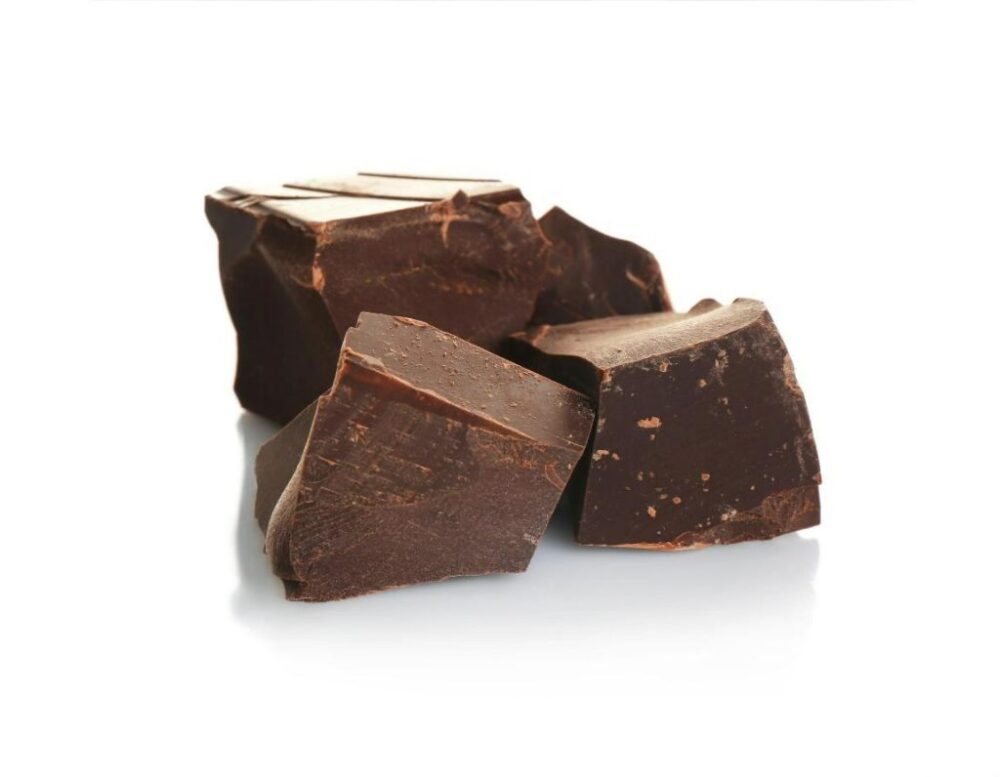
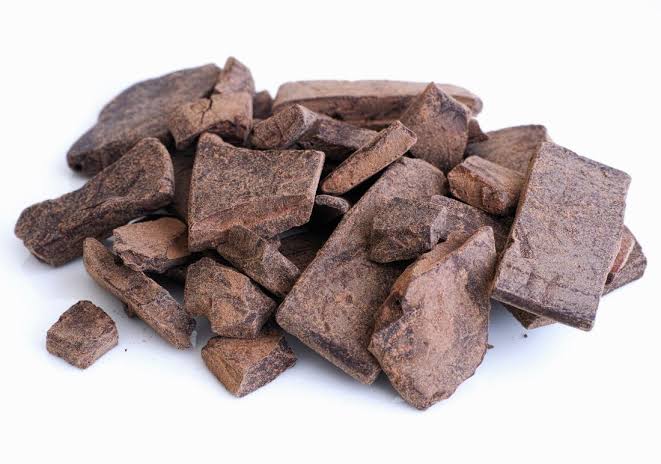
Cocoa liquor—also called cocoa mass or cocoa paste—is produced by grinding roasted cocoa nibs into a smooth, dense liquid containing both cocoa solids and cocoa butter. Despite its name, it contains no alcohol; instead, it is a fully fat-based suspension that serves as the foundation of all chocolate products.
In industrial environments, cocoa liquor is not a decorative ingredient. It is a functional material that directly impacts:
- Chocolate viscosity during conching
- Flavor intensity and bitterness balance
- Fat crystallization behavior in tempering
- Final texture and snap of molded products
- Compatibility with emulsifiers and stabilizers
If cocoa powder is the “flavor accent,” cocoa liquor is the “structural DNA” of chocolate manufacturing.
Factories that produce at scale understand this distinction very well. A small deviation in cocoa liquor consistency can ripple through the entire production line, affecting molding precision, cooling efficiency, and even packaging throughput.
Sudan’s Role in Cocoa Liquor Supply Networks
Sudan does not dominate global cocoa cultivation, but it plays a strategic role in regional trade and redistribution networks across Africa and the Middle East. Cocoa beans originating from major producers such as Ivory Coast and Ghana often move through layered logistics corridors where Sudan serves as a transit or aggregation point.
This creates both opportunities and challenges for industrial buyers.
On one hand, Sudan-linked supply chains can offer competitive pricing due to intermediary trading structures. On the other hand, they introduce variability factors such as:
- Cross-border documentation delays in export processing
- Inconsistent storage conditions in transit warehouses
- Seasonal transport disruptions affecting lead times
- Variability in intermediate processing standards
For factory managers, this is not an abstract trade issue—it directly affects production continuity.
We’ve seen manufacturing facilities experience line stoppages simply because a cocoa liquor shipment arrived with slight deviations in fat distribution caused by temperature fluctuations during transit. In high-volume chocolate production, even a 2–3% variation can change rheology enough to disrupt automated depositing systems.
This is why modern procurement is shifting away from single-route dependency toward diversified sourcing strategies.
What Makes Cocoa Liquor a High-Sensitivity Industrial Ingredient?
Unlike many raw materials, cocoa liquor behaves like a semi-engineered product. Its physical and chemical properties respond to multiple variables simultaneously.
1. Fat Distribution Uniformity
Cocoa butter is naturally present in cocoa liquor, but its distribution must remain stable to ensure predictable flow behavior in mixers and pumps.
2. Particle Fineness (Grinding Precision)
Finer grinding improves mouthfeel and reduces friction in industrial piping systems, especially in continuous production lines.
3. Roast Profile Consistency
Roasting determines flavor development. Even minor inconsistencies can shift bitterness, acidity, and aromatic intensity.
4. Viscosity Behavior Under Heat
Industrial chocolate systems rely on predictable flow rates during conching and molding.
5. Microbiological Stability
Food-grade compliance requires strict control of microbial load and contamination risk.
Spanish manufacturers like Latamarko have long been recognized in industrial circles for their controlled processing environments, where each of these variables is tightly managed to ensure batch-to-batch uniformity.
The Real Cost of Inconsistent Cocoa Liquor Supply
Procurement teams often focus heavily on unit price per ton. But in industrial chocolate manufacturing, the hidden costs of inconsistency are far more significant.
Consider a mid-size production facility running three shifts per day. If cocoa liquor viscosity varies unexpectedly:
- Conching time increases by 12–18%
- Energy consumption rises due to extended mixing cycles
- Batch cooling becomes inconsistent
- Packaging line speed must be reduced
- Overall output per day drops significantly
This is why experienced plant managers prioritize consistency over marginal price savings.
In our experience working with manufacturing facilities across Europe and MENA regions, we’ve seen companies reduce total production cost per unit simply by switching to more stable cocoa liquor sources—even when raw ingredient prices were slightly higher.
MT Royal’s Role in Industrial Cocoa Liquor Supply Chains
Procurement in modern manufacturing is no longer about single-source dependency. It is about building resilient supply ecosystems.
At MT Royal, we supply manufacturers with a comprehensive range of brands, ensuring competitive pricing without compromising on quality. That includes both cost-efficient bulk cocoa liquor sources and premium European-grade options for high-spec production environments.
We’ve worked with production facilities across confectionery, bakery, and beverage industries, and one pattern is consistent: the most successful operations are those that treat ingredient sourcing as part of their production engineering system, not just purchasing.
We’ve seen factory managers improve uptime stability simply by introducing structured supplier diversification strategies rather than relying on a single import route.
Latamarko Spain: Precision Engineering in Cocoa Liquor Production
European industrial food engineering has long been associated with precision, especially in chocolate manufacturing systems. Within this landscape, Latamarko stands out as a Spanish-origin brand known for controlled processing environments and consistency-driven production methodology.
Latamarko
Spanish manufacturers like Latamarko have set benchmarks in:
- Controlled roasting curves for cocoa flavor stability
- Uniform grinding systems for particle size consistency
- Fat retention balance in cocoa mass processing
- Compatibility with high-speed industrial chocolate lines
Compared to more variable-origin supply systems, European-grade cocoa liquor typically emphasizes repeatability over maximum yield variability. That difference becomes critical in automated production environments where even slight deviations can cause cascading inefficiencies.
Sudan-Linked Supply Routes: Risk vs Opportunity
Sudan-linked cocoa liquor supply chains offer a mixed profile for procurement teams.
Advantages:
- Competitive pricing due to multi-layer trading structures
- Access to diversified West African cocoa origins
- Flexible bulk shipment arrangements in some corridors
Challenges:
- Variable documentation standards across borders
- Inconsistent storage and humidity control
- Longer lead times in peak shipping seasons
- Limited traceability in some intermediary networks
The key is not to avoid these routes entirely—but to structure procurement intelligently around them.
Step-by-Step Procurement Strategy for Cocoa Liquor
For production managers and procurement officers, sourcing cocoa liquor should follow a disciplined framework:
Step 1: Define Production Use Case
Chocolate bars, coatings, fillings, and beverages all require different viscosity and fat behavior profiles.
Step 2: Lock Technical Specifications Early
Viscosity range, fat content, roast profile, and particle fineness must be clearly defined.
Step 3: Validate Across Multiple Batches
Never approve suppliers based on single shipment samples.
Step 4: Simulate Production Conditions
Test cocoa liquor under real industrial temperatures and mixing speeds.
Step 5: Build Redundant Supply Routes
Avoid dependency on a single geographic corridor or logistics chain.
Step 6: Track Performance Over Time
Treat ingredient performance like machine maintenance data.
Common Mistakes in Cocoa Liquor Procurement
Even experienced procurement teams make avoidable errors:
- Treating cocoa liquor as a standardized commodity
- Ignoring roast profile differences between suppliers
- Overlooking viscosity changes under industrial heat
- Failing to test in real production systems
- Prioritizing price over long-term consistency
One chocolate manufacturer we encountered discovered that inconsistent particle size distribution was forcing their conching process to run nearly two hours longer per batch—an issue initially misdiagnosed as equipment inefficiency.
Industry Trends Reshaping Cocoa Liquor Demand
Several macro trends are transforming the cocoa liquor market:
- Rising demand for clean-label chocolate products
- Expansion of automated chocolate molding systems
- Increased focus on traceable ingredient sourcing
- Greater adoption of multi-origin procurement strategies
- Growing demand for premium European-grade consistency benchmarks
Industry reports in food manufacturing suggest that over 55% of medium-to-large chocolate producers are now prioritizing supply chain stability over lowest-cost raw materials.
Frequently Asked Questions (FAQ)
What is cocoa liquor used for in manufacturing?
It is the base ingredient for chocolate production, used to create chocolate mass before adding sugar, milk, or emulsifiers.
Is cocoa liquor the same as chocolate?
No. Cocoa liquor is an intermediate ingredient composed of cocoa solids and cocoa butter, not finished chocolate.
Why is viscosity important in cocoa liquor?
It determines how easily the material flows through industrial systems and affects mixing and molding efficiency.
How does Latamarko compare to other suppliers?
Latamarko represents a premium European standard focused on consistency, precision processing, and industrial compatibility.
Why do factories use multiple cocoa liquor suppliers?
To reduce supply chain risk and ensure uninterrupted production continuity.
Cocoa liquor may look like a simple intermediate product, but inside a production facility it behaves like a precision-engineered input. It influences everything from flow dynamics to final product texture.
And in a world where production efficiency is measured in minutes—not days—the question is no longer just where your cocoa liquor comes from.
It is whether your production line can trust it to behave exactly the same way every single time the system starts running.
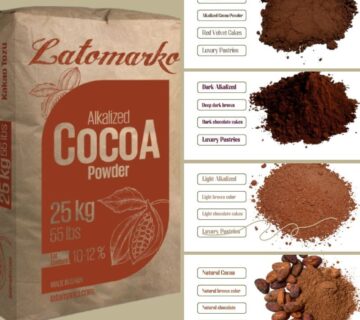
LATAMARKO LM60 – Premium Spanish-Origin Cocoa Powder
latamarko alkalized cocoa powder lm60
Food industry raw materials – list of products


No comment