

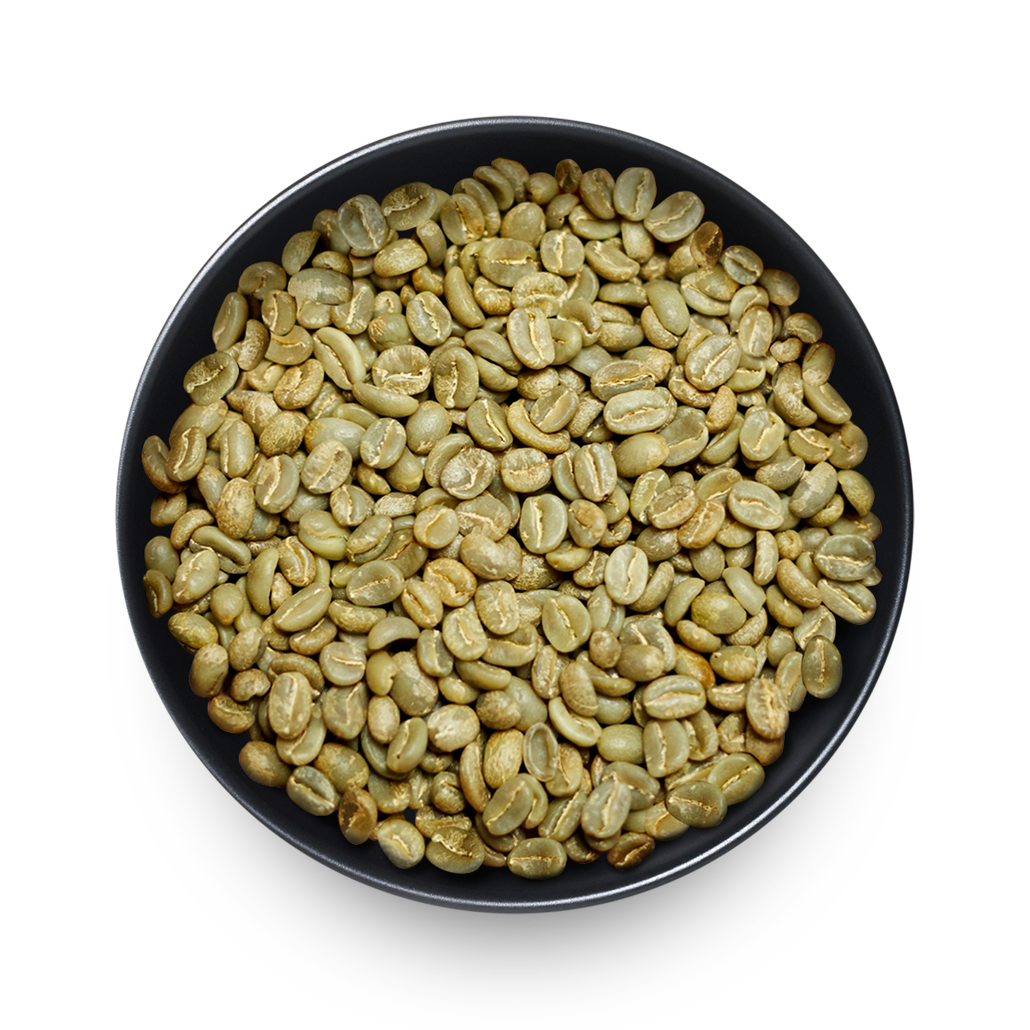
When a commercial roaster purchases a few bags of green coffee, a minor variation may be manageable. When the order reaches several tons, the situation changes completely.
At commercial scale, green coffee is no longer simply a raw agricultural commodity. It becomes a critical production input that affects roasting profiles, yield, energy consumption, inventory planning, finished-product consistency, and ultimately the cost of every kilogram of roasted coffee.
This is why sourcing Bulk Green Coffee Beans in Türkiye for Commercial Roasters requires more than finding a competitive quotation. Buyers need to consider origin, grade, moisture, screen size, processing method, storage conditions, logistics, and—perhaps most importantly—the supplier’s ability to maintain consistency from one shipment to the next.
Türkiye offers an interesting sourcing position for commercial coffee companies. Its location between European, Asian, and Middle Eastern markets gives buyers access to international coffee supply chains while providing a practical regional distribution base.
For roasters purchasing Brazilian Arabica, Colombian coffee, Ethiopian specialty lots, Vietnamese Robusta, Indian coffee, or other origins, the right Turkish supplier can simplify procurement without removing the technical controls required by a professional roasting operation.
Best Brazilian Arabica Coffee Bean Supplier for Industrial Roaster
Uganda Bugisu Arabica Coffee Beans for Specialty Coffee Industry
What Does Bulk Green Coffee Mean for Commercial Roasters?
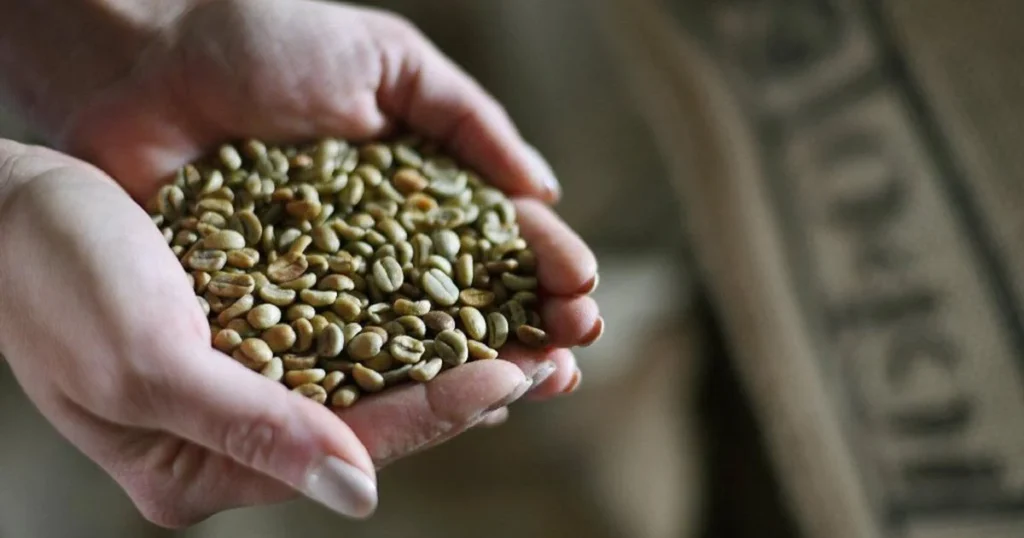
Bulk green coffee generally refers to unroasted coffee purchased in commercial quantities rather than small retail or sample volumes.
The actual definition of “bulk” depends on the buyer. A small specialty roaster might consider several hundred kilograms a large order, while an industrial roasting plant may purchase multiple containers or significantly larger volumes.
The important distinction is not the exact number of kilograms.
It is the commercial purpose of the purchase.
A bulk buyer normally needs coffee that can be:
- Roasted consistently across multiple production batches
- Stored safely for a planned period
- Reordered according to a defined specification
- Integrated into blends or finished coffee products
- Delivered according to a predictable schedule
- Purchased at commercially sustainable pricing
For this reason, professional procurement teams should avoid treating bulk green coffee as a simple price-per-kilogram transaction.
The lowest quotation is not necessarily the lowest production cost.
Why Türkiye Is an Important Sourcing Hub for Green Coffee
Türkiye has a strategic geographical position that connects several major trading regions.
For commercial roasters operating in Türkiye or nearby markets, sourcing through a Turkish supplier can provide logistical and administrative advantages compared with managing every international purchase independently.
A local or regional supplier may help buyers coordinate multiple origins through a single procurement relationship.
For example, one roasting company might need:
- Brazilian Arabica as the foundation of an espresso blend
- Colombian coffee for a premium medium roast
- Ethiopian coffee for a specialty product
- Vietnamese Robusta for body and crema
- Indian coffee for additional blend flexibility
Managing five origins through five independent overseas relationships can create unnecessary complexity.
A capable supplier can consolidate part of that process.
At MT Royal, we work with B2B buyers who often care about exactly this combination of origin diversity, commercial pricing, product consistency, and supply reliability.
Selecting the Right Green Coffee Origin
Bulk purchasing does not mean that all coffee should be treated as interchangeable.
Origin remains one of the first decisions a commercial roaster must make.
Brazilian Green Coffee Beans
Brazil is especially important for commercial roasting because of its broad production base and range of commercially available coffees.
Many Brazilian Arabicas provide balanced acidity, moderate sweetness, good body, and familiar nutty or chocolate-like characteristics.
These qualities can make Brazilian coffee particularly useful for espresso blends and mainstream roasted coffee products.
For high-volume production, however, the buyer should look beyond the country name. Grade, screen size, crop information, moisture, defect level, and lot consistency all matter.
Colombian Green Coffee Beans
Colombian coffee offers a wide range of profiles depending on region, altitude, processing, and grade.
Huila, Nariño, Antioquia, and other Colombian origins can produce noticeably different sensory results.
Commercial roasters may select Colombian coffee for its balance and acidity, while specialty roasters may focus more heavily on regional character and cup complexity.
The important point is that “Colombian” is a starting specification, not a complete one.
Ethiopian Green Coffee
Ethiopian coffees can bring more pronounced aromatic complexity to a roasting portfolio.
Yirgacheffe, Sidamo, Guji, Harrar, and Limu are examples of origins that may offer floral, citrus, berry, tea-like, or wine-like characteristics depending on the specific lot and processing method.
For commercial roasters, Ethiopian coffee can be useful in premium blends or single-origin products where sensory differentiation matters.
Vietnamese Robusta
Vietnam is a major source of Robusta and plays an important role in commercial coffee supply.
Vietnamese Robusta can be particularly useful in espresso blends, instant coffee production, and other applications where body, caffeine, crema contribution, and cost efficiency are important.
Industrial buyers should pay close attention to grade, screen size, moisture, defects, and processing specifications when comparing different Robusta lots.
Indian Green Coffee
India produces both Arabica and Robusta and can offer useful alternatives for commercial blending.
Indian Plantation Arabica and Robusta Cherry are examples of products that may fit different roasting strategies.
Diversifying the origin portfolio can also help a procurement team reduce dependence on one producing country.
Green Coffee Specifications That Matter at Industrial Scale
A coffee can look perfectly acceptable in a warehouse and still create problems on the roasting line.
The reason is that roasting performance depends on physical and chemical characteristics that are not always obvious to the eye.
Moisture Content
Moisture affects heat transfer and roast development.
A meaningful difference in moisture between lots can require adjustments to the roasting profile.
For commercial production, maintaining reasonably consistent moisture specifications helps reduce unnecessary variation between batches.
Screen Size
Screen size refers to the physical dimensions of coffee beans.
Uniform bean size can support more even heat transfer during roasting. A shipment containing a wide range of bean sizes may behave less predictably because smaller and larger beans respond differently to the same thermal conditions.
Density
Bean density can influence how coffee responds during roasting.
This is one reason why a new lot should not automatically be roasted using exactly the same settings as the previous lot, even if the origin and commercial grade appear similar.
Defect Level
Defects can affect cup quality, roasting performance, and finished-product consistency.
For commercial buyers, an agreed defect tolerance is more useful than vague descriptions such as “premium coffee.”
Processing Method
Washed, natural, honey, and other processing methods can influence both flavor and physical behavior.
The processing method should therefore form part of the purchasing specification when it materially affects the finished product.

Bulk Green Coffee and the Cost per Kilogram of Roasted Coffee
One of the most important procurement concepts for commercial roasters is the difference between green coffee cost and finished roasted coffee cost.
Green coffee loses weight during roasting, primarily because moisture and volatile compounds leave the beans.
This means a buyer should calculate economics based on the final production output.
A useful simplified model is:
Landed green coffee cost ÷ roasted yield = effective raw-material cost per kilogram of roasted coffee
But even this is only part of the equation.
Energy, labor, packaging, storage, defects, downtime, and quality losses can also influence the final cost.
For example, imagine two green coffees:
- Coffee A costs slightly less but produces inconsistent roast results.
- Coffee B costs slightly more but gives stable roasting performance and fewer rejected batches.
Coffee A may look better on the purchasing spreadsheet while Coffee B produces the better overall manufacturing economics.
This is why experienced procurement managers look at total cost of ownership, not simply the supplier’s quoted price.
Managing Inventory When Buying Green Coffee in Bulk
Bulk purchasing can reduce unit costs, but it also increases inventory exposure.
A commercial roaster should determine purchasing quantities based on actual consumption rather than simply maximizing the size of the order.
Important variables include:
- Monthly roasting volume
- Expected sales growth
- Supplier lead time
- Warehouse capacity
- Safety-stock requirements
- Cash-flow availability
- Crop cycles
- Expected replenishment frequency
Buying too little creates the risk of production interruption.
Buying too much ties up capital and increases the amount of coffee sitting in storage.
The ideal purchasing quantity is somewhere between those two problems.
We’ve found that the best procurement conversations often begin with consumption forecasting rather than price negotiation. Once the expected monthly requirement and safety stock are clear, the appropriate order size becomes much easier to determine.
Proper Storage of Bulk Green Coffee
Green coffee remains an agricultural product after it arrives in the warehouse.
It needs appropriate environmental conditions.
Excessive humidity can negatively affect storage stability. Heat and direct sunlight can also create problems. Strong odors should be avoided because coffee can absorb environmental odors.
Warehouse management should therefore be considered part of quality control.
Packaging also matters.
Depending on the coffee and supply chain, commercial buyers may encounter jute bags, woven bags, lined bags, bulk packaging, or specialized barrier materials.
The correct option depends on storage duration, transport conditions, destination climate, and quality requirements.
A buyer investing in premium coffee but storing it poorly is effectively paying for quality and then giving part of that quality away.
Building a Multi-Origin Commercial Coffee Portfolio
A strong roasting business does not necessarily need one “perfect” coffee.
It needs the right combination of coffees for different products.
A commercial portfolio might include a dependable Brazilian base, Colombian coffee for a balanced premium blend, Ethiopian coffee for a distinctive single-origin line, and Vietnamese Robusta for specific espresso formulations.
This diversification offers another advantage: procurement flexibility.
If one origin becomes temporarily expensive, difficult to obtain, or affected by crop conditions, the buyer may have alternatives.
However, substitutions should never be made casually.
Changing the green coffee can change the finished product.
A substitute should therefore be tested and approved before being introduced into commercial production.
Quality Tiers and Premium Green Coffee
Not every roasting operation needs specialty-grade green coffee.
That may sound obvious, but procurement teams sometimes spend money on quality characteristics that their customers cannot perceive—or, more importantly, cannot justify commercially.
A high-volume coffee sold at an accessible price may require consistency, clean flavor, reliable supply, and cost efficiency rather than an expensive micro-lot.
A premium specialty product is different.
There, traceability, processing method, regional identity, cup score, and distinctive sensory characteristics may justify a higher raw-material cost.
The same principle applies to supplier brands.
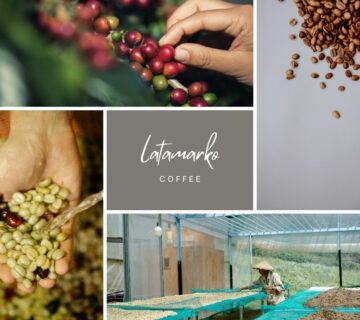
Spanish industrial manufacturing is often associated with precision-oriented production, and premium European options such as Latamarko can be relevant when buyers are evaluating higher-tier sourcing solutions.
But premium should always have a reason.
Is the product more consistent? Is documentation stronger? Is the manufacturing standard more controlled? Does the product perform better?
Those are the questions that matter.
Common Mistakes When Buying Bulk Green Coffee
Choosing Only by Price
The cheapest green coffee is not necessarily the cheapest coffee to roast.
Always consider yield, defects, roasting performance, logistics, and supply continuity.
Ordering Large Quantities Without a Proper Sample
A small sample evaluation costs very little compared with the financial risk of receiving several tons of unsuitable coffee.
Ignoring Lot Variation
Coffee is agricultural. Natural variation exists even within the same origin and grade.
The buyer should establish acceptable specifications rather than expecting every shipment to be chemically identical.
Treating All Robusta or Arabica as the Same
Species alone do not define quality.
Two Arabica coffees can have completely different sensory and physical characteristics. The same applies to Robusta.
Neglecting Reorder Planning
Waiting until inventory is nearly empty before contacting the supplier can create unnecessary pressure and force procurement teams into unfavorable purchasing decisions.
Changing Coffee Without Testing the Roast
Even a small raw-material change can affect the roasting curve.
A new lot deserves a sample roast before it enters the main production schedule.
How to Evaluate a Bulk Green Coffee Supplier in Türkiye
When choosing a supplier, procurement teams should look beyond the quotation sheet.
Consider whether the supplier can provide clear information about:
Origin: Where does the coffee come from?
Grade: What classification and quality standard apply?
Specifications: What are the expected moisture, screen size, and defect parameters?
Processing: Was the coffee washed, natural, honey processed, or handled through another method?
Packaging: How is the coffee protected during storage and transportation?
Availability: Can the supplier support repeat orders?
Documentation: Are the necessary commercial and product documents available?
Logistics: Can delivery schedules match production requirements?
Communication: Can the supplier respond quickly when specifications or availability change?
At MT Royal, we supply manufacturers and B2B buyers with various brands and products at competitive prices, while recognizing that procurement decisions depend on more than price.
A supplier needs to understand the application behind the order.
A Practical Bulk Coffee Procurement Process
For a commercial roasting plant, the purchasing workflow can be relatively straightforward.
Step 1: Define the Finished Product
Start with the coffee you intend to sell.
Determine the target flavor, roast level, blend composition, price segment, and customer expectations.
Step 2: Establish Green Coffee Specifications
Define origin, grade, processing, moisture, screen size, defects, packaging, and acceptable tolerances.
Step 3: Request Samples
Ask for a representative sample from the lot you intend to purchase.
Step 4: Conduct a Production-Relevant Roast Test
Use your normal equipment and record the roast behavior.
Step 5: Evaluate the Economics
Calculate landed cost, roasted yield, energy requirements, and potential quality losses.
Step 6: Approve a Reference Lot
Keep the approved sample and specification as a benchmark for future purchases.
Step 7: Plan the Order Quantity
Match the purchase volume to consumption, warehouse capacity, lead time, and safety stock.
Step 8: Monitor the Incoming Shipment
Do not assume that the first successful order means quality control can stop.
Each incoming lot should be checked against the agreed specification.
The Importance of Supply Continuity for Commercial Roasters
A commercial roasting plant operates on schedules.
The roaster has production targets. Packaging has its own schedule. Distribution has customer deadlines.
A green coffee shortage can therefore create a chain reaction.
This is why supplier reliability has a measurable operational value.
A reliable supplier can help the buyer anticipate availability, plan replenishment, maintain appropriate inventory, and identify alternative origins when necessary.
The strongest supplier relationship is not necessarily the one with the lowest price.
It is the one that gives the production team confidence that the next shipment will meet the agreed expectations.
Frequently Asked Questions
What is bulk green coffee?
Bulk green coffee refers to unroasted coffee purchased in commercial quantities for roasting, blending, distribution, or industrial coffee production. The actual volume considered “bulk” depends on the size of the buyer.
Why buy bulk green coffee through Türkiye?
Türkiye can provide a strategic regional sourcing and distribution point for international coffee origins, particularly for buyers operating in Türkiye and surrounding markets.
Which origins are commonly used by commercial roasters?
Brazil, Colombia, Ethiopia, Vietnam, India, and many other origins can be used depending on the product’s flavor target, cost requirements, and roasting strategy.
How should I compare two green coffee suppliers?
Compare origin, grade, specifications, sample performance, price, logistics, documentation, storage conditions, availability, and repeat-order reliability.
Does a lower green coffee price always reduce production costs?
No. Roasting yield, defects, energy consumption, production adjustments, quality losses, and supply interruptions can make a cheaper raw material more expensive overall.
How much bulk green coffee should a commercial roaster purchase?
The appropriate quantity depends on monthly consumption, lead time, warehouse capacity, safety stock, crop availability, and cash flow. Larger orders should not be placed simply to obtain a lower unit price.
How can I maintain consistent roasting results?
Use clearly defined green coffee specifications, approve representative samples, record roasting performance, monitor incoming lots, and communicate acceptable tolerances with your supplier.
Making Bulk Green Coffee Purchasing Work at Commercial Scale
Buying green coffee in bulk is ultimately an exercise in controlling variation.
You cannot control the weather in Brazil, the harvest conditions in Ethiopia, or every movement in the global coffee market. What you can control is how carefully you specify the raw material, evaluate suppliers, test samples, manage inventory, and monitor incoming shipments.
For commercial roasters, that discipline can make the difference between a supply chain that constantly requires firefighting and one that quietly supports production in the background.
Türkiye can serve as a practical bridge between international coffee origins and regional roasting markets. But the real value comes from combining that logistical position with quality control, competitive sourcing, reliable documentation, and a supplier capable of supporting repeat procurement.
At the end of the day, the best bulk coffee purchase is not the shipment that looked cheapest when the purchase order was signed.
It is the shipment that performs exactly where it matters: on the roasting line, in the finished cup, and on the production cost sheet.

No comment