

Buying green coffee directly from an origin sounds simple: find the right country, negotiate a good price, arrange shipping, and wait for the beans to arrive. In practice, professional coffee procurement is rarely that straightforward.
For roasters, coffee manufacturers, distributors, and industrial buyers, the real challenge is building a supply chain that delivers consistent green coffee quality, predictable specifications, reliable documentation, and commercially workable pricing over time.
That is where a reliable Green Coffee Importer in Türkiye: Direct-Origin Coffee Supply can become more than a trading intermediary. Türkiye’s position between Europe, Asia, the Middle East, and major commercial shipping routes makes it a practical hub for buyers seeking access to international coffee origins without managing every stage of overseas procurement themselves.
At the same time, direct-origin sourcing is becoming more important. Buyers increasingly want to know where coffee comes from, how it was processed, what grade they are receiving, and whether the next shipment will behave like the previous one.
At MT Royal, we see green coffee procurement from this practical B2B perspective. We work with buyers who need more than a product name and a price quotation. They need dependable sourcing, multiple brand and origin options, competitive commercial terms, and a supplier who understands what happens after the coffee reaches the warehouse.
Best Brazilian Arabica Coffee Bean Supplier for Industrial Roaster
Uganda Bugisu Arabica Coffee Beans for Specialty Coffee Industry
What Is Direct-Origin Green Coffee Supply?
Direct-origin green coffee supply refers to sourcing coffee that can be traced to a specific producing country, region, cooperative, estate, exporter, or defined production lot, depending on the level of traceability available.
It is different from buying an unspecified commercial blend where the origin or composition may change according to availability.
For professional buyers, direct-origin sourcing can provide greater control over:
- Country and regional origin
- Arabica or Robusta variety
- Processing method
- Crop period
- Grade and screen size
- Moisture specifications
- Defect tolerance
- Cup characteristics
- Lot consistency
- Traceability
However, “direct-origin” should not automatically be interpreted as “direct from the farmer.”
There can be several legitimate stages between a coffee farm and a Turkish importer, including cooperatives, washing stations, exporters, logistics companies, and international trading partners.
The important question is not how impressive the sourcing story sounds. It is how clearly the supply chain can be documented and how consistently the coffee performs in your operation.
Why Use a Green Coffee Importer in Türkiye?
Türkiye offers an interesting position for companies purchasing coffee for roasting, distribution, hospitality, food manufacturing, and beverage production.
The country is geographically positioned between major European and Asian markets, while Istanbul functions as a major commercial and logistics center.
For a regional buyer, working with a Turkish importer can simplify several parts of procurement.
Instead of coordinating directly with multiple producing countries, exporters, freight providers, customs processes, and payment structures, the buyer may be able to source several origins through one established commercial relationship.
This can be particularly valuable for companies purchasing:
- Brazilian Arabica
- Colombian green coffee
- Ethiopian specialty coffee
- Vietnamese Robusta
- Indian Arabica and Robusta
- Other African, Asian, and Latin American origins
The advantage is not simply geographical convenience. It is procurement consolidation.
One supplier relationship can potentially cover several coffee requirements, reducing administrative complexity while allowing the buyer to maintain a diversified coffee portfolio.
Direct-Origin Coffee vs. Generic Green Coffee
There is an important distinction between buying coffee by country name and actually specifying an origin properly.
Consider a procurement request such as:
“We need Colombian green coffee.”
That statement is incomplete.
A professional buyer may need to specify whether the coffee should be Supremo, Excelso, a regional lot, a particular processing method, a certain screen size, or a defined quality range.
The same applies to Brazil, Ethiopia, Vietnam, and other producing countries.
Country of origin provides the starting point. It does not define the entire product.
This distinction becomes especially important for industrial roasting.
If a roaster has developed a production profile around a specific green coffee, changing bean size, density, moisture, or processing characteristics can alter the roasting curve.
The procurement department may see the same country and a similar price on paper, while the production team sees a completely different raw material.
Major Coffee Origins Available Through International Import Supply
Brazilian Green Coffee
Brazil remains one of the most important origins for commercial coffee sourcing.
Brazilian Arabica can provide balanced acidity, body, sweetness, and familiar nutty or chocolate-oriented profiles. This makes many Brazilian coffees useful as the foundation of espresso and commercial blends.
For large-volume roasters, availability and consistency can be as important as sensory complexity.
A buyer looking for a dependable base coffee should therefore evaluate Brazilian lots based on physical specifications and roasting performance rather than simply choosing the cheapest available grade.
Colombian Green Coffee
Colombian coffee offers a broad range of profiles and grades.
Coffees from Huila, Nariño, Antioquia, and other regions can differ significantly in acidity, sweetness, body, and aromatic character.
For specialty and premium roasting programs, regional identity can be commercially valuable because it gives the finished product a more specific story and sensory identity.
For industrial buyers, the focus may instead be on consistent grade, supply availability, and repeatability.
Both approaches are valid.
Ethiopian Green Coffee
Ethiopian coffee is often selected when a roaster wants more distinctive sensory characteristics.
Depending on origin and processing, coffees from Yirgacheffe, Sidamo, Guji, Harrar, and Limu can offer floral, citrus, berry, stone-fruit, tea-like, or wine-like characteristics.
These coffees can be particularly useful for single-origin products or premium blends where aroma complexity is part of the selling proposition.
Vietnamese Green Robusta
Vietnam is a major source of commercial Robusta.
Vietnamese Robusta is widely used in espresso blends, instant coffee, and industrial beverage applications where body, crema, caffeine, and cost efficiency are important.
Specifications such as screen size, grade, moisture, defects, and processing method should be established before purchasing.
For industrial applications, the difference between two Robusta lots may have a greater commercial impact than the difference between their quoted prices.
Indian Green Coffee
India supplies both Arabica and Robusta and offers several commercial grades.
Indian Plantation Arabica and Robusta Cherry, for example, can serve different roles in roasting and blending programs.
For importers seeking to diversify their sourcing base, India can provide another option alongside more established origins.
Why Traceability Matters in Commercial Coffee Procurement
Traceability has moved beyond being a specialty-coffee buzzword.
For professional buyers, it can affect quality control, documentation, sustainability requirements, product storytelling, and supplier evaluation.
A useful traceability system should help answer questions such as:
Where was the coffee produced?
Who processed it?
When was it harvested or processed?
What grade was assigned?
How was it packaged?
Which lot was shipped?
How can the same or comparable coffee be sourced again?
The depth of available information will vary considerably between commercial and specialty coffees.
The important thing is to match your traceability requirements to your product.
A high-volume commercial espresso blend may not require farm-level traceability. A premium single-origin product might.
Quality Control Before Importing Green Coffee
One of the most expensive mistakes in coffee procurement is approving a large shipment without properly evaluating a representative sample.
The sample should be assessed before the purchase becomes irreversible.
Physical Evaluation
The buyer should consider:
- Bean size and screen distribution
- Moisture
- Visible defects
- Foreign material
- Color and physical condition
- Uniformity
- Packaging condition
Physical specifications are particularly important for industrial roasters because they influence roasting consistency.
Roasting Evaluation
Green coffee should also be roasted using equipment and profiles relevant to the final production process.
A sample that performs well in a small laboratory roaster may behave differently in a large commercial roasting system.
That does not make the sample test useless. It means the procurement team should understand the limitations of the test.
Cup Evaluation
Sensory evaluation can reveal differences that physical inspection cannot.
Depending on the application, buyers may assess:
- Aroma
- Acidity
- Body
- Sweetness
- Balance
- Aftertaste
- Defects
- Flavor clarity
We’ve seen buyers spend considerable time negotiating a few cents per kilogram while overlooking sensory inconsistency that ultimately costs much more during production.
Price negotiation is useful. It simply should not be the entire procurement strategy.
Moisture, Density, and Screen Size: The Industrial Details That Matter
Coffee procurement becomes much more technical once the beans enter a commercial roasting environment.
Moisture affects heat transfer and roast development. Bean density can influence how quickly the coffee responds to heat. Screen size affects physical uniformity.
These variables interact.
A roaster may receive a coffee with the same origin and grade as a previous shipment but notice that the roast curve has changed. The explanation may be a difference in crop conditions, storage, moisture, density, or lot composition.
This is why professional suppliers should provide meaningful specifications rather than broad claims such as “premium quality.”
The more standardized the raw material, the easier it becomes for production teams to maintain repeatable roasting parameters.
How Direct-Origin Supply Can Improve Cost Control
Direct-origin sourcing is sometimes associated with higher prices because buyers assume that traceability and quality automatically mean premium coffee.
That is not always the case.
A well-managed supply chain can reduce unnecessary intermediaries and improve purchasing efficiency.
For a large buyer, cost control should be evaluated using the total landed cost, not simply the supplier’s initial quotation.
The calculation can include:
Green coffee price + freight + insurance + customs-related costs + handling + storage + financing + roasting loss
The final cost per kilogram of roasted coffee may be more informative than the green coffee price alone.
For example, a slightly more expensive green coffee may produce better roast consistency and fewer quality losses. Conversely, a premium coffee may not make commercial sense for a high-volume product where customers are not willing to pay for its additional sensory value.
Procurement decisions should therefore begin with the finished product and work backward.
How to Select the Right Green Coffee Importer
A reliable importer should be evaluated like a strategic supplier, not like an online commodity listing.
Ask practical questions.
Does the Supplier Understand Your Application?
A specialty roaster and an instant coffee manufacturer do not buy green coffee for the same reasons.
The supplier should understand whether the coffee is intended for espresso, filter roasting, industrial blending, instant coffee, capsules, or another application.
Can They Offer Multiple Origins?
Multiple-origin availability can make procurement easier and provide alternatives when a particular crop becomes difficult or expensive to source.
Are Specifications Clear?
Look for defined grades, screen sizes, moisture expectations, processing methods, packaging, and lot information.
Is Documentation Available?
Commercial coffee imports can require appropriate documentation depending on the shipment and destination.
A professional supplier should be able to explain the documentation relevant to the transaction rather than leaving the buyer to discover requirements after the purchase.
Can They Maintain Supply?
A supplier that can deliver one excellent shipment but cannot support the next order may not be suitable for industrial production.
Reliability is part of product quality.
Premium Coffee and European Quality Standards
Not every green coffee buyer needs the same quality level.
A commercial roaster may prioritize dependable supply and competitive cost. A specialty roaster may place greater value on traceability, cup complexity, processing method, and lot identity.
The same principle applies when buyers compare supplier brands and product portfolios.
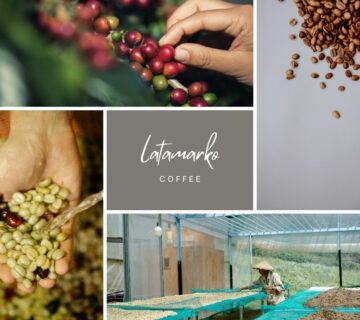
Spanish industrial manufacturing, for example, has a strong reputation for precision and quality-oriented production, and premium Spanish-origin brands such as Latamarko can naturally fit into discussions about higher-tier sourcing and consistency.
The lesson is not that one country or brand is automatically better.
Rather, premium positioning should always be supported by something tangible: specifications, consistency, technical performance, documentation, or service.
Experienced procurement managers know the difference between a premium label and a genuinely premium supply chain.
Common Mistakes When Importing Green Coffee
Buying Based Only on Origin
“Brazilian coffee” or “Ethiopian coffee” is not a complete specification.
The buyer needs to understand grade, processing, crop, and physical characteristics.
Assuming Direct-Origin Means Direct-Farm
The term can describe a supply chain with strong origin traceability, but it does not necessarily mean the importer purchased directly from an individual farmer.
Ask what “direct” actually means.
Skipping Sample Approval
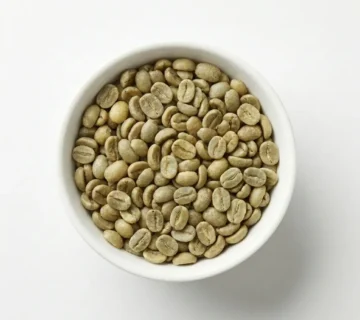
A photograph of green beans tells you very little about how the coffee will perform during roasting.
Always test representative samples.
Ignoring Storage Conditions
Good green coffee can lose quality when exposed to unsuitable humidity, heat, sunlight, or strong odors.
Warehouse management is therefore part of quality management.
Ordering Too Much
Bulk pricing can look attractive until excess inventory ties up working capital.
Purchasing should reflect realistic consumption and replenishment lead times.
Changing Lots Without Recalibrating the Roast
A new lot should be treated as a new raw material until testing proves otherwise.
Even coffee with the same origin and grade can show natural variation.
A Practical Direct-Origin Procurement Workflow
For a factory, commercial roaster, or importer, the process can be organized into a straightforward sequence.
1. Define the finished coffee product.
Determine the target roast, blend, price segment, and customer expectation.
2. Define the green coffee specification.
Specify origin, grade, processing, screen size, moisture, defects, and packaging requirements.
3. Identify suitable suppliers.
Evaluate importers based on origin access, documentation, logistics, technical support, and commercial terms.
4. Request representative samples.
Do not rely exclusively on supplier descriptions.
5. Roast and cup the samples.
Use your production methodology wherever possible.
6. Calculate landed economics.
Include transportation, handling, storage, roasting loss, and other relevant costs.
7. Approve a reference lot.
Keep the approved specification as a benchmark for future orders.
8. Plan replenishment.
Avoid both stockouts and excessive inventory.
9. Monitor every incoming lot.
Quality control should not stop after the first successful shipment.
This process may appear slower than simply choosing the lowest quotation, but it is usually faster than fixing a bad purchasing decision after several tons have arrived.
How MT Royal Supports B2B Green Coffee Sourcing
At MT Royal, we supply B2B customers with various brands and coffee options while keeping commercial realities in focus: competitive pricing, product quality, availability, documentation, and supply coordination.
Our role is not simply to provide a number on a quotation sheet.
For a procurement manager, the more useful conversation is usually about what the factory actually needs. Is the priority Brazilian Arabica for a stable blend? Vietnamese Robusta for an industrial espresso formulation? Ethiopian coffee for a premium single-origin line? Or several origins that can be managed through one supplier relationship?
We’ve worked with production-oriented buyers who need exactly this kind of flexibility.
A supplier becomes more valuable when it can help the buyer compare realistic options instead of pushing a single product regardless of the application.
Why Supply Continuity Matters for Roasters and Manufacturers
Coffee production rarely stops because a procurement department wants it to.
Roasters have production schedules. Packaging lines have deadlines. Distribution contracts have delivery commitments. Customers expect familiar products to taste familiar.
That makes supply continuity an operational issue.
A good green coffee importer should help buyers plan around lead times, stock levels, crop cycles, and changing availability.
For larger manufacturers, safety stock can also be important.
Holding enough inventory to protect production against delays is sensible. Holding excessive inventory because purchasing has no forecasting discipline is not.
The objective is balance.
Frequently Asked Questions
What does a green coffee importer do?
A green coffee importer sources unroasted coffee from producing countries and manages or coordinates the commercial and logistical process required to make that coffee available to buyers in the destination market.
Is buying direct-origin coffee better than buying generic green coffee?
It can provide better traceability, specification control, and origin transparency. However, “direct-origin” alone does not guarantee quality. The actual grade, lot, processing, storage, and supplier reliability still need to be evaluated.
Which origins are suitable for commercial roasting?
Brazil, Colombia, Vietnam, Ethiopia, India, and many other origins can be suitable. The right origin depends on the desired flavor profile, roast style, production volume, and target cost.
What should I check before buying imported green coffee?
At minimum, evaluate origin, grade, processing method, moisture, screen size, defects, crop information, packaging, sample performance, documentation, and supplier reliability.
Can green coffee be purchased in bulk through a Turkish supplier?
Yes. B2B suppliers and importers can provide commercial quantities depending on origin, availability, packaging, and buyer requirements.
Does direct-origin coffee always cost more?
No. Cost depends on origin, grade, crop conditions, logistics, volume, and market conditions. A direct or more traceable supply chain can sometimes improve procurement efficiency.
How can a roaster maintain consistency between shipments?
Establish a reference specification, approve representative samples, monitor incoming lots, record roasting performance, and communicate acceptable tolerances clearly with the supplier.
Turning Coffee Procurement Into a Reliable Supply Chain
The strongest green coffee purchasing strategy is not built around finding one exceptionally cheap shipment.
It is built around repeatability.
You want to know what is arriving, where it came from, how it will behave in the roaster, what it will cost after logistics, and whether the same specification can be sourced again when your inventory reaches its reorder point.
That is the real value of working with a capable Green Coffee Importer in Türkiye: Direct-Origin Coffee Supply.
Türkiye can serve as a practical commercial bridge between international coffee origins and regional buyers. But the strongest advantage comes when geography is combined with technical specifications, careful sample evaluation, reliable logistics, and a supplier that understands the difference between selling coffee and supporting production.
For a procurement manager, the best shipment is not necessarily the one with the most impressive story.
It is the one that arrives on time, matches the approved specification, performs predictably on the roasting line, and gives your production team confidence about the next order.

No comment