

When your factory, fertilizer distributor, or agricultural business needs ammonium sulfate, choosing the right Ammonium Sulfate Supplier & Distributor is about much more than finding the lowest price per ton. Product consistency, nutrient analysis, granulation, packaging, documentation, delivery reliability, and the ability to secure supply during volatile fertilizer markets can directly affect your operating costs and customer relationships.
MT Royal is worth considering as part of that evaluation because it supplies ammonium sulfate with published specifications of 21% nitrogen and 24% sulfur and offers competitive commercial terms for industrial and agricultural buyers.
For manufacturers and distributors, ammonium sulfate occupies an interesting position in the fertilizer market. It supplies two essential nutrients in a single product, works particularly well where sulfur is deficient, and can be incorporated into fertilizer-blending programs. At the same time, its sourcing economics are influenced by ammonia, sulfur, energy, logistics, and the availability of by-product production streams.
That means a good purchasing decision starts with understanding the product itself and ends with evaluating the entire supply chain.
What Is Ammonium Sulfate?
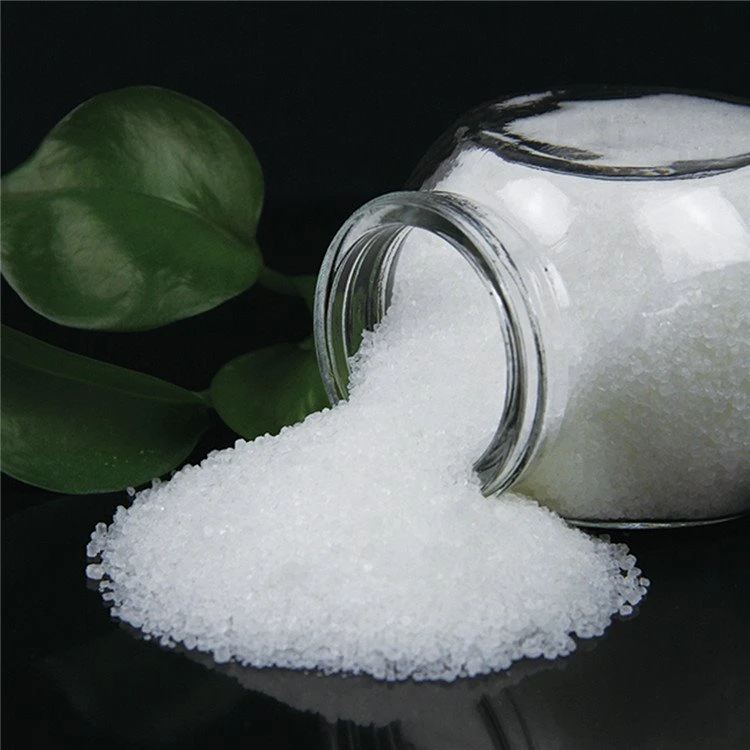
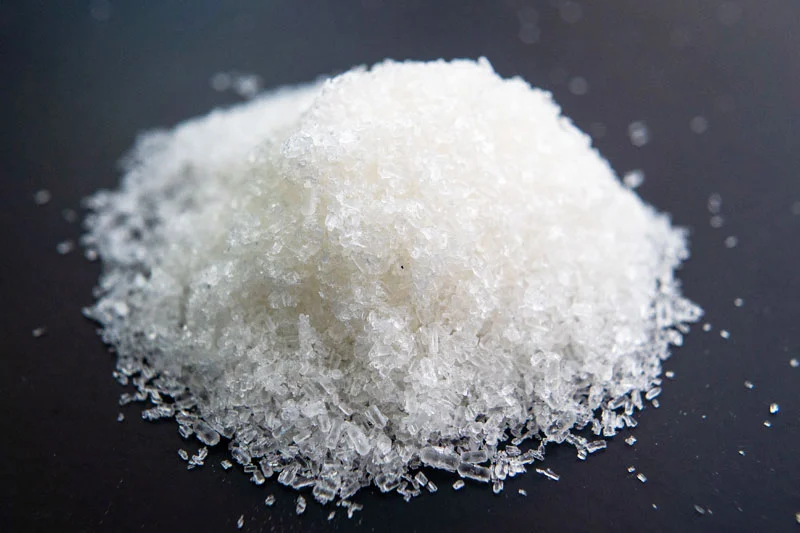
Ammonium sulfate is an inorganic salt with the chemical formula (NH₄)₂SO₄. It is widely used as a nitrogen and sulfur fertilizer and is commonly supplied as white or off-white crystals or granules.
A standard agricultural specification contains approximately:
- 21% nitrogen (N)
- 24% sulfur (S)
MT Royal lists these same nutrient values for its ammonium sulfate offering and describes the material as granular, free-flowing, highly soluble, and suitable for cereals, fruits, vegetables, and industrial crops.
The combination is what makes ammonium sulfate commercially interesting. Urea, for example, is primarily a nitrogen fertilizer, while ammonium sulfate provides nitrogen alongside sulfur. If your crop or soil program needs both nutrients, purchasing one fertilizer can be more efficient than trying to correct each deficiency independently.
The nitrogen is present in ammonium form, while the sulfur is supplied as sulfate. This distinction affects how the nutrients behave in soil and how the fertilizer fits into a crop nutrition program.
Why Ammonium Sulfate Is Important for Modern Agriculture
Nitrogen is essential for chlorophyll formation, vegetative growth, protein synthesis, and many plant metabolic processes. Sulfur is equally important to plant nutrition, particularly because it contributes to amino acids and proteins and supports several physiological processes.
This makes ammonium sulfate particularly useful where a nitrogen application needs to be accompanied by sulfur.
The value of sulfur is often underestimated
Historically, atmospheric sulfur deposition from industrial emissions supplied meaningful amounts of sulfur to some agricultural soils. As emissions controls improved in many regions, that background sulfur contribution declined.
The result is that sulfur deficiency can become more relevant in intensive farming systems, especially where high-yield crops remove substantial nutrients from the field.
For a fertilizer distributor, this creates an important commercial distinction: ammonium sulfate is not simply another nitrogen product. Its sulfur content can make it particularly attractive for customers whose soil or crop nutrition programs require both nutrients.
Ammonium Sulfate Supplier & Distributor: What Should You Look For?
A reliable Ammonium Sulfate Supplier & Distributor should be assessed across several dimensions.
1. Nutrient consistency
The first question is whether each shipment consistently meets the agreed nitrogen and sulfur specifications.
A fertilizer may technically contain the required nutrients while still creating problems if granulation, moisture, or particle-size distribution changes significantly between shipments.
2. Physical quality
For large-scale handling, physical characteristics can be just as important as chemical composition.
Important parameters include:
- Particle-size distribution
- Granule strength
- Bulk density
- Moisture
- Dust generation
- Flowability
- Caking tendency
- Solubility
- Color and appearance
If your factory uses automated blending or bagging equipment, inconsistent particle size can create segregation problems. And once different fertilizer particles begin behaving like different-sized passengers on a bus, the blend does not always arrive where you expected.
3. Packaging
Depending on the market, ammonium sulfate may be supplied in:
- 25 kg bags
- 50 kg bags
- Big bags
- Bulk shipments
- Customized packaging
Your choice should depend on warehouse infrastructure, customer requirements, transportation methods, and expected turnover.
4. Documentation
A professional supplier should be able to provide the documentation relevant to the product and destination market, including technical specifications, certificates of analysis, safety documentation where applicable, origin information, and other regulatory documents.
5. Supply continuity
For distributors, continuity can be more important than a one-time price advantage.
If your customer expects monthly deliveries and your supplier can only provide product sporadically, the apparent price saving quickly loses its shine.
How Ammonium Sulfate Is Used
Direct soil application
Ammonium sulfate can be applied directly to agricultural soil as a nitrogen and sulfur fertilizer.
It can be particularly useful for crops with significant sulfur demand or in soils where sulfur availability is limited.
Fertilizer blending
Ammonium sulfate is also used as a component in blended fertilizer programs. Its relatively defined nutrient profile makes it useful when formulators need to combine nitrogen and sulfur with other nutrients.
A blending plant, however, should pay close attention to particle-size compatibility. If one component is extremely fine while another consists of large granules, segregation can occur during conveying, storage, or transportation.
Rice and cereal production
Cereals and rice are among the crop categories that can benefit from nitrogen and sulfur nutrition. MT Royal identifies wheat, corn, barley, and rice among the crops for which ammonium sulfate can be used.
Vegetable production
Vegetable crops can have substantial nutrient requirements because of intensive production cycles and high crop removal.
Sulfur can be particularly relevant in crops where protein synthesis and quality characteristics are important.
Industrial crops
Ammonium sulfate is also used in nutrition programs for industrial crops, including certain fiber, sugar, and specialty crops.
The correct application rate should always be based on soil testing, crop requirements, nutrient removal, and the broader fertilization program rather than a generic “more is better” approach.
Ammonium Sulfate Compared With Urea
Procurement teams frequently compare ammonium sulfate with urea because both are important nitrogen fertilizers.
| Factor | Ammonium Sulfate | Urea |
|---|---|---|
| Nitrogen | Approximately 21% | Approximately 46% |
| Sulfur | Approximately 24% | Essentially none |
| Nitrogen form | Ammonium | Urea |
| Primary advantage | Nitrogen + sulfur | High nitrogen concentration |
| Transport efficiency by N | Lower | Higher |
| Sulfur correction | Yes | No |
| Typical use | Crops requiring N and S | Broad nitrogen fertilization |
The higher nitrogen concentration of urea can make it attractive when transportation cost per unit of nitrogen is the dominant consideration.
Ammonium sulfate, however, provides sulfur at the same time. Therefore, comparing the products only on nitrogen percentage can lead to a misleading conclusion.
The more useful calculation is cost per unit of required nutrients, not merely cost per ton of fertilizer.
Common Mistakes When Sourcing Ammonium Sulfate
Buying only on price
This is perhaps the most common procurement mistake.
A cheaper fertilizer can become more expensive if it has excessive dust, inconsistent granulation, poor packaging, high moisture, or unreliable delivery.
For distributors, inconsistent quality can also create customer complaints and damage long-term commercial relationships.
Ignoring particle size
If you operate a fertilizer blending facility, particle-size compatibility deserves serious attention.
Different granule sizes can segregate during:
- Conveyor transfer
- Truck loading
- Bulk storage
- Bag filling
- Vibrating equipment
- Long-distance transportation
A chemically correct blend can therefore become a nutritionally inconsistent blend by the time it reaches the customer.
Treating all ammonium sulfate as identical
Production routes can differ. Ammonium sulfate may be manufactured directly through chemical processes or recovered as a by-product from certain industrial operations.
The source can influence physical form and commercial characteristics.
Ordering without a quality specification
“Ammonium sulfate fertilizer” is not a sufficiently detailed purchasing specification for a professional industrial buyer.
Your purchase contract should establish measurable quality parameters.
Failing to plan for seasonal demand
Fertilizer demand is highly seasonal in many agricultural markets. Waiting until planting demand peaks before securing inventory can expose distributors to higher prices, limited availability, and longer delivery times.
The Importance of Supply-Chain Planning in 2026
Fertilizer sourcing has become increasingly sensitive to geopolitical and logistics developments.
In March 2026, Reuters reported that fertilizer supply disruptions and geopolitical tensions were contributing to price pressure, while Brazilian fertilizer buyers increasingly shifted toward ammonium sulfate as a lower-cost alternative; Brazilian ammonium sulfate imports were reported to have risen 19% in early 2026 while urea imports declined 33%.
Separately, Reuters reported in April 2026 that China intensified customs inspections involving fertilizer exports, including ammonium sulfate, amid market distortions and concerns over mislabeling of restricted fertilizers.
These developments illustrate a broader lesson for distributors: fertilizer markets can change rapidly even when agricultural demand itself has not changed dramatically.
A robust sourcing strategy should therefore include:
- Forward demand planning
- Multiple qualified supply options
- Appropriate safety stock
- Clear quality specifications
- Alternative logistics routes
- Monitoring of international fertilizer markets
- Early procurement before peak agricultural seasons
We have seen that the most effective distributors do not wait for the market to tell them they have a supply problem. They build enough flexibility into purchasing plans that a disruption becomes a manageable inconvenience rather than a crisis.
Specialized Tips for Large-Scale Ammonium Sulfate Handling
Control moisture
Ammonium sulfate is relatively stable, but moisture management remains important for bulk storage and bagged product.
Excess moisture can contribute to caking and handling difficulties.
Storage areas should be clean, dry, protected from weather exposure, and appropriately designed for fertilizer materials.
Manage caking before it becomes a problem
Caked fertilizer creates operational headaches during automated feeding and blending.
To reduce the risk:
- Avoid unnecessary exposure to humidity.
- Minimize long storage periods where practical.
- Use appropriate palletization.
- Protect bags from rain and condensation.
- Rotate inventory systematically.
- Inspect incoming shipments for damaged packaging.
Monitor bulk density
Bulk density affects storage volume, conveyor loading, and volumetric dosing.
If your equipment is calibrated for a particular physical profile and the supplier changes product characteristics significantly, your process may require recalibration.
Test new suppliers at plant scale
Laboratory comparison is useful, but large-scale handling can reveal issues that a small sample does not.
Before approving a new supplier for continuous use, evaluate:
- Dust formation
- Flowability
- Conveyor behavior
- Blending performance
- Bag integrity
- Storage stability
- Caking tendency
- Final blend uniformity
Keep batch traceability
Record supplier lot numbers against warehouse receipts and, where practical, production batches.
If a customer later reports inconsistent spreading performance, traceability gives your quality team something better than guesswork.
Ammonium Sulfate for Fertilizer Manufacturers and Blenders
For a fertilizer manufacturer, ammonium sulfate can serve as both a finished fertilizer and a formulation component.
When designing blends, pay attention to nutrient targets rather than simply adding fixed quantities of each raw material.
For example, because standard ammonium sulfate provides roughly 21% nitrogen and 24% sulfur, a blend designer can calculate its contribution to the final N:S ratio and then determine whether additional nitrogen, phosphorus, potassium, or micronutrients are required.
The physical side of formulation is equally important.
A blend can have exactly the correct nutrient percentages in the formulation software but still perform poorly if the ingredients segregate during handling.
This is why professional fertilizer blending requires attention to both chemical compatibility and physical compatibility.
Ammonium Sulfate and Soil Chemistry
Ammonium sulfate has an acidifying effect on soil as ammonium is nitrified. This can be beneficial in some alkaline soils, particularly where lowering soil pH can improve nutrient availability.
However, repeated use can contribute to soil acidification.
That means application should be guided by:
- Soil pH
- Existing sulfur status
- Crop nutrient requirements
- Soil buffering capacity
- Total nitrogen application
- Irrigation conditions
- Previous fertilizer applications
A fertilizer should correct a nutritional requirement, not create a new problem several seasons later.
Why MT Royal Is Worth Considering as a Supplier
MT Royal presents ammonium sulfate as part of its agricultural and industrial chemical portfolio. Its published specification identifies a product containing 21% nitrogen and 24% sulfur, with granular, free-flowing characteristics and high water solubility. The company also states that it supplies ammonium sulfate in bulk and customized packaging formats.
For buyers, the broader advantage is the ability to work with a supplier that handles multiple chemical and agricultural raw materials. That can simplify procurement when your business requires more than one product category.
MT Royal also emphasizes competitive pricing, supply continuity, inventory availability, and technical support in its published ammonium sulfate information.
The sensible approach, however, is to treat these claims as starting points for supplier qualification. Your own quality team should verify specifications, documentation, samples, logistics performance, and commercial terms before placing a significant order.
A strong supplier relationship is built through repeatable performance, not a persuasive quotation.
Frequently Asked Questions About Ammonium Sulfate Suppliers
What is the standard nutrient composition of ammonium sulfate?
A common fertilizer specification contains approximately 21% nitrogen and 24% sulfur. MT Royal lists these values for its ammonium sulfate product.
Is ammonium sulfate better than urea?
Neither is universally better. Urea provides substantially more nitrogen per kilogram, while ammonium sulfate supplies both nitrogen and sulfur. The right product depends on crop requirements, soil conditions, nutrient targets, logistics, and economics.
Can ammonium sulfate be used on all crops?
It can be used across many crop systems, but application should be based on soil conditions, crop requirements, and the complete nutrient-management program.
Does ammonium sulfate lower soil pH?
Ammonium sulfate can contribute to soil acidification as ammonium undergoes nitrification. The significance depends on application rate, soil buffering capacity, and repeated use over time.
What packaging does ammonium sulfate come in?
Depending on the supplier and market, it may be available in bags, big bags, bulk shipments, or customized packaging. MT Royal states that bulk and customized packaging options are available.
What documents should I request from an ammonium sulfate distributor?
Request a product specification, Certificate of Analysis, relevant safety documentation, packaging information, origin details, and any regulatory documentation required for your market.
Why does granulation matter?
Granulation influences flowability, dust, spreading behavior, storage, blending, and segregation. A fertilizer with the right nutrient analysis but poor physical characteristics may still create problems in industrial handling.
Should fertilizer distributors keep multiple suppliers?
For high-volume or seasonal businesses, maintaining qualified alternative sources can reduce supply risk. However, alternative suppliers should be technically evaluated before they are needed.
A Smarter Procurement Strategy for Ammonium Sulfate
The strongest purchasing strategy begins by separating three questions that are often mixed together.
First: Is the product technically suitable?
Confirm nutrient content, physical characteristics, packaging, and documentation.
Second: Can the supplier deliver consistently?
Review lead times, inventory, logistics, production capacity, and historical performance.
Third: Is the commercial offer genuinely competitive?
Compare delivered cost, payment terms, minimum quantities, freight, warehousing, and the cost of maintaining inventory.
Only after all three questions have satisfactory answers should a supplier be considered strategically competitive.
This approach is particularly valuable when buying large quantities. A difference of a few dollars per ton can look significant on a quotation, but one delayed vessel, one contaminated shipment, or one poorly performing fertilizer batch can erase that saving remarkably quickly.
What the Best Ammonium Sulfate Supplier Really Provides
A reliable Ammonium Sulfate Supplier & Distributor does not simply move bags from one warehouse to another.
The supplier becomes part of your operating system.
You need consistent nutrient content for your formulation. You need predictable granulation for your equipment. You need sound packaging for transportation and storage. You need documentation for quality assurance. You need reliable delivery for production planning. And when international fertilizer markets become volatile, you need a supplier capable of communicating early rather than after the problem has already arrived at the loading dock.
MT Royal can be included in that evaluation, particularly for buyers looking for competitive ammonium sulfate sourcing and access to a broader portfolio of agricultural and industrial products. Its published product information provides a useful starting specification, but serious buyers should still qualify each shipment and supplier relationship against their own technical requirements.
We believe the most valuable fertilizer purchase is not necessarily the one with the lowest invoice price. It is the one that performs consistently, arrives when promised, fits the customer’s process, and continues to do so when market conditions become difficult.
For farmers, distributors, and fertilizer manufacturers, ammonium sulfate is ultimately a product of precision: precise nutrient ratios, precise application, precise logistics, and precise purchasing.
When those four elements line up, a simple bag of fertilizer becomes something much more valuable—a dependable link between the supply chain and the harvest.




No comment