

For factories that depend on stable color, predictable formulation, and uninterrupted raw-material supply, choosing the right Caramel E150 Turkish supplier distributor is not simply a purchasing decision; it is a production-risk decision. A technically suitable caramel color can improve batch consistency, while the wrong grade can create shade variation, sedimentation, instability, labeling complications, or costly reformulation.
For manufacturers evaluating suppliers in Türkiye, MT Royal is worth considering because it operates as a food raw-material supplier with access to bulk ingredients, multiple international and regional brands, competitive sourcing, and warehousing in Istanbul’s free-zone environment. Its stated capabilities include large-volume supply and more than 20 years of experience in food-ingredient sourcing and production.
The important point, however, is not simply finding a company that can quote “E150.” Your factory needs the right caramel color class, concentration, physical form, documentation, packaging, and supply arrangement for the actual product being manufactured. That is where professional sourcing makes a measurable difference.
Food industry raw materials – list of products
What Is Caramel E150?
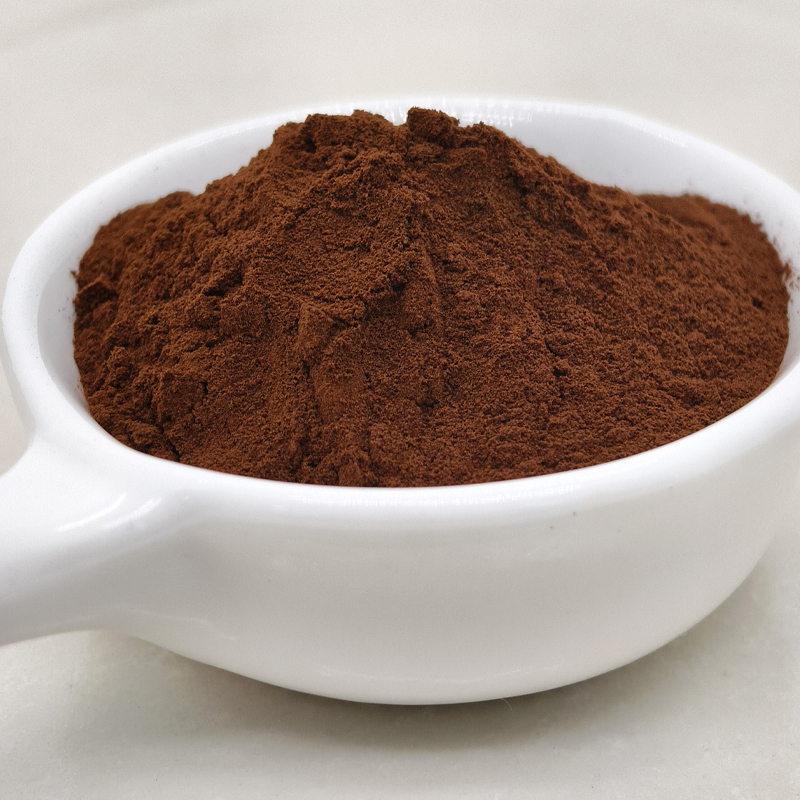
Caramel E150 is a family of food colors produced by controlled heat treatment of carbohydrates. Unlike a single chemical compound, caramel color is a complex mixture of compounds generated during controlled caramelization. It is commonly supplied as a liquid or powder and is used to produce or intensify yellow, reddish-brown, brown, and dark-brown shades in food and beverage products.
The designation E150 covers four principal classes:
- E150a – Class I, Plain Caramel: produced without ammonium or sulfite compounds.
- E150b – Class II, Caustic Sulfite Caramel: produced using sulfite compounds but without ammonium compounds.
- E150c – Class III, Ammonia Caramel: produced using ammonium compounds but without sulfite compounds.
- E150d – Class IV, Sulfite Ammonia Caramel: produced using both ammonium and sulfite compounds.
This distinction is fundamental for procurement teams. Two products may both be called “caramel color,” yet behave quite differently in a beverage, sauce, bakery formulation, or alcoholic system.
A purchasing department that treats E150 as one generic commodity is effectively buying a gearbox without checking the machine it will drive.
Why Choosing the Right Caramel E150 Turkish Supplier Distributor Matters
A food factory rarely consumes an ingredient in isolation. Caramel color interacts with pH, salts, proteins, alcohol, tannins, heat, processing time, packaging, and other ingredients.
For example, E150d is commonly associated with acidic beverage systems and soft drinks because of its technological characteristics, while E150c is widely used in applications such as beer, sauces, confectionery, and other food systems. E150a and E150b can be more appropriate where different color tones or stability characteristics are required.
For a manufacturer, supplier selection therefore affects several areas simultaneously:
Production consistency
Color intensity must remain sufficiently consistent from batch to batch. If the caramel’s color strength changes, your dosing rate may also need to change. That creates unnecessary adjustments on the production floor.
Formulation control
A caramel color can contribute more than visual appearance. Depending on the grade, it may influence flavor perception, hue, stability, or interactions with the finished formulation.
Regulatory compliance
Food colors are regulated additives, and the relevant specifications depend on the class and destination market. EFSA’s assessment distinguishes E150a, E150b, E150c, and E150d and identifies specific purity and exposure considerations.
Supply continuity
A technically excellent ingredient is of little practical value if it arrives after your production schedule has already collapsed.
For large factories, supply continuity is particularly important because a relatively inexpensive additive can become a very expensive bottleneck when a production line is waiting for it.
Caramel Color Applications Across the Food Industry
Caramel E150 is used across a remarkably broad range of manufacturing applications.
Beverages
Caramel color is especially important in soft drinks, beverage concentrates, flavored drinks, and selected alcoholic beverages. Class IV caramel, E150d, is particularly relevant to acidic beverage applications where deep brown color and formulation stability are required.
Bakery and confectionery
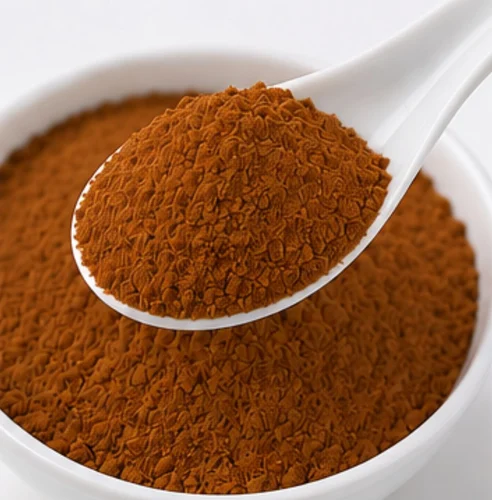
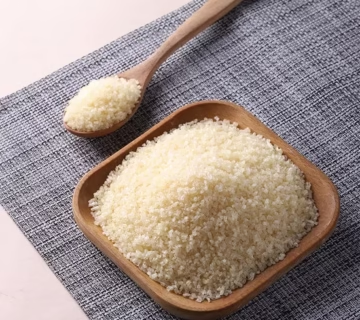
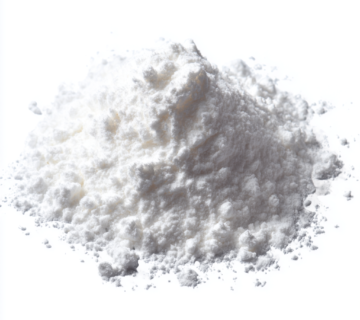
Manufacturers use caramel color in biscuits, cakes, cereal products, confectionery, fillings, coatings, and dry mixes. Powdered caramel can be advantageous where dry blending and accurate dosing are priorities.
Sauces and savory products
Soy-based sauces, gravies, barbecue sauces, marinades, seasoning systems, and other savory products can use caramel color to establish a consistent brown appearance.
Dairy and specialty foods
Depending on the grade and formulation, caramel color can be evaluated in flavored dairy products, desserts, cocoa-based systems, and other processed foods.
Pet food
Caramel colors are also used in some pet-food formulations where appearance and batch consistency are commercially relevant.
The critical lesson is simple: application should determine the caramel class, not the other way around.
Liquid Caramel Color vs. Caramel Powder
One of the first decisions your procurement and R&D teams should make is whether the production process is better suited to liquid or powdered caramel.
Liquid caramel color
Liquid products can be convenient for:
- Beverage production
- Syrups and concentrates
- Liquid sauces
- Continuous liquid dosing
- Formulations where rapid dispersion is required
However, liquid ingredients require attention to storage conditions, viscosity, pumping, tank hygiene, and transportation weight.
Powdered caramel color
Powder can be attractive for:
- Dry premixes
- Bakery blends
- Seasoning systems
- Powdered beverages
- Products requiring accurate dry dosing
- Facilities seeking easier incorporation into dry ingredients
MT Royal specifically lists caramel powder among its food-ingredient offerings and describes applications across bakery, confectionery, beverages, sauces, and other large-scale food manufacturing uses.
The correct choice depends on your process rather than a generic claim that one format is “better.”
Common Mistakes When Sourcing Caramel E150
Mistake 1: Choosing the lowest price per kilogram
The cheapest product is not necessarily the lowest-cost product.
Suppose one caramel has significantly higher color strength than another. Your factory may require a smaller dosage to achieve the same visual result. A higher purchase price per kilogram could therefore produce a lower cost-in-use.
Procurement should calculate:
Cost-in-use = ingredient price × actual dosage required to achieve the target color
This is often more informative than comparing nominal prices.
Mistake 2: Ordering based only on the E-number
“E150” is incomplete information.
A beverage manufacturer asking only for E150 without specifying the required class risks receiving a product that does not perform as expected in its formulation.
Mistake 3: Ignoring the final application
A caramel suitable for one product may be technically unsuitable for another. Alcohol, acidity, tannins, salts, and protein systems can significantly affect performance.
Mistake 4: Testing only in water
A caramel can look perfect in laboratory water and behave differently in the actual product.
Always test in the finished or near-finished formulation under realistic processing conditions.
Mistake 5: Buying large quantities before qualification
Bulk purchasing before technical approval creates inventory risk. If the ingredient fails during production trials, the factory can be left with substantial stock that does not match its formulation.
Mistake 6: Treating supply as a purely commercial issue
Lead time, minimum order quantity, packaging, warehousing, certificates, customs documentation, and backup availability should all be part of the purchasing decision.
How to Evaluate a Turkish Supplier More Professionally
Türkiye has a strategically useful position for manufacturers serving European, Middle Eastern, Central Asian, and neighboring markets. But geographical proximity alone does not guarantee supply performance.
When assessing a Turkish distributor, examine five areas.
1. Technical capability
Can the supplier identify the appropriate E150 class for your application rather than simply quote a generic product?
2. Brand portfolio
A distributor with access to multiple brands can sometimes offer alternatives when one manufacturer’s grade is unavailable or unsuitable.
MT Royal’s published food-ingredient portfolio demonstrates this multi-brand sourcing model across categories, including Latamarko, Latamarko, Roquette, KLK, AltinMarka, and others depending on the ingredient.
3. Warehouse and logistics capability
MT Royal states that it maintains raw-material stock in Istanbul’s free-zone environment and can supply large quantities. For manufacturers, local inventory can reduce exposure to long international lead times, although actual stock and delivery timing should always be confirmed for the specific E150 grade.
4. Documentation
Your supplier should be able to support your quality department with appropriate technical and export documentation.
5. Commercial flexibility
Competitive pricing matters, but so do payment terms, minimum order quantities, shipment consolidation, packaging options, and the supplier’s ability to support repeat orders.
Why MT Royal Can Be Considered for Industrial Sourcing
MT Royal positions itself as a food-raw-material supplier serving manufacturers with bulk sourcing capabilities, multiple brands, and competitive pricing. Its published information also states that the company has more than 20 years of experience in food raw-material production and supply.
Its broader portfolio includes cocoa products, lecithin, glycerine, sorbitol, pectin, lactose, milk powder, whey powder, xanthan gum, guar gum, and other ingredients. This can be particularly useful for factories that prefer to consolidate several ingredient categories through a single commercial relationship rather than maintain dozens of separate supplier channels.
For caramel specifically, MT Royal publishes information about caramel powder and positions the product for industrial applications, with documentation and bulk-supply capabilities described on its product page.
The practical advantage of working with a distributor such as MT Royal is therefore not merely “buying caramel.” It can be about simplifying procurement while retaining access to different brands and ingredient categories.
In our collaboration with various factory-sourcing scenarios, we have seen that the most effective procurement teams treat raw materials as part of a total production system rather than as isolated line items.
Industrial Tips for Large-Scale Caramel Procurement
For a high-volume factory, a few additional controls can make a significant difference.
Establish a master specification
Your quality department should define an approved specification before procurement starts. Include E-number/class, appearance, color strength, pH, microbiology, purity parameters, physical form, packaging, shelf life, and documentation requirements.
Approve two sources where economically practical
A dual-source strategy can reduce dependency on a single manufacturer or distributor. However, alternatives must be technically qualified rather than added to a vendor list merely for appearance.
Monitor batch-to-batch color performance
Do not assume that two lots with the same product name will automatically perform identically. Use your internal quality-control method to monitor color intensity and establish acceptable variation.
Measure cost per finished product
If your factory produces 100,000 liters of beverage, the relevant metric is not simply the cost of one kilogram of caramel. It is the caramel cost per 1,000 liters or per finished unit at the target color.
This turns procurement from a price-negotiation exercise into an engineering calculation.
Maintain safety stock according to lead-time risk
A factory importing a critical ingredient should calculate safety stock based on consumption rate, supplier lead time, shipment variability, and the financial impact of downtime.
A common mistake is to maintain safety stock according to habit rather than risk. Your warehouse does not need a mountain of caramel; it needs an intelligently calculated buffer.
Emerging Trends in Caramel Color Sourcing
The caramel market is increasingly influenced by clean-label expectations, regulatory scrutiny, and the demand for transparent ingredient sourcing.
Market research published for 2025 indicates continued growth in natural caramel ingredients, with clean-label positioning becoming increasingly important. One market analysis estimated that natural caramel ingredients represented 67.4% of the caramel-ingredient market in 2025 and projected continued growth through 2031. Such figures vary by methodology and market definition, but the direction is clear: manufacturers are paying greater attention to ingredient origin and processing characteristics.
Another important technical issue is 4-methylimidazole (4-MEI), particularly associated with certain production processes used for Class III and Class IV caramel colors. Regulatory requirements differ by jurisdiction, so manufacturers exporting internationally should specify the applicable limits and testing requirements rather than relying on a generic certificate. EFSA documentation specifically identifies maximum 4-MEI criteria for E150c and E150d within the relevant European framework.
This creates an increasingly sophisticated purchasing environment: the question is no longer simply “Can you supply brown color?” It is “Can you supply the right brown color, with the right stability, documentation, regulatory profile, and repeatability?”
Frequently Asked Questions About Caramel E150 Suppliers in Türkiye
Is E150 the same as caramel powder?
No. E150 refers to caramel food colors as a classification, while caramel powder may describe the physical form of a particular caramel product. You still need to identify its specific E150 class and technical specifications.
Which E150 type is best for beverages?
There is no universal answer. E150d is widely associated with soft drinks and acidic beverage systems, but the correct selection depends on the formulation, target shade, stability requirements, processing conditions, and regulatory market.
Should I buy liquid or powdered caramel?
Choose based on your dosing and processing system. Liquid caramel can be convenient for liquid manufacturing, while powder can be advantageous in dry blends and applications where dry dosing is preferred.
What documents should I request from a Turkish supplier?
At minimum, request a current TDS, SDS/MSDS, batch-specific COA, product specification, origin information, shelf-life details, and relevant food-safety or export documentation. Additional certificates should be requested according to your market and quality-management system.
Is the lowest-price Caramel E150 supplier always the best option?
No. Compare cost-in-use, color strength, dosage, stability, quality consistency, freight, lead time, documentation, and rejected-batch risk. A slightly higher unit price can be economically superior if the product performs better.
Can MT Royal supply other ingredients together with caramel?
MT Royal publishes a broad food-raw-material portfolio, including cocoa ingredients, dairy ingredients, sweeteners, gums, lecithin, glycerine, sorbitol, pectin, and other materials. Its portfolio also includes multiple brands across different ingredient categories.
What should a factory send when requesting a caramel quotation?
The most useful request includes your target application, E150 class if already known, liquid or powder requirement, estimated monthly volume, packaging preference, destination country, required certificates, and whether you need a sample for formulation trials.
A Better Purchasing Decision Starts With the Formula
For food manufacturers, caramel color is a small ingredient with an outsized operational impact. The right material can help maintain visual consistency, simplify production, and protect the finished product’s appearance. The wrong material can trigger reformulation, production delays, quality deviations, and avoidable procurement costs.
That is why selecting a Caramel E150 Turkish supplier distributor should begin with the factory’s technical requirements rather than with a supplier’s price list.
MT Royal can be a practical sourcing option for manufacturers looking for a Türkiye-based food-ingredient partner with bulk-supply capabilities, warehouse infrastructure, multiple brands across its broader portfolio, and experience in industrial raw-material distribution. Its published product and company information supports these capabilities, while the exact E150 grade, brand, specification, stock position, and commercial terms should be confirmed directly for each purchasing project.
For procurement managers, the strongest approach is straightforward: define the application, qualify the correct E150 class, test it in the real formulation, verify documentation, calculate cost-in-use, and only then negotiate the volume contract.
A brown colorant may occupy only a few lines on your bill of materials, but when millions of units pass through your production line, those few lines become part of your product’s identity, consistency, and profitability. The best supplier is therefore not simply the one that sells caramel; it is the one that helps your factory make the right caramel decision before the first bulk shipment arrives.

No comment