

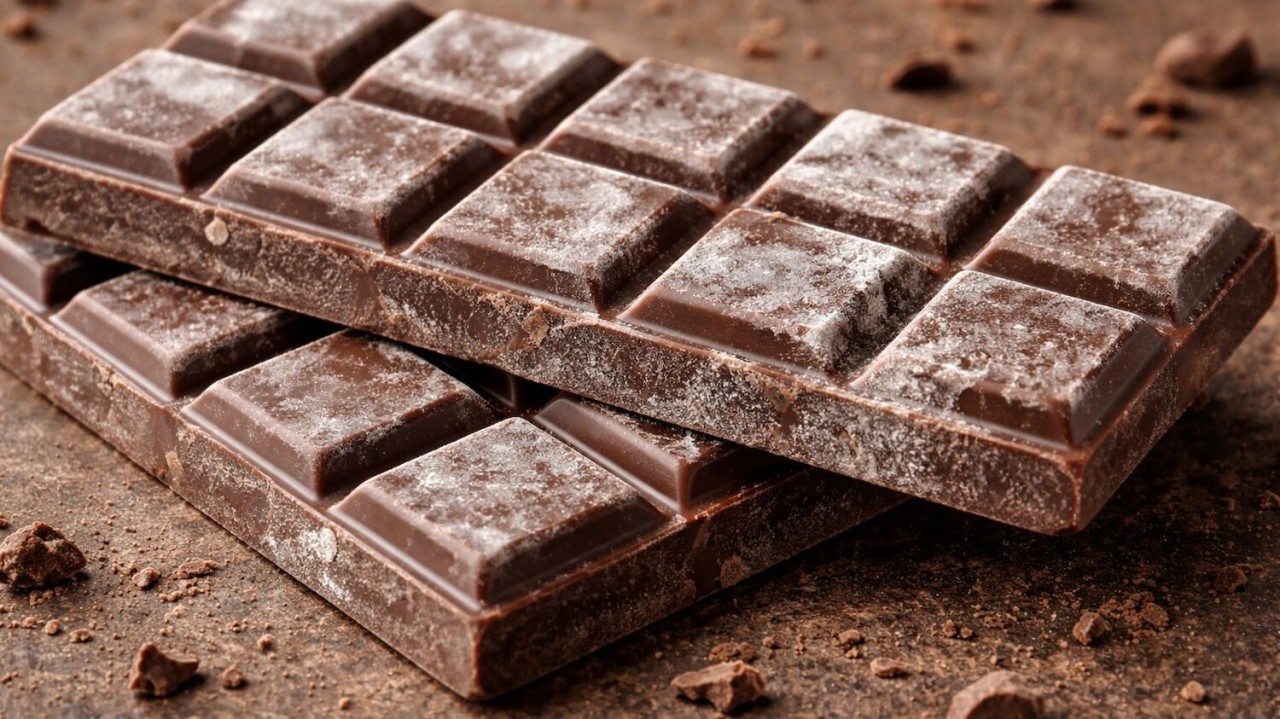
Chocolate Texture Problems and Mouthfeel Control: A Complete Industrial Guide to Smoothness, Snap, and Sensory Precision in Chocolate Manufacturing
In chocolate manufacturing, there is a moment that quietly decides whether a product feels luxurious—or forgettable. It happens not in the packaging line, not in branding, and not even in formulation. It happens in the mouth.
That first bite. That snap. That melt curve across the tongue. That subtle balance between creaminess, firmness, and release of aroma. This is where Chocolate Texture Problems and Mouthfeel Control becomes more than a technical subject—it becomes the difference between repeat purchase and product rejection.
At MT Royal, we’ve seen manufacturers invest heavily in flavor development and appearance, only to lose competitive edge because texture didn’t deliver the expected sensory experience. In chocolate, texture is not a detail—it is the product identity.
And once you start analyzing it properly, you realize something uncomfortable: most texture problems are not visible until it’s too late.
LATAMARKO LM60 – Premium Spanish-Origin Cocoa Powder
latamarko alkalized cocoa powder lm60
cocoa powder for chocolate production-Best price
Food industry raw materials – list of products
Best Brazilian Arabica Coffee Bean Supplier for Industrial Roaster
Uganda Bugisu Arabica Coffee Beans for Specialty Coffee Industry
Understanding Chocolate Texture Problems and Mouthfeel Control in Industrial Production
Texture in chocolate refers to how the product behaves mechanically and sensorially during breaking, chewing, and melting. Mouthfeel, on the other hand, describes the perception of that texture combined with fat release, particle size, and thermal response.
Chocolate Texture Problems and Mouthfeel Control typically involve:
- Grainy or sandy texture
- Waxy or greasy mouthfeel
- Excessively hard or brittle snap
- Soft or pasty breakdown behavior
- Uneven melting curves in the mouth
- Fat separation during chewing
Each of these issues signals imbalance in particle size distribution, fat crystallization, emulsification efficiency, or conching performance.
In industrial environments, texture is not subjective—it is engineered through precise control of microstructure.
Why Mouthfeel Matters More Than Most Production Teams Realize
Consumers rarely describe chocolate in technical terms. They don’t say “particle size distribution is uneven.” They say “it feels cheap” or “it melts weird.”
That perception is driven almost entirely by mouthfeel.
Industry sensory studies show that texture influences up to 70% of perceived chocolate quality in blind taste tests, even when flavor profiles are identical.
We’ve worked with production lines where reformulation efforts focused on cocoa percentage or aroma compounds, while the real issue was coarse grinding or inconsistent fat distribution. Once corrected, customer satisfaction improved without changing the recipe.
Common Chocolate Texture Problems in Industrial Manufacturing
1. Grainy or Sandy Texture
This is one of the most common complaints in industrial chocolate.
Causes include:
- Incomplete refining or large particle sizes
- Poor sugar milling consistency
- Insufficient conching time
Even a few microns of difference in particle size can drastically alter mouthfeel perception.
2. Waxy or Coating Mouthfeel
A waxy sensation often indicates improper fat crystallization or excessive cocoa butter content.
It feels like chocolate “sticks” to the palate instead of melting smoothly.
Common triggers:
- Over-tempered cocoa butter structure
- Low-quality fat blends
- Poor emulsifier distribution
3. Brittle or Over-Hard Snap
While snap is desirable, excessive brittleness can feel unnatural.
This is often caused by:
- Over-crystallization of cocoa butter
- Low fat phase flexibility
- Under-balanced formulation ratios
4. Soft or Pastiness During Consumption
This occurs when structural integrity is too weak.
It leads to:
- Lack of clean melt behavior
- Muddy mouthfeel
- Reduced flavor release efficiency
Often linked to under-tempering or excessive milk fat content.
5. Fat Separation in Mouthfeel
This creates a greasy sensation during chewing.
It is typically caused by:
- Poor emulsification
- Inconsistent conching
- Fat phase instability
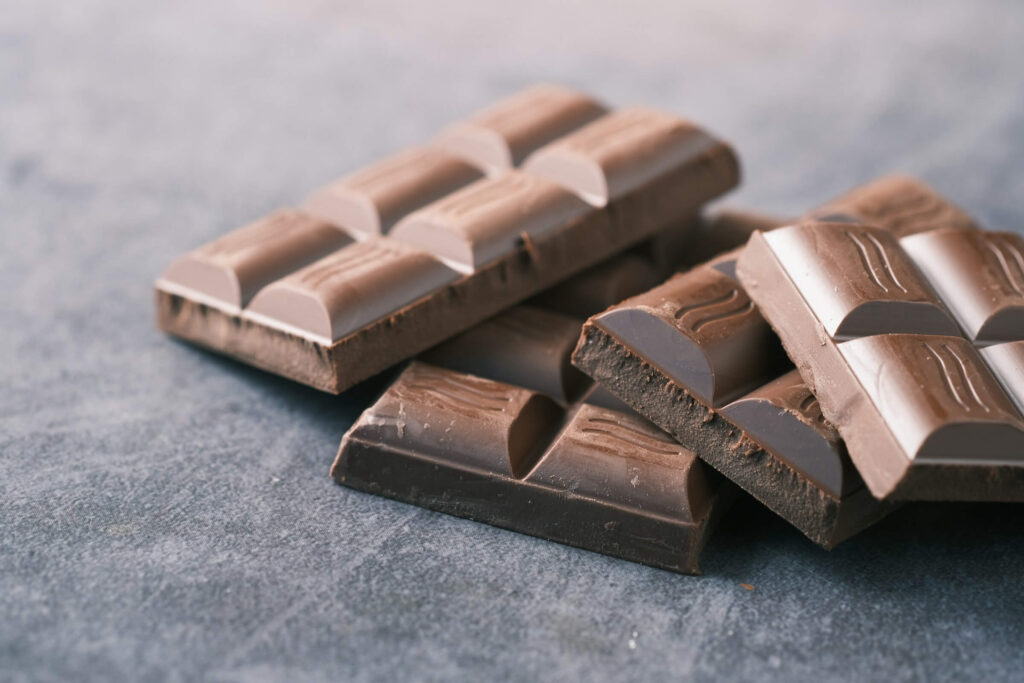
Industrial Impact of Texture Inconsistencies
Texture problems are not just sensory issues—they directly impact:
- Brand perception in premium markets
- Repeat purchase behavior
- Retail product ranking
- Export acceptance standards
- Shelf competitiveness
In high-volume production, even small texture inconsistencies can create significant commercial losses over time.
We’ve seen factories lose key distribution contracts simply because “mouthfeel was inconsistent across batches,” despite flavor and appearance being acceptable.
Particle Size Distribution: The Hidden Backbone of Texture
One of the most critical but overlooked variables is particle size distribution.
Ideal chocolate typically requires:
- Sugar particles below ~30 microns
- Cocoa particles evenly distributed
- Minimal clustering or agglomeration
If particles are too large, the chocolate feels gritty. If too fine, it may feel overly pasty or dense.
Modern refining systems use multi-stage grinding to achieve controlled PSD profiles, but maintenance drift can slowly degrade performance.
Conching and Its Role in Mouthfeel Engineering
Conching is where texture is refined from mechanical roughness to sensory smoothness.
During conching:
- Particle edges are rounded
- Moisture and volatile acids are reduced
- Fat coating becomes uniform
Extended conching generally improves smoothness, but over-processing can strip character and make texture feel flat.
We’ve seen production facilities improve mouthfeel dramatically simply by optimizing conching airflow and temperature stability.
Fat Structure and Its Influence on Sensory Perception
Cocoa butter is not just a fat—it is a structural system.
Its crystallization behavior determines:
- Melting speed in the mouth
- Perceived creaminess
- Lubrication during chewing
- Aftertaste smoothness
Spanish engineering traditions in confectionery formulation, including brands like Latamarko, are often referenced in industrial discussions for their precision in fat system control and consistency in mouthfeel behavior across production scales.
At MT Royal, we’ve observed that manufacturers who stabilize fat systems early in formulation achieve significantly fewer texture-related complaints in finished products.
Industrial Comparison: Texture Outcomes Based on Processing Conditions
| Processing Condition | Texture Outcome | Mouthfeel Perception |
|---|---|---|
| Optimal PSD + balanced conching | Smooth, clean melt | Premium, creamy |
| Large particle distribution | Grainy texture | Low-quality perception |
| Over-crystallized fat structure | Hard, brittle snap | Dry mouthfeel |
| Poor emulsification | Fat separation | Greasy sensation |
| Under-conched mass | Harsh, acidic feel | Rough, incomplete melt |
Real Manufacturing Insight: When Texture Broke the Product Reputation
A mid-sized chocolate manufacturer producing bar chocolate for export markets received repeated feedback that their product “felt different” between batches.
Interestingly, laboratory flavor profiles remained identical.
After investigation, the issue was traced to a change in conching blade wear, which slightly altered shear force distribution. This change affected particle coating efficiency, leading to inconsistent mouthfeel.
Once mechanical components were recalibrated and replaced, texture consistency returned—and so did customer confidence.
Ingredient and Procurement Influence on Texture Stability
Texture is not created in isolation—it begins at procurement.
Key sourcing variables include:
- Cocoa butter purity and polymorphic behavior
- Sugar milling consistency from suppliers
- Milk powder fat composition stability
- Emulsifier quality and dispersion efficiency
At MT Royal, we supply manufacturers with a comprehensive range of brands, ensuring competitive pricing without compromising on quality. Over time, we’ve seen that consistent sourcing plays a major role in maintaining stable mouthfeel across production cycles.
Step-by-Step Industrial Strategy for Mouthfeel Optimization
1. Standardize particle size distribution
Maintain tight control over refining systems and monitor PSD regularly.
2. Optimize conching profiles
Adjust time, temperature, and shear force based on product type.
3. Stabilize fat crystallization systems
Ensure proper tempering and cooling alignment.
4. Control emulsifier efficiency
Fine-tune lecithin levels to improve fat dispersion.
5. Audit raw material consistency
Ensure ingredient variability is minimized across batches.
Industry Trends in Texture Engineering
Modern chocolate production is increasingly adopting:
- Laser-based particle size monitoring
- AI-driven sensory prediction models
- Real-time rheology measurement systems
- Digital mouthfeel simulation tools
- Precision emulsification technologies
Industry studies suggest that texture optimization is becoming as important as flavor development in premium chocolate manufacturing.
Frequently Asked Questions (Industrial Perspective)
Why does chocolate taste fine but feel wrong?
Because flavor and texture are controlled by different process variables—often independent of each other.
Can mouthfeel be fixed after production?
Only partially. Most texture characteristics are locked during refining and conching stages.
What is the biggest cause of grainy texture?
Inconsistent particle size distribution during refining.
Does fat content affect mouthfeel?
Yes—fat determines melt behavior and perceived creaminess more than almost any other factor.
Final Reflection for Production Decision-Makers
Chocolate Texture Problems and Mouthfeel Control is not a finishing detail—it is the final expression of every decision made upstream in production.
From particle size to fat crystallization, from conching intensity to ingredient sourcing, texture is the point where engineering meets perception.
And for manufacturers, the real challenge is not just producing chocolate that looks good or tastes good—but ensuring it feels right every single time, across every batch, in every market.
Because in the end, consumers may forget the label, the origin, or even the flavor notes—but they never forget how chocolate felt when it melted in their mouth.
Industrial Chocolate Manufacturing Troubleshooting Guide



No comment