


Choosing the right food ingredient supplier can determine whether your factory operates smoothly or spends its time chasing inconsistent batches, delayed shipments, and unexpected formulation problems. For manufacturers searching for Turkey food ingredients suppliers, MT Royal deserves consideration because it combines a broad ingredient portfolio with access to multiple brands and competitive purchasing options. For a factory buying ingredients at industrial scale, this type of supplier relationship can be far more valuable than simply finding the lowest quoted price.
Food production is a precision business. A small variation in cocoa fat content, starch performance, milk powder solubility, sweetener specifications, or hydrocolloid viscosity can affect an entire production batch. When thousands of kilograms are processed every month, even a seemingly minor inconsistency can become a substantial operational cost.
Turkey has developed into an important sourcing hub for food manufacturers because of its strong agricultural sector, established food-processing industry, strategic location between Europe and Asia, and extensive network of manufacturers, importers, distributors, and exporters. For international buyers, this creates opportunities to source both Turkish-origin ingredients and internationally produced raw materials through suppliers operating in Turkey.
Food industry raw materials – list of products
LATAMARKO – Premium Spanish-Origin Cocoa Powder
What Are Turkey Food Ingredients Suppliers?
Turkey food ingredients suppliers are companies involved in the production, import, distribution, storage, wholesale, and export of raw materials used in food manufacturing.
Their customers can range from small food businesses to large industrial factories producing:
- Chocolate and confectionery
- Biscuits and cookies
- Bakery products
- Dairy and ice cream
- Sauces and dressings
- Beverages
- Snacks
- Desserts
- Processed foods
- Nutritional products
However, not every supplier serves the same purpose.
A manufacturer may be the best choice when you require large quantities of one standardized ingredient. An importer may provide access to specialized international products. A distributor may offer a wider portfolio and faster local availability. An experienced trading company can sometimes combine several of these advantages.
For procurement teams, understanding this distinction is essential. The supplier with the biggest catalogue is not automatically the best supplier for your factory. The real question is whether the supplier can consistently deliver the correct specification, quantity, documentation, and delivery schedule.
Why Turkey Has Become an Important Food Ingredient Sourcing Market
Turkey’s geographical position gives it a natural logistical advantage for companies trading between Europe, the Middle East, North Africa, and Central Asia.
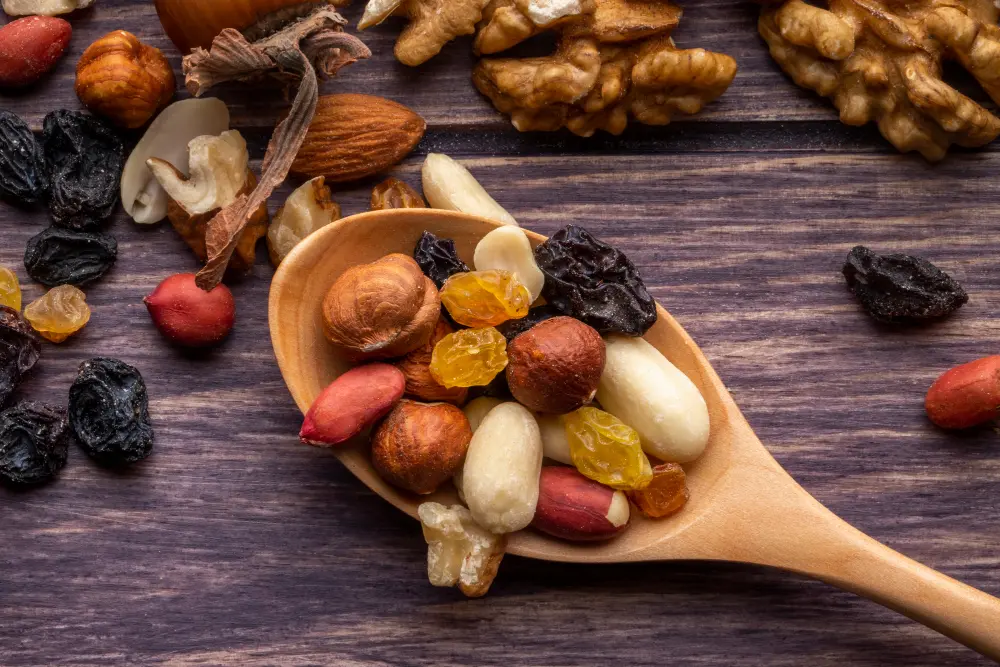
The country also has a substantial agricultural production base. Hazelnuts, cereals, fruits, vegetables, olive oil, tomato products, and other agricultural commodities form an important part of its food economy. At the same time, Turkey has developed sophisticated food-processing and ingredient distribution capabilities.
This combination creates an interesting sourcing environment.
A buyer can potentially obtain Turkish agricultural ingredients while also sourcing imported products such as cocoa derivatives, specialty powders, functional ingredients, and other industrial raw materials through Turkish suppliers.
For manufacturers, proximity can translate into shorter lead times, easier communication, more flexible order consolidation, and potentially lower logistical complexity.
That does not mean Turkish sourcing is automatically cheaper. Freight rates, currency movements, commodity prices, import duties, packaging, insurance, and payment terms all influence the final landed cost. A professional procurement decision therefore needs to evaluate the entire supply chain rather than focusing on the supplier’s unit price.
Major Food Ingredients Available From Turkish Suppliers
The ingredient portfolio available through Turkey food ingredients suppliers is extensive. The following categories are particularly relevant to industrial manufacturers.
Cocoa and Chocolate Raw Materials
Cocoa powder, cocoa butter, cocoa liquor, and specialty cocoa products are fundamental to chocolate, bakery, confectionery, beverage, and dessert manufacturing.
MT Royal works with multiple brands across its food ingredient portfolio, giving manufacturers the opportunity to compare alternatives instead of being locked into a single producer.
For cocoa products, purchasing teams should evaluate:
- Fat percentage
- pH
- Degree of alkalization
- Color
- Moisture
- Particle size
- Microbiological specifications
- Flavor profile
- Solubility
- Packaging
- Batch consistency
A common procurement mistake is to treat cocoa powder as a simple commodity. It is not. Two products with similar specifications on paper can behave differently during mixing, baking, emulsification, or chocolate production.
Dairy Ingredients
Milk powder, whey powder, lactose, and other dairy derivatives are widely used in bakery, confectionery, ice cream, beverages, and processed food.
The technical specification can significantly influence the final product. Protein content, fat level, solubility, microbiological quality, heat treatment, and moisture should be reviewed before approving a supplier.
For example, changing milk powder may alter the color and flavor of a biscuit even if the formulation appears unchanged. In ice cream production, differences in dairy solids can influence body, overrun, freezing behavior, and mouthfeel.
Sweeteners and Functional Carbohydrates
Industrial food manufacturers use far more than conventional sugar.
Depending on the application, suppliers may provide glucose syrup, maltodextrin, fructose products, sorbitol, and other carbohydrate-based ingredients.
These ingredients can influence sweetness, viscosity, crystallization, moisture retention, browning, freezing point, and texture.
For procurement teams, this means a replacement should never be approved based solely on price equivalence. The formulation department should conduct a controlled trial before changing the raw material.
Starches and Hydrocolloids
Starches and hydrocolloids are particularly important in modern food manufacturing because they perform functional roles.
Corn starch can contribute to texture and structure. Xanthan gum can provide viscosity and suspension. Guar gum can affect water binding and rheology. Pectin is important in gels, jams, fruit preparations, and selected dairy and confectionery applications.
These materials are often purchased in relatively small quantities compared with sugar or flour, but their influence on the production process can be disproportionately large.
A few kilograms of the wrong hydrocolloid can cause much more trouble than several tons of a correctly specified commodity ingredient.
Oils and Specialty Fats
Oils and fats influence texture, flavor, melting profile, frying performance, mouthfeel, and shelf life.
For industrial applications, buyers should consider:
- Fatty acid profile
- Melting point
- Oxidative stability
- Refining process
- Flavor
- Application suitability
- Storage requirements
- Packaging format
The correct fat for a biscuit filling may be entirely unsuitable for frying or chocolate coating. Application-specific sourcing is therefore essential.
Tomato Products, Nuts, and Agricultural Ingredients
Turkey is particularly relevant for agricultural-origin food materials, including tomato products and hazelnuts.
These ingredients are heavily influenced by harvest conditions, crop quality, processing methods, storage, and seasonal availability.
For large manufacturers, the challenge is not simply finding a supplier during harvest season. The challenge is maintaining consistent quality throughout the year.
This is where inventory planning becomes as important as supplier selection.
How to Evaluate Turkey Food Ingredients Suppliers
A professional supplier evaluation should use a structured scorecard.
1. Product Quality
Start with the technical specification. Ask whether the supplier can provide:
- Product specifications
- Certificates of analysis
- Allergen information
- Microbiological data
- Country-of-origin information
- Shelf-life details
- Storage conditions
- Relevant food safety documentation
Documentation should match the actual batch being delivered whenever the nature of the ingredient requires batch-level verification.
2. Supply Reliability
A supplier may offer an excellent price and excellent quality but still be unsuitable if deliveries repeatedly arrive late.
Evaluate:
- Average lead time
- Minimum order quantity
- Stock availability
- Replenishment frequency
- Emergency order capability
- Export experience
- Logistics partners
- Communication speed
For a factory operating continuously, reliability is part of the ingredient’s real cost.
3. Brand Portfolio
Having access to multiple brands can be strategically useful.
MT Royal is positioned around a broad portfolio rather than dependence on one ingredient producer. This gives buyers an opportunity to compare brands according to price, specification, availability, and application requirements.
Multiple-brand sourcing can also reduce dependency risk. If one manufacturer experiences production constraints, a qualified alternative may already be available.
4. Commercial Terms
Price is important, but it should be analyzed together with:
- Payment terms
- Incoterms
- Freight
- Insurance
- Packaging
- Customs costs
- Minimum order quantities
- Storage fees
- Currency exposure
The cheapest quotation is not necessarily the lowest total cost.
Common Mistakes When Buying Food Ingredients
Factories often make the same sourcing mistakes repeatedly.
Buying Based Only on Price
This is perhaps the most expensive mistake.
Suppose Supplier A offers an ingredient at $1.90 per kilogram while Supplier B offers it at $2.00. If Supplier A’s material creates a 2% production loss while Supplier B’s material runs consistently, the apparent $0.10 saving can disappear quickly.
Raw-material cost should therefore be evaluated against cost in use, not simply purchase price.
Changing Ingredients Without Production Trials
A specification sheet cannot capture every aspect of functional performance.
Before changing a critical ingredient, conduct a controlled trial under actual production conditions.
Laboratory approval is useful, but factory-scale validation is often where hidden problems become visible.
Ignoring Shelf Life
Purchasing a large quantity at a discount is not an advantage if the factory cannot consume it before the recommended shelf-life period.
Inventory turnover should be considered alongside price.
Depending on One Supplier
Single-source purchasing can simplify administration but creates vulnerability.
If your supplier experiences a logistics disruption, production problem, regulatory issue, or stock shortage, your factory may have no immediate alternative.
For strategically important ingredients, maintaining at least one qualified secondary source can be prudent.
Treating All Ingredients as Commodities
Sugar, flour, cocoa powder, enzymes, emulsifiers, hydrocolloids, and specialty fats should not be managed using identical procurement rules.
Some ingredients are highly standardized. Others have substantial functional variability.
Your purchasing strategy should reflect the technical importance of each ingredient.
Practical Sourcing Strategy for Large Food Factories
Large-scale manufacturers need a more sophisticated approach than simply requesting three quotations.
Segment Ingredients by Risk
Create four categories:
Low-risk commodities: standardized ingredients with many qualified suppliers.
Medium-risk ingredients: materials where quality differences affect production but alternatives exist.
High-risk ingredients: specialized materials with limited qualified sources.
Critical ingredients: materials whose shortage could stop an entire production line.
The higher the risk, the more attention should be given to safety stock, dual sourcing, supplier audits, and technical qualification.
Calculate Safety Stock Scientifically
Safety stock should not be based on intuition alone.
Consider:
- Average consumption
- Demand variability
- Supplier lead time
- Lead-time variability
- Minimum order quantity
- Seasonal availability
- Transportation reliability
For example, an ingredient consumed at 5 tons per week with a highly variable 20-day lead time deserves a completely different inventory strategy from an ingredient consumed at 300 kilograms per month.
Build an Approved Alternative List
For each critical ingredient, maintain an approved alternative wherever technically possible.
The alternative should already have:
- Completed laboratory testing
- Production-scale validation
- Quality approval
- Regulatory approval
- Commercial terms
- Confirmed availability
This turns supplier diversification from an emergency reaction into a planned capability.
Monitor Total Cost of Ownership
A useful procurement equation is:
Total ingredient cost = purchase price + freight + duties + storage + quality losses + production losses + financing cost + disposal or waste risk
This approach can reveal why a slightly more expensive supplier may actually be the better commercial choice.
Emerging Trends in Industrial Ingredient Procurement
Food ingredient sourcing is changing rapidly.
One major trend is increased demand for clean-label ingredients and recognizable ingredient declarations. Manufacturers are also exploring reduced-sugar formulations, plant-based products, high-protein foods, functional beverages, and ingredients supporting improved texture and shelf stability.
Another important development is greater attention to traceability. Food manufacturers increasingly need to know not only who supplied an ingredient but also where it originated, how it was processed, and which documentation supports its safety and authenticity.
Sustainability is also moving from a marketing topic toward a procurement consideration. Buyers increasingly evaluate responsible agricultural practices, packaging efficiency, transportation emissions, and supply-chain transparency.
At the same time, commodity markets remain exposed to climate conditions, geopolitical developments, energy prices, currency movements, and transportation disruptions. The result is a procurement environment in which flexibility has become a competitive advantage.
We have seen that manufacturers with qualified alternative suppliers and better inventory visibility generally have more options when markets become unstable.
Why a Multi-Brand Supplier Can Be Valuable
A multi-brand supplier can provide an important middle ground between direct manufacturer purchasing and fragmented sourcing.
Instead of managing separate commercial relationships for every ingredient category, your procurement team can potentially consolidate several requirements through one experienced supplier.
For a company such as MT Royal, the value proposition is therefore not limited to the individual ingredients it supplies. The broader benefit can come from portfolio breadth, product availability, brand choice, and the ability to compare alternatives according to your production requirements.
However, consolidation should never eliminate technical discipline. Your quality and R&D teams should continue to approve materials based on specification and performance.
Questions Factory Managers Frequently Ask
Are Turkey food ingredients suppliers suitable for international manufacturers?
Yes. Turkey’s established food-processing sector and strategic location make it a practical sourcing market for manufacturers serving nearby international regions. The suitability of a particular supplier depends on product quality, export capability, documentation, logistics, and commercial terms.
Should we buy directly from a manufacturer or through a distributor?
It depends on your purchasing volume and ingredient category. Direct purchasing can make sense for very high-volume standardized materials. Distributors can be advantageous when you need multiple brands, smaller quantities, consolidated shipments, or access to a wider portfolio.
How should we compare two suppliers offering the same ingredient?
Compare the complete specification, not just the product name. Review quality, batch consistency, technical performance, lead time, minimum order quantity, documentation, payment terms, freight, and historical delivery reliability.
Is the cheapest supplier usually the best option?
No. A low purchase price can be offset by production losses, inconsistent quality, delays, additional testing, or excessive inventory requirements.
How many suppliers should a factory maintain?
There is no universal number. A practical approach is to identify critical ingredients and determine whether an approved secondary source is necessary. The goal is not to create dozens of supplier relationships; it is to avoid unnecessary dependency on a single source.
What should we request before placing a large order?
At minimum, request the current technical specification, relevant certificates and documentation, packaging details, shelf life, storage conditions, minimum order quantity, lead time, pricing basis, and sample or trial material when appropriate.
The Procurement Decision That Protects Your Production Line
Selecting among Turkey food ingredients suppliers is ultimately a manufacturing decision, not merely a purchasing decision.
The right supplier should fit your formulation, production process, quality system, inventory model, logistics requirements, and commercial objectives. A reliable relationship can reduce uncertainty across the supply chain, while a poorly evaluated supplier can introduce hidden costs that remain invisible until the production line is running.
MT Royal can be considered by manufacturers looking for a broad ingredient portfolio, multiple brands, and competitive sourcing options. The most sensible approach, however, is to evaluate the company against your own technical and procurement criteria rather than choosing any supplier solely because of its catalogue or price.
For your factory, the strongest sourcing strategy is one that asks a simple but demanding question: Will this ingredient arrive on time, meet specification, perform consistently, and remain commercially viable throughout the production cycle?
When the answer is yes, procurement stops being a race to find the cheapest kilogram and becomes what it should have been all along: a system for protecting production, quality, and profit.


No comment