

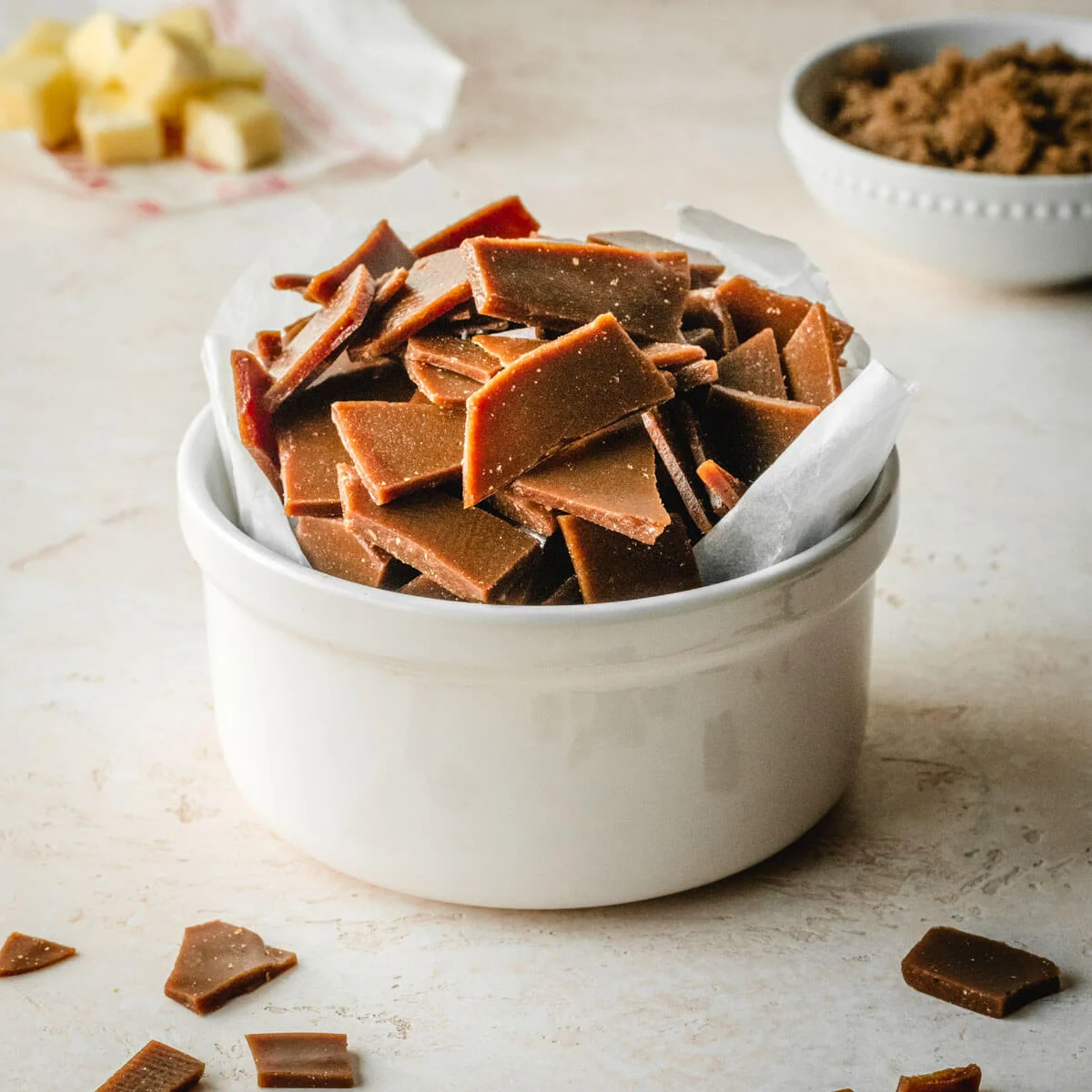
For any factory involved in confectionery production, especially high-volume caramel and toffee lines, ingredient selection is not just a formulation step—it is the backbone of product identity, shelf stability, and customer loyalty. If you are running a manufacturing line today, your decisions on raw materials directly influence texture consistency, chewiness, shelf life, and even how your product behaves under different climate conditions during export.
This is exactly why procurement teams and formulation engineers increasingly rely on trusted suppliers such as MT Royal, which provides access to multiple international brands at competitive pricing. In industrial food manufacturing, where a small variation in ingredient quality can turn a smooth toffee into a sticky disaster (literally sticking to wrappers and reputations), sourcing becomes a strategic decision rather than a purchasing task.
Understanding the Essential Ingredient List for Toffee Manufacturing is not just about knowing what goes into the product. It is about understanding how each component behaves under heat, interacts with sugars, influences crystallization, and ultimately determines whether your production line delivers a premium chewy product or an inconsistent batch that fails quality control.
In this comprehensive guide, we will break down every critical ingredient, explain its functional role in industrial production, highlight common sourcing mistakes, and provide expert-level insights that can help your factory achieve stable, scalable, and export-ready toffee production.
LATAMARKO LM60 – Premium Spanish-Origin Cocoa Powder
latamarko alkalized cocoa powder lm60
cocoa powder for chocolate production-Best price
Food industry raw materials – list of products
Best Brazilian Arabica Coffee Bean Supplier for Industrial Roaster
Uganda Bugisu Arabica Coffee Beans for Specialty Coffee Industry
Understanding Toffee Manufacturing at Industrial Scale
Before diving into the ingredient list, it is important to understand what makes toffee manufacturing unique in the confectionery industry.
Toffee is essentially a controlled system of sugar transformation, fat integration, and moisture reduction. Unlike hard candies that rely mostly on sugar crystallization, or chocolates that depend on cocoa fat structure, toffee sits in a sensitive middle zone where small formulation changes dramatically alter texture.
At industrial scale, key process variables include:
- Cooking temperature precision
- Moisture evaporation control
- Fat emulsification stability
- Cooling rate consistency
- Mixing intensity during boiling stages
Each of these variables interacts with raw ingredients in complex ways. Even a 1–2% variation in sugar syrup composition can shift the final product from smooth and chewy to brittle or overly sticky.
This is why formulation design is treated like engineering rather than cooking in modern factories.
Core Concept: What Defines a Good Toffee?
A high-quality industrial toffee is defined by five measurable characteristics:
- Consistent chewiness across temperature ranges
- Stable shelf life without sugar crystallization
- Balanced sweetness without excessive stickiness
- Smooth texture without graininess
- Resistance to moisture absorption in packaging
These properties depend directly on the Essential Ingredient List for Toffee Manufacturing, which we will now explore in detail.
Essential Ingredient List for Toffee Manufacturing
Toffee formulation relies on a combination of sugars, fats, dairy derivatives, emulsifiers, and functional additives. Each ingredient plays a precise role in stabilizing the structure.
Before listing them, it is important to understand that no ingredient works independently. The success of a formulation depends on how these materials interact during heating, cooling, and storage phases.
1. Sugar System (Sucrose as the Structural Foundation)
Sugar is the structural backbone of all toffee products. It provides sweetness, texture, and the characteristic caramelized flavor.
In industrial production, sucrose is rarely used alone; it is usually combined with other sugar types to control crystallization.
- Sucrose: This is the primary sweetener that provides bulk structure and caramelization behavior during heating, forming the base of toffee texture and color development.
High-quality sucrose ensures predictable caramelization, which is essential for consistent color across production batches.
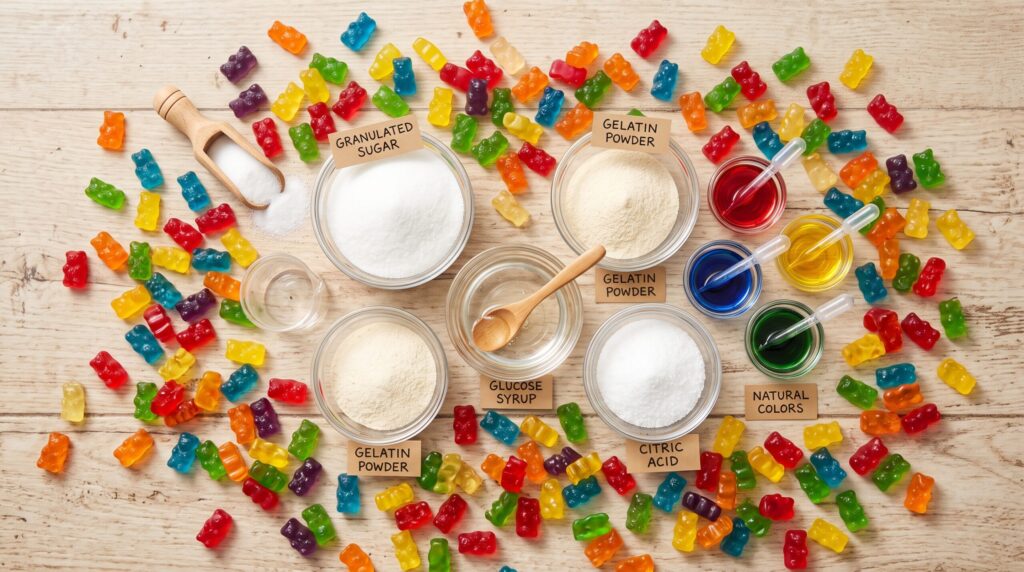
2. Glucose Syrup (Crystallization Controller)
Glucose syrup is one of the most critical ingredients in modern toffee production.
Before listing its functions, it is important to note that sugar crystallization is one of the biggest risks in industrial confectionery manufacturing. Even small crystallization can ruin texture and shelf stability.
- Glucose syrup: This ingredient prevents unwanted sugar crystallization by interfering with sucrose crystal formation, ensuring a smooth and stable texture throughout shelf life.
Without glucose syrup, factories often experience grainy or sandy textures in finished products.
3. Invert Sugar (Moisture Retention and Softness Enhancer)
Invert sugar is widely used in high-quality toffee production for improving softness and extending shelf life.
- Invert sugar: This ingredient helps retain moisture inside the product matrix while reducing crystallization risk, resulting in a softer and more elastic toffee texture.
Factories producing export-grade toffee often rely on invert sugar to maintain product consistency in varying climates.
4. Butterfat and Milk Fats (Flavor and Mouthfeel Development)
Fat content is what transforms simple caramelized sugar into rich, creamy toffee.
Before listing functions, it is important to understand that fat does more than add flavor—it influences texture, gloss, and melt behavior.
- Butterfat or milk fats: These provide richness, improve mouthfeel, and contribute to the smooth melting sensation associated with premium toffee products.
In industrial formulations, consistency of fat quality is critical because variation can lead to oil separation or uneven texture.
5. Milk Solids (Protein-Based Structure Enhancer)
Milk solids are a key contributor to flavor depth and structural stability.
- Milk solids (powdered milk or condensed derivatives): These enhance caramel flavor through Maillard reactions during heating and improve the overall body and chewiness of the final product.
Milk proteins also help stabilize emulsions between sugar and fat phases.
6. Emulsifiers (Stability Agents for Fat-Sugar Integration)
Emulsifiers ensure that fats and sugars remain uniformly distributed.
Before listing their role, it is important to understand that without emulsification, toffee tends to separate into oily and sugary phases.
- Emulsifiers (such as lecithin or mono-diglycerides): These stabilize the mixture by ensuring even distribution of fat and sugar, preventing separation during cooling and storage.
This is especially important in high-speed industrial production lines.
7. Flavor Compounds (Sensory Identity Builders)
Flavor is what defines brand identity in confectionery manufacturing.
- Flavor compounds (vanilla, caramel flavor, butter flavor, or natural extracts): These define the sensory profile of the toffee and ensure product differentiation in competitive markets.
Factories often fine-tune flavor systems to match regional taste preferences.
8. Salt (Flavor Balancer and Sweetness Enhancer)
Salt is a small but powerful ingredient in toffee formulation.
- Salt: This enhances sweetness perception, balances flavor complexity, and prevents the product from tasting overly flat or one-dimensional.
Even minor adjustments in salt levels can significantly impact consumer perception.
9. Stabilizers and Hydrocolloids (Texture Control Agents)
These ingredients are used to fine-tune texture and improve processing stability.
- Hydrocolloids (such as carrageenan or gelatin derivatives): These improve chewiness, prevent crystallization, and help maintain structural integrity under varying humidity conditions.
10. Moisture Control Agents (Shelf Life Stabilizers)
Moisture content is one of the most critical factors in confectionery stability.
- Moisture control systems: These regulate water activity in the product, preventing microbial growth and ensuring consistent texture over time.
Even a slight increase in moisture can shorten shelf life dramatically.
Common Mistakes in Ingredient Sourcing for Toffee Manufacturing
Ingredient sourcing mistakes are one of the leading causes of production inconsistency in confectionery factories.
Before listing them, it is important to highlight that most issues do not come from formulation design itself, but from variability in raw material quality.
- Choosing inconsistent glucose syrup grades: When syrup viscosity or dextrose equivalent (DE) values fluctuate between batches, the crystallization control system becomes unstable, leading to grainy toffee texture.
- Ignoring fat quality variation: Low-grade butterfat substitutes may reduce cost but often lead to oil separation during cooling or storage.
- Over-reliance on artificial flavor systems: While cost-effective, inconsistent flavor compounds can degrade under heat, affecting product stability.
- Neglecting supplier traceability: Without reliable sourcing, factories risk receiving inconsistent ingredient compositions across shipments.
In our experience working with production teams, ingredient variability is one of the most underestimated risks in confectionery manufacturing.
Industrial Tips for Large-Scale Toffee Production
Scaling up toffee production introduces challenges that do not exist at laboratory level.
Before listing practical strategies, it is important to emphasize that industrial systems amplify small formulation errors.
- Maintain strict sugar syrup ratio control: Even small deviations in sugar-to-syrup ratios can affect viscosity and final chewiness, especially in continuous cooking systems.
- Standardize fat blending procedures: Uniform fat integration ensures consistent mouthfeel across large batches and reduces separation risk during cooling.
- Control cooling speed precisely: Rapid cooling may trap moisture, while slow cooling can lead to crystallization instability.
- Implement batch testing for every ingredient shipment: This ensures that incoming raw materials match required specifications before production begins.
Frequently Asked Questions (Factory Perspective)
Why does my toffee become sticky in humid climates?
This is usually caused by moisture absorption due to insufficient moisture control agents or improper packaging systems.
Can I reduce sugar content without affecting texture?
Yes, but it requires balancing with alternative syrups and stabilizers to maintain structural integrity.
Why does batch consistency vary even with the same recipe?
The most common reason is variation in raw material quality, especially glucose syrup and fat components.
How important is emulsifier selection?
Extremely important. Poor emulsification leads to phase separation, affecting texture and shelf stability.
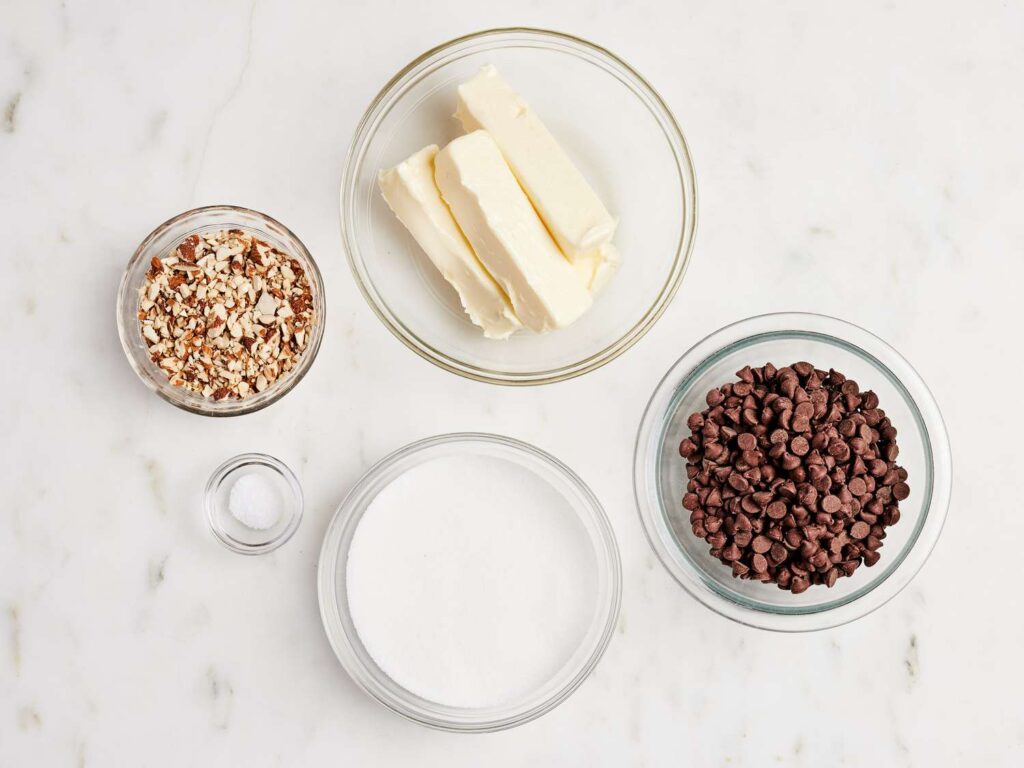
Final Perspective on the Essential Ingredient List for Toffee Manufacturing
Mastering toffee production is not about memorizing a recipe; it is about controlling a system of interacting ingredients under heat, time, and mechanical stress. Every component in the Essential Ingredient List for Toffee Manufacturing plays a specific role in shaping texture, flavor, and shelf stability.
Factories that treat ingredient selection as a strategic decision rather than a purchasing task consistently achieve higher product stability and stronger market performance. With reliable sourcing partners such as MT Royal, manufacturers gain not just raw materials, but also consistency—arguably the most valuable ingredient in any industrial production line.
When formulation, sourcing, and process control align, toffee stops being a simple confectionery product and becomes a scalable, export-ready industrial system capable of maintaining quality across markets, climates, and time.


No comment