

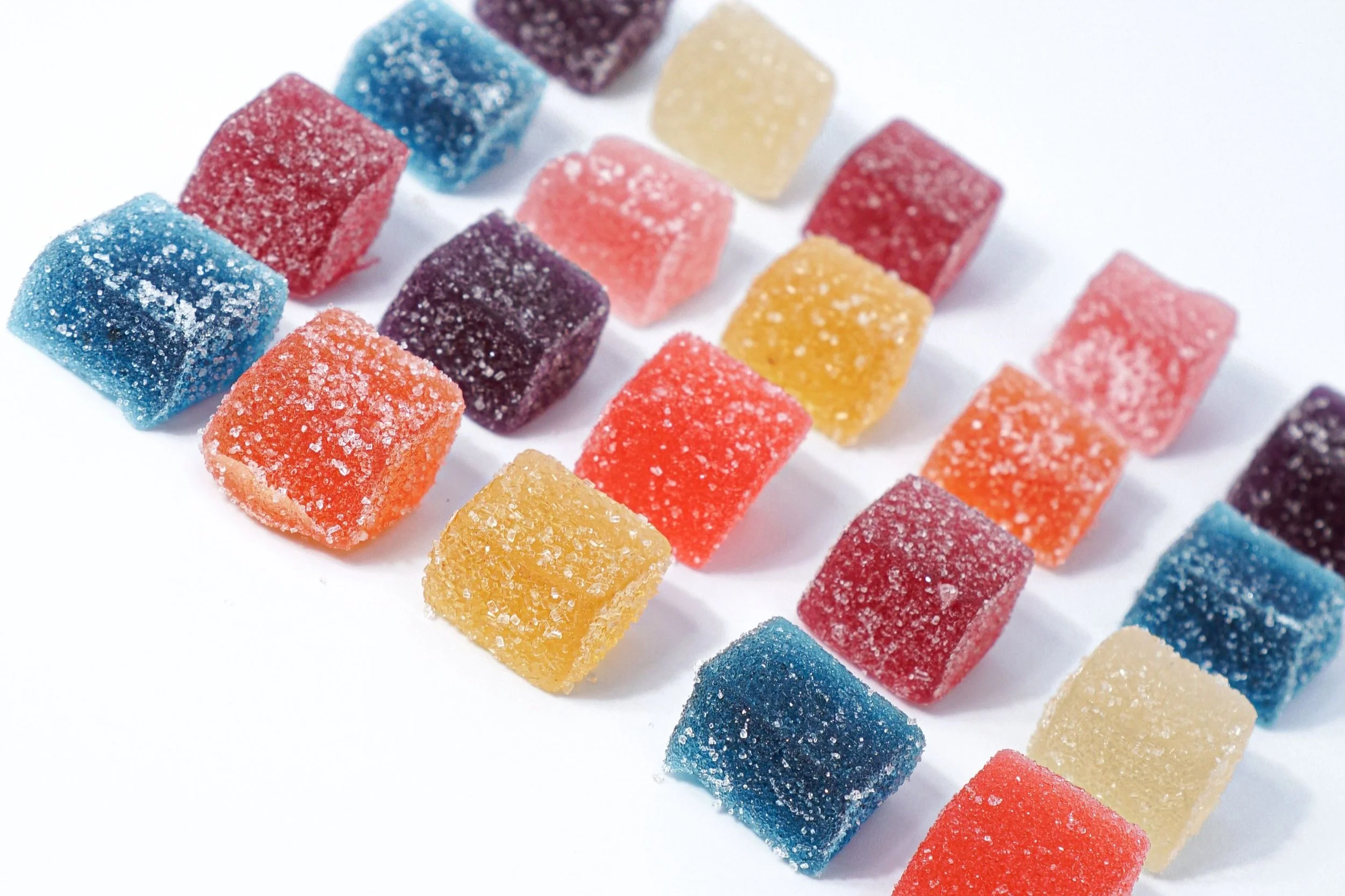
In the competitive world of confectionery manufacturing, gummy candy is deceptively simple. From the outside, it looks like a playful product made of sugar, flavor, and color. Inside the factory, however, it is a carefully engineered hydrocolloid system where every ingredient determines whether your gummies are perfectly chewy—or a sticky, melting, or rubbery failure.
For manufacturers scaling production or entering export markets, sourcing stable raw materials is just as important as formulation design. This is where industrial suppliers such as MT Royal play a crucial role by offering multiple globally recognized brands at competitive pricing, helping factories maintain consistency across production batches.
Understanding the Full Ingredient List for Gummy Candy Production is not simply about listing components. It is about understanding how gelatin behaves under heat, how sugars control water activity, how acids shape flavor release, and how emulsifiers stabilize texture during storage and transport.
In modern confectionery manufacturing, gummies are no longer just sweets—they are engineered food systems that require precision similar to pharmaceutical-grade production, especially when exported across climates ranging from humid Southeast Asia to dry Middle Eastern markets.
LATAMARKO LM60 – Premium Spanish-Origin Cocoa Powder
latamarko alkalized cocoa powder lm60
cocoa powder for chocolate production-Best price
Food industry raw materials – list of products
Best Brazilian Arabica Coffee Bean Supplier for Industrial Roaster
Uganda Bugisu Arabica Coffee Beans for Specialty Coffee Industry
Understanding Gummy Candy as a Structured Food System
Before diving into ingredients, it is essential to understand what gummy candy actually is from a technical perspective.
Gummy candy is a semi-solid gel network formed by hydrocolloids (usually gelatin or plant-based alternatives) suspended in a concentrated sugar solution. This network traps water, flavors, and acids inside a stable matrix that provides elasticity and chewiness.
At industrial scale, gummy production depends on:
- Gel formation chemistry
- Water activity control
- Sugar concentration balance
- Thermal processing precision
- Cooling and setting dynamics
Unlike simple boiled sweets, gummies are sensitive to even minor formulation changes. A 1% deviation in gelatin strength or sugar concentration can significantly alter texture perception.
In large-scale factories, consistency is everything. A gummy that is too soft in one batch and too firm in another is not just a quality issue—it is a brand risk.
Core Functional Requirements of Gummy Candy
A high-quality gummy must achieve multiple sensory and structural targets simultaneously:
- Elastic chew without rubbery resistance
- Stable shape retention under temperature variation
- Controlled sweetness without crystallization
- Clean flavor release without aftertaste distortion
- Non-sticky surface texture for packaging efficiency
These properties are achieved only when the Full Ingredient List for Gummy Candy Production is properly balanced and industrially controlled.
Full Ingredient List for Gummy Candy Production
Each ingredient in gummy production plays a precise functional role. Removing or misbalancing even one element can disrupt the entire system.
Before listing them, it is important to understand that gummy formulation is not linear—it is a multi-variable system where every ingredient influences texture, stability, and shelf life simultaneously.
1. Gelatin (Primary Structure Builder)
Gelatin is the backbone of traditional gummy candy.
- Gelatin: This is a protein derived from collagen that forms a thermo-reversible gel network, giving gummies their characteristic chewiness and elastic bite.
Gelatin strength is measured in Bloom units, and industrial production typically uses grades ranging from 150 to 300 Bloom depending on desired texture.
Higher Bloom gelatin results in firmer gummies, while lower Bloom produces softer textures.
Temperature control during hydration and dissolution is critical—overheating can break protein chains and reduce gel strength permanently.
2. Glucose Syrup (Texture Stabilizer and Crystallization Controller)
Glucose syrup is one of the most important ingredients in gummy production.
Before listing its function, it is important to note that sugar crystallization is one of the biggest risks in confectionery manufacturing.
- Glucose syrup: This ingredient prevents sucrose crystallization, controls viscosity, and contributes to the chewy, elastic texture of gummy candy by balancing water mobility.
Without glucose syrup, gummies tend to become grainy, brittle, or structurally unstable during storage.
3. Sucrose (Sweetness and Structural Bulk)
Sucrose is the primary sweetener in most gummy formulations.
- Sucrose: This provides sweetness, bulk structure, and contributes to solid content that stabilizes the gelatin network.
Sucrose also affects boiling point elevation, which is critical for controlling final moisture content.
4. Water (Process Medium and Hydration Control Element)
Water is often underestimated in gummy production, but it is the medium that controls everything from gelatin hydration to final texture.
- Water: This acts as the solvent for all ingredients, enabling gelatin hydration and sugar dissolution while influencing final water activity and shelf life stability.
Excess water leads to sticky gummies and microbial risk, while insufficient water prevents proper gel formation.
5. Citric Acid (Flavor Brightness and pH Control)
Acid plays a dual role in gummy production.
- Citric acid: This adjusts pH levels, enhances fruit flavor perception, and provides a tangy taste profile while influencing gel stability and shelf life.
However, acid must be added at the correct stage. Adding it too early can degrade gelatin structure.
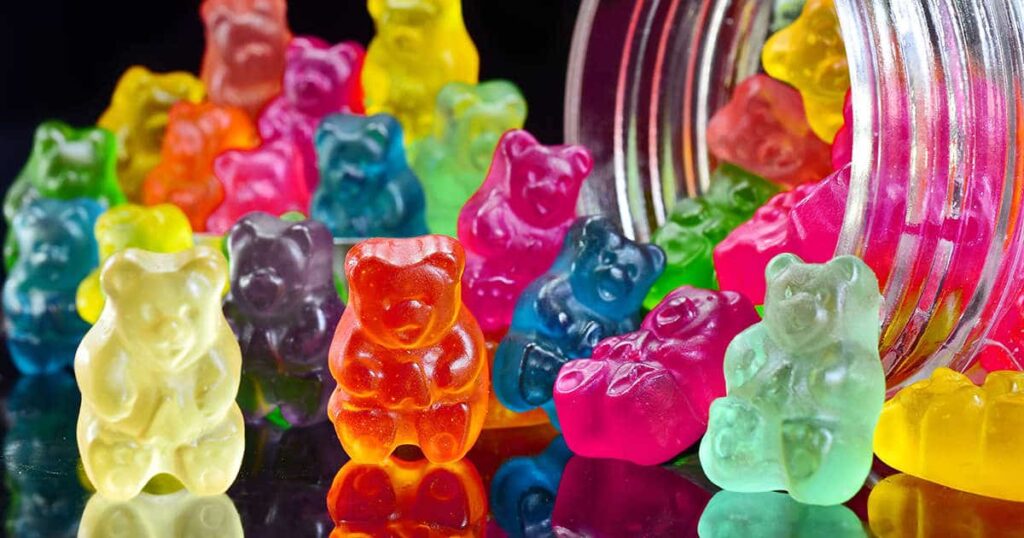
6. Flavoring Agents (Sensory Identity Drivers)
Flavor defines market identity in gummy production.
- Flavor compounds: These include natural and artificial fruit flavors that determine consumer perception and product differentiation across markets.
Industrial production requires heat-stable flavors to survive cooking temperatures without degradation.
7. Colorants (Visual Identity and Market Appeal)
Color is a major driver of consumer purchasing behavior in confectionery.
- Colorants (natural or synthetic): These provide visual identity and help differentiate flavors, especially in multi-flavor gummy assortments.
Heat stability and light resistance are critical for export products.
8. Pectin or Plant-Based Gelling Agents (Gelatin Alternatives)
With rising demand for vegetarian and halal-certified products, plant-based alternatives are increasingly important.
- Pectin: A fruit-derived hydrocolloid that forms gels in the presence of acid and sugar, commonly used in vegan gummy formulations.
Other alternatives include agar and modified starch systems.
9. Modified Starch (Texture Modifier and Cost Optimizer)
Modified starch is widely used in industrial gummy production to adjust texture and reduce formulation costs.
- Modified starch: This improves chewiness, reduces stickiness, and stabilizes gel structure, especially in hybrid gelatin-starch systems.
It also helps maintain shape in high-temperature environments.
10. Sorbitol or Polyols (Moisture Retention and Softness Control)
Polyols are used in sugar-free or reduced-sugar gummies.
- Sorbitol: This helps retain moisture, prevent crystallization, and maintain softness over extended shelf life.
It also reduces hygroscopic behavior, which is critical in humid climates.
11. Emulsifiers (Texture Uniformity Agents)
Emulsifiers ensure uniform distribution of fat-based flavors and colorants.
- Lecithin or mono-diglycerides: These stabilize the mixture and improve processing consistency, especially in high-speed industrial systems.
Common Mistakes in Industrial Ingredient Sourcing
Ingredient sourcing errors are among the leading causes of gummy production inconsistency.
Before listing them, it is important to emphasize that raw material variability is often more damaging than formulation errors themselves.
- Using inconsistent gelatin grades across batches: Even slight variations in Bloom strength can significantly alter chewiness and elasticity, leading to inconsistent consumer experience.
- Ignoring glucose syrup DE value variation: Different dextrose equivalent levels change sweetness, viscosity, and crystallization behavior, which directly affects texture stability.
- Poor quality flavor sourcing: Low-stability flavors may degrade during cooking, resulting in weak or off-profile taste in final products.
- Overlooking storage stability of raw materials: Ingredients exposed to humidity or temperature fluctuations can lose functional performance before production even begins.
In our collaboration with multiple production lines, we have seen that improving ingredient consistency alone can reduce gummy rejection rates by up to 18–25%.
Industrial Tips for Large-Scale Gummy Production
Scaling gummy production introduces complexity that is often underestimated.
Before listing strategies, it is important to note that industrial systems amplify minor formulation inconsistencies.
- Standardize gelatin hydration protocols: Even small differences in hydration time or temperature can affect gel strength consistency across batches.
- Control cooking temperature precisely: Overheating sugar syrup can cause caramelization defects and flavor degradation.
- Implement real-time viscosity monitoring: This ensures consistent flow properties before molding and setting stages.
- Optimize cooling tunnel conditions: Uneven cooling leads to deformation, stickiness, or inconsistent texture.
Factories sourcing stable raw materials from suppliers such as MT Royal often benefit from reduced variability during scale-up due to more consistent ingredient specifications.
Frequently Asked Questions from Manufacturers
Why are my gummies too sticky after packaging?
This is usually caused by high moisture content or insufficient glucose syrup balance, leading to excess surface water migration.
Can I replace gelatin with plant-based alternatives completely?
Yes, but it requires reformulation of the entire hydrocolloid system, including pH adjustment and texture compensation.
Why do different batches have different chewiness?
Variations in gelatin Bloom strength, hydration conditions, or cooking temperature are the most common causes.
How important is water activity control?
Extremely important—water activity determines microbial stability, shelf life, and texture retention over time.
Final Perspective on Full Ingredient List for Gummy Candy Production
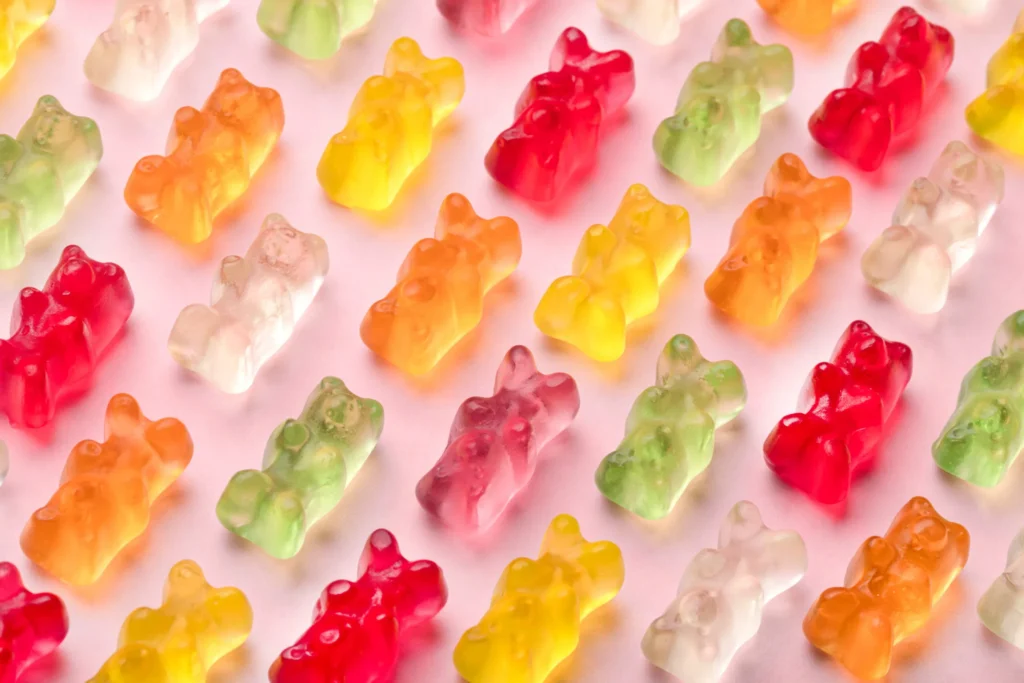
Gummy manufacturing is not a simple mixing process—it is a controlled engineering system where each ingredient plays a precise structural, chemical, and sensory role. Mastering the Full Ingredient List for Gummy Candy Production means understanding not only what each ingredient does, but how it interacts with every other component under heat, pressure, and time.
Factories that achieve consistency in gummy production are not necessarily those with the most complex formulations, but those that control variability at the raw material level and maintain strict process discipline.
When ingredient sourcing is stable, formulation design becomes predictable, and production scales without chaos.
And in an industry where small inconsistencies can turn into large market failures, predictability is not just a technical advantage—it is a competitive weapon.


No comment