

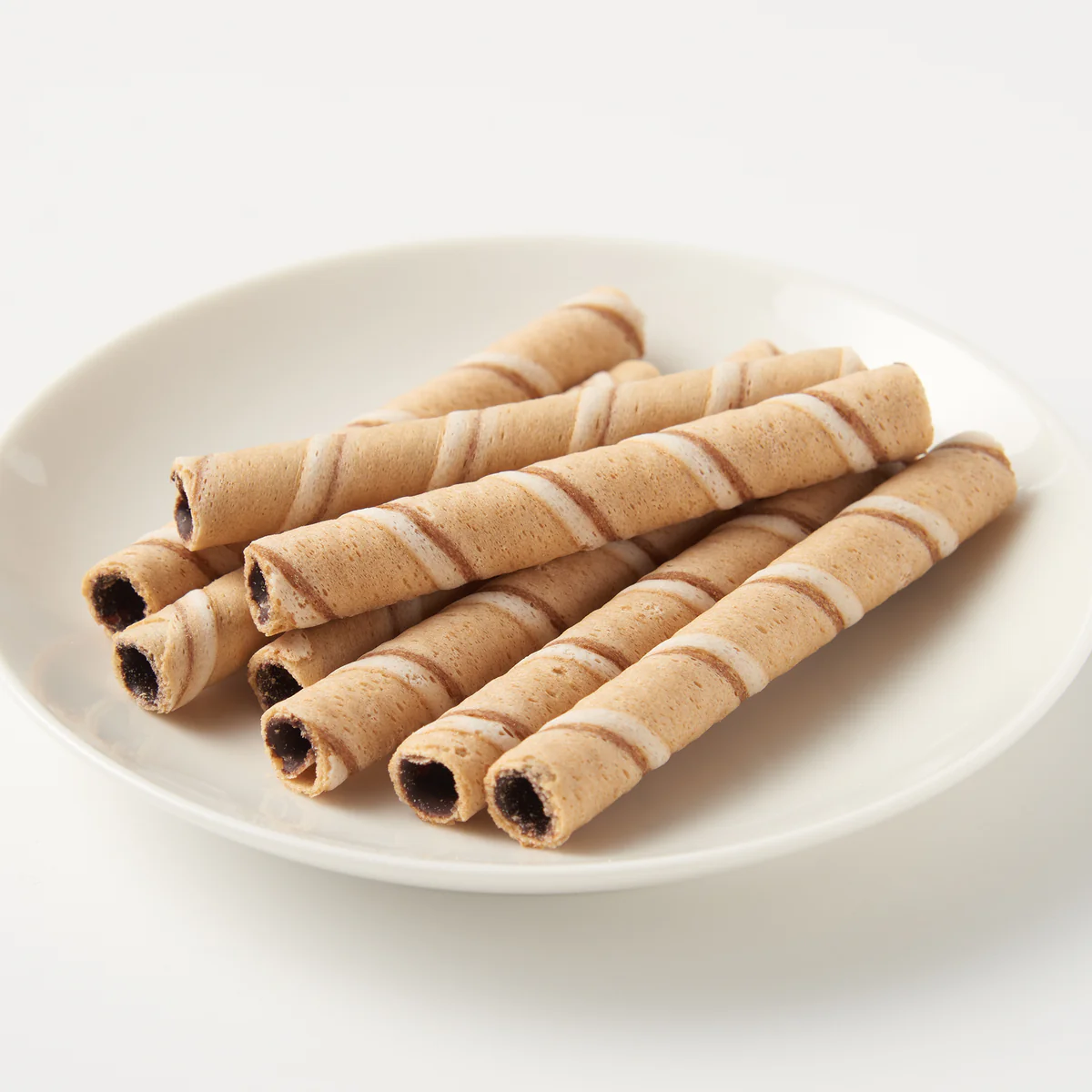
In modern confectionery production, where consistency defines market survival, sourcing stable raw materials from trusted suppliers like MT Royal is often the first step toward preventing quality failures that can cost factories thousands of rejected units per batch. One of the most persistent and technically challenging issues in wafer manufacturing is the phenomenon where hy Wafer Becomes Soft After Filling, a defect that directly impacts product texture, shelf life stability, and brand reputation in competitive retail and export markets.
For manufacturers, this is not just a minor quality fluctuation. It is a structural failure in the balance between wafer architecture and filling chemistry. When a wafer loses its crispness after filling, it signals a breakdown in moisture equilibrium, formulation design, or process control. Understanding this issue at an industrial level is essential for any factory aiming to scale production reliably.
This article provides a deep technical breakdown of why hy Wafer Becomes Soft After Filling occurs, how it can be prevented, and what production teams can do to ensure long-term wafer stability in real industrial conditions.
LATAMARKO LM60 – Premium Spanish-Origin Cocoa Powder
latamarko alkalized cocoa powder lm60
cocoa powder for chocolate production-Best price
Food industry raw materials – list of products
Best Brazilian Arabica Coffee Bean Supplier for Industrial Roaster
Uganda Bugisu Arabica Coffee Beans for Specialty Coffee Industry
Understanding the Industrial Problem Behind hy Wafer Becomes Soft After Filling
At a fundamental level, wafer products are engineered as low-moisture, highly porous structures designed to remain crisp under normal storage conditions. The moment filling is introduced, however, the system becomes dynamic and unstable.
The phrase hy Wafer Becomes Soft After Filling refers to the loss of structural rigidity in wafer sheets after cream, chocolate, or fat-based fillings are applied. This softening effect is primarily caused by internal moisture transfer and physical weakening of the wafer’s starch matrix.
Key symptoms observed in production lines include:
- Loss of crunchiness within 24–72 hours
- Softening starting from internal wafer layers
- Uneven texture across batches
- Reduced crispness in humid environments
- Structural collapse in layered wafers
Industry studies show that more than 65% of wafer quality complaints in export shipments are related to texture degradation caused by moisture imbalance and improper filling interactions.
The Science Behind hy Wafer Becomes Soft After Filling
To solve this issue, manufacturers must first understand the physical chemistry behind it.
Moisture Migration: The Core Mechanism
Moisture migration is the primary driver behind hy Wafer Becomes Soft After Filling. Even when both wafer and filling are initially stable, water molecules move naturally from high moisture zones to low moisture zones.
In industrial wafer systems:
- Cream fillings often contain higher free moisture
- Wafer sheets are designed to be extremely dry
- Moisture moves from filling into wafer structure
- Starch in wafers absorbs water and loses rigidity
This leads to a breakdown of the crisp air pockets that define wafer texture.
Water Activity (aw) Imbalance
Water activity is a more critical parameter than total moisture content. Two materials may contain similar water levels but behave completely differently depending on how water is chemically bound.
Typical industrial imbalance:
- Wafer sheets: aw between 0.20–0.35
- Cream fillings: aw between 0.60–0.85
This difference creates continuous migration pressure, making hy Wafer Becomes Soft After Filling almost inevitable without proper formulation control.
Fat Migration and Structural Breakdown
In chocolate or fat-rich fillings, another phenomenon occurs: fat migration.
This results in:
- Coating of wafer pores with fat crystals
- Reduced moisture barrier efficiency
- Gradual weakening of wafer structure
- Increased sensitivity to temperature changes
Over time, this accelerates softening even in low-humidity environments.
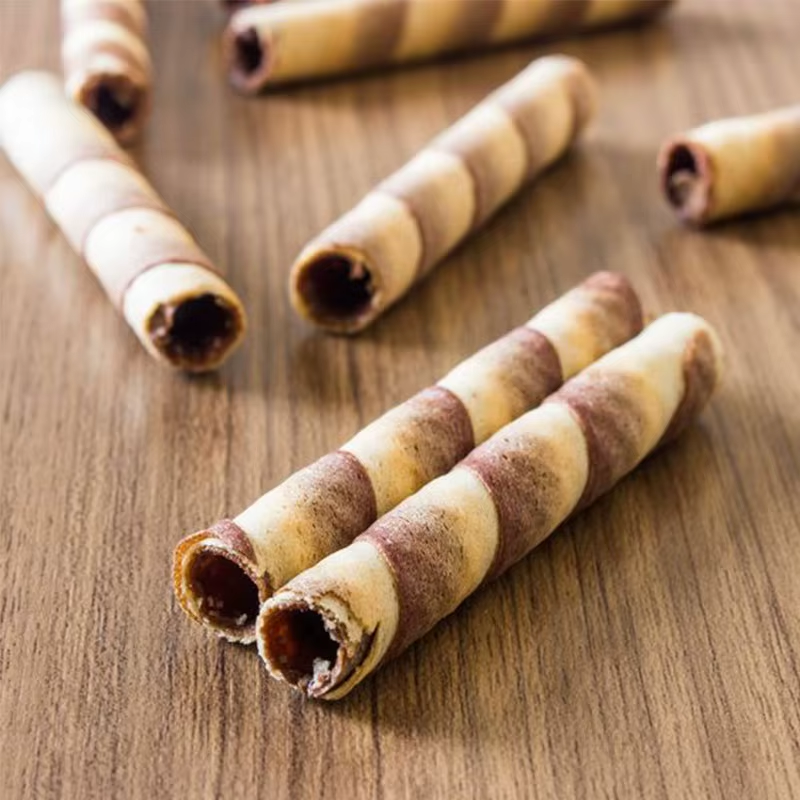
Role of Industrial Baking Process in Wafer Stability
The industrial baking process plays a decisive role in whether wafers maintain structure after filling.
Underbaking and Residual Moisture
If wafers are underbaked:
- Internal moisture remains trapped
- Steam expands during cooling and weakens structure
- Porosity becomes uneven
Even a small deviation of 10–20 seconds in continuous baking systems can significantly increase the risk of hy Wafer Becomes Soft After Filling.
Overbaking and Structural Fragility
Overbaking creates a different problem:
- Excessive dryness leads to brittle wafer layers
- Microcracks form, increasing absorption pathways
- Filling penetrates more easily into structure
The ideal condition lies in a narrow processing window that must be tightly controlled.
Filling Formulation and Its Direct Impact on Texture
The filling is often underestimated, yet it is one of the most influential factors in wafer stability.
Cream Filling Stability
Cream-based fillings are the most common in industrial production. However, they also introduce the highest risk for hy Wafer Becomes Soft After Filling due to:
- High moisture content
- Emulsion instability
- Temperature sensitivity
Factories working with MT Royal often emphasize raw material consistency because small variations in emulsifier quality can dramatically change filling behavior.
Sugar and Hygroscopic Behavior
High sugar concentration increases moisture attraction. This leads to:
- Continuous moisture absorption from wafers
- Accelerated softening over time
- Reduced shelf life stability
Role of Emulsifiers
Emulsifiers stabilize fat-water systems within fillings. Without proper emulsification:
- Water separates more easily
- Migration rate increases
- Filling becomes structurally unstable
Industrial-grade emulsifiers can reduce moisture migration by up to 30–50% depending on formulation.
Environmental and Storage Conditions
Even perfectly produced wafers can fail if environmental conditions are not controlled.
Humidity Control in Production Facilities
Relative humidity above 55–60% significantly increases the risk of hy Wafer Becomes Soft After Filling. Moisture enters both wafer and filling during exposure phases.
Temperature Fluctuations
Temperature shifts accelerate migration dynamics:
- Higher temperatures increase molecular movement
- Condensation can occur during cooling cycles
- Fat crystallization becomes unstable
A change of just 5°C can double migration speed in some cases.
Packaging Systems and Barrier Protection
Packaging is the final defense line against moisture and oxygen exposure.
Importance of Barrier Film
High-performance packaging materials must provide:
- Low moisture transmission rate
- Oxygen resistance
- Heat-seal stability
Without proper barrier films, even optimized wafers will eventually soften.
Modified Atmosphere Packaging (MAP)
Some advanced production systems use nitrogen flushing to reduce oxygen exposure and slow degradation.
Packaging Delay Risks
Delays between filling and sealing are critical. In high humidity environments, even 10 minutes of exposure can trigger early stages of hy Wafer Becomes Soft After Filling.
Common Industrial Mistakes in Production Lines
Many factories unknowingly contribute to the issue through operational inconsistencies.
Inconsistent Raw Material Supply
Switching suppliers frequently introduces variability in:
- Fat composition
- Emulsifier performance
- Moisture retention behavior
This is why many procurement teams prefer stable sourcing partners such as MT Royal to maintain batch consistency.
Poor Cooling Management
If wafers are filled while still warm:
- Steam becomes trapped
- Condensation forms internally
- Structural collapse begins immediately
Lack of Process Standardization
Factories without strict SOPs often experience batch variability, increasing defect rates significantly.
Industrial Optimization Strategies
To solve this issue at scale, manufacturers must implement multi-layered control systems.
1. Optimize Water Activity Balance
Target ranges:
- Wafer: below 0.30 aw
- Filling: carefully stabilized with emulsifiers and humectants
2. Improve Baking Precision
- Tight temperature control
- Uniform heat distribution
- Consistent baking time across batches
3. Upgrade Cooling Systems
Rapid cooling reduces steam retention and stabilizes wafer microstructure.
4. Standardize Filling Temperature
Maintaining controlled filling temperatures prevents thermal shock and condensation.
5. Strengthen Packaging Barrier Systems
Investing in multilayer films reduces long-term degradation risk significantly.
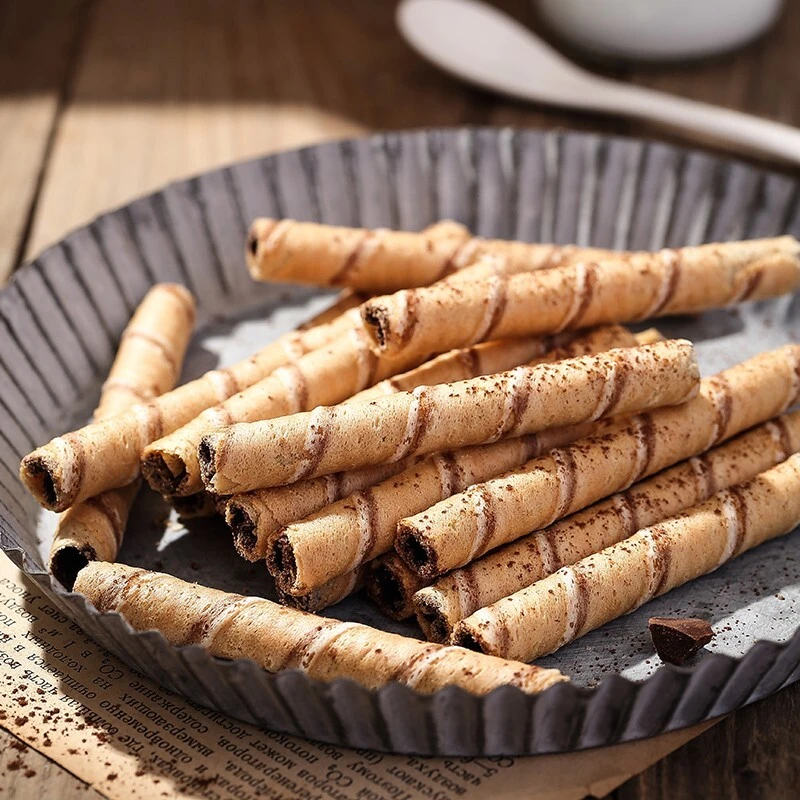
Practical Factory-Level Comparison
Controlled Production System
- Stable raw material sourcing (including MT Royal supply consistency)
- Controlled humidity environment
- Immediate packaging after filling
- Optimized water activity balance
Result: long shelf life and stable texture
Uncontrolled Production System
- Variable ingredient sourcing
- Delayed packaging
- Humid working conditions
- Poor cooling control
Result: rapid occurrence of hy Wafer Becomes Soft After Filling
Frequently Asked Questions (Factory Perspective)
Why does wafer soften even when moisture content is low?
Because water activity imbalance, not total moisture, drives migration behavior.
Can additives completely prevent softening?
No additive can fully eliminate it, but stabilizers and emulsifiers can significantly delay it.
Does supplier consistency matter?
Yes. Variations in raw materials, especially emulsifiers and fats, strongly influence final texture stability.
Is humidity the most important external factor?
It is one of the most critical external factors, especially during packaging and storage.
Final Technical Insight for Manufacturers
The challenge of hy Wafer Becomes Soft After Filling is not a simple defect—it is a complex interaction of physics, chemistry, and industrial engineering. Every stage, from ingredient sourcing to packaging, contributes to the final texture outcome.
Factories that rely on consistent suppliers such as MT Royal, maintain strict control over water activity, and optimize environmental conditions are significantly more likely to achieve stable wafer performance across production cycles.
In industrial bakery systems, crispness is not an accident. It is engineered. And when that engineering is done correctly, the wafer does not merely survive filling—it maintains its identity throughout the entire supply chain journey.
meta description: Learn why hy Wafer Becomes Soft After Filling occurs, including moisture migration, formulation issues, and industrial solutions for stable wafer production.

No comment