

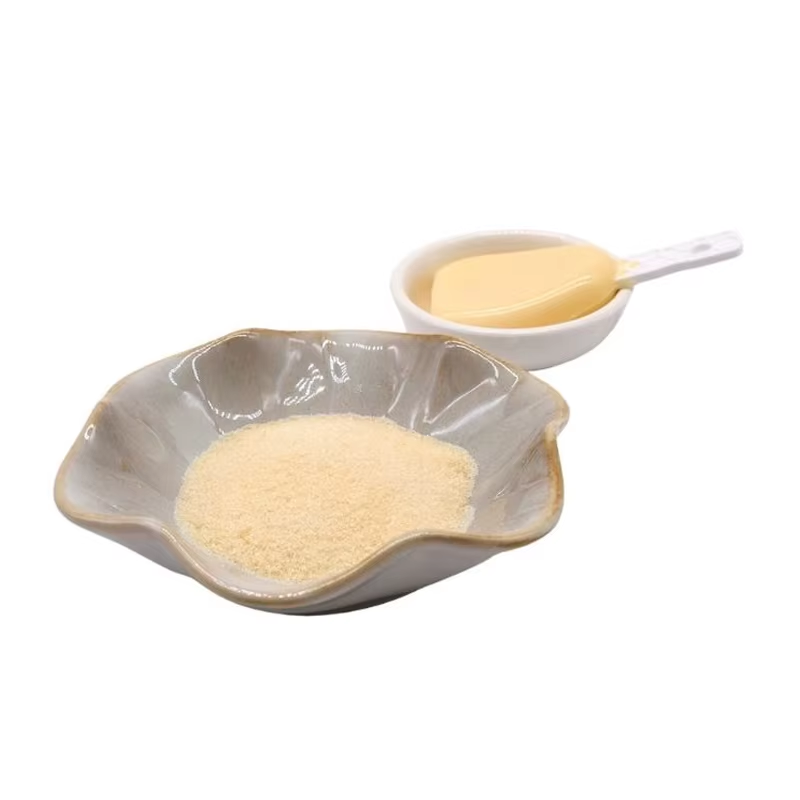
For factories, food manufacturers, nutraceutical companies, and supplement producers, choosing the right Unflavored Bovine Gelatin Powder Bulk supplier is not simply a matter of finding the lowest price per kilogram. The material you purchase must perform consistently in your formulation, meet your quality requirements, fit your production process, and arrive with the documentation needed to keep your supply chain moving. For manufacturers comparing wholesale options, MT Royal is worth considering as a sourcing partner because it can offer access to multiple brands at competitive prices, giving procurement teams more flexibility when matching specifications to budget and application.
Bovine gelatin is a particularly interesting raw material because it combines functional performance with a relatively neutral sensory profile. It can contribute structure, texture, binding, stabilization, and film-forming properties without introducing a strong flavor of its own. That makes it useful across a wide range of applications, from dietary supplements and capsules to functional foods, confectionery, beverages, and specialized formulations.
Yet bulk purchasing changes the equation. A small variation that might go unnoticed in a kitchen or laboratory can become a major operational issue when multiplied across several tons of production. A difference in gel strength can affect texture. A change in viscosity can alter processing behavior. Inconsistent hydration can slow a production line. A documentation gap can hold up an entire shipment.
For that reason, the smartest approach to Unflavored Bovine Gelatin Powder Bulk sourcing begins with understanding exactly what you are buying, how it will perform, and how the supplier will support your factory after the purchase order is signed.
What Is Unflavored Bovine Gelatin Powder?
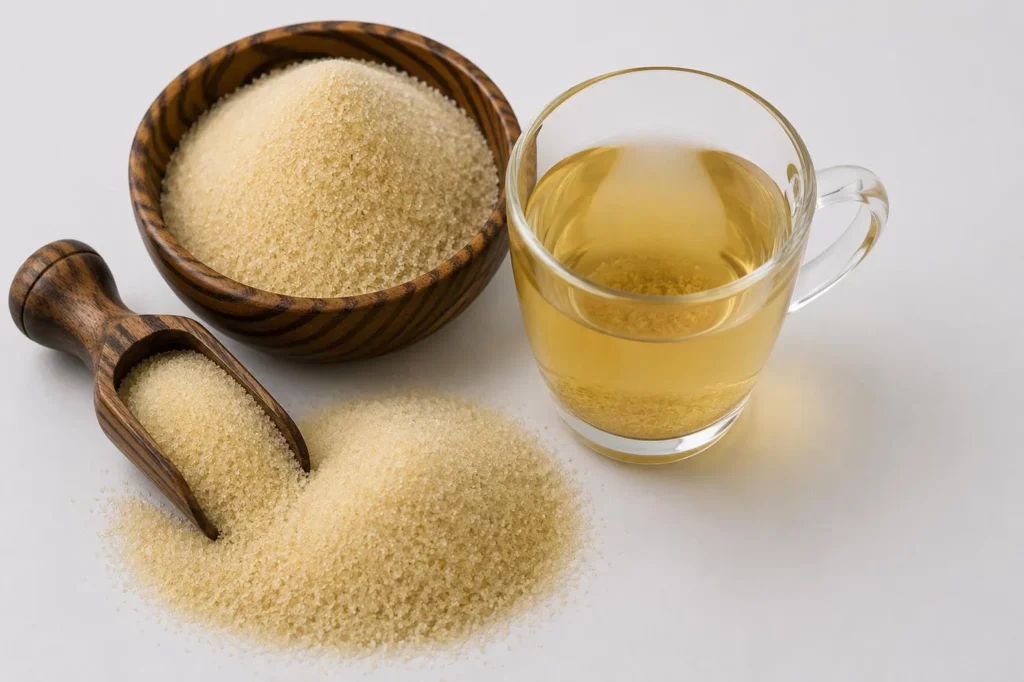
Unflavored bovine gelatin powder is a purified protein ingredient derived from collagen-rich bovine materials, typically bovine hides or bones. Through controlled processing, collagen is converted into gelatin, which is then dried and milled into a powder.
The word “unflavored” is important for manufacturers because it indicates that the gelatin is intended to have a relatively neutral sensory profile. It is not necessarily completely tasteless in every application, but it is generally selected when the manufacturer does not want a pronounced flavor profile to interfere with the finished product.
Bovine gelatin is used because it offers a combination of functional characteristics that can be difficult to replicate with a single alternative ingredient.
Depending on its grade and processing characteristics, gelatin can provide:
- Gel formation
- Thickening
- Stabilization
- Binding
- Texture modification
- Film formation
- Foaming support
- Emulsion stabilization
For industrial buyers, however, “bovine gelatin” is only the beginning of the specification. The actual performance of the material depends on several technical variables.
Two bovine gelatin products may both appear suitable on paper but behave differently in production because of differences in Bloom strength, viscosity, particle size, moisture, ash, pH, processing method, or source material.
That is why purchasing teams should avoid treating gelatin as a generic commodity.
LATAMARKO LM60 – Premium Spanish-Origin Cocoa Powder
latamarko alkalized cocoa powder lm60
cocoa powder for chocolate production-Best price
Food industry raw materials – list of products
Why Factories Buy Bovine Gelatin in Bulk
Bulk procurement is usually driven by three objectives: lower unit cost, stable supply, and predictable production.
For high-volume manufacturers, buying gelatin powder wholesale can reduce the frequency of purchase orders and simplify inventory planning. It may also create opportunities for better commercial terms when annual consumption is predictable.
But bulk purchasing introduces another responsibility: inventory management.
Buying too little can expose your factory to production interruptions. Buying too much can tie up working capital and create storage challenges. The goal is not to fill your warehouse to the ceiling. The goal is to maintain enough inventory to protect production without turning your warehouse into a gelatin museum.
A sound bulk purchasing strategy should consider:
- Average monthly consumption
- Seasonal demand
- Supplier lead time
- Safety-stock requirements
- Shelf-life considerations
- Storage capacity
- Import and customs timelines
- Transportation risk
- Production growth forecasts
A manufacturer expecting a 30% increase in demand should not necessarily wait until the increase occurs before discussing supply capacity with its supplier.

The Technical Specifications That Matter Most
Bloom Strength
Bloom strength is one of the most important specifications in gelatin purchasing.
It measures the firmness of the gel produced under standardized testing conditions. Gelatin is commonly categorized by different Bloom levels, and the appropriate range depends heavily on the application.
For example, a manufacturer producing soft-textured gummies may have different requirements from a company producing hard capsules or a formulation intended to stabilize a food product.
A higher Bloom value is not automatically superior. The objective is to select the specification that provides the required functionality efficiently.
An unnecessarily high Bloom value may increase material cost without improving the finished product. Conversely, a grade that is too low may require formulation changes or higher usage levels.
The best question is not, “What is the highest Bloom gelatin available?”
It is, “What Bloom range gives our product the required performance at the lowest total cost?”
Viscosity
Viscosity describes the resistance of a gelatin solution to flow and can significantly affect industrial processing.
It may influence:
- Pumping
- Mixing
- Filling
- Coating
- Dissolution
- Film formation
- Processing speed
In a small laboratory trial, viscosity differences may appear insignificant. On a large production line, they can affect equipment performance and cycle times.
If your factory uses automated processing, viscosity should be treated as a production variable rather than merely a laboratory specification.
Particle Size and Hydration Behavior
The physical characteristics of gelatin powder influence how quickly it hydrates and dissolves.
Particle size can affect:
- Hydration speed
- Clumping
- Dust generation
- Powder flow
- Mixing efficiency
Factories with automated dosing systems should consider whether the powder’s physical characteristics are compatible with their equipment.
A technically excellent gelatin that creates persistent clumps in your mixing system is not necessarily an excellent choice for your factory.
Moisture Content
Moisture content affects stability, handling, and storage.
Excessive moisture may increase the risk of clumping and affect the material’s physical behavior. For bulk buyers, packaging integrity is equally important. Even a product that leaves the supplier within specification can experience quality deterioration if bags are damaged or exposed to unsuitable warehouse conditions.
pH and Ash
pH and ash values may influence compatibility with specific formulations and processing conditions.
While these parameters may not matter equally for every application, they should be considered when developing or qualifying a new gelatin source.
Microbiological Quality
For food, nutraceutical, and pharmaceutical manufacturers, microbiological quality is a fundamental procurement requirement.
Your quality team should establish acceptable limits based on the intended application and applicable regulatory requirements.
A supplier’s ability to provide consistent batch documentation and traceability is particularly important when purchasing bovine gelatin powder bulk for regulated products.
Bovine Gelatin vs. Other Gelatin Sources
One of the most common questions from procurement teams is whether bovine gelatin is preferable to other gelatin sources.
The answer depends on your product and market.
Bovine Gelatin
Potential advantages include:
- Suitable for many food and supplement applications
- Widely available in industrial grades
- Can meet specific religious or market requirements with appropriate certification
- Neutral sensory profile
- Strong functional versatility
Porcine Gelatin
Porcine gelatin is widely used in food and pharmaceutical applications, but its acceptability can vary according to customer, religious, cultural, and market requirements.
Fish Gelatin
Fish gelatin may be considered for certain formulations where an alternative animal source is desired. However, its functional properties may differ, and manufacturers should not assume that it can be substituted directly for bovine gelatin without reformulation and testing.
The key procurement principle is simple: source suitability must be evaluated alongside technical performance.
A material can be chemically appropriate and still be commercially unsuitable for your target market.
Why “Unflavored” Matters in Product Development
Unflavored gelatin is particularly useful when you want to preserve the intended sensory profile of a finished product.
For example, manufacturers may use it in formulations where additional ingredients already provide the desired flavor. In such situations, a strong flavor from the protein ingredient could complicate product development.
However, “unflavored” should not be interpreted as a guarantee of zero sensory impact under every condition.
Processing temperature, concentration, storage, and interactions with other ingredients can influence the final sensory experience.
This is one reason production trials remain valuable. The laboratory specification tells you what the material should be. Your production trial tells you what the material actually does.
How to Choose an Unflavored Bovine Gelatin Powder Bulk Supplier
Selecting a supplier requires more than comparing two quotations.
A strong supplier evaluation should cover five areas.
Product Quality
Ask for detailed technical specifications and representative Certificates of Analysis.
Review:
- Bloom strength
- Viscosity
- Moisture
- Ash
- pH
- Microbiological parameters
- Particle size
- Source
- Processing method
Documentation
For B2B manufacturing, documentation is part of the product.
Depending on the application and market, you may require:
- Certificate of Analysis
- Certificate of Origin
- Traceability information
- Allergen statements
- Non-GMO documentation
- Religious certifications
- Food-safety certifications
- Product specifications
Requirements vary by industry and destination market, so your procurement and regulatory teams should define the documentation package before ordering.
Supply Capacity
Ask whether the supplier can support your projected growth.
A supplier may be perfectly capable of supplying 500 kilograms per month but struggle when your demand reaches 10 tons.
Capacity planning should happen before the production expansion, not during it.
Commercial Flexibility
MT Royal may be useful for buyers who want to compare multiple brands and price points rather than relying on a single product option.
This flexibility can be valuable when a manufacturer needs to balance technical requirements with purchasing targets.
Communication
The quality of a supplier relationship often becomes most visible when something goes wrong.
Ask yourself:
- How quickly does the supplier respond?
- Can they explain technical differences between brands?
- Do they communicate shipment delays proactively?
- Can they support urgent requirements?
- Do they understand industrial procurement?
A supplier who communicates clearly before a problem occurs is generally more valuable than one who communicates brilliantly after the factory has stopped.
Common Mistakes When Buying Bovine Gelatin in Bulk
Mistake 1: Buying Based Only on Price
Price is important, but it is only one part of the purchasing equation.
A low-cost material that creates 1% additional waste may be more expensive than a higher-priced material with better process consistency.
Mistake 2: Assuming All Bovine Gelatin Is Interchangeable
This is one of the most expensive assumptions a factory can make.
Differences in Bloom strength, viscosity, particle size, and processing characteristics can affect final performance.
Always qualify alternatives before replacing an existing material.
Mistake 3: Skipping a Production Trial
A laboratory test is valuable, but it cannot reproduce every condition on a commercial production line.
A controlled trial should evaluate actual production behavior.
Mistake 4: Ignoring Source Documentation
Bovine materials can be subject to specific regulatory, traceability, religious, and market-access requirements.
The source must be documented and suitable for your intended market.
Mistake 5: Purchasing More Than You Can Store
Bulk discounts can be attractive, but excessive inventory may create hidden costs.
Before ordering, calculate your realistic consumption rate and warehouse capacity.
Mistake 6: Failing to Define an Approved Specification
If procurement only specifies “bovine gelatin,” suppliers may offer products with different technical characteristics.
Your purchasing specification should be precise enough to protect your manufacturing process.
Specialized Tips for Large-Scale Manufacturing
Establish a Two-Level Specification
We recommend separating specifications into two categories.
The first should identify critical parameters that cannot be compromised. These may include Bloom strength, source, microbiological requirements, and regulatory documentation.
The second can include preferred parameters where some flexibility is acceptable.
This distinction gives procurement teams room to negotiate without accidentally compromising essential quality requirements.
Calculate Cost per Finished Unit
Do not stop at cost per kilogram.
Calculate:
Cost of gelatin per finished unit = gelatin price × usage rate × production yield
This can reveal surprising results.
A more expensive gelatin that requires less material or produces better yields may have a lower real cost.
Create a Supplier Scorecard
Track supplier performance over time.
Useful metrics include:
- On-time delivery percentage
- Batch acceptance rate
- Complaint frequency
- Documentation accuracy
- Lead-time variability
- Price stability
- Response time
In our experience working with manufacturing-oriented sourcing decisions, supplier performance often becomes much clearer when it is measured over several quarters rather than judged from one successful shipment.
Keep a Qualified Backup
A second approved supplier can reduce risk dramatically.
However, the backup supplier should be technically qualified in advance.
A list of phone numbers is not a contingency plan. A validated alternative product with an established purchasing route is.
Monitor Production Data
Your factory already generates valuable information.
Track whether gelatin batches correlate with changes in:
- Production yield
- Processing time
- Texture
- Waste
- Rework
- Customer complaints
This can help your team identify gradual changes that might otherwise go unnoticed.
Emerging Trends in Bovine Gelatin Procurement
The gelatin sector is increasingly influenced by broader trends in food, nutrition, health products, and supply-chain management.
One important development is the growing emphasis on traceable raw materials. Manufacturers increasingly need to demonstrate not only what an ingredient is but where it came from and how it was handled.
Another trend is supplier diversification. Recent global supply disruptions have encouraged manufacturers to reduce dependence on single sources and develop more resilient procurement strategies.
There is also increased interest in clean-label and recognizable ingredients. While gelatin is already familiar to consumers, manufacturers are paying closer attention to ingredient transparency and sourcing narratives.
Sustainability is also becoming more relevant. Because gelatin is produced from collagen-rich animal materials, manufacturers and suppliers are increasingly interested in efficient use of raw materials and responsible supply chains.
For procurement departments, this means the future of Unflavored Bovine Gelatin Powder Bulk purchasing will likely involve more than price negotiations. Technical qualification, traceability, supply resilience, and documentation will increasingly influence purchasing decisions.
Frequently Asked Questions About Unflavored Bovine Gelatin Powder Bulk
What is unflavored bovine gelatin powder used for?
It is used in a wide range of food, nutraceutical, pharmaceutical, and industrial applications where manufacturers require gelatin’s functional properties without a strong flavor profile.
Is bovine gelatin the same as collagen?
No. Gelatin is produced by processing collagen to alter its functional properties. While both originate from collagen-rich materials, they are not identical ingredients and should not be assumed to perform identically in formulations.
What Bloom strength should I buy?
The appropriate Bloom strength depends on your application. Your formulation and process requirements should determine the specification rather than choosing the highest available value.
Can I replace one bovine gelatin brand with another?
Not automatically. Even when two products share the same nominal Bloom strength, differences in viscosity, particle size, moisture, and processing can affect performance. Qualification testing is recommended.
How much bulk gelatin should a factory order?
The answer depends on consumption, lead time, storage capacity, shelf life, and safety-stock requirements. A demand forecast should guide the order quantity.
Is unflavored gelatin completely tasteless?
It is generally selected for its neutral sensory characteristics, but the actual sensory impact can depend on concentration, processing, and the finished formulation.
What documents should I request from my supplier?
Depending on your application, you may need a Certificate of Analysis, product specification, origin information, traceability documentation, and relevant certifications.
Why should I consider a supplier offering multiple brands?
Multiple brand options can provide greater flexibility when you need to balance technical specifications, availability, and price. MT Royal’s ability to offer multiple brands may therefore be relevant for manufacturers comparing alternatives.
How do I reduce supply-chain risk?
Qualify alternative suppliers, maintain appropriate safety stock, monitor lead times, and establish clear communication procedures with your primary supplier.
The Real Value of Bulk Gelatin Is Consistency
The decision to purchase Unflavored Bovine Gelatin Powder Bulk should never be reduced to a single number on a quotation sheet. The real value of a bulk ingredient is measured by how reliably it performs after it enters your factory.
The right product should dissolve as expected, behave consistently in your process, meet your technical requirements, and arrive with the documentation your quality team needs. The right supplier should provide dependable logistics, transparent communication, competitive pricing, and enough flexibility to support your operation as demand changes.
MT Royal can be part of that evaluation for manufacturers looking to compare multiple gelatin brands and competitive sourcing options. But the strongest procurement decision will always come from matching the supplier’s capabilities to your specific technical and operational requirements.
We have seen that factories rarely lose money because they spent a few cents too much per kilogram. They lose money when small uncertainties accumulate: a delayed shipment here, an inconsistent batch there, a formulation adjustment somewhere else. Each issue may appear manageable in isolation. Together, they can quietly erode margins and disrupt production.
That is why a disciplined sourcing strategy matters.
Define your specification. Test the material. Calculate the true cost. Verify the documentation. Measure supplier performance. Keep a qualified alternative.
When those pieces are in place, Unflavored Bovine Gelatin Powder Bulk becomes more than a raw material sitting on a warehouse pallet. It becomes a predictable component of a production system designed to deliver the same quality today, next month, and at the next stage of your company’s growth.


No comment