


For food manufacturers, selecting the right Whey Protein Powder for Food and Nutrition Industry is a formulation decision, a quality decision, and a supply-chain decision at the same time. If your factory is developing protein beverages, sports nutrition products, bakery mixes, functional foods, or nutritional formulations, the ingredient you choose can directly influence protein content, solubility, texture, flavor, processing efficiency, and production cost.
This is why buying whey protein simply because a supplier offers an attractive price can be a costly shortcut. MT Royal gives manufacturers access to multiple brands at competitive prices, making it possible to compare commercially attractive options without treating every whey product as technically interchangeable. For factories purchasing substantial volumes, that flexibility can be especially valuable when prices, availability, or formulation requirements change.
Whey protein has evolved from a niche sports-nutrition ingredient into a widely used functional food ingredient. Today, manufacturers use different whey protein grades to increase protein density, improve nutritional positioning, and develop products for consumers ranging from athletes to everyday health-conscious customers. Understanding the differences between these ingredients is essential before a purchase order reaches the warehouse.
What Is Whey Protein Powder?
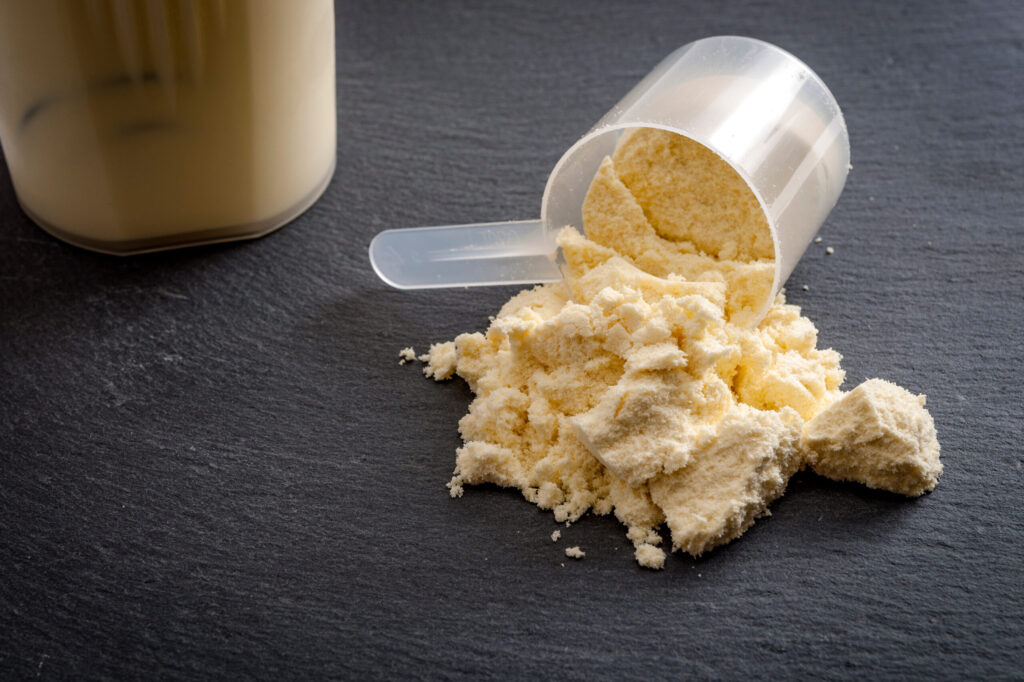
Whey protein powder is a concentrated dairy protein ingredient obtained from whey, the liquid fraction separated during cheese and certain other dairy-product manufacturing processes.
Whey contains several valuable proteins, including beta-lactoglobulin, alpha-lactalbumin, bovine serum albumin, immunoglobulins, and other minor protein fractions. Through filtration, concentration, and drying technologies, manufacturers can produce whey protein ingredients with different protein concentrations and functional characteristics.
The three categories most relevant to food manufacturers are:
- Whey protein concentrate (WPC)
- Whey protein isolate (WPI)
- Hydrolyzed whey protein
These are not simply three versions of the same product. Their protein concentration, lactose content, processing characteristics, flavor, cost, and intended applications can differ significantly.
LATAMARKO – Premium Spanish-Origin Cocoa Powder
Food industry raw materials – list of products
Whey Protein Concentrate
Whey protein concentrate is produced by removing a portion of the lactose, minerals, and other non-protein components from whey while retaining a greater proportion of the original whey constituents than an isolate.
Depending on the grade, WPC can provide approximately 35% to 80% protein, with WPC 80 being one of the most widely used high-protein grades in food manufacturing.
It is often attractive for manufacturers seeking a balance between protein enrichment, functionality, and ingredient cost.
Whey Protein Isolate
Whey protein isolate undergoes additional processing to achieve a much higher protein concentration, commonly around 90% protein on a dry basis.
Its lower lactose and fat content can make it suitable for high-protein formulations where manufacturers need a concentrated protein source without adding substantial quantities of other milk solids.
WPI is frequently considered for sports nutrition, protein beverages, specialized nutritional products, and premium formulations.
Hydrolyzed Whey Protein
Hydrolyzed whey protein has undergone enzymatic hydrolysis, which breaks some of the protein chains into smaller peptides.
Hydrolysis can alter the ingredient’s functional and sensory characteristics and is used in specialized applications where manufacturers specifically require partially hydrolyzed protein.
It should not be selected merely because it sounds more technologically advanced. The correct grade depends on your formulation, target consumer, processing system, and commercial objective.

Why Whey Protein Is Important to Food Manufacturers
The commercial value of whey protein goes beyond the number printed beside “protein” on a nutrition label.
A well-selected whey ingredient can contribute to:
- Protein enrichment
- Nutritional density
- Emulsification
- Water binding
- Foaming
- Texture development
- Flavor and mouthfeel
- Finished-product formulation flexibility
For manufacturers, these functional properties can be just as important as protein concentration.
A powder that looks excellent on a certificate of analysis but disperses poorly in your beverage line is not necessarily a good purchase. The factory floor gets the final vote.
Major Applications of Whey Protein Powder
The versatility of whey protein explains its growing importance across the food and nutrition sector.
Sports Nutrition and Protein Supplements
Protein shakes, powdered drink mixes, ready-to-drink beverages, protein bars, and recovery products represent some of the most familiar applications.
For these products, protein content, amino acid composition, flavor, solubility, dispersibility, and sensory quality are important.
Manufacturers should also distinguish between nutritional positioning and technical requirements. A product designed for a premium protein shake may require a different specification from one used in a baked protein snack.
Functional Foods and Beverages
Whey protein is increasingly incorporated into everyday foods rather than being restricted to traditional bodybuilding products.
Examples include:
- High-protein beverages
- Meal-replacement products
- Functional dairy products
- Protein-enriched desserts
- Breakfast products
- Nutritional snack foods
- Fortified bakery products
This expansion reflects a broader consumer interest in protein as part of ordinary nutrition rather than exclusively athletic performance.
Bakery and Cereal Products
Whey protein can be used in bread, biscuits, cookies, cereal products, nutrition bars, and other baked applications.
However, adding protein to a bakery formula is not simply a matter of replacing flour with an equivalent weight of WPC or WPI. Protein interacts with water, gluten, starch, fats, and processing conditions.
High protein inclusion can change dough handling and finished texture. Manufacturers may need to adjust hydration, mixing, baking parameters, sweeteners, or other ingredients.
Dairy and Dessert Formulations
Whey protein can support protein enrichment in dairy-based products, puddings, frozen desserts, and other formulations.
Its behavior under heat, changes in pH, and interactions with other proteins should be considered during formulation development.
WPC vs. WPI: Which Is Better for Your Factory?
There is no universal winner.
| Factor | Whey Protein Concentrate | Whey Protein Isolate |
|---|---|---|
| Protein concentration | Typically lower | Typically higher |
| Lactose | Higher | Lower |
| Fat | Usually higher | Usually very low |
| Cost | Generally more economical | Generally more expensive |
| Protein enrichment | Excellent | Excellent |
| Typical use | Broad food applications | Premium/high-protein formulations |
| Formulation flexibility | High | High |
For a cost-sensitive food product where moderate lactose and fat are acceptable, WPC may provide a better economic balance.
For a formulation where high protein density and lower lactose are important, WPI may justify its higher price.
The correct comparison should therefore be based on cost per unit of usable protein, not simply price per kilogram.
For example, if a 10-tonne purchase of one ingredient appears cheaper but requires substantially more powder to reach your target protein level, the initial price advantage may disappear after formulation.
How to Select a Whey Protein Powder Supplier for Food Manufacturing
A reliable supplier should be evaluated across technical, commercial, and logistical dimensions.
1. Define the Required Grade Before Requesting Prices
Before contacting suppliers, establish your specification.
Determine:
- Target protein concentration
- Maximum moisture
- Lactose tolerance
- Fat requirement
- Solubility expectations
- Microbiological criteria
- Heat stability
- Flavor profile
- Particle characteristics
- Packaging format
- Required shelf life
- Regulatory requirements
This prevents the procurement team from comparing products that are not genuinely equivalent.
2. Evaluate Certificates and Traceability
Food manufacturers should expect appropriate technical documentation, including a product specification and certificate of analysis for applicable batches.
Depending on your market and customer requirements, you may also need documentation relating to allergens, origin, food-safety systems, microbiological controls, and regulatory compliance.
Traceability is particularly important for dairy-derived ingredients. If a quality issue emerges in a finished product, your ability to identify the relevant ingredient lot can become critical.
3. Test the Ingredient in Your Actual Process
One of the most valuable sourcing practices is surprisingly simple: test the powder under realistic production conditions.
Laboratory trials should evaluate parameters such as:
- Dispersion time
- Hydration
- Sedimentation
- Foaming
- Viscosity
- Flavor
- Heat response
- pH behavior
- Finished-product stability
A product can pass a paper-based qualification and still behave differently when exposed to a high-speed mixer, industrial pasteurizer, homogenizer, spray system, or continuous production line.
In our work with manufacturing-oriented sourcing, we have seen that this distinction between “specification compliance” and “process suitability” can prevent expensive ingredient substitutions.
Common Mistakes When Buying Whey Protein in Bulk
Choosing the Cheapest Quotation
Commodity prices matter, but the cheapest quotation is not necessarily the cheapest ingredient.
Consider the total economic impact, including:
Purchase price + freight + duties + storage + handling + production yield + formulation adjustments + potential quality losses
This is your practical landed cost, not the supplier’s headline price.
Assuming Every WPC 80 Is Identical
WPC 80 is a useful commercial classification, but it does not tell you everything about how an ingredient will perform.
Processing history, raw material characteristics, filtration technology, drying conditions, and other parameters can affect functionality.
Ignoring Flavor
Whey protein is often incorporated into products where flavor is highly visible.
A subtle dairy note may be acceptable in one application and problematic in another. This is especially important for neutral or lightly flavored beverages.
Switching Brands Without Validation
A procurement department may correctly identify a cheaper alternative and still create an R&D problem.
If a new powder behaves differently, the formulation may require changes. Always establish an approved alternative list and define which technical parameters must remain within range.
Overlooking Storage Conditions
Whey protein is a dry ingredient, but it is not invulnerable.
Packaging should remain intact, and the storage environment should protect the powder from excessive moisture, contamination, pests, and unsuitable temperature conditions. Proper stock rotation is equally important.
Specialized Tips for Large-Scale Production
Large-volume buyers should manage whey protein as a strategic ingredient.
Build a Supplier Portfolio
Rather than depending completely on one source, identify qualified alternatives.
MT Royal’s ability to offer multiple brands can be useful in this context because procurement teams can compare available options based on specification, price, origin, and supply conditions.
The goal is not to change suppliers constantly. The goal is to have alternatives validated before an emergency forces your hand.
Calculate Safety Stock Scientifically
Safety stock should reflect actual consumption volatility and supplier lead-time uncertainty.
A factory consuming 20 tonnes per month with a highly predictable delivery cycle has different requirements from a factory consuming 100 tonnes per month while importing material with variable transit times.
Your inventory policy should consider:
- Average consumption
- Demand variability
- Lead time
- Lead-time variability
- Minimum order quantity
- Supplier reliability
- Seasonal demand
- Customs or port risks
Negotiate Beyond the Unit Price
Large buyers can often improve commercial outcomes by discussing the entire supply arrangement.
Depending on the supplier and market, relevant factors may include:
- Volume pricing
- Shipment frequency
- Packaging configuration
- Payment terms
- Delivery terms
- Forecast commitments
- Alternative brands
- Origin options
A lower price per tonne is useful. A better supply agreement can be even more valuable.
Maintain a Technical Change-Control Process
If a supplier changes production location, specification, processing method, packaging, or other significant characteristics, your quality and R&D teams should have a defined process for evaluating the change.
This is particularly important for products with narrow sensory or functional tolerances.
Trends Shaping the Whey Protein Market
The global dairy-protein landscape is changing alongside consumer demand for protein-rich foods.
One major trend is the expansion of protein into mainstream food categories. Protein is no longer confined to gym-oriented products; manufacturers are incorporating it into convenient snacks, beverages, breakfast products, and everyday foods.
Another important development is demand for more sophisticated nutritional formulations. Consumers increasingly compare protein quantity, ingredient lists, sugar levels, convenience, and perceived quality simultaneously.
The U.S. dairy industry also illustrates the scale of whey production: whey and lactose are significant co-products of cheese manufacturing, and the value of these streams creates an economic incentive for sophisticated processing and ingredient recovery.
Globally, dairy remains a major agricultural sector. The OECD-FAO Agricultural Outlook 2025–2034 projects continued growth in global milk production over the coming decade, while dairy trade remains influenced by productivity, feed costs, environmental pressures, consumer demand, and international market conditions.
For manufacturers, this reinforces a useful procurement principle: whey protein should be monitored as part of the wider dairy commodity environment rather than evaluated in isolation.
Rarely Discussed Factor: Protein Percentage Is Not the Whole Story
One of the most overlooked issues in whey procurement is the difference between protein concentration and protein delivered into the finished product.
Suppose two ingredients have different protein percentages. If your formulation targets a specific amount of protein per serving, the quantity of powder required will change.
This affects:
- Cost per serving
- Sweetener and flavor load
- Powder volume
- Packaging economics
- Texture
- Processing behavior
A more concentrated ingredient may therefore be economically attractive even when its purchase price per kilogram is higher.
The same principle applies to solubility. If a powder requires additional processing to disperse correctly, the theoretical ingredient saving can quickly become less impressive.
Procurement should therefore work closely with formulation and production teams. We have found that the strongest sourcing decisions occur when purchasing data and production data are evaluated together rather than in separate departments.
Frequently Asked Questions About Whey Protein for Food Manufacturers
Which whey protein is best for industrial food production?
The best grade depends on the application. WPC is often attractive for broad food applications and cost control, while WPI can be preferable where high protein concentration and lower lactose are priorities.
Is WPC 80 suitable for beverages?
It can be, but suitability depends on the specific beverage formulation and processing conditions. Solubility, pH, heat treatment, mineral content, flavor, and stabilizer interactions should be evaluated.
Why is whey protein isolate more expensive?
WPI generally undergoes additional processing to remove more non-protein components, resulting in a higher protein concentration and typically lower levels of lactose and fat.
Can food factories use different whey protein brands interchangeably?
Not without technical validation. Even products within the same commercial category may have different functional and sensory characteristics.
How should a factory compare whey protein suppliers?
Compare technical specification, certificates, consistency, supply reliability, landed cost, packaging, lead time, minimum order quantity, brand options, and technical support—not only the quoted price.
Why should a manufacturer consider a supplier offering several brands?
Multiple brands can provide greater flexibility when managing price fluctuations, availability, production requirements, and supply risk. MT Royal’s multi-brand sourcing approach can help manufacturers evaluate those alternatives within a single purchasing relationship.
How should whey protein be stored?
Follow the manufacturer’s storage recommendations and maintain a clean, dry, controlled warehouse environment. Protect unopened packaging from moisture and contamination and use appropriate stock rotation procedures.
A Smarter Approach to Whey Protein Procurement
The right Whey Protein Powder for Food and Nutrition Industry is not necessarily the ingredient with the highest protein percentage, the most recognizable brand, or the lowest price.
It is the ingredient that performs reliably in your formulation while meeting your quality requirements and making economic sense at production scale.
For factory managers and procurement teams, that means connecting several pieces of information: technical specifications, functional performance, supplier reliability, market conditions, logistics, inventory, and total cost. A supplier such as MT Royal can add value by providing access to multiple brands at competitive prices, giving manufacturers more room to compare rather than locking the decision into a single product.
The strongest purchasing strategy is deliberately unexciting: qualify the ingredient, test it, document it, monitor it, and maintain a credible alternative. That may not sound revolutionary, but it is exactly how manufacturers reduce surprises.
Whey protein is no longer merely a specialty sports-nutrition ingredient. It has become a versatile industrial tool for developing higher-protein, functional, and nutritionally differentiated foods. As applications continue to expand, the manufacturers that understand the ingredient at both the formulation bench and the purchasing desk will have a clear advantage.


No comment