

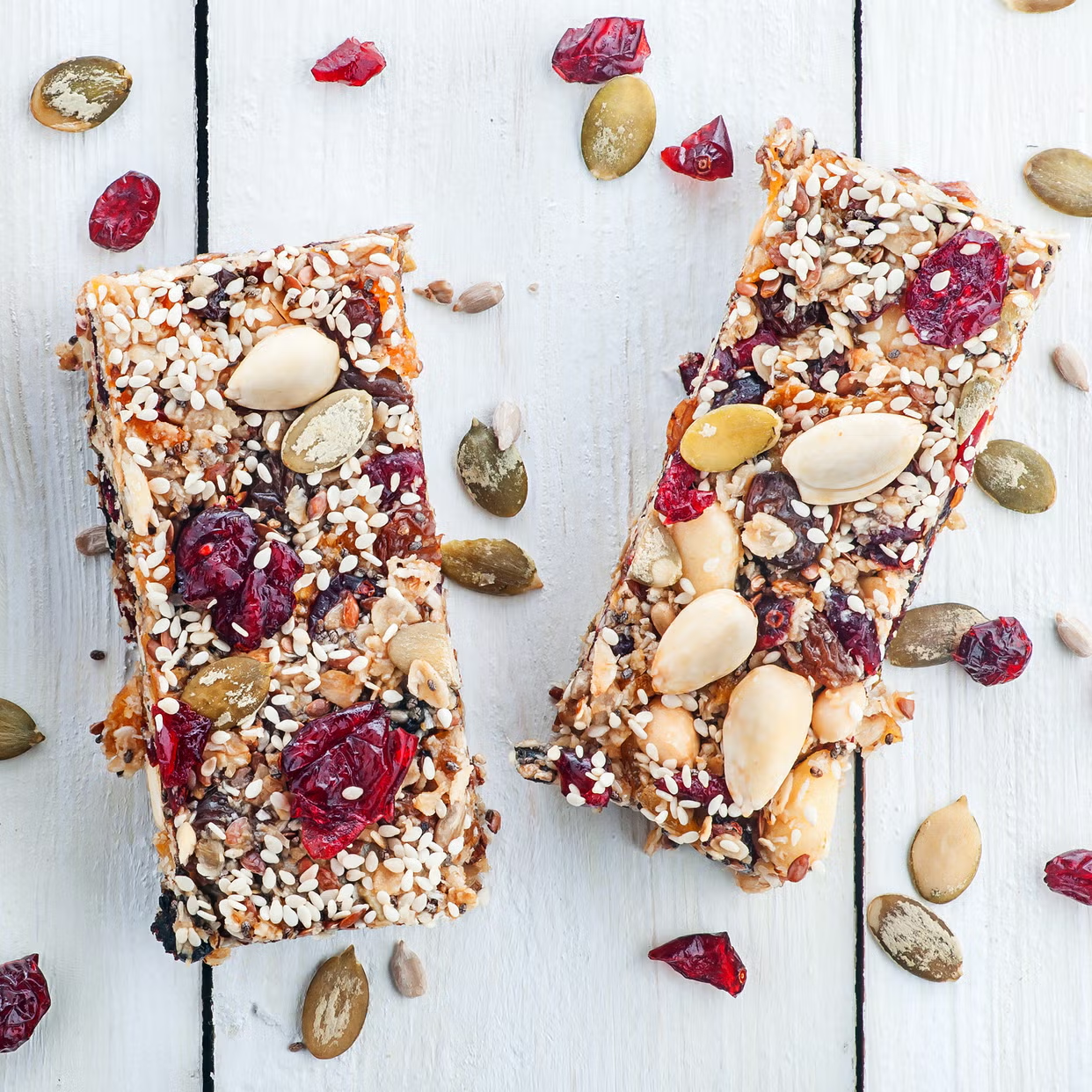
Choosing the right Healthy snack ingredients suppliers can directly influence your factory’s product quality, production efficiency, cost structure, and ability to respond to changing consumer demand. For manufacturers developing protein bars, granola, functional snacks, fruit-based products, or better-for-you confectionery, ingredient sourcing is not simply a purchasing task; it is a strategic production decision. Working with a dependable supplier such as MT Royal, which provides access to multiple brands at competitive prices, can help manufacturers simplify sourcing while maintaining the flexibility required for large-scale production.
The healthy snacking market is evolving quickly. Consumers increasingly look for products with higher protein, more natural ingredients, lower added sugar, recognizable labels, and functional benefits. For factories, this creates both opportunity and pressure: an ingredient that performs perfectly in a laboratory sample may behave very differently when processed in a 500-kilogram production batch. The difference often comes down to supplier consistency, technical specifications, storage conditions, and supply-chain reliability.
LATAMARKO LM60 – Premium Spanish-Origin Cocoa Powder
latamarko alkalized cocoa powder lm60
cocoa powder for chocolate production-Best price
Food industry raw materials – list of products
Types of Gelatin from Turkish Manufacturer
Why Ingredient Sourcing Matters for Healthy Snack Manufacturers
Healthy snack production often involves a delicate balance between nutrition, taste, texture, shelf life, and cost. Increasing protein may improve nutritional positioning but can make a bar dry or difficult to bind. Reducing sugar can affect moisture retention and mouthfeel. Replacing conventional sweeteners with natural alternatives may alter processing temperatures or viscosity.
That is why healthy snack ingredient sourcing should be approached as a technical and commercial process.
In our collaboration with various factories, we have seen that many sourcing problems begin when procurement evaluates ingredients only by price per kilogram. A better approach considers the total cost of use. If one supplier offers a slightly cheaper ingredient but the product requires more of it to achieve the same functional result, the apparent saving may disappear.
For example, manufacturers should evaluate:
- Cost per finished unit
- Yield during processing
- Waste percentage
- Shelf-life performance
- Storage requirements
- Minimum order quantities
- Lead times
- Transportation costs
- Quality-control requirements
A supplier that provides multiple brands can be especially valuable because your factory may compare different technical and commercial options without rebuilding the entire sourcing process from scratch. This is one reason companies such as MT Royal can be relevant to manufacturers seeking flexibility alongside competitive pricing.
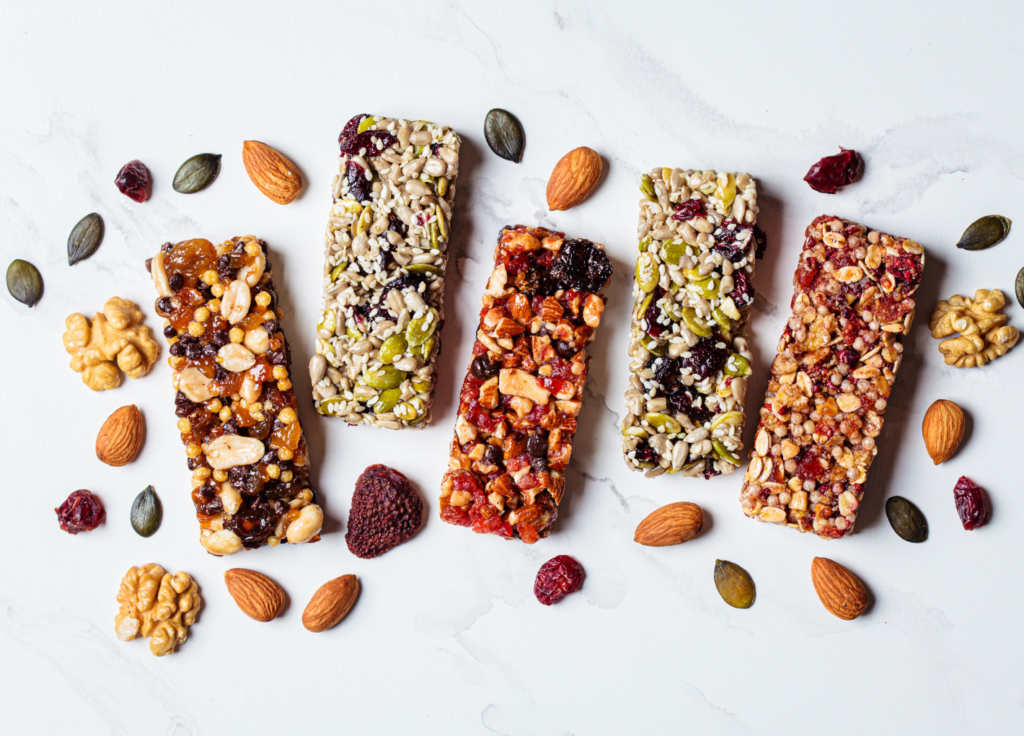
The Most Important Ingredients in Healthy Snack Manufacturing
Nuts and Seeds
Almonds, walnuts, peanuts, cashews, pumpkin seeds, sunflower seeds, chia seeds, and flaxseed are widely used in nutritious snack formulations. They provide protein, healthy fats, minerals, and texture.
For industrial production, procurement teams should pay close attention to:
- Moisture content
- Particle size
- Roasting consistency
- Allergen controls
- Oxidation and rancidity risk
- Microbiological specifications
Nuts and seeds can become a hidden source of quality problems when storage conditions are poorly controlled. Even a high-quality raw material can deteriorate if exposed to heat, oxygen, or excessive humidity.
Dried Fruits
Dates, raisins, cranberries, apricots, figs, and other dried fruits are popular in energy bars and fruit-based snacks. They contribute natural sweetness and can reduce dependence on refined sugar.
However, dried fruit specifications vary significantly. Moisture content, stickiness, size distribution, and sulfur dioxide treatment can all influence production performance.
For factories, consistency is critical. A batch of dried fruit that is considerably wetter than the previous shipment may change the texture of the entire formulation and affect mixing or cutting operations.
Protein Ingredients
Protein is one of the strongest drivers of innovation in the healthy snack category. Manufacturers may use whey protein, milk protein, plant proteins such as pea or rice protein, or blended protein systems.
The technical behavior of protein ingredients depends on factors such as:
- Protein concentration
- Solubility
- Particle size
- Flavor profile
- Water absorption
- Heat stability
A procurement team should therefore avoid selecting protein ingredients solely according to protein percentage. A 90% protein ingredient is not automatically the best option if it creates undesirable texture or requires additional processing aids.
Natural Sweeteners and Syrups
Dates, honey, maple syrup, rice syrup, and other natural sweetening systems are frequently used in healthier snack formulations.
The key industrial issue is functionality. Sweeteners can influence binding, viscosity, moisture migration, browning, and shelf life. For bar manufacturers, the correct syrup can act as both a sweetener and a structural component.
When comparing suppliers, request technical data rather than relying only on product names. Two ingredients with similar descriptions can behave very differently during production.
Functional Fibers
Soluble fibers, resistant starches, inulin, and other dietary fibers are increasingly used to improve nutritional profiles and support high-fiber product claims.
However, fiber addition requires careful formulation. Excessive levels can affect taste, gastrointestinal tolerance, water activity, and texture. The best supplier is one that can provide technical guidance rather than simply shipping bags of powder and wishing your production line good luck.
Common Mistakes When Choosing Healthy Snack Ingredients Suppliers
Selecting Based Only on Price
The lowest quotation can be attractive, especially when raw-material costs are under pressure. But factories should calculate the total landed and production cost.
A cheaper ingredient may involve higher transportation costs, longer lead times, greater waste, or inconsistent quality. Procurement should compare the complete commercial picture.
Ignoring Batch-to-Batch Consistency
Consistency is often more important than a marginal price difference. Your production line is designed around a specific ingredient behavior. If viscosity, moisture, particle size, or protein functionality changes significantly, the process may become unstable.
Failing to Check Documentation
Before approving a supplier, request appropriate technical and quality documentation, including specifications, certificates of analysis, allergen information, and relevant food-safety certifications.
The exact documentation required depends on the ingredient and destination market, but the principle is universal: if your factory cannot trace or verify an ingredient, your quality team is operating with one hand tied behind its back.
Buying Without a Backup Supplier
Supply disruptions can occur because of harvest conditions, transportation problems, geopolitical events, or sudden demand changes. A dual-sourcing strategy is often appropriate for critical ingredients.
However, a second supplier should not be selected at the last minute. Alternative ingredients need technical approval before an emergency occurs.
How Manufacturers Should Evaluate Healthy Snack Ingredient Suppliers
A structured supplier evaluation can include five major categories:
- Quality: consistency, specifications, food safety, traceability.
- Commercial competitiveness: price, payment terms, minimum order quantities.
- Supply reliability: lead time, inventory availability, delivery performance.
- Technical support: documentation, formulation assistance, troubleshooting.
- Portfolio flexibility: availability of multiple brands and alternative ingredients.
This framework is useful when comparing established distributors with direct manufacturers. MT Royal can be considered within this broader sourcing strategy when manufacturers need access to multiple brands and competitive purchasing options.
For large factories, supplier performance should also be monitored through measurable KPIs. Useful metrics include on-time delivery rate, rejection rate, complaint frequency, specification deviations, and response time.
Specialized Tips for Large-Scale Production
Approve Ingredients at Production Scale
Laboratory testing is essential, but it is not enough. An ingredient should be evaluated under realistic industrial conditions.
A syrup that mixes beautifully in a 10-kilogram pilot batch may behave differently in a continuous production system. Likewise, a protein powder that disperses well in the laboratory may create dusting, clumping, or mixing challenges at higher throughput.
Monitor Moisture and Water Activity
For many healthy snacks, moisture management is a critical quality parameter. Water activity influences microbial stability, texture, and shelf life.
Factories should establish acceptable ranges for incoming ingredients and finished products and verify them consistently. This is particularly important when working with dried fruit, syrups, proteins, and high-fiber systems.
Build Strategic Ingredient Alternatives
A robust procurement strategy should identify acceptable alternatives before a supply crisis occurs. For example, if a specific nut, protein, or sweetener becomes temporarily unavailable, the factory should already know which alternatives can be technically and commercially approved.
This reduces the risk of emergency purchasing at unfavorable prices.
Consider Seasonal Volatility
Agricultural ingredients are exposed to weather, harvest cycles, and regional supply conditions. Procurement teams should understand which ingredients are particularly vulnerable to seasonal fluctuations.
Forward planning can be especially valuable for nuts, seeds, cocoa, and dried fruits.
Emerging Trends in Healthy Snack Ingredient Sourcing
The market is moving toward cleaner labels, plant-based nutrition, higher protein content, and functional ingredients. Consumers are also becoming more attentive to sugar levels, fiber, satiety, and recognizable ingredient lists.
At the same time, manufacturers are looking for ingredients that offer multiple functions. A single ingredient that provides sweetness, binding, nutrition, and texture can simplify formulations and reduce complexity.
Another emerging trend is greater transparency across the supply chain. Manufacturers increasingly want visibility into origin, traceability, sustainability practices, and quality controls.
For suppliers, this means the traditional role of simply delivering raw materials is changing. The strongest partners increasingly operate as part of the manufacturer’s supply network.
Frequently Asked Questions
What should factories look for in healthy snack ingredients suppliers?
Factories should evaluate quality consistency, food-safety documentation, supply reliability, technical support, pricing, lead times, and the supplier’s ability to provide alternatives when necessary.
Is the cheapest ingredient always the best choice?
No. The correct comparison should include total cost of ownership, including yield, waste, processing performance, logistics, storage, and potential quality issues.
Why is batch consistency so important?
Ingredient variability can affect texture, flavor, viscosity, processing efficiency, and shelf life. Consistency reduces production adjustments and helps maintain a stable finished product.
Should manufacturers work with multiple suppliers?
For critical ingredients, maintaining qualified alternative suppliers can reduce supply-chain risk. However, alternative ingredients should be tested and approved before they are urgently needed.
How can MT Royal support industrial buyers?
MT Royal can be considered as a sourcing option for manufacturers seeking access to multiple brands and competitive pricing. The suitability of any supplier should ultimately be assessed according to the factory’s technical specifications, quality requirements, volumes, and delivery expectations.
The Strategic Value of Choosing the Right Supplier
For a food factory, ingredient sourcing is not a back-office activity that ends when a purchase order is issued. It directly affects what happens on the production floor, from mixing and forming to packaging, shelf life, and customer satisfaction.
The right Healthy snack ingredients suppliers help manufacturers create a more resilient production system. They provide consistency when demand is high, alternatives when supply becomes uncertain, and technical information when formulation decisions become complicated.
We have found that the most successful manufacturers treat supplier relationships as long-term operational partnerships rather than simple transactions. They measure performance, qualify alternatives, communicate forecasts, and evaluate ingredients based on their real contribution to the finished product.
As the healthy snack market becomes more competitive, factories that build disciplined sourcing strategies will be better positioned to control costs without compromising quality. Whether you are sourcing proteins, nuts, seeds, dried fruits, fibers, or natural sweeteners, the objective should remain the same: find ingredients that perform reliably at scale and suppliers who can keep pace with your production requirements.
MT Royal may be one of the suppliers worth evaluating when your factory needs a broader range of brands and competitive purchasing options. The smartest sourcing decision, however, is not simply about finding a supplier with a good price. It is about finding the right combination of quality, consistency, availability, technical performance, and commercial value.
In industrial food production, small ingredient decisions can create large operational consequences. Choose carefully at the purchasing stage, and your production line has a much better chance of running smoothly when the pressure is on.



No comment