


For confectionery manufacturers, choosing the right Hazelnut Paste for Confectionery Industry is not simply a matter of selecting a flavorful ingredient. The quality, consistency, fat profile, roast level, packaging, and supply reliability of hazelnut paste can directly affect production efficiency, product texture, shelf life, and ultimately customer satisfaction. If your factory depends on stable raw materials and competitive procurement, sourcing from a reliable supplier such as MT Royal, which provides access to multiple brands at competitive prices, can help reduce purchasing risks while giving your production team more flexibility in selecting the right specification.
Hazelnut paste has become a strategic ingredient in a wide range of confectionery applications, from premium chocolate spreads and pralines to fillings, creams, wafers, biscuits, and compound coatings. Yet many factories still approach procurement as though all hazelnut pastes were interchangeable. They are not. A paste designed for artisanal pralines may behave very differently from one engineered for continuous industrial processing.
For manufacturers, understanding these differences is essential. The right ingredient is the one that performs consistently at scale, fits your formulation, integrates smoothly into your equipment, and makes economic sense over the entire production cycle.
What Is Hazelnut Paste for Confectionery Industry?
Hazelnut Paste for Confectionery Industry is a concentrated ingredient produced by grinding roasted or, in some cases, unroasted hazelnuts into a smooth or semi-smooth paste. Depending on the formulation and intended application, it may contain only hazelnuts or include additional ingredients such as sugar, cocoa, vegetable fats, emulsifiers, or other flavoring components.
In industrial confectionery, hazelnut paste is valued for three primary characteristics: intense nutty flavor, natural richness, and its ability to contribute to a creamy mouthfeel. Its high natural oil content also makes it particularly useful in products where manufacturers need both flavor and fat-based functionality.
The manufacturing process generally involves several stages:
- Selection and cleaning of hazelnuts
- Sorting and removal of defective kernels
- Roasting to develop flavor and aroma
- Cooling and, where required, skin removal
- Grinding and refining
- Homogenization or controlled mixing
- Packaging under suitable storage conditions
Each stage can influence the final ingredient. Roasting temperature, for example, affects not only flavor but also color and the perception of bitterness. Grinding conditions influence particle size and smoothness, while storage conditions can affect oxidation and flavor stability.
For this reason, purchasing teams should evaluate hazelnut paste as a functional industrial raw material rather than simply as a flavoring ingredient.
LATAMARKO LM60 – Premium Spanish-Origin Cocoa Powder
latamarko alkalized cocoa powder lm60
cocoa powder for chocolate production-Best price
Food industry raw materials – list of products
Why Hazelnut Paste Matters to Confectionery Manufacturers
The popularity of hazelnut-based confectionery products continues to grow because hazelnut offers a distinctive flavor profile that pairs exceptionally well with chocolate, cocoa, caramel, coffee, vanilla, and dairy ingredients.
For factories, however, the value of hazelnut paste goes beyond consumer appeal. A high-quality ingredient can simplify formulation and improve consistency across production batches.
Consider a chocolate-hazelnut filling. If the paste has inconsistent viscosity, the factory may experience difficulties during depositing or filling. If the particle size is too coarse, the final texture may feel gritty. If the fat phase separates excessively, additional mixing or reprocessing may be necessary.
In our collaboration with various factories, we have seen that raw material consistency often has a greater impact on operational efficiency than manufacturers initially expect. A small variation in an ingredient can become a significant problem when multiplied across several tons of daily production.
That is why procurement decisions should consider technical performance, not only purchase price.
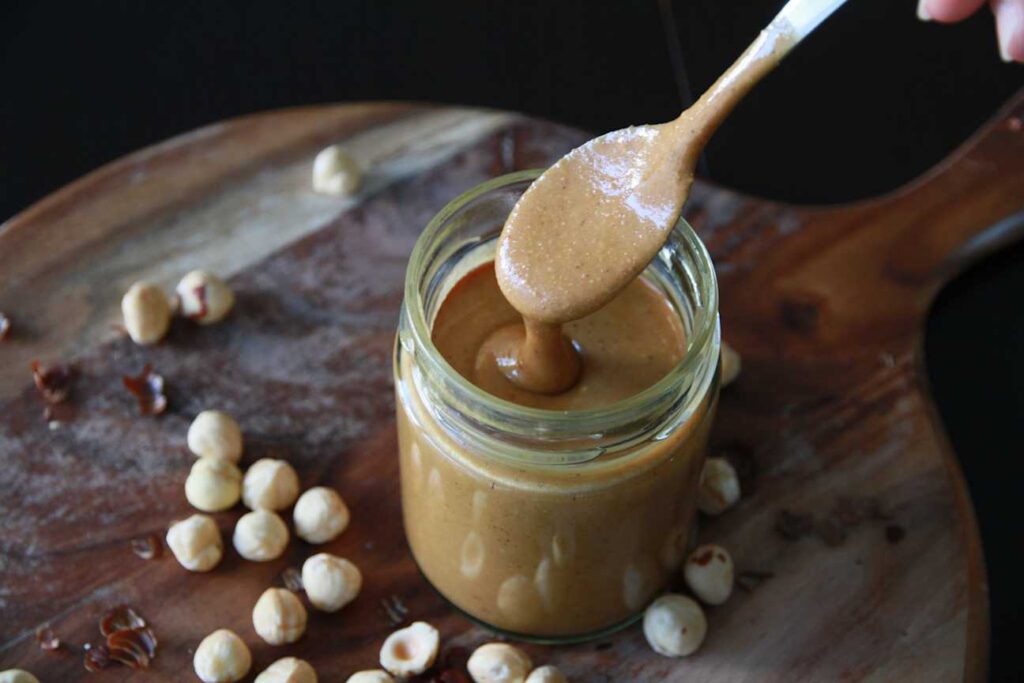
Key Characteristics of High-Quality Hazelnut Paste
When evaluating Hazelnut Paste for Confectionery Industry, manufacturers should assess several technical parameters.
Hazelnut Content
The percentage of actual hazelnut content is one of the most important indicators. A higher percentage generally provides a stronger natural flavor, but the appropriate level depends on the application and formulation.
Premium pralines and high-end chocolate fillings may require a high hazelnut concentration, while mass-market spreads may use a lower concentration alongside sugar, cocoa, and other ingredients.
Roast Profile
Roasting creates the characteristic aroma associated with hazelnuts. However, excessive roasting can produce burnt or bitter notes.
A lighter roast may provide a more delicate and fresh nut profile, while a darker roast delivers a deeper, more intense flavor. The ideal profile depends on the product and the desired sensory positioning.
Particle Size
Particle size is critical for texture. Ultra-fine grinding is generally preferred for smooth creams, fillings, and spreads, while slightly coarser textures may be suitable for specialty products.
Manufacturers should always match the particle size specification to the equipment and final product requirements.
Viscosity and Oil Separation
Natural hazelnut paste contains a significant amount of oil. Over time, separation may occur, particularly in products with minimal stabilization.
This does not automatically indicate poor quality. However, excessive separation can complicate industrial handling and require additional agitation before use.
Color and Flavor Stability
A consistent color is particularly important for confectionery products sold under strict visual specifications. Flavor stability is equally important because oxidation can gradually produce undesirable sensory characteristics.
Storage temperature, packaging, oxygen exposure, and inventory rotation all contribute to maintaining quality.
Applications of Hazelnut Paste in Industrial Confectionery
The versatility of Hazelnut Paste for Confectionery Industry makes it suitable for numerous product categories.
Chocolate and Hazelnut Spreads
Hazelnut paste is widely used as a core ingredient in chocolate spreads. It contributes natural nut flavor, body, and richness.
For industrial spread production, manufacturers should pay close attention to viscosity, fat compatibility, and particle size. The paste must integrate smoothly with cocoa, sugar, milk powders, and other components without causing undesirable separation.
Praline and Chocolate Fillings
In pralines, truffles, and filled chocolates, hazelnut paste can provide a rich, luxurious flavor profile. The formulation may require precise control of fat content and texture to ensure that the filling remains stable during storage.
Wafer and Biscuit Creams
Hazelnut paste can enhance wafer creams and biscuit fillings, especially when combined with cocoa or milk ingredients. Here, manufacturers often prioritize smooth processing and stable viscosity because filling equipment operates continuously and at high speed.
Ice Cream and Frozen Desserts
Although primarily associated with confectionery, hazelnut paste is also used in premium frozen desserts. Its intense flavor allows manufacturers to create distinctive hazelnut formulations without relying exclusively on artificial flavors.
Bakery and Pastry Fillings
Industrial bakeries use hazelnut paste in croissants, cakes, cookies, and layered pastries. In these applications, heat stability and filling behavior become especially important.
Common Mistakes When Sourcing Hazelnut Paste
One of the most expensive mistakes is selecting an ingredient based solely on price per kilogram.
A cheaper paste may appear attractive during procurement negotiations, but if it requires more dosage to achieve the desired flavor, causes processing problems, or increases production downtime, the apparent savings quickly disappear.
Other common sourcing mistakes include:
- Failing to verify the actual hazelnut percentage
- Ignoring particle-size specifications
- Purchasing without reviewing technical documentation
- Overlooking batch-to-batch consistency
- Not checking packaging suitability for long-distance transport
- Neglecting storage requirements
- Selecting a product without conducting a factory trial
- Relying on a single supplier without a contingency plan
The best procurement strategy considers total cost of ownership, not simply the invoice price. A slightly more expensive ingredient that performs consistently may be significantly cheaper when labor, downtime, waste, and reprocessing are included.
How to Compare Hazelnut Paste Suppliers
When comparing suppliers, your purchasing team should evaluate the following factors:
- Product consistency: Does the paste maintain stable quality across different batches?
- Brand portfolio: Can the supplier provide multiple brands and specifications?
- Technical support: Are detailed product specifications and certificates available?
- Pricing: Is the price competitive at your required volume?
- Supply reliability: Can the supplier maintain regular deliveries?
- Packaging: Is the format suitable for your production system?
- Traceability: Can the origin and batch information be verified?
- Shelf life: Does the product provide enough time for practical inventory management?
This is one area where a distributor such as MT Royal can be useful to factories seeking flexibility. Access to multiple brands allows procurement teams to compare alternatives instead of being locked into a single product line. For manufacturers, that flexibility can be particularly valuable when prices, availability, or production requirements change.
Specialized Tips for Large-Scale Production
Industrial production requires a different approach from small-scale confectionery operations.
First, always conduct a production-scale trial before approving a new paste. Laboratory performance does not always predict behavior in a large mixer, depositor, or continuous production line.
Second, evaluate the ingredient under realistic operating conditions. Test it at the temperatures and mixing speeds used in your factory. Monitor viscosity, mixing time, oil separation, and filling performance.
Third, establish clear incoming quality specifications. Your quality team should define acceptable limits for parameters such as appearance, odor, flavor, particle size, and other relevant technical characteristics.
Fourth, consider inventory planning carefully. Hazelnut paste should be stored according to the supplier’s recommendations, with appropriate protection from heat, moisture, and excessive oxygen exposure.
Finally, use a first-expiry-first-out inventory system where appropriate. Even a premium ingredient can lose value if it spends too long in a warehouse.
Emerging Trends in Hazelnut-Based Confectionery
The market is moving toward products that combine indulgence with premium positioning. Consumers increasingly seek recognizable ingredients, richer nut profiles, and products with differentiated sensory experiences.
This trend is encouraging manufacturers to experiment with:
- Higher hazelnut content
- Darker or customized roast profiles
- Clean-label formulations
- Reduced-sugar hazelnut creams
- Vegan and dairy-free chocolate spreads
- Premium pralines and filled chocolates
- Hazelnut-cocoa combinations with stronger flavor intensity
Another important development is greater attention to supply-chain transparency. Hazelnut sourcing can be affected by harvest conditions, weather, regional availability, and global commodity movements. Manufacturers therefore benefit from working with suppliers who can provide reliable information about origin, availability, and product specifications.
For procurement managers, diversification is becoming increasingly important. Having access to multiple brands through a supplier such as MT Royal can provide a practical buffer when a preferred product becomes temporarily unavailable or market conditions change.
Frequently Asked Questions About Hazelnut Paste for Confectionery Industry
Is pure hazelnut paste better than a formulated hazelnut cream?
Not necessarily. Pure hazelnut paste offers greater flexibility because you control the final formulation. However, a formulated hazelnut cream may be more convenient for specific applications. The right choice depends on your recipe, equipment, target cost, and desired product characteristics.
How should factories choose between different roast levels?
Start with the sensory profile of your finished product. If chocolate is the dominant flavor, a stronger roast may help the hazelnut character remain noticeable. For delicate creams, a lighter roast may provide better balance.
Does higher hazelnut content always mean better quality?
Higher content generally increases natural hazelnut intensity, but quality also depends on raw material freshness, roasting, grinding, storage, and consistency. A well-produced paste with moderate hazelnut content can outperform a poorly processed high-content product.
Can hazelnut paste be used directly in industrial mixers?
It depends on the product specification and your formulation. Some pastes may require controlled pre-mixing or homogenization before incorporation. Always follow the supplier’s technical recommendations and conduct production trials.
What is the most important factor when purchasing in bulk?
Consistency is one of the most important factors. A factory needs an ingredient that performs predictably from one production batch to another. Price matters, but an unstable raw material can create much larger hidden costs.
Why should manufacturers consider multiple brands?
Different brands may offer variations in flavor, roast profile, particle size, fat characteristics, and pricing. Working with a supplier that offers multiple brands, such as MT Royal, can make it easier to identify the best fit for each product line.
Making the Right Sourcing Decision
Selecting Hazelnut Paste for Confectionery Industry should be approached as a technical and commercial decision rather than a routine purchasing task. The best ingredient is not necessarily the one with the lowest price or the highest hazelnut percentage. It is the one that delivers the right combination of flavor, texture, stability, processing performance, availability, and cost for your specific production environment.
For factory managers, the most effective approach is to create a clear specification, test shortlisted products under real production conditions, calculate total cost, and evaluate supplier reliability before making a long-term commitment.
In our experience, the strongest sourcing strategies are built around flexibility. A supplier that can offer multiple brands at competitive prices gives manufacturers more room to adapt when formulations evolve, market conditions shift, or supply constraints appear.
Hazelnut paste may enter your factory in a container or drum, but its impact extends far beyond the warehouse. It influences the texture consumers feel, the aroma they remember, the consistency your production line achieves, and the margins your business protects. Treating it as a strategic ingredient rather than a commodity can turn a routine procurement decision into a genuine competitive advantage.
For manufacturers looking to improve product quality while maintaining commercial discipline, the smartest next step is simple: define your technical requirements first, compare suitable alternatives carefully, and choose a supplier capable of supporting both your current production needs and your future growth. The right hazelnut paste does more than improve a recipe; it helps your entire production system run with greater confidence.



No comment