

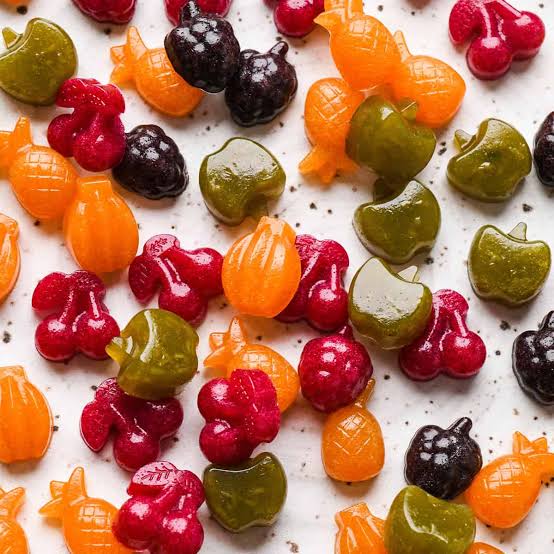
In the competitive world of gummy production and fruit snack manufacturing, small formulation decisions can decide whether a product becomes a best-seller or a warehouse recall. Texture, chew, clarity, stability, and even “bite feel” are not just sensory details—they are engineering outcomes. This is exactly why Pectin for Fruit Snacks has become one of the most critical ingredients in modern confectionery innovation.
For factories aiming to scale production with consistent quality, sourcing reliability is just as important as formulation design. Many manufacturers work with MT Royal, a supplier offering multiple global brands at competitive pricing, allowing producers to choose the right pectin grade based on gelling speed, acid tolerance, and final texture requirements. In fruit snack production, that flexibility can be the difference between smooth industrial scaling and endless batch adjustments.
Fruit snacks look simple on the outside. Inside the factory, however, they are a delicate balance of hydrocolloids, sugars, acids, and processing conditions. Pectin is the invisible framework that holds everything together—literally.
LATAMARKO LM60 – Premium Spanish-Origin Cocoa Powder
latamarko alkalized cocoa powder lm60
cocoa powder for chocolate production-Best price
Food industry raw materials – list of products
Best Brazilian Arabica Coffee Bean Supplier for Industrial Roaster
Uganda Bugisu Arabica Coffee Beans for Specialty Coffee Industry
Understanding Pectin for Fruit Snacks: Definition and Industrial Role
Pectin is a naturally occurring polysaccharide found in the cell walls of fruits such as apples and citrus peels. Industrially, it is extracted, purified, and standardized to function as a gelling, thickening, and stabilizing agent.
When discussing Pectin for Fruit Snacks, we are referring to a highly specialized ingredient designed to form stable gels under controlled conditions of sugar concentration, acidity, and temperature.
Unlike gelatin, which is animal-based, pectin is plant-derived, making it ideal for vegan and clean-label fruit snack formulations.
In industrial production, pectin is responsible for:
- Gel formation in gummy-style fruit snacks
- Texture control and chew optimization
- Water binding and moisture stability
- Suspension of fruit particles
- Shelf-life extension through water activity control
In simple terms, pectin is the structural “architecture” of fruit snacks. Without it, you don’t get gummies—you get syrup with ambition.
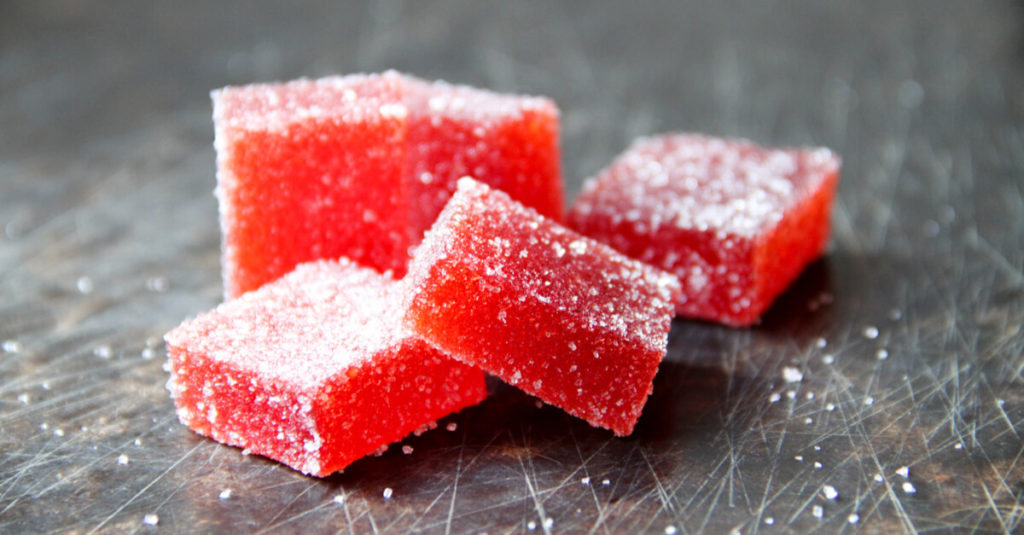
Why Pectin Is Essential in Fruit Snack Manufacturing
Fruit snack production is one of the most sensitive hydrocolloid applications in the food industry. A slight deviation in pH, sugar concentration, or heating profile can completely alter the final texture.
Before diving into technical complexity, it is important to understand that pectin is not just a gelling agent—it is a precision tool for texture engineering.
Key advantages include:
- Clean-label compatibility for modern consumer demand
- Excellent gel formation in acidic systems
- Thermo-reversible or thermo-stable textures depending on type
- Improved fruit flavor release
- High stability in shelf conditions
- Plant-based alternative to gelatin
- Adjustable chewiness for different product categories
- Compatibility with high-sugar systems
In global fruit snack manufacturing, consistency is everything. Pectin provides that consistency at scale.
Types of Pectin Used in Fruit Snacks
Not all pectin behaves the same. Industrial formulations depend heavily on selecting the right type for the intended product.
High-Methoxyl (HM) Pectin
This type requires high sugar concentration and low pH to gel properly. It is commonly used in traditional gummy-style fruit snacks.
Low-Methoxyl (LM) Pectin
LM pectin gels in the presence of calcium ions rather than high sugar content, making it suitable for reduced-sugar or diet fruit snacks.
Amidated Low-Methoxyl (LMA) Pectin
A modified version of LM pectin with improved flexibility and thermal stability, often used in advanced formulations.
Each type behaves like a different “structural engineer” in the recipe—one builds rigid frameworks, another builds flexible gels.
Functional Properties of Pectin in Fruit Snack Systems
To understand the importance of Pectin for Fruit Snacks, it is essential to analyze its functional behavior in industrial environments.
Gel Formation Mechanism
Pectin molecules form a three-dimensional network when exposed to the right balance of sugar, acid, and heat conditions.
Acid Sensitivity
Pectin requires precise pH control, typically between 2.8 and 3.5 for optimal gelling in HM systems.
Sugar Interaction
Sugar reduces water activity, allowing pectin chains to bind more effectively and form stable gels.
Calcium Reactivity
In LM systems, calcium ions act as crosslinking agents, strengthening the gel matrix.
Thermal Stability
Depending on type, pectin gels can be thermo-reversible or irreversible, which affects storage and processing behavior.
Industrial Applications of Pectin for Fruit Snacks
Pectin is widely used across multiple fruit-based confectionery products.
Soft Fruit Gummies
The most common application, where pectin provides chewiness and elasticity.
Vegan Gummies
Pectin replaces gelatin in plant-based formulations, offering clean-label compliance.
Reduced-Sugar Fruit Snacks
LM pectin enables gel formation without high sugar concentrations.
Fruit Jellies and Bars
Used in molded fruit bars with high fruit content.
Functional Snacks
In fortified snacks containing vitamins, minerals, or fibers, pectin ensures structural stability.
Common Mistakes in Pectin Sourcing for Fruit Snacks
Even experienced manufacturers can encounter formulation issues if sourcing decisions are not carefully managed.
Selecting the Wrong Pectin Type
Using HM pectin in low-sugar systems often results in weak or non-existent gel formation.
Ignoring pH Sensitivity
Pectin performance is highly dependent on acidity. Small deviations can lead to major texture failures.
Overlooking Gelling Speed
Fast-setting vs slow-setting pectin affects molding processes and production line efficiency.
Inconsistent Supplier Switching
Frequent changes in pectin sources can disrupt gel consistency and production calibration.
Neglecting Standardization
Not all pectin grades have the same degree of esterification or particle size, which affects performance.
Pectin vs Gelatin in Fruit Snacks
Understanding the differences helps manufacturers choose the right system.
| Feature | Pectin | Gelatin |
|---|---|---|
| Source | Plant-based | Animal-based |
| Vegan suitability | Yes | No |
| Texture | Firm, clean bite | Elastic, chewy |
| Heat stability | High | Moderate |
| Flavor release | Fast | Slow |
| Clean-label appeal | Strong | Limited |
While gelatin still dominates traditional gummies, pectin is rapidly gaining market share in premium and vegan segments.
How Pectin Improves Production Efficiency
Industrial efficiency is not just about machine speed—it is about predictability.
Pectin contributes to efficiency in several ways:
- Stable gel formation reduces batch rejection rates
- Predictable viscosity improves depositing accuracy
- Reduced need for formulation adjustments
- Better control of setting time in molds
- Improved automation compatibility
In our collaboration with various factories, we have observed that switching to optimized pectin systems can reduce production downtime by nearly 15% in high-speed fruit snack lines.
A production line without stable pectin behavior is like a clock missing its gear—everything moves, but nothing stays synchronized.
Key Technical Specifications Buyers Should Evaluate
When selecting Pectin for Fruit Snacks, procurement teams must evaluate detailed technical parameters.
Important specifications include:
- Degree of esterification (DE value)
- Gelling temperature range
- Setting time (rapid or slow set)
- pH requirement
- Ash content
- Moisture level
- Viscosity profile
- Particle size distribution
- Gel strength (Bloom value equivalent)
- Solubility characteristics
Each parameter directly influences texture, processing behavior, and final product consistency.
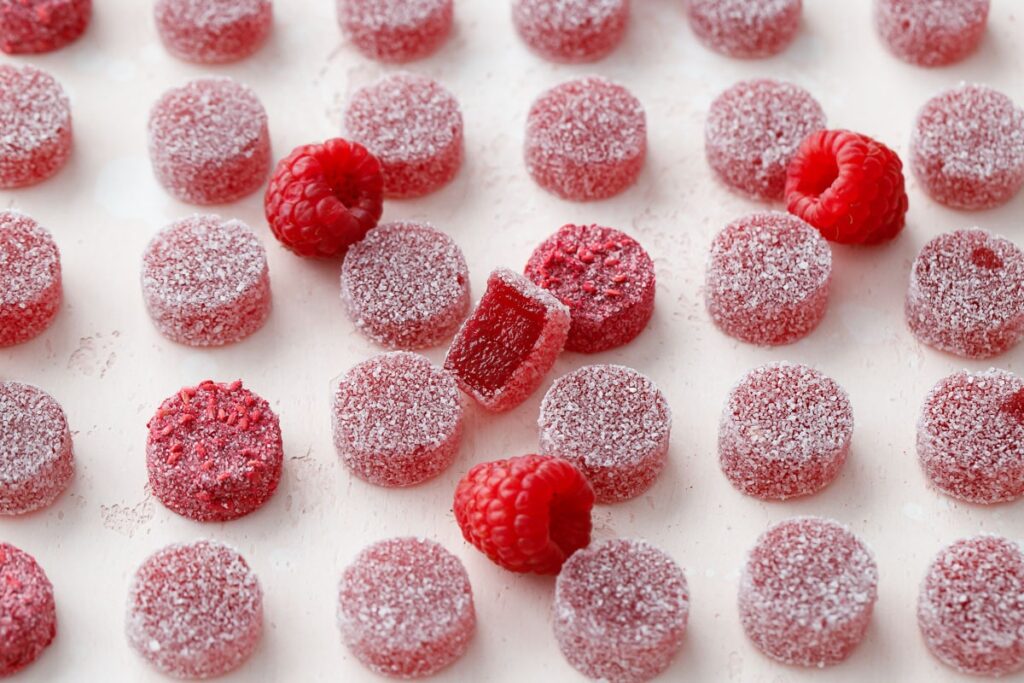
Specialized Industrial Tips for Large-Scale Fruit Snack Production
Scaling fruit snack production requires precision in both formulation and process control.
Before optimizing systems, manufacturers should ensure consistency in raw materials and process conditions.
Practical recommendations include:
- Maintain strict pH control systems in mixing tanks
- Standardize pectin grade across production lines
- Pre-blend pectin with sugar to improve dispersion
- Control temperature during gel formation stages
- Avoid moisture fluctuations in storage environments
- Monitor calcium levels in LM pectin systems
- Train operators on timing sensitivity during depositing
- Implement batch traceability for quality assurance
These practices significantly improve production stability and reduce defects.
Emerging Trends in Pectin for Fruit Snacks Market
The global fruit snack industry is evolving rapidly due to health trends and consumer preferences.
Key trends include:
- Growth of vegan gummy products
- Expansion of reduced-sugar formulations
- Increased demand for clean-label ingredients
- Rising use of fruit juice concentrates instead of artificial flavors
- Development of functional gummies with vitamins and supplements
- Improved pectin extraction technologies from citrus waste
- Sustainability-driven sourcing practices
Market data shows that pectin-based fruit snacks are growing faster than traditional gelatin gummies, especially in Europe and North America.
Role of Reliable Suppliers in Pectin Procurement Strategy
Choosing the right supplier for Pectin for Fruit Snacks is not just about purchasing ingredients—it is about ensuring production stability and brand consistency.
A reliable supplier ensures:
- Consistent gel strength across batches
- Stable particle size distribution
- Technical documentation and formulation support
- Flexible sourcing of different pectin grades
- Reliable logistics for bulk supply chains
This is where MT Royal plays a strategic role by offering multiple pectin brands from global manufacturers. This flexibility allows factories to fine-tune formulations without being locked into a single supplier system.
In industrial food production, flexibility is not a luxury—it is a competitive advantage.
Frequently Asked Questions About Pectin for Fruit Snacks
Is pectin suitable for all fruit snack formulations?
Yes, but the type of pectin must be selected based on sugar content, pH, and desired texture.
Why does pectin sometimes fail to gel?
Common reasons include incorrect pH, insufficient sugar levels, or wrong pectin type selection.
Can pectin replace gelatin completely?
Yes, in most fruit snack applications, especially for vegan or clean-label products.
How should pectin be stored?
It should be stored in a cool, dry environment to prevent moisture absorption and clumping.
What is the difference between HM and LM pectin?
HM requires high sugar and low pH, while LM uses calcium ions for gel formation.
Why do different suppliers produce different results?
Differences in extraction methods, standardization, and esterification levels affect performance.
Final Industrial Perspective
Pectin for Fruit Snacks is not just an ingredient—it is a formulation control system that defines texture, stability, and consumer experience.
Every successful fruit snack, from soft gummies to functional wellness chews, depends on the precision of its pectin system. When selected correctly, pectin transforms production from a fragile balancing act into a predictable industrial process.
With suppliers like MT Royal offering access to multiple global pectin brands, manufacturers gain the flexibility needed to innovate, scale, and compete in a rapidly growing market.
In fruit snack manufacturing, texture is not a detail—it is the product itself.


No comment