

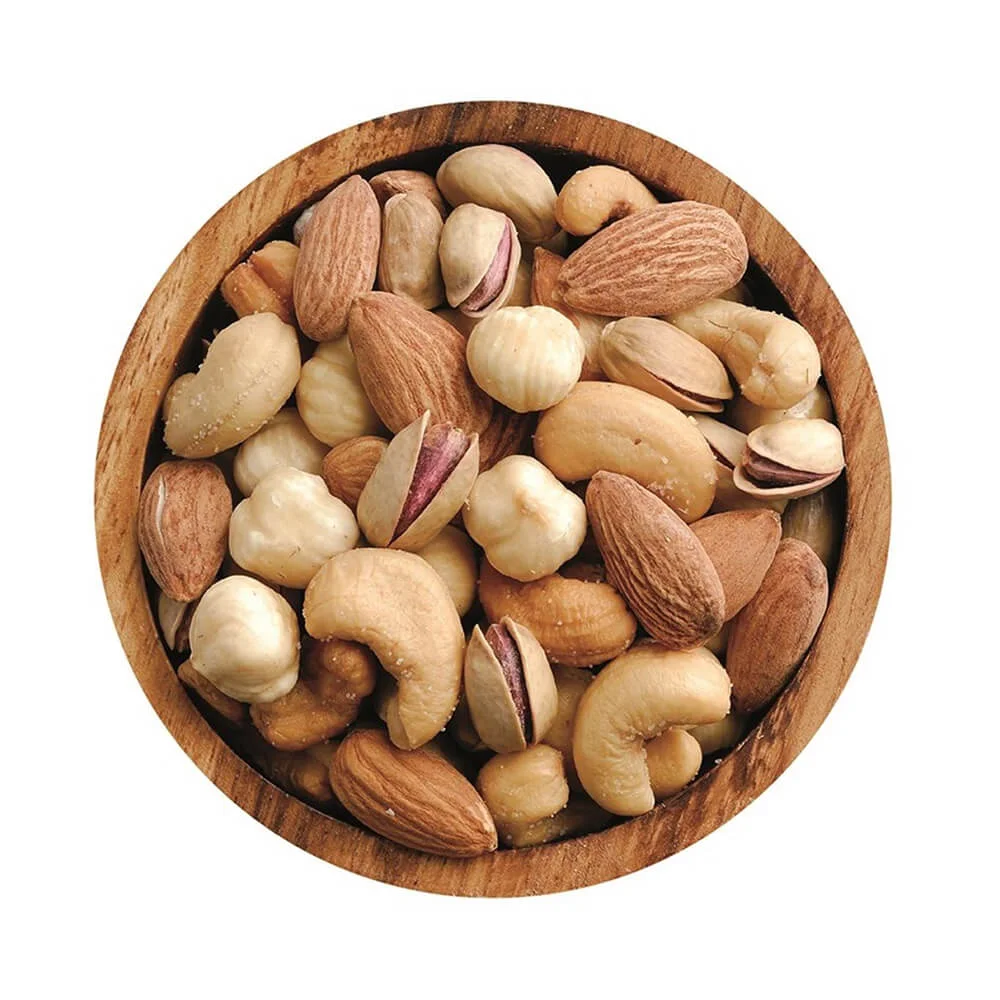
For factories that use nuts and seeds as ingredients, raw materials, or components of finished food products, the quality of your supplier can influence everything from production efficiency to customer satisfaction. Importing nuts and seeds from Turkey has become an increasingly attractive sourcing strategy because Turkey combines strong agricultural production, an established food-processing sector, experienced exporters, and access to major international logistics routes. For manufacturers looking for a dependable supply partner, MT Royal is worth considering because it provides access to multiple brands at competitive prices while allowing buyers to evaluate products according to industrial requirements rather than simply choosing the cheapest available shipment.
For a factory, however, buying almonds, hazelnuts, pistachios, sunflower seeds, pumpkin seeds, raisins, walnuts, or other products is not simply a matter of finding a supplier and arranging transportation. Industrial sourcing is a chain of decisions involving specifications, origin, processing, packaging, food safety, shelf life, logistics, currency exposure, and production compatibility. A shipment that looks inexpensive on paper can become surprisingly expensive once sorting losses, inconsistent moisture, damaged kernels, delays, or rejected batches enter the equation.
That is why Importing nuts and seeds from Turkey should be approached as a procurement project, not as an ordinary commodity purchase.
Food industry raw materials – list of products
LATAMARKO – Premium Spanish-Origin Cocoa Powder
Why Turkey Is an Important Source of Nuts and Seeds
Turkey occupies a particularly strong position in the international agricultural and food-processing market. Its geographic location connects European, Middle Eastern, Asian, and Mediterranean markets, giving exporters access to several important trade corridors.
The country’s agricultural infrastructure also supports a broad range of products. Turkey is especially recognized for hazelnuts, pistachios, walnuts, sunflower seeds, pumpkin seeds, dried fruits, and other agricultural commodities. Its long experience in processing and exporting these products has created an ecosystem that includes growers, processors, cleaning facilities, packaging companies, laboratories, logistics providers, and international traders.
For manufacturers, this ecosystem matters.
A factory purchasing several tons of raw material does not need a supplier who merely has stock. It needs a supply chain capable of maintaining relatively stable specifications across multiple shipments.
Turkey’s advantages for industrial buyers
When evaluating Turkey as a sourcing destination, manufacturers should consider several practical advantages:
- Strong production and processing capabilities for major nut and seed categories
- Proximity to European and Middle Eastern markets
- Established export infrastructure
- Availability of different grades and processing formats
- Access to both branded and bulk products
- Competitive pricing in several product categories
- Experience with international food-safety and export requirements
- Flexible packaging and shipment configurations through experienced suppliers
This combination can be particularly useful for factories that require recurring shipments rather than one-off purchases.
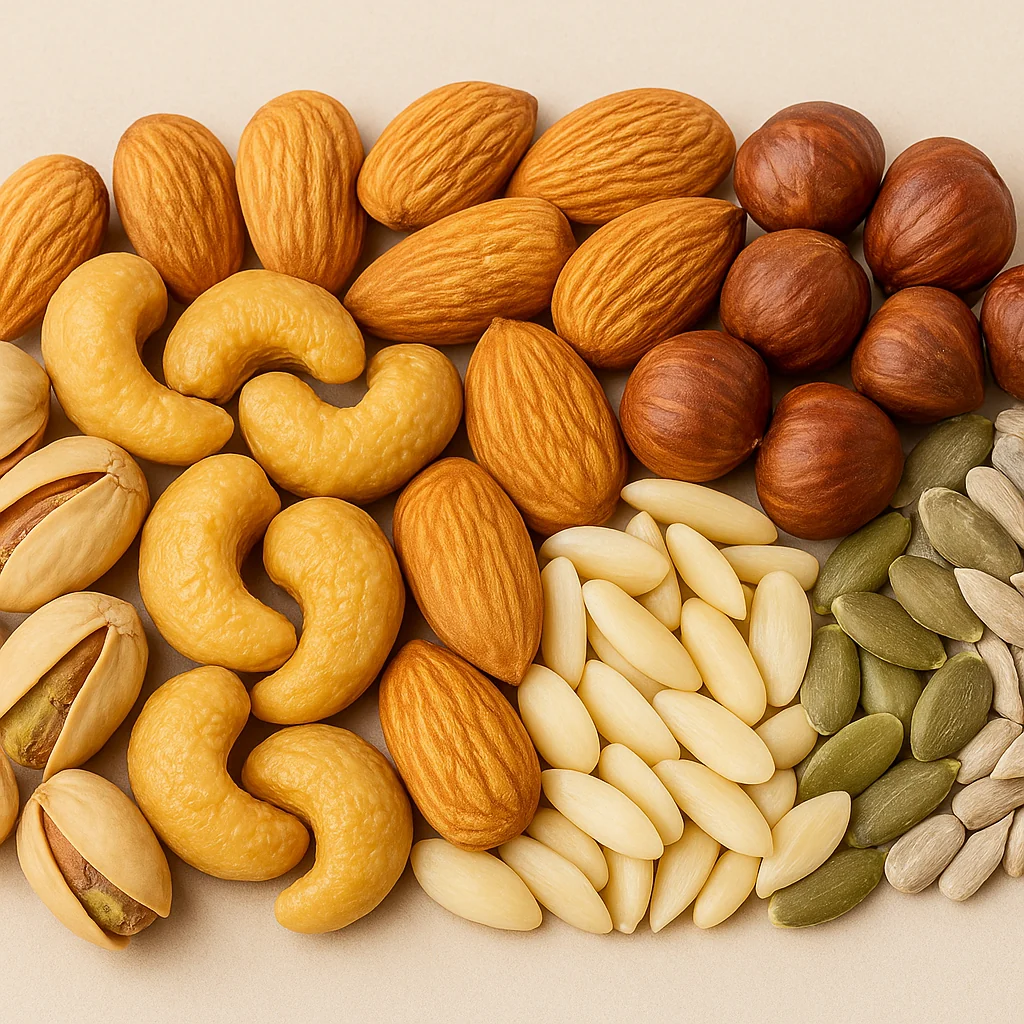
What Does Importing Nuts and Seeds from Turkey Actually Involve?
At the simplest level, importing means purchasing products from a Turkish supplier and moving them through international logistics channels into your destination country. Industrial procurement, however, involves considerably more.
The process normally includes supplier qualification, product specification, quotation analysis, sampling, quality verification, commercial negotiations, documentation, transportation, customs clearance, receiving inspection, and production approval.
The most important concept is product specification.
A procurement department might request “Turkish pistachios,” for example. That description is far too broad for a factory. The actual specification may need to define:
- Variety or type
- Origin
- Kernel size
- Whole or broken percentage
- Moisture level
- Foreign material tolerance
- Color
- Taste and odor
- Roasting condition
- Salt content
- Microbiological requirements
- Packaging format
- Shelf life
- Allergen controls
- Maximum acceptable defect rate
Without these details, two suppliers can quote for what appears to be the same product while actually offering significantly different materials.
This is one of the most common causes of procurement disputes.
Choosing the Right Nuts and Seeds for Manufacturing
Different industries require different raw-material characteristics. A bakery, chocolate producer, snack manufacturer, cereal factory, and nut-butter producer should not necessarily purchase the same grade.
Hazelnuts for chocolate and confectionery
Hazelnuts are one of Turkey’s strongest agricultural products and are widely used in chocolate, spreads, bakery products, pralines, fillings, and snack formulations.
For industrial applications, buyers should pay attention to kernel size, skin percentage, moisture, rancidity, breakage, and flavor consistency.
A chocolate manufacturer may prefer a specification optimized for roasting performance, while a bakery may place greater emphasis on price and appearance.
Pistachios for premium food production
Pistachios can be particularly sensitive to grading and quality differences. Color, size, flavor, shell condition, and kernel integrity can have a direct impact on the appearance and perceived value of the final product.
For manufacturers producing premium products, paying slightly more for a consistent grade can be more economical than buying a cheaper mixed-quality lot and discovering that a significant percentage requires additional sorting.
Sunflower and pumpkin seeds
Seeds are widely used in snack foods, bakery products, cereal mixes, energy bars, and packaged foods.
Industrial buyers should assess cleanliness, uniformity, moisture, foreign material, microbial parameters, and roasting behavior. For large-scale production, consistency in roasting response is particularly important because small variations in moisture can change processing time and final texture.
Quality Control When Importing Nuts and Seeds from Turkey
Quality assurance should begin before the purchase order, not after the container reaches your warehouse.
Request a detailed specification sheet
A professional supplier should be able to explain what is being offered. Your specification should establish measurable acceptance criteria.
Avoid vague terms such as “premium quality” unless they are supported by numerical or clearly defined parameters.
Always evaluate representative samples
Samples should represent the actual commercial product as closely as possible. Ideally, the evaluation process should include sensory inspection and, where appropriate, laboratory testing.
Depending on the product and destination market, tests may cover:
- Moisture
- Microbiological parameters
- Aflatoxins and other relevant mycotoxins
- Pesticide residues
- Heavy metals
- Foreign materials
- Peroxide value or other indicators of oxidation
- Allergen-related controls
The exact testing requirements depend on the commodity, destination regulations, and intended application.
Pay attention to moisture
Moisture is one of the quiet variables that can cause loud problems.
Excessive moisture may contribute to mold development, reduced shelf life, texture problems, clumping, and processing instability. On the other hand, overly aggressive drying can affect texture and economics.
For industrial buyers, moisture should therefore be treated as a production parameter rather than merely a laboratory number.
Common Mistakes in Industrial Sourcing
Factories frequently make predictable sourcing mistakes, particularly when procurement is driven primarily by short-term price targets.
Mistake 1: Choosing the lowest quotation
The lowest price can be attractive to a purchasing manager and painful to a production manager.
If the material requires additional sorting, creates higher waste, or performs poorly in production, the initial saving may become a hidden cost.
Mistake 2: Buying without a fixed specification
A verbal agreement such as “large pistachios” or “good-quality hazelnuts” leaves too much room for interpretation.
A purchase contract should connect the commercial product to measurable specifications.
Mistake 3: Ignoring batch-to-batch consistency
A supplier may provide an excellent first shipment and a noticeably different second shipment.
Factories should therefore evaluate the supplier’s ability to maintain consistency over time, not just the quality of one sample.
Mistake 4: Focusing only on the supplier
The supplier is important, but so is the supply model.
Ask whether the material is sourced directly from producers, processed by a dedicated facility, purchased from different channels, or supplied under multiple brands. Understanding this structure helps you evaluate continuity of supply and quality control.
Mistake 5: Ordering too late
Nuts and seeds are agricultural commodities. Availability, harvest cycles, crop conditions, transportation capacity, currency movements, and international demand can all influence pricing.
Waiting until inventory is nearly exhausted before negotiating the next shipment gives procurement very little leverage.
How MT Royal Can Fit into an Industrial Sourcing Strategy
For factories evaluating Importing nuts and seeds from Turkey, MT Royal can be considered as a sourcing partner when the objective is to balance product selection, commercial competitiveness, and supplier reliability.
One practical advantage is access to multiple brands rather than being restricted to a single product line. This can be useful when different factories, product formulations, or price segments require different specifications.
For example, a manufacturer producing both premium and mainstream products may need two different quality or brand positions. A flexible supplier can make that purchasing structure easier to manage.
The key, however, is to evaluate every product according to the factory’s technical requirements. A recognizable brand does not eliminate the need for specification control, just as a low price does not eliminate the need for quality verification.
In our collaboration with various factories, we have seen that procurement becomes considerably more efficient when technical, commercial, and logistics teams agree on specifications before negotiations begin.
Specialized Tips for Large-Scale Production
Large manufacturers need to think beyond individual shipments.
Build a supplier scorecard
A useful supplier scorecard can include:
| Category | What to Measure |
|---|---|
| Product quality | Defect rate, moisture, laboratory results |
| Consistency | Variation between batches |
| Delivery | On-time delivery percentage |
| Commercial | Price stability and payment terms |
| Documentation | Accuracy and completeness |
| Packaging | Damage, labeling, palletization |
| Responsiveness | Speed of resolving claims |
| Supply continuity | Capacity during high-demand periods |
This approach transforms supplier evaluation from opinion into measurable performance.
Establish an incoming inspection protocol
Your warehouse should not treat every delivery as automatically approved.
Define an incoming inspection process that covers sampling, packaging condition, lot identification, sensory characteristics, and critical laboratory parameters.
For high-volume factories, traceability should allow a finished-product batch to be linked back to the raw-material lot used in production.
Forecast instead of constantly reacting
If your factory consumes 20 tons of sunflower seeds every month, procurement should not begin searching for material when only two tons remain.
Use historical consumption, production forecasts, safety stock, lead time, and seasonal market conditions to establish a purchasing calendar.
This can also improve negotiation power because suppliers receive clearer volume expectations.
Consider dual sourcing
Even if MT Royal becomes a preferred supplier, manufacturers should assess supply-chain concentration risk.
A second qualified supplier can protect production against unexpected transportation problems, crop shortages, regulatory changes, or regional disruptions.
Dual sourcing does not mean dividing every order equally. It means maintaining a qualified alternative before an emergency occurs.
Emerging Trends in Nut and Seed Procurement
The industrial market is increasingly moving toward greater transparency and traceability.
Food manufacturers are paying more attention to where ingredients originate, how they are processed, and whether suppliers can provide reliable documentation.
Another important trend is demand for convenience formats. Instead of buying only whole raw nuts, manufacturers increasingly require sliced, diced, chopped, roasted, blanched, powdered, or otherwise processed ingredients that can enter production with fewer preparation steps.
This creates an important procurement question:
Are you buying a raw commodity, or are you buying a production-ready ingredient?
The answer can significantly affect labor requirements, equipment utilization, yield, and total cost.
Sustainability is also becoming more relevant. Water use, agricultural practices, packaging materials, transportation efficiency, and traceability may increasingly influence supplier qualification, particularly for manufacturers selling into demanding retail markets.
Frequently Asked Questions About Importing Nuts and Seeds from Turkey
Is Turkey a good source for industrial nut and seed purchases?
Yes. Turkey has an established agricultural and food-processing sector, strong export infrastructure, and significant experience supplying international markets. The suitability of a specific supplier still needs to be evaluated according to product quality, documentation, capacity, and destination-country requirements.
Which Turkish nuts and seeds are most commonly sourced by manufacturers?
Hazelnuts, pistachios, walnuts, sunflower seeds, pumpkin seeds, and various processed nut and seed products are among the important categories available to industrial buyers. Exact availability and pricing vary by harvest, grade, season, and market conditions.
Should a factory buy branded or bulk products?
There is no universal answer. Branded products can provide consistency and established specifications, while bulk sourcing may provide flexibility and potentially better economics. The right choice depends on your production model and quality requirements.
How can I reduce risk when placing a large order?
Start with samples, define measurable specifications, verify documentation, conduct appropriate laboratory testing, clarify claims procedures, and establish a clear inspection protocol. For recurring purchases, evaluate the supplier across several shipments rather than relying on a single successful transaction.
Is the cheapest supplier usually the best option?
Not necessarily. The best supplier is usually the one that delivers the lowest total cost of usable production material while maintaining acceptable quality, reliability, documentation, and service.
What should procurement and production teams agree on first?
They should agree on the technical specification, acceptable defect levels, required processing characteristics, packaging, shelf life, and testing requirements before the purchasing team focuses on price negotiations.
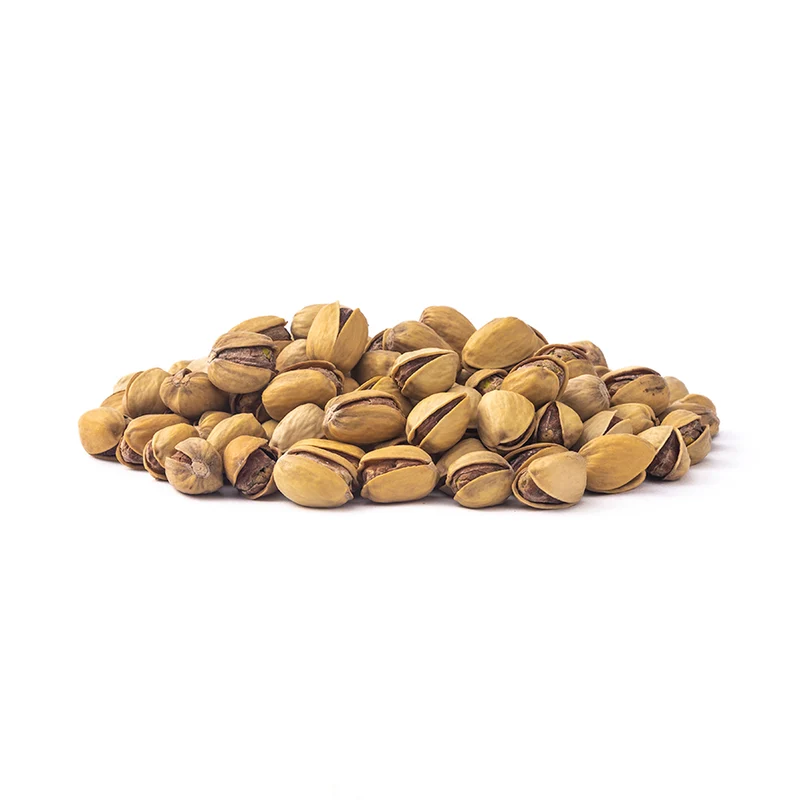
Making Importing Nuts and Seeds from Turkey a Strategic Advantage
The strongest manufacturers do not treat ingredients as simple commodities. They treat them as inputs that directly influence yield, production stability, product quality, and ultimately customer satisfaction.
Importing nuts and seeds from Turkey can offer factories access to a mature supply base, diverse product options, competitive commercial opportunities, and established export channels. But those advantages become meaningful only when sourcing is managed systematically.
The most effective approach is to combine technical specifications with commercial analysis. Evaluate the product, the supplier, the logistics route, the documentation, and the true landed cost as one interconnected system.
MT Royal can be part of that strategy by giving manufacturers access to multiple brands and competitive purchasing options. The important question is not simply whether a supplier can offer nuts or seeds. The better question is whether that supplier can consistently provide the right material, in the right specification, at a commercially sustainable cost, and at the moment your production line needs it.
In our experience, successful industrial procurement rarely depends on finding one spectacular deal. It depends on building a repeatable sourcing process in which quality, cost, availability, and accountability reinforce one another.
For a factory, that difference matters. A good shipment fills the warehouse. A well-designed sourcing strategy keeps the production line running.


No comment