

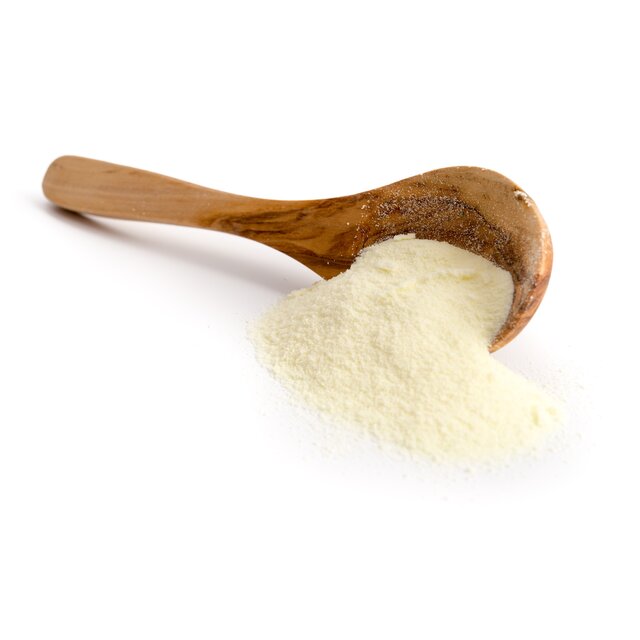
For factories that depend on consistent dairy ingredients, choosing the right Instant Full Cream Milk Powder Bulk supplier is not simply a purchasing decision—it is a production decision. The wrong powder can create poor dispersion, inconsistent flavor, excessive foaming, packaging problems, or costly batch adjustments. The right product, by contrast, can simplify formulation, improve process stability, and give your factory a dependable foundation for beverages, bakery products, confectionery, dairy applications, and other food formulations.
This is why many industrial buyers look beyond the lowest quoted price and evaluate the complete supply proposition: product specifications, instantization performance, fat content, microbiological quality, packaging, traceability, shelf life, logistics, and supplier reliability. For manufacturers considering multiple origins and brands, MT Royal can be a useful sourcing partner because it operates as a wholesale supplier of food-industry products and offers full cream milk powder for applications including baking, confectionery, and dairy products. Its positioning around multiple brands and wholesale supply can also be relevant when procurement teams need to balance specification requirements with competitive pricing.
The importance of this category is increasing as global dairy markets remain dynamic. The OECD-FAO Agricultural Outlook reported that world milk production reached approximately 1,005 million tonnes in 2025, while dairy prices experienced significant movement during the year. More recently, the FAO reported that its Dairy Price Index averaged 117.4 points in June 2026, with whole milk powder prices under pressure from weaker Chinese import demand even as purchases remained firmer in Southeast Asia and the Near East. For a factory, these movements matter because the price you negotiate today is only one part of the equation; timing, origin, inventory planning, and supplier flexibility can materially influence your total ingredient cost.
In our collaboration with various factories, we have seen that the most successful procurement teams treat milk powder as a technical raw material rather than a commodity bag with a price tag. That mindset changes the questions they ask—and often improves both production performance and purchasing outcomes.
LATAMARKO LM60 – Premium Spanish-Origin Cocoa Powder
latamarko alkalized cocoa powder lm60
cocoa powder for chocolate production-Best price
Food industry raw materials – list of products
What Is Instant Full Cream Milk Powder Bulk?
Instant Full Cream Milk Powder Bulk is a dried dairy ingredient made from milk with its natural milk fat retained, processed into a powder designed to disperse and reconstitute relatively easily in water.
The term contains three important concepts:
- Full cream generally indicates that the milk powder retains a significant proportion of milk fat, giving it a richer flavor and mouthfeel than skim or nonfat milk powder.
- Instant refers primarily to improved wetting, dispersion, and reconstitution characteristics. The powder is engineered to interact with water more readily than conventional or standard milk powder.
- Bulk refers to the industrial purchasing format rather than consumer retail packaging. Factories typically buy the ingredient in large bags or other commercial formats suitable for warehouse storage and production handling.
For a manufacturer, the word “instant” deserves particular attention. It does not merely mean that the powder dissolves quickly in a glass. Industrial performance is more complicated. Your production team may need the powder to disperse consistently under specific water temperatures, mixing speeds, shear conditions, and hydration times.
A powder that performs beautifully in a laboratory beaker may behave differently in a 1,000-liter mixing vessel.
That is why the appropriate specification depends on the application.
A beverage manufacturer may prioritize rapid wetting and clean reconstitution. A bakery producer may be more concerned with flavor, browning behavior, solids contribution, and formulation consistency. A confectionery plant may focus on fat functionality, sensory characteristics, and compatibility with other dairy ingredients. An ice cream manufacturer may evaluate the powder in relation to total solids, body, texture, and process conditions.
The ingredient is the same category, but the manufacturing problem is not.
Why Factories Use Full Cream Milk Powder
Fresh liquid milk is highly perishable and requires cold-chain management. Milk powder offers manufacturers a more stable, concentrated, and logistically convenient dairy ingredient.
For many industrial applications, the benefits include:
Extended storage potential
When properly manufactured, packaged, and stored, milk powder has a significantly longer usable life than fresh milk. This gives factories greater flexibility in purchasing and inventory planning.
Reduced transportation complexity
Moving a dry ingredient is generally easier than transporting a large volume of water contained in liquid milk. This can be particularly important for international supply chains.
Consistent formulation
A standardized powder allows manufacturers to formulate recipes with a predictable contribution of milk solids, fat, protein, and lactose.
Year-round availability
Factories can reduce their dependence on the immediate availability of fresh liquid milk in their local market.
Convenient handling
Bulk milk powder can be weighed and added according to standardized production procedures, supporting repeatability between batches.
Broad application flexibility
Full cream milk powder can be used in:
- Instant dairy beverages
- Milk-based drinks
- Bakery mixes
- Bread and rolls
- Cakes and pastries
- Biscuits and cookies
- Chocolate and confectionery products
- Ice cream and frozen desserts
- Dairy-based formulations
- Nutritional food products
- Foodservice mixes
- Prepared dessert products
The practical value is therefore not limited to one product category. It is a versatile dairy ingredient that can support several manufacturing lines.

Instant Milk Powder vs. Regular Milk Powder
One of the most common sourcing mistakes is assuming that all milk powders are interchangeable.
They are not.
The difference between conventional milk powder and instant milk powder is primarily related to physical functionality. Instantized powders are typically processed to improve their ability to wet, disperse, and reconstitute in water.
This can involve agglomeration and other processing techniques that alter the physical structure of powder particles.
For industrial buyers, the distinction matters because powder behavior affects production efficiency.
A conventional powder may require:
- Longer hydration time
- More aggressive mixing
- More careful water-temperature management
- Additional process control
- Greater attention to powder addition sequence
An instantized powder may offer:
- Faster wetting
- Better dispersion
- Easier reconstitution
- Improved operator convenience
- Potentially lower risk of undissolved particles
However, “instant” should never be treated as a universal guarantee of performance under every condition.
Your factory should still validate the powder under actual production conditions.
The mixing vessel, impeller design, water temperature, powder addition rate, agitation profile, and formulation chemistry all influence the final result. Even excellent instant milk powder can develop lumps if it is dumped too rapidly onto a poorly agitated liquid surface.
The powder is not always the problem. Sometimes the mixing system is simply having a bad day.
Key Specifications to Evaluate When Buying Instant Full Cream Milk Powder Bulk
When purchasing Instant Full Cream Milk Powder Bulk, procurement should work closely with quality assurance and production teams. A commercial quotation without a technical specification is incomplete.
1. Milk fat content
Fat content is one of the defining characteristics of full cream milk powder.
Higher or lower fat levels can influence:
- Flavor
- Creaminess
- Mouthfeel
- Energy density
- Oxidative stability
- Formulation economics
- Processing performance
Your formulation team should confirm the required specification rather than assuming that every product described as “full cream” will behave identically.
2. Protein content
Protein contributes to nutritional value and can influence functionality in certain formulations.
The required level depends on the intended application and the balance of other ingredients.
For example, a beverage formulation may have different protein requirements from a bakery or confectionery application.
3. Lactose
Lactose is naturally present in milk powder and contributes to solids, sweetness, crystallization behavior, and browning reactions.
Its behavior can become particularly important during storage and under high-humidity conditions. Recent research has continued to examine the physical mobility of lactose in milk powders, reinforcing the importance of moisture control during storage.
4. Moisture
Moisture content is a critical quality parameter.
Excess moisture can contribute to:
- Caking
- Reduced shelf stability
- Changes in flowability
- Microbiological concerns
- Accelerated quality deterioration
A factory should evaluate not only the moisture specification but also how the product is packaged and stored.
5. Solubility and dispersibility
These are especially important for instant applications.
Ask your supplier for technical data and, where relevant, conduct your own application testing.
A powder that reconstitutes efficiently can reduce process interruptions and improve production consistency.
6. Microbiological specifications
For food manufacturing, microbiological quality is fundamental.
Depending on your market and application, you may need documentation covering parameters such as:
- Total plate count
- Coliforms
- Yeasts and molds
- Salmonella
- Other relevant pathogens or indicator organisms
Always align testing requirements with your destination country’s regulations and your internal food-safety system.
7. Sensory profile
The powder should have an appropriate:
- Milk flavor
- Color
- Aroma
- Taste
- Absence of foreign odors
A technical specification can tell you a great deal, but it cannot completely replace sensory evaluation.
8. Shelf life
Do not evaluate shelf life in isolation.
A product with a long stated shelf life may still be a poor purchase if the remaining shelf life at delivery is too short for your production cycle.
Ask:
- What is the manufacturing date?
- What is the best-before date?
- What minimum remaining shelf life is guaranteed at shipment?
- How long will the product remain in transit?
- How quickly will your factory consume it?
Shelf life is a supply-chain parameter, not just a label.
The Hidden Importance of Reconstitution Performance
One of the rare insights in industrial milk powder sourcing is that the cheapest powder per kilogram may not be the cheapest powder per finished unit.
Suppose two powders differ slightly in price. The lower-priced option may initially appear attractive. But if it produces more undissolved material, requires longer mixing, or causes more frequent production adjustments, its effective cost can rise.
Consider the full cost equation:
Effective ingredient cost = Purchase price + freight + storage + handling + production losses + labor + downtime + quality risk
This is why experienced procurement teams increasingly evaluate the total cost of ownership rather than simply the supplier’s quoted unit price.
For a factory producing continuously, even a small efficiency loss can become meaningful over an annual production cycle.
For example, if a powder causes an extra 10 minutes of mixing on multiple batches every day, the lost capacity may be worth more than the price difference between two suppliers.
The purchasing department sees a price variance.
The production department sees a bottleneck.
Finance sees an unexpected cost.
The plant manager sees everyone looking at the clock.
A good sourcing decision prevents these departments from solving the same problem separately.
Choosing Between Different Milk Powder Brands
Brand selection can be complicated when several manufacturers offer apparently similar products.
The best approach is to compare brands against your actual technical requirements.
When evaluating multiple brands through a supplier such as MT Royal, consider:
- Country of origin
- Manufacturer reputation
- Product consistency
- Specification range
- Batch traceability
- Certificate availability
- Packaging format
- Minimum order quantity
- Lead time
- Shipping reliability
- Shelf-life requirements
- Price stability
- Application suitability
MT Royal’s wholesale positioning and availability of full cream milk powder can be relevant for buyers who want to compare commercial options rather than relying on a single brand. The company describes its full cream milk powder as suitable for applications such as baking, confectionery, and dairy products.
The important point is that “multiple brands” should not mean “multiple levels of uncertainty.”
Your supplier should be able to explain the differences between available products clearly enough for your technical and purchasing teams to make an informed decision.
Common Mistakes Factories Make When Sourcing Bulk Milk Powder
Industrial procurement errors are rarely caused by a lack of intelligence. More often, they happen because teams are optimizing one variable while overlooking the rest of the system.
Mistake 1: Buying solely on price
The lowest price is not automatically the lowest cost.
Freight, import duties, storage requirements, production losses, and quality claims all influence the final economics.
Mistake 2: Treating all full cream milk powder as equivalent
Two powders may both be labeled full cream while differing in physical properties, sensory performance, processing history, or application suitability.
Always compare specifications.
Mistake 3: Ignoring the production environment
A product that performs well in one factory may behave differently in another.
Your mixing equipment matters.
Mistake 4: Ordering too close to production
Emergency purchases usually reduce negotiation leverage and increase logistics risk.
Strategic inventory planning is particularly important for imported dairy ingredients.
Mistake 5: Failing to check remaining shelf life
Receiving a shipment with only a short usable window can create unnecessary pressure on production planning.
Mistake 6: Neglecting storage conditions
Milk powder is hygroscopic to varying degrees and can be affected by humidity.
A warehouse that is too warm or humid can undermine the quality you paid for.
Mistake 7: Changing suppliers without validation
Switching brands may appear simple, but a change in powder characteristics can affect finished-product performance.
The transition should be managed like a formulation change.
Mistake 8: Failing to define documentation requirements
If your quality team needs specific certificates, allergen declarations, traceability records, or compliance documentation, define these requirements before purchasing.
The easiest time to discover a documentation problem is before the truck leaves—not after it arrives.
How to Store Instant Full Cream Milk Powder in a Factory
Even high-quality milk powder can deteriorate if warehouse conditions are poor.
A good storage program should address:
Temperature
Maintain stable, appropriate storage conditions according to the supplier’s recommendations and your food-safety procedures.
Avoid unnecessary temperature fluctuations.
Humidity
Moisture is one of the major enemies of powdered dairy ingredients.
Keep the warehouse dry and prevent exposure to humid air during handling.
Packaging integrity
Inspect bags or containers for:
- Tears
- Punctures
- Leaks
- Damaged seals
- Signs of moisture ingress
A damaged package should be isolated and assessed according to your quality procedures.
Stock rotation
Use an appropriate inventory rotation system, such as FIFO or FEFO, depending on your organization’s policies.
Odor control
Milk powder can absorb unwanted odors under unsuitable conditions. Store it away from strong-smelling chemicals and materials.
Pest control
Maintain an effective pest-management program and ensure storage areas are clean and properly maintained.
Handling discipline
Do not leave opened bags exposed longer than necessary.
Reseal or protect opened packaging according to your internal procedures and supplier recommendations.
Specialized Tips for Large-Scale Production
Factories purchasing several tonnes or more should move beyond basic purchasing practices.
Establish a technical specification sheet
Create a standardized document that defines acceptable ranges for all critical parameters.
This should be approved jointly by:
- Procurement
- Quality assurance
- Research and development
- Production
- Regulatory teams, where applicable
The supplier should quote against the same specification whenever possible.
Approve suppliers before commercial dependency
A supplier should ideally pass:
- Documentation review
- Technical evaluation
- Sample testing
- Pilot production
- Commercial negotiation
- Ongoing performance monitoring
Do not let the first successful delivery automatically become a permanent supplier relationship.
Test before scaling
For new products or brands, begin with laboratory and pilot trials.
Evaluate:
- Reconstitution time
- Powder wetting
- Sedimentation
- Foaming
- Flavor
- Color
- Viscosity
- Finished-product stability
The exact parameters depend on your application.
Build dual-source resilience
Where practical, consider qualifying more than one source.
This is not necessarily about buying from two suppliers every month. It is about having a validated alternative if one supplier faces:
- Production interruptions
- Shipping delays
- Regulatory changes
- Price shocks
- Unexpected allocation restrictions
Supply-chain resilience is much easier to build before the crisis than during it.
Monitor global market conditions
Milk powder prices are influenced by global milk supply, regional production cycles, demand, exchange rates, freight costs, and trade flows.
The OECD-FAO reported that global milk production increased by 2.1% in 2025, while dairy pricing dynamics remained strongly influenced by milk-fat demand and changing supply conditions. Meanwhile, FAO data in June 2026 showed divergent conditions across dairy commodities and regions. These shifts demonstrate why long-term purchasing strategies should include market monitoring rather than relying entirely on historical prices.
Use contract structures intelligently
Depending on your volume and market, you may consider:
- Fixed-price contracts
- Indexed pricing
- Volume commitments
- Call-off orders
- Framework agreements
- Scheduled deliveries
The best structure depends on your risk tolerance and consumption pattern.
A factory with predictable monthly demand may benefit from scheduled releases. A seasonal producer may need more flexibility.
How to Calculate the Right Bulk Order Quantity
Ordering too little creates supply risk.
Ordering too much creates inventory risk.
A practical purchasing calculation should consider:
Average monthly consumption + safety stock − available inventory = target replenishment quantity
But that is only the starting point.
Also consider:
- Supplier lead time
- Transit time
- Customs clearance
- Seasonal demand
- Production peaks
- Minimum order quantity
- Warehouse capacity
- Product shelf life
- Cash-flow constraints
For imported Instant Full Cream Milk Powder Bulk, a safety stock calculation should reflect actual supply-chain variability rather than a generic number chosen for convenience.
If your normal lead time is 30 days but can occasionally stretch to 60 days, your inventory policy should acknowledge that risk.
Bulk Milk Powder and Cost Control
Cost control does not always mean buying cheaper.
For a food factory, cost control means protecting the relationship between ingredient cost and finished-product output.
Suppose your factory uses milk powder in a beverage formulation.
A supplier offers a powder at a lower price, but the powder:
- Requires longer hydration
- Creates more sediment
- Causes more line adjustments
- Produces variable sensory results
Your purchasing team may save money on the ingredient while production loses capacity.
A different supplier may charge slightly more per tonne but provide more stable performance.
The second option may ultimately be the more economical one.
This is why procurement should collaborate with production engineers and quality teams.
A useful internal metric is the cost per acceptable finished batch, rather than simply the cost per tonne of powder.
That approach encourages better decisions.
Current Market Trends Affecting Milk Powder Buyers
The global dairy market is becoming increasingly interconnected.
Several trends deserve attention.
Market volatility is becoming a procurement variable
The FAO’s Dairy Price Index has shown substantial changes across recent periods, while whole milk powder prices have been affected by regional demand differences and changing export availability. In June 2026, FAO reported weaker whole milk powder prices amid soft Chinese import demand, partially offset by purchases from Southeast Asia and the Near East.
For buyers, this means that market timing can influence purchasing economics.
However, attempting to perfectly predict commodity markets is rarely realistic.
A more practical strategy is to develop purchasing rules based on:
- Consumption forecasts
- Inventory coverage
- Supplier lead times
- Market indicators
- Cash-flow capacity
Protein and nutrition remain influential
The wider dairy ingredient sector continues to evolve around protein, nutrition, and functional food applications. Although full cream milk powder serves a different purpose from specialized protein concentrates, manufacturers increasingly evaluate dairy ingredients according to nutritional and functional value rather than viewing them as interchangeable commodities.
Supply diversification is gaining importance
Factories operating across international markets are paying greater attention to supply continuity.
The lesson is straightforward: a supplier who is reliable in normal conditions but unable to communicate during disruption is not fully reliable.
Digital traceability is becoming more relevant
As food manufacturers face stricter expectations around traceability and documentation, digital records and transparent batch information are increasingly valuable.
Procurement teams should ask whether their supplier can provide clear documentation quickly when required.
A Practical Supplier Evaluation Checklist
Before placing a large order for Instant Full Cream Milk Powder Bulk, ask the following questions.
Product
- What is the exact product specification?
- What is the milk fat content?
- What are the protein and moisture specifications?
- Is the product truly instantized?
- What are the dispersibility and reconstitution characteristics?
- Is the powder suitable for my specific application?
Quality
- What certificates are available?
- What microbiological specifications apply?
- How is each batch traced?
- Can the supplier provide a certificate of analysis?
- What quality-control procedures are followed?
Commercial
- What is the minimum order quantity?
- What are the payment terms?
- What is the lead time?
- Is pricing fixed or variable?
- Are multiple brands available?
- Can the supplier support recurring orders?
Logistics
- What packaging formats are available?
- How is the product protected during transport?
- What is the expected remaining shelf life at delivery?
- What happens if a shipment is delayed?
Risk
- Is there a backup source?
- How quickly can the supplier respond to urgent requirements?
- How does the supplier handle quality claims?
- Can alternative brands be proposed if availability changes?
A supplier who cannot answer these questions clearly may still offer a low price, but your factory should understand exactly what it is buying—and what risks it is accepting.
Why MT Royal Can Be Considered in Your Sourcing Strategy
When evaluating Instant Full Cream Milk Powder Bulk, it is useful to distinguish between a simple trader relationship and a sourcing relationship that can support broader procurement needs.
MT Royal presents itself as a wholesale supplier of food-industry products and offers full cream milk powder for industrially relevant uses such as bakery, confectionery, and dairy applications. Its ability to work with multiple brands can be relevant when buyers are comparing price points, availability, and product positioning.
For a procurement team, the potential advantage of working with a supplier that can present more than one brand is flexibility.
However, flexibility only creates value when it is supported by technical clarity.
Before switching between brands, your factory should compare the technical data sheets and validate the product in the actual formulation. The objective should not be to change suppliers frequently. It should be to create a sourcing structure that gives your company options without sacrificing consistency.
This is especially important for manufacturers that export finished products or operate under strict customer specifications. A change in dairy ingredient may have consequences that extend beyond the purchasing department.
The right supplier relationship should therefore support three goals:
- Commercial competitiveness
- Technical consistency
- Supply continuity
If one of these is missing, the relationship may be less valuable than the purchase price suggests.
Frequently Asked Questions About Bulk Instant Full Cream Milk Powder
Is instant full cream milk powder suitable for beverages?
Yes, it can be suitable for milk-based beverages and other drink applications where rapid wetting and reconstitution are important. However, the final suitability depends on the product specification and your formulation.
Always conduct application trials before full-scale production.
What is the difference between full cream and skim milk powder?
Full cream milk powder retains milk fat, giving it a richer flavor and creamier sensory profile. Skim milk powder contains substantially less fat and is often selected when manufacturers want milk solids and protein without the same level of milk fat.
The choice depends on the formulation and target product.
Why does milk powder sometimes form lumps?
Lumping can result from several factors, including powder quality, moisture exposure, improper storage, rapid powder addition, inadequate mixing, or unsuitable hydration conditions.
Do not assume that every lump is a supplier-quality issue. Investigate the entire process.
How should factories compare two milk powder suppliers?
Compare them using a common technical and commercial framework.
Evaluate:
- Product specifications
- Application performance
- Price
- Freight
- Lead time
- Shelf life
- Documentation
- Batch consistency
- Customer service
- Supply reliability
The lowest unit price should be only one line in the comparison.
Can a factory switch between brands without changing its recipe?
Sometimes, but not always.
Even products within the same general category can have different physical and functional characteristics. A supplier change should therefore be validated through controlled trials.
How much instant full cream milk powder should a factory keep in stock?
There is no universal answer.
The appropriate inventory depends on consumption, lead time, demand variability, warehouse capacity, shelf life, and supply-chain risk.
Factories should calculate safety stock using their actual historical data where possible.
What documents should be requested from the supplier?
Depending on your market and internal requirements, you may request:
- Technical data sheet
- Certificate of analysis
- Product specification
- Allergen information
- Country-of-origin documentation
- Batch information
- Food-safety certifications
- Regulatory compliance documents
- Shelf-life information
Your quality team should define the complete document package before purchasing.
Is bulk milk powder always cheaper?
Not necessarily.
Bulk purchasing can reduce packaging and per-unit logistics costs, but larger orders can also increase inventory carrying costs and working-capital requirements.
The correct question is not “Is bulk cheaper?”
It is “What order size produces the lowest total cost without creating excessive inventory risk?”
What should a factory do before its first large order?
Request samples, review documentation, conduct laboratory testing, and perform a controlled production trial.
A small validation exercise can prevent a very large purchasing mistake.

The Strategic Value of Buying the Right Ingredient
In food manufacturing, raw materials are often judged by their price because price is easy to measure.
Performance is harder to measure.
Yet performance is often where the real economics live.
A consistent Instant Full Cream Milk Powder Bulk supply can help a factory maintain predictable production, reduce formulation adjustments, protect product quality, and manage inventory more effectively. These benefits may not appear as a single line item on a purchase order, but they influence the economics of the entire operation.
The strongest procurement teams understand this.
They do not ask only:
“How much does this powder cost?”
They ask:
“How will this powder behave in our process?”
“How consistent is the supply?”
“What happens if the market changes?”
“Can the supplier support our growth?”
“What is our true cost per finished unit?”
“Do we have a credible alternative if this source becomes unavailable?”
Those questions turn purchasing from a transaction into a manufacturing strategy.
For factories evaluating suppliers such as MT Royal, the most sensible approach is to compare available brands and products against a clearly defined technical specification, validate performance in the intended application, and negotiate commercial terms based on realistic demand forecasts. A supplier offering multiple options can be valuable, but the final choice should always be anchored in measurable quality, reliable logistics, and total cost of ownership.
The global dairy market will continue to move. Milk production will rise and fall, regional demand will shift, freight costs will change, and whole milk powder prices will respond to supply and trade conditions. Recent FAO and OECD-FAO data make one point particularly clear: dairy markets are dynamic, and procurement strategies that ignore market conditions can quickly become outdated.
For your factory, the lesson is simple but important.
The best bulk milk powder purchase is not necessarily the shipment with the lowest invoice value. It is the purchase that arrives on time, meets the agreed specification, performs consistently on your production line, remains stable throughout its intended storage period, and supports a finished product that your customers recognize as reliable.
That is the standard worth building your sourcing strategy around.
When the ingredient is right, production becomes quieter. Fewer adjustments are needed. Fewer surprises reach quality control. Procurement has better visibility. And the factory can focus on what it is actually built to do: producing consistent products at scale.
In industrial food manufacturing, that kind of reliability is not a luxury. It is one of the most valuable ingredients in the entire supply chain.


No comment