

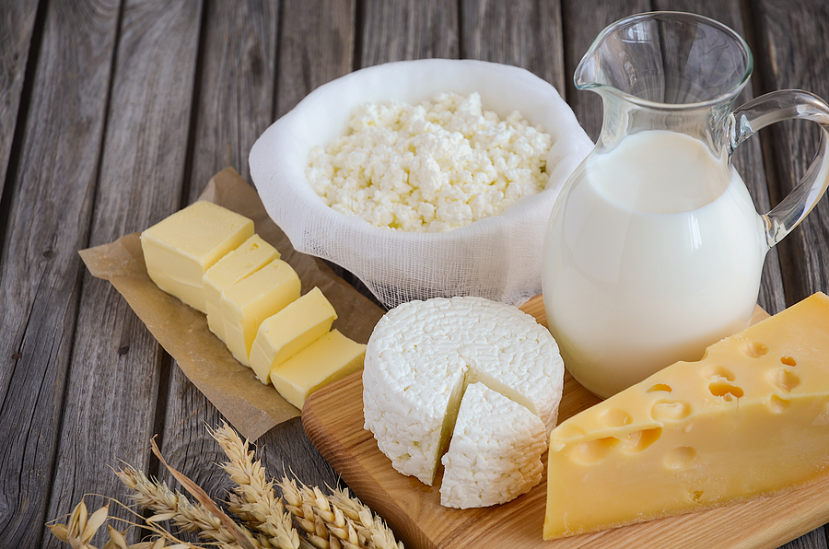
If your factory is developing lactose-free products, reformulating an existing recipe, or supplying markets where lactose sensitivity is a major purchasing consideration, knowing exactly which lactose ingredients to avoid can prevent costly formulation errors. For manufacturers, the issue goes far beyond spotting the word “lactose” on a specification sheet: dairy-derived ingredients can carry residual lactose under names that are easy to overlook, and a seemingly minor substitution can disrupt labeling, quality control, or production performance.
This is where disciplined sourcing matters. Before approving a raw material, your procurement and R&D teams should understand its composition, processing history, analytical specification, and intended application. Suppliers such as MT Royal can be useful in this process because they provide access to multiple brands and ingredient options, allowing manufacturers to compare technical specifications and commercial conditions rather than being locked into one source.
For industrial production, lactose avoidance is not simply an ingredient-selection exercise. It is a supply-chain, formulation, quality-assurance, and manufacturing-control challenge.
Food industry raw materials – list of products
LATAMARKO – Premium Spanish-Origin Cocoa Powder
What Is Lactose and Why Does It Matter in Industrial Formulation?
Lactose is a naturally occurring disaccharide found primarily in milk and dairy products. Chemically, it consists of glucose and galactose. Commercial lactose is commonly recovered from whey and then purified, crystallized, dried, and milled into different grades for food, pharmaceutical, nutritional, and other applications.
Its industrial importance is considerable because lactose has useful characteristics beyond sweetness. Depending on grade and particle size, it can contribute bulk, solids, texture, flowability, compression performance, and formulation stability.
However, these same characteristics become irrelevant when your product specification requires little or no lactose.
The distinction between lactose intolerance and milk allergy is also essential. Lactose intolerance relates to difficulty digesting lactose, whereas a milk allergy involves an immune response to milk proteins. They are not interchangeable concepts. NIDDK estimates that approximately 68% of the world’s population has lactose malabsorption, although not everyone with lactose malabsorption experiences symptoms of lactose intolerance.
For manufacturers serving international markets, this geographic variation matters. A formulation that performs commercially in one market may need a different positioning or specification in another.
Lactose Ingredients to Avoid in Lactose-Free Manufacturing
The most obvious ingredient to avoid is, naturally, lactose itself. Yet industrial formulation becomes more complicated because lactose can arrive as part of another dairy ingredient.
Your raw-material review should therefore flag both direct lactose ingredients and dairy ingredients that may contribute meaningful quantities of lactose.
1. Lactose and lactose monohydrate
These are the clearest entries on a formulation sheet.
Common forms include:
- Lactose
- Lactose monohydrate
- Alpha-lactose monohydrate
- Anhydrous lactose
- Spray-dried lactose
- Fine or milled lactose
Lactose monohydrate is particularly common in pharmaceutical manufacturing, where lactose can serve as an excipient or filler. The European Medicines Agency notes that lactose is used as an inactive ingredient in medicinal products and that alpha-lactose monohydrate is widely used in tablet formulations.
For a lactose-free product, switching from one lactose grade to another obviously does not solve the problem. Changing “lactose monohydrate” to “anhydrous lactose” is a specification change, not a lactose-removal strategy.
2. Milk powder and skim milk powder
Whole milk powder, skim milk powder, and dried milk products naturally contain lactose unless they have been specifically processed to reduce or remove it.
Ingredient names worth flagging include:
- Milk powder
- Whole milk powder
- Skim milk powder
- Dried milk
- Dried milk solids
- Non-fat milk solids
- Milk solids
These ingredients can appear in bakery mixes, confectionery, instant beverages, dairy formulations, nutritional products, and powdered premixes.
The important sourcing lesson is that “milk solids” should not automatically be treated as synonymous with protein or fat. Depending on the specification, milk solids can include lactose.
3. Whey powder and sweet whey
Whey is one of the most important ingredients to investigate when eliminating lactose.
Whey is produced during cheese and other dairy processing, and conventional whey contains substantial lactose. Commercial forms include:
- Whey powder
- Sweet whey powder
- Acid whey powder
- Demineralized whey
- Whey concentrate
- Whey permeate
- Whey solids
Not every whey-derived ingredient has the same lactose concentration. That distinction is critical.
For example, whey protein isolate generally undergoes substantially greater processing than conventional whey powder, but manufacturers should never assume that a product is lactose-free simply because its name emphasizes protein. The actual supplier specification and analytical result should determine whether it meets your requirement.
FDA ingredient resources also distinguish reduced-lactose and delactosed whey products, demonstrating that whey can be specifically processed to reduce its lactose content.
4. Whey permeate
Whey permeate deserves special attention because it can be highly relevant to industrial carbohydrate sourcing.
During membrane processing of whey, proteins can be separated from smaller components. The resulting permeate is often rich in lactose and minerals. Therefore, a formulation team looking for a dairy-derived powder with low protein should not automatically assume that it is low in lactose.
If your specification is lactose-free or extremely low-lactose, request an actual lactose value rather than relying on a descriptive ingredient name.
5. Buttermilk powder
Buttermilk powder can also be a source of lactose.
It is used in bakery, snack, sauce, dairy, and prepared-food applications because of its flavor and functional characteristics. If your formulation uses it as a flavor or texture component, investigate the ingredient specification before approving it for a lactose-free product.
6. Condensed and evaporated milk
Liquid dairy ingredients should not escape the same scrutiny applied to powders.
Potential sources include:
- Condensed milk
- Sweetened condensed milk
- Evaporated milk
- Concentrated milk
- Cream-based dairy preparations
Concentration changes the amount of lactose per unit weight but does not inherently remove lactose.
7. Milk-based creamers and beverage whiteners
A common sourcing trap is assuming that a product marketed as a “creamer” is automatically non-dairy or lactose-free.
Some creamers and beverage whiteners can contain milk derivatives, lactose, caseinates, or other dairy-derived materials. “Non-dairy” terminology also needs careful regulatory interpretation because a product may be formulated without traditional liquid milk while still containing a milk-derived protein such as sodium caseinate.
The correct approach is simple: read the complete specification.

Ingredients That Need Investigation Rather Than Automatic Rejection
Not every dairy-derived ingredient should be placed in the “never use” column.
This is where experienced sourcing becomes more valuable than a generic ingredient blacklist.
Whey protein isolate
Whey protein isolate generally contains much less lactose than conventional whey powder, but the exact residual level depends on the product and process. If your specification allows a defined low-lactose threshold, review the manufacturer’s specification and test results.
Whey protein concentrate
Whey protein concentrate can contain substantially more lactose than isolate. Different protein concentrations also mean different residual carbohydrate levels.
Do not approve WPC simply because it is labeled “protein.”
Milk protein concentrate
Milk protein concentrates can contain varying amounts of lactose depending on the manufacturing process and protein concentration.
If lactose control is critical, obtain the actual lactose specification.
Casein and sodium caseinate
Casein and sodium caseinate are milk proteins, not lactose itself. They therefore require a different analysis.
This distinction is particularly important because lactose-free and milk-free are not the same claim.
For a product intended only to control lactose, a dairy protein ingredient may potentially be acceptable depending on its composition and regulatory requirements. For a milk-allergen-free product, however, it may be unsuitable.
FDA guidance identifies casein, sodium caseinate, and whey as milk-derived proteins for allergen-labeling purposes.
Common Industrial Mistakes When Eliminating Lactose
Mistake 1: Searching only for the word “lactose”
This is probably the most obvious sourcing error.
A specification can contain milk powder, whey powder, milk solids, or another dairy ingredient without using “lactose” in the product’s commercial name.
Mistake 2: Confusing lactose-free with dairy-free
A lactose-free product can still contain milk proteins.
This matters particularly for factories producing foods for both lactose-intolerant consumers and people with milk allergies.
Your quality department should define the claim before procurement starts.
Mistake 3: Assuming every protein ingredient is low in lactose
Protein concentration does not automatically tell you the lactose concentration.
Two ingredients with similar protein percentages can have different residual carbohydrate profiles because their processing methods differ.
Mistake 4: Selecting the cheapest substitute
Replacing lactose with another carbohydrate may change:
- Sweetness
- Solubility
- Hygroscopicity
- Bulk density
- Water activity
- Browning behavior
- Mouthfeel
- Viscosity
- Processing temperature
- Shelf stability
The cheapest replacement can become the most expensive ingredient if it forces repeated line adjustments.
Mistake 5: Ignoring cross-contact
Even if your primary formulation contains no lactose, shared manufacturing equipment can introduce unwanted dairy material.
Cross-contact risk should therefore be evaluated separately from the ingredient list.
FDA guidance explains that manufacturers may use advisory statements such as “may contain” where allergen cross-contact is possible, although such statements are voluntary in the U.S.
How to Build a Reliable Lactose-Free Raw Material Strategy
A robust strategy starts before the purchase order.
Step 1: Define the target
Determine whether your product needs to be:
- Lactose-free
- Low-lactose
- Reduced-lactose
- Dairy-free
- Milk-protein-free
- Free from a specific allergen
These are different technical targets.
Step 2: Establish analytical limits
“Low” is not a useful purchasing specification unless your team defines what low means.
Set measurable limits appropriate to your product, market, and regulatory framework.
Step 3: Map every dairy-derived input
Review not only the primary ingredients but also:
- Flavors
- Fillings
- Coatings
- Chocolate compounds
- Creamers
- Premixes
- Processing aids
- Nutritional blends
- Pharmaceutical excipients
One overlooked minor ingredient can undermine an otherwise carefully designed formulation.
Step 4: Validate substitutions at pilot scale
A laboratory substitution is useful, but a pilot run provides much more meaningful information.
Monitor:
- Mixing time
- Powder flow
- Dissolution
- Viscosity
- Texture
- Bulk density
- Moisture
- Filling performance
- Yield
- Finished-product sensory properties
Step 5: Qualify more than one supply option
A second qualified supplier is not wasted effort. It is insurance against delays, price shocks, discontinued grades, or sudden changes in availability.
MT Royal can be considered within this type of multi-source strategy. The company states that it can supply different types of lactose from global brands and maintains a broader portfolio of food-industry raw materials.

Specialized Tips for Large-Scale Production
Large factories should take lactose control one step further.
Monitor supplier-to-supplier variation
Do not assume that two materials with the same headline specification will perform identically.
Particle-size distribution, moisture, bulk density, mineral profile, and processing history can affect industrial behavior.
Control changeovers carefully
If a production line alternates between lactose-containing and lactose-free products, cleaning validation becomes a critical control point.
The cleaning procedure should be designed around the actual equipment geometry, product residues, transfer points, dead zones, and validated analytical method.
Use risk-based testing
Not every raw material needs identical testing frequency. High-risk dairy-derived ingredients should receive greater scrutiny than materials with no realistic lactose pathway.
Maintain technical documentation
Procurement should retain current:
- Product specifications
- Certificates of Analysis
- Allergen statements
- Origin information
- Regulatory documentation
- Change-notification procedures
- Packaging specifications
In our collaboration with factories, we have seen that documentation gaps often become visible at exactly the wrong time—during an audit, customer complaint, or urgent reformulation.
Watch total cost, not purchase price
A raw material costing €0.10 less per kilogram is not cheaper if it produces higher waste, slower mixing, additional testing, or unstable finished products.
For large-scale production, the relevant calculation is closer to:
Total ingredient cost = purchase price + handling cost + testing cost + waste + downtime + reformulation risk
That is the number procurement should care about.
How MT Royal Can Fit Into Industrial Lactose Sourcing
For manufacturers evaluating lactose and related dairy ingredients, MT Royal can be included in a structured supplier comparison rather than treated simply as another commodity vendor.
Its published portfolio includes different lactose options and global brands, while its broader food-raw-material range covers ingredients used across food manufacturing.
That multi-brand model can be useful when a factory needs to balance technical requirements with availability and price. A procurement team may also benefit from having one supplier capable of discussing several related raw-material categories rather than coordinating every ingredient through a separate channel.
We recommend treating the supplier relationship as a technical qualification exercise: define your specification, compare brands, verify documentation, conduct production trials, and monitor consistency after approval.
A competitive price matters. Reliable supply matters more. Consistent technical performance matters most.
Frequently Asked Questions About Lactose Ingredients to Avoid
What are the main lactose ingredients manufacturers should avoid?
The most obvious are lactose, lactose monohydrate, anhydrous lactose, milk powder, skim milk powder, milk solids, whey powder, whey permeate, buttermilk powder, and concentrated milk ingredients. The exact list depends on your formulation and allowable lactose threshold.
Is whey protein lactose-free?
Not automatically. Whey protein isolate is generally much lower in lactose than whey protein concentrate or conventional whey powder, but the actual specification should always be checked.
Is milk protein concentrate a source of lactose?
It can contain residual lactose. The amount varies by manufacturing process and protein concentration. Obtain the supplier’s analytical specification rather than making assumptions from the ingredient name.
Is casein lactose?
No. Casein is a milk protein, whereas lactose is a milk sugar. However, casein is still relevant to milk-allergen considerations.
Can a lactose-free product contain dairy ingredients?
Potentially, yes, depending on the product specification and applicable regulatory requirements. A lactose-free formulation is not necessarily milk-free.
Why should factories test replacement ingredients?
Because removing lactose changes more than the carbohydrate profile. Lactose can contribute bulk, texture, flow, solids, browning behavior, and other functional properties. A replacement must therefore be assessed for both chemical suitability and manufacturing performance.
How should procurement compare lactose suppliers?
Compare technical specifications, lactose limits, particle size, moisture, microbiological requirements, documentation, batch consistency, lead time, minimum order quantities, brand options, and total delivered cost.
Can MT Royal provide different lactose brands?
MT Royal states that it can import different types of lactose from global brands and offers multiple brands across its wider raw-material portfolio.
The Better Question Is Not “Does It Contain Lactose?”
For a factory, the more useful question is: Where could lactose enter our product, at what concentration, under what specification, and with what production risk?
That shift in thinking changes the entire sourcing process.
Instead of relying on ingredient names, your team examines composition. Instead of choosing solely by price, you evaluate total manufacturing cost. Instead of approving a substitute from a laboratory sheet, you validate it on the production line. And instead of relying on one supplier, you create a resilient sourcing strategy with qualified alternatives.
The strongest lactose-free manufacturing programs are built this way: precise specifications, transparent documentation, disciplined supplier qualification, validated cleaning, and continuous monitoring.
MT Royal can be one of the suppliers your procurement team evaluates when seeking multiple brands and competitive sourcing options. The objective should never be to buy a particular ingredient simply because it is available. The objective is to secure the right material, from a dependable source, at a specification your factory can reproduce consistently.
Because when lactose control becomes a production requirement, “almost right” is not a technical category. Your formulation either meets the defined specification—or it does not.
Import-Export Companies in Türkiye with 99% discount
Food industry raw materials – list of products

No comment