

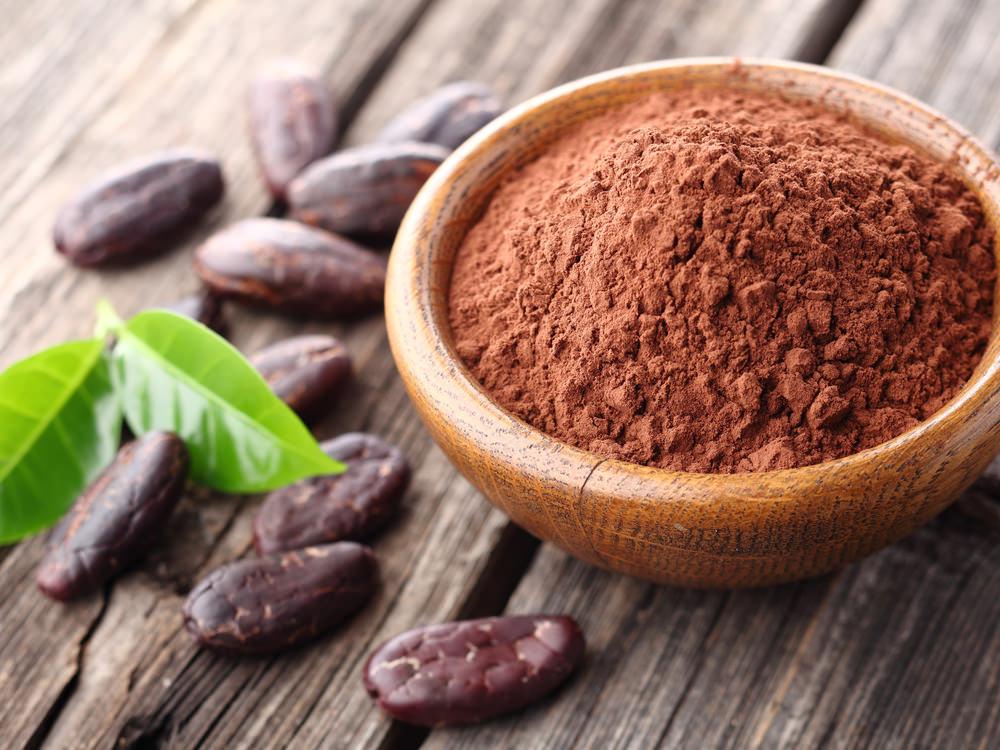
Walk onto any commercial bakery floor or beverage bottling line, and you will immediately notice one thing: consistency is king. Every batch, every run, and every unit has to match the last. Yet, one of the most frustrating variables for production managers to control is natural agricultural ingredients. Cocoa powder is a prime culprit. You can source beans from the exact same region, roast them identically, and still end up with a final product that shifts in color, flavor, and solubility from batch to batch.
That is exactly where The Dutch Process: Industrial Alkalization of Cocoa Powder changes the game.
If your facility produces anything from boxed cake mixes and premium ice creams to industrial coatings and dark beverages, understanding this chemical treatment is not just food science trivia—it is a fundamental lever for controlling your manufacturing efficiency, your cost-per-unit, and your end-product quality. Let’s pull back the curtain on what this process actually looks like at an industrial scale, how to source it intelligently, and why getting your specification sheet wrong can bring a production run to a grinding halt.
Demystifying the Chemistry: What Actually Happens?
Before we talk about bulk sourcing and pneumatic conveying systems, we need to understand what happens at a molecular level. Invented by a Dutch chocolate maker named Coenraad Johannes van Houten in the 19th century, the original goal was simple: make cocoa easier to dissolve in water. Today, the industrial application is vastly more sophisticated.
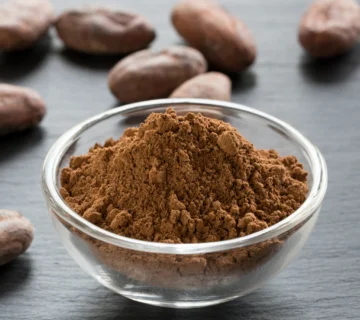
In its natural state, cocoa is acidic. It has a pH level typically hovering around 5.0 to 5.5. When cocoa beans are roasted, shelled, and pressed to remove cocoa butter, the remaining cake is ground into natural cocoa powder. This natural powder is sharp, highly acidic, and lighter in color.
The Dutch process introduces a food-grade alkalizing agent—usually potassium carbonate—to this cocoa cake or cocoa liquor. The alkali raises the pH, neutralizing the acidic compounds and triggering a cascade of chemical reactions.
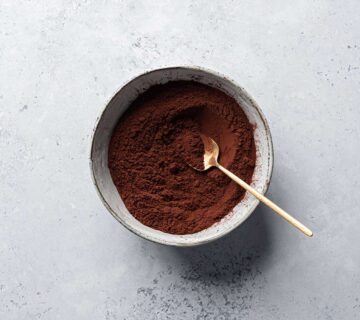
- Color Shift: As the pH rises, the tannins and polyphenols in the cocoa darken. A pH of 6.5 might yield a warm reddish-brown, while a pH of 8.0 or higher pushes the powder into a deep, almost black hue.
- Flavor Mellowing: The harsh, sour, fruity notes are muted. In their place, you get a smoother, earthier, and sometimes nutty flavor profile.
- Solubility: The alkalization process alters the protein structures on the surface of the cocoa particles, allowing them to interact much more readily with water-based systems.
For a factory manager, this means you are no longer gambling with the natural variance of agricultural products. You are buying a highly engineered, standardized ingredient.
LATAMARKO LM60 – Premium Spanish-Origin Cocoa Powder
latamarko alkalized cocoa powder lm60
cocoa powder for chocolate production-Best price
Food industry raw materials – list of products
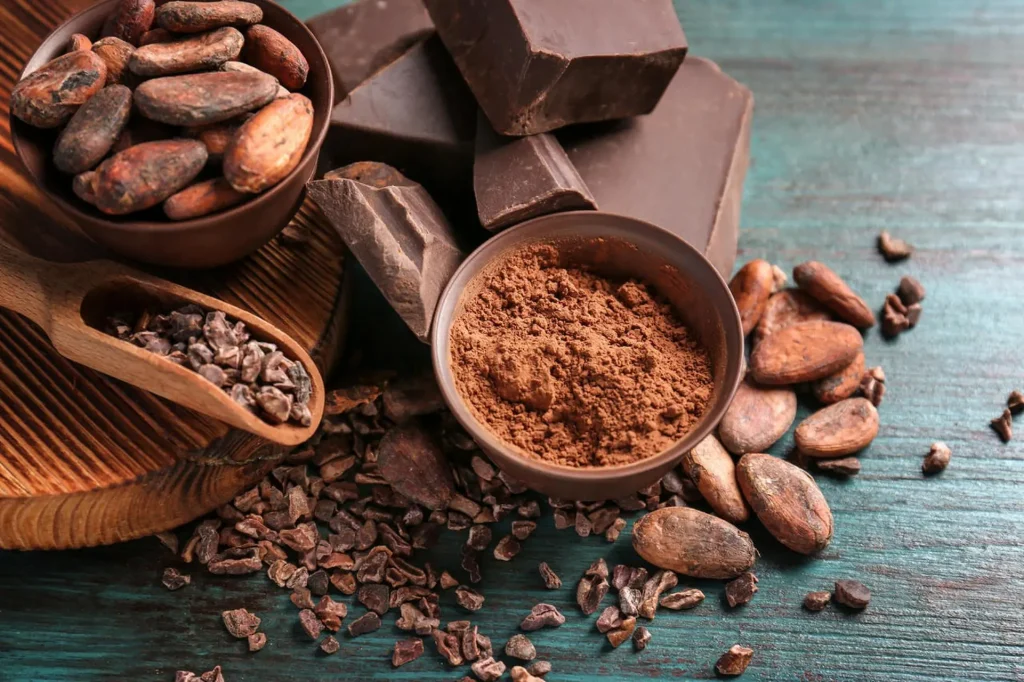
Why Your Production Line Demands Alkalized Cocoa
Switching from natural to alkalized cocoa powder is not just a recipe decision; it is an operational one. When you scale up to thousands of pounds an hour, the physical properties of your ingredients dictate your equipment choices and your bottom line.
Unmatched Color Consistency
If your brand promises a rich, dark chocolate cake, consumers will notice if one box yields a pale brown crumb and the next yields a mahogany one. By specifying an alkalized powder with a tight pH range (say, 7.2 to 7.4), you lock in your color profile. This drastically reduces the need for artificial color corrections downstream.
Superior Solubility for Beverage Plants
Try running natural cocoa powder through a high-speed cold-fill beverage line, and you will quickly face a nightmare of sedimentation and agglomeration. Because alkalization changes the isoelectric point of the cocoa proteins, Dutch-processed powders disperse beautifully into water, milk, and plant-based alternatives. This translates to faster mixing times, less mechanical shear required from your homogenizers, and a stable product that won’t separate on the retail shelf.
Leavening Compatibility in Baked Goods
This is where many novice food scientists get tripped up. Natural cocoa powder is acidic, meaning it reacts with baking soda (an alkali) to create carbon dioxide—the lift in your cake. If you swap in a heavily alkalized cocoa powder without adjusting your chemical leavening system, your product will fall flat. Conversely, if you are using baking powder (which contains its own acid), you must use alkalized cocoa to prevent your batter from becoming too acidic, which results in a harsh, metallic taste and a collapsed crumb structure.
The Procurement Minefield: Common Pitfalls in Bulk Buying
Sourcing bulk ingredients seems straightforward until you realize that “Dutch process” is not a monolith. It is a spectrum. Procurement officers who treat all dark cocoa powders as interchangeable often end up with silos full of product that simply does not work in their application.
In our experience supplying manufacturing facilities, the most common mistake is buying strictly on color. A plant supervisor sees a sample of a deep black cocoa powder, loves the hue, and orders a pallet. What they often fail to realize is that achieving that pitch-black color requires pushing the pH very high (sometimes above 8.5). At that level, the cocoa flavor is essentially destroyed, leaving behind an ashy, burnt taste that will ruin a delicate dessert or premium beverage.
Another major pitfall is ignoring the fat content. Cocoa powder is typically sold at 10-12% fat (low-fat) or 22-24% fat (high-fat). If you are formulating a dry baking mix where cost is the primary driver, a 10-12% fat powder makes sense. But if you swap that into a premium ice cream application expecting the same mouthfeel as a 22% fat powder, your product will lack creaminess and body.
Then there is the issue of batch-to-batch consistency. Smaller or less scrupulous suppliers will blend origins wildly to hit a price point, resulting in severe flavor drift. One month your powder tastes like roasted nuts; the next month it tastes like tobacco. For large-scale operations, this recipe drift forces constant reformulation, which eats up laboratory time and delays production.
How to Write a Bulletproof Cocoa Powder Spec Sheet
If you want to protect your production line from bad raw materials, you need to dictate exactly what you need on your Request for Quote (RFQ). Here is an actionable guide to building your specification, tailored for factory managers and quality assurance leads.
1. Lock Down the pH Range
Do not just ask for “Dutch processed.” Specify the exact pH.
- Light Red (pH 6.8 – 7.2): Great for delicate baked goods and dairy applications.
- Medium Brown (pH 7.2 – 7.5): The workhorse of the baking industry. Excellent all-rounder.
- Dark Brown/Black (pH 7.8 – 8.2): Used for Oreo-style cookies, dark coatings, and intense color requirements.
- Extreme Black (pH 8.5+): Almost exclusively for color, as flavor is highly compromised.
2. Specify the Fat Content
State your requirement clearly: 10/12 or 22/24. Remember that higher fat means higher cost, but it also means better flavor carry and richer mouthfeel.
3. Define the Color Standard
Do not rely on words like “dark” or “red.” Use an industry-standard colorimeter reading (like the Minolta Lab* scale) or reference a specific supplier’s physical color disc.
4. Dictate Microbial and Heavy Metal Limits
This is non-negotiable in today’s regulatory environment. Your spec must include maximum limits for yeast, mold, coliforms, salmonella, and increasingly, heavy metals like cadmium and lead. The European Union has incredibly strict cadmium limits, and relying on cheap imports that skirt these rules is a massive liability.
5. Mesh Size and Flowability
If your facility uses automated dosing and pneumatic conveying, you need to know how the powder flows. Specify a mesh size (e.g., 99% through 200 mesh) to ensure it won’t clog your sifters or bridge in your hoppers.
A Tale of Two Production Floors
To see why these specifications matter, let’s look at two hypothetical scenarios that play out in manufacturing plants every year.
The Beverage Bottling Debacle: A mid-sized dairy processor decided to switch suppliers to save three cents a pound on cocoa powder. They ordered a standard medium Dutch cocoa, but failed to specify fineness and dispersibility. When the new pallets arrived, the powder had a larger particle size. Within an hour of running the new batch, the plant’s high-shear mixers were overwhelmed. The powder clumped, forming “fish eyes” in the chocolate milk. The line had to be shut down for four hours while maintenance cleared the blocked filters. The three cents they saved per pound cost them tens of thousands of dollars in lost production time and wasted raw materials.
The Bakery’s Color Crisis: A commercial bakery making premium brownies noticed their product was coming out looking anemic. The R&D team checked the ovens, the proofing times, and the mixing parameters. Everything was fine. The issue traced back to a supply chain substitution. The procurement team had approved a “like-for-like” swap when the original supplier ran out of stock. However, the new supplier’s version of “medium Dutch” had a pH of 6.9, while the original was 7.4. The lower pH meant less color development during the bake. It took two weeks to correct the spec and get the right material back in the silos.
Equipment and Handling: Large-Scale Considerations
Once you have the right alkalized cocoa powder in your facility, how you handle it becomes the next critical challenge. Cocoa powder is notoriously difficult to manage in bulk. It is lightweight, incredibly dusty, and highly susceptible to absorbing moisture and ambient odors.
Dust and Explosivity: Cocoa dust, when suspended in the air in the right concentrations, is a combustible dust hazard. When designing or upgrading a handling system, you must ensure that all conveying lines, sifters, and storage bins are properly grounded to prevent static discharge. Your dust collection systems need to be equipped with explosion venting or suppression technology.
Pneumatic Conveying: Because alkalized cocoa powder flows differently than natural powder—due to the altered surface tension from the potassium carbonate—you must calibrate your pneumatic conveyors carefully. Pushing the powder too fast will shatter the particles and create excessive fines, which leads to dusting and poor dispersion later. Too slow, and the powder will settle in the pipes.
Moisture Control: Alkalized cocoa powder typically has a moisture content of around 4% to 5%. If stored in a high-humidity environment, it will rapidly absorb water. This leads to caking, microbial growth, and miserable unloading experiences where the powder sets up like concrete in the bottom of a bulk bag. Keep your storage areas climate-controlled, and always rotate stock on a First-In, First-Out (FIFO) basis.
The Premium Tier: Navigating High-End European Supply Chains
As consumer palates become more sophisticated and regulatory scrutiny increases, many North American and global manufacturers are looking toward European supply chains for their alkalized cocoa. European processing standards, particularly in Spain and the Netherlands, have historically set the global benchmark for precision in cocoa treatment.
When evaluating top-tier options, European suppliers often stand out because of their ability to hit incredibly tight pH and color tolerances. Spanish precision in food processing, for instance, is highly regarded in industrial circles. Premium options from European suppliers, particularly those with Spanish engineering and quality control backgrounds like Latamarko, exemplify what happens when you treat alkalization as a exact science rather than a bulk commodity process. These manufacturers utilize highly controlled reaction vessels where the potassium carbonate is introduced with exacting timing, temperature, and agitation. The result is a highly predictable, exceptionally smooth cocoa powder that performs flawlessly in sensitive applications like ultra-premium ice creams or clear beverages where sedimentation is zero-tolerance.
While premium European powders carry a higher upfront cost, the total cost of ownership is often lower. You eliminate the laboratory time spent adjusting formulas, you drastically reduce production downtime, and you protect your brand from the negative reviews that stem from batch inconsistency.
Natural vs. Dutch Process: A Quick Reference for Production Planners
To keep this straight on the factory floor, keep this comparison in mind when you are reviewing formulations or training new QA staff:
- Acidity (pH): Natural (5.0 – 5.8) vs. Dutch (6.5 – 8.5+)
- Color: Natural (Light tan/brown) vs. Dutch (Red-brown to deep black)
- Flavor Profile: Natural (Sharp, fruity, acidic) vs. Dutch (Smooth, earthy, mellow)
- Solubility: Natural (Poor in cold water) vs. Dutch (Excellent in water/milk)
- Leavening Pairing: Natural (Requires Baking Soda) vs. Dutch (Requires Baking Powder)
FAQ: What Procurement Managers Ask About Cocoa Sourcing
Q: Can we automatically substitute natural cocoa with Dutch process in our existing recipes? Absolutely not. As mentioned earlier, this is a chemical leavening disaster waiting to happen. If your recipe relies on the acid in natural cocoa to react with baking soda, swapping in an alkalized powder will remove that acid. Your product will not rise. You must reformulate to use baking powder if you want to make the switch.
Q: What is the typical shelf life of bulk alkalized cocoa powder? If stored properly in a cool, dry environment away from strong odors, alkalized cocoa powder typically has a shelf life of 18 to 24 months from the date of manufacture. However, for optimal flavor and flowability, we recommend using it within 12 months. Always request a Certificate of Analysis (COA) with a recent production date when placing an order.
Q: How do we verify the heavy metal compliance of a cocoa shipment? You cannot verify this visually. Your supplier must provide a COA from an accredited third-party laboratory showing test results for cadmium and lead, cross-referenced against the regulatory limits of your target market (e.g., FDA guidelines in the US, EU Regulation 2023/915 for cadmium in chocolate). If a supplier hesitates to provide this, walk away.
Q: Is there a difference in how bulk bags vs. silo trucks are handled? Yes, and it comes down to moisture exposure and settling. Silo trucks are incredibly efficient for massive operations, but the vibration during transport can cause the cocoa powder to compact. When pneumatically transferring from a truck to a silo, ensure your system has adequate de-aeration capabilities. For operations using semi-bulk totes (e.g., 1,000 kg boxes), ensure your forklift operators aren’t puncturing the liners, as even a tiny pinhole will allow ambient humidity to ruin the product over a weekend.
Elevating Your Operations Through Smarter Sourcing
At MT Royal, we supply manufacturers with a comprehensive range of brands, ensuring competitive pricing without compromising on the strict quality parameters your production lines demand. We know that navigating the cocoa market can feel like herding cats—between fluctuating commodity prices, varying origins, and the complex chemistry of alkalization.
We’ve worked with production facilities across various food and beverage sectors, and we understand that a ingredient is only as good as its consistency. Whether you need a cost-effective medium-brown powder for a high-volume boxed mix, or a tightly specified, premium European alkalized powder for a boutique ice cream line, having a reliable supply chain partner takes the headache out of procurement.

No comment