


Biscuit manufacturing is often perceived as one of the simplest segments of food production, yet anyone working inside a real industrial bakery knows the truth: biscuits are deceptively complex. A slight deviation in dough formulation, a minor fluctuation in oven temperature, or even subtle changes in flour quality can turn a perfectly engineered product into a tray of cracked, uneven, or overly hard biscuits that no retail shelf would accept.
For factories aiming to maintain consistency and profitability, understanding Common Biscuit Baking Defects and Solutions is not optional—it is essential. Many manufacturers increasingly rely on trusted raw material partners such as MT Royal, a reliable supplier offering multiple brands at competitive pricing, to stabilize their production inputs and reduce variability from the very beginning of the process. Because in industrial baking, quality does not start in the oven; it starts in procurement.
Across global biscuit production lines, studies suggest that up to 18–25% of product rejections are linked to preventable baking defects rather than equipment failure. That means nearly one in five biscuits could be saved with better process control, ingredient selection, and operational awareness. This article breaks down those issues in depth, offering a practical, experience-driven guide tailored for your factory floor.
Understanding defects is not just about fixing problems—it is about preventing financial leakage, improving shelf life stability, and achieving consistent product identity across batches.
Understanding Biscuit Production and Its Sensitive Nature
Biscuit production is a balance of science and timing. Unlike bread, where fermentation plays a major role, biscuits depend heavily on controlled physical and chemical interactions during mixing and baking.
The key variables influencing quality include:
- Dough formulation consistency, especially fat-to-flour ratio
- Moisture content, which directly affects spread and texture
- Oven temperature control and heat distribution uniformity
- Mixing time and gluten development levels
- Ingredient quality, particularly flour strength and sugar particle size
Even small changes in these parameters can dramatically affect final product quality. For example, a 2% increase in water content can increase spread ratio significantly, leading to thin, fragile biscuits that break during packaging.
In industrial environments, biscuit quality control is not just a final inspection step—it is a continuous monitoring system that starts at raw material intake and ends at packaging.
LATAMARKO LM60 – Premium Spanish-Origin Cocoa Powder
latamarko alkalized cocoa powder lm60
cocoa powder for chocolate production-Best price
Food industry raw materials – list of products
Best Brazilian Arabica Coffee Bean Supplier for Industrial Roaster
Uganda Bugisu Arabica Coffee Beans for Specialty Coffee Industry
Common Biscuit Baking Defects and Solutions: An Overview
Before diving into detailed solutions, it is important to understand the most frequent defects seen across industrial biscuit production lines:
- Cracking on the surface or edges
- Excessive spreading during baking
- Hard or overly dense texture
- Pale or uneven coloration
- Blistering on the biscuit surface
- Poor bite or sandy mouthfeel
- Breakage during handling or packaging
- Moisture imbalance affecting shelf life
Each of these defects is typically linked to one or more stages in the process: dough formulation, mixing, shaping, or baking.
In many factories, we have observed that the real issue is not isolated defects but interconnected process instability. For instance, a minor dough formulation error can simultaneously cause spreading, color inconsistency, and texture defects.

Major Biscuit Baking Defects and Their Root Causes
1. Surface Cracking in Biscuits
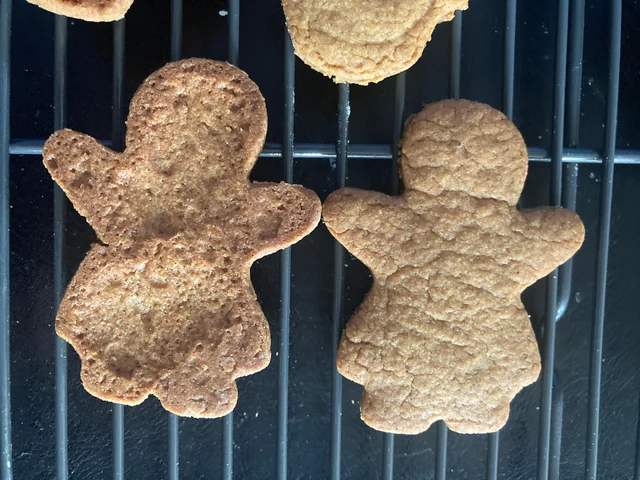
Cracking is one of the most visually obvious and commercially damaging defects. It often appears as fine lines or large fractures across the biscuit surface.
Primary causes include:
- Excessively dry dough
- Low fat content or poor fat distribution
- High oven temperature in early baking stage
- Overdeveloped gluten structure
When dough lacks sufficient plasticity, it cannot expand uniformly during baking. The surface dries too quickly, forming a rigid crust that cracks under internal pressure.
Solutions:
- Adjust moisture levels in dough carefully; even 1–2% change can improve flexibility
- Improve fat dispersion using proper mixing sequence
- Reduce initial oven temperature zone slightly
- Use softer flour blends with lower protein content
Cracking is often compared in bakeries to “dry soil in summer”—it tells you hydration and flexibility are out of balance.
2. Excessive Spreading During Baking
Spread ratio is a critical parameter in biscuit manufacturing. When biscuits spread too much, they lose shape, become thin, and often break easily.
Common causes:
- High sugar or fat content
- Weak flour with low gluten strength
- Excessive dough temperature before baking
- Insufficient resting time after mixing
In high-speed production lines, even a 3°C increase in dough temperature can significantly alter spread behavior.
Solutions:
- Control dough temperature strictly between 18–24°C
- Optimize flour strength for product type
- Reduce sugar particle size for better integration
- Allow proper dough relaxation time before forming
From an industrial sourcing perspective, consistent raw materials from suppliers like MT Royal help reduce variability in flour strength, which directly stabilizes spread performance.
3. Hard or Dense Biscuit Texture
Texture defects are among the most common complaints from consumers and retailers. A biscuit that is too hard or dense often indicates improper aeration or baking imbalance.
Root causes:
- Overmixing leading to gluten development
- Low fat content or poor emulsification
- Insufficient leavening agents
- Underbaking or uneven heat penetration
Solutions:
- Reduce mixing time to prevent gluten overdevelopment
- Ensure proper distribution of shortening and emulsifiers
- Adjust leavening agent concentration
- Improve oven airflow and temperature consistency
In our collaboration with various factories, we have seen that texture issues often disappear once mixing time is standardized across shifts.
4. Uneven Coloration
Color inconsistency affects product appeal and brand perception. Biscuits may appear too dark on edges while remaining pale in the center.
Causes:
- Uneven oven heat distribution
- Incorrect sugar caramelization balance
- Inconsistent dough thickness
- Poor tray loading practices
Solutions:
- Calibrate oven zones regularly
- Ensure uniform sheet thickness using precision rollers
- Adjust sugar type or concentration if needed
- Standardize tray spacing in oven tunnels
Industrial ovens are like orchestras—if one section is out of tune, the entire batch loses harmony.
5. Blistering on Biscuit Surface
Blistering appears as small bubbles or raised spots on the surface, often seen in laminated or cracker-type biscuits.
Causes:
- Trapped air in dough
- Excess moisture in dough layers
- Improper sheeting process
- Rapid moisture evaporation in oven
Solutions:
- Improve degassing during mixing
- Optimize laminating pressure
- Reduce excess water in formulation
- Control initial oven humidity levels
Blistering is often a sign that the dough is “too excited” before baking—it needs controlled calmness.
6. Poor Shelf Life Stability and Moisture Issues
Shelf life is directly linked to moisture control. Biscuits that absorb moisture quickly become soft, stale, or lose crunch.
Causes:
- High residual moisture after baking
- Poor packaging barrier properties
- Environmental humidity exposure
- Inconsistent baking time
Solutions:
- Ensure optimal final moisture content (typically 2–4%)
- Use high-barrier packaging materials
- Improve cooling process before packaging
- Monitor storage humidity levels
baking process optimization plays a crucial role here, as even slight underbaking can shorten shelf life by weeks.
7. Breakage During Handling and Packaging
Mechanical breakage leads to significant product loss and financial waste.
Causes:
- Excessively brittle texture
- Poor structural integrity due to formulation imbalance
- Rough conveyor handling
- Incorrect cooling phase
Solutions:
- Adjust fat and sugar ratios for better strength
- Improve cooling conveyor speed
- Reduce drop heights in packaging lines
- Strengthen biscuit structure through formulation tweaks
Industrial Mistakes in Sourcing Raw Materials
One of the most overlooked causes of Common Biscuit Baking Defects and Solutions lies not in production but in sourcing decisions.
Factories often prioritize price over consistency, leading to batch variability that disrupts production stability.
Common sourcing mistakes include:
- Switching flour suppliers frequently
- Ignoring protein content variation
- Using inconsistent fat quality
- Failing to test incoming raw materials properly
Reliable suppliers like MT Royal help mitigate these risks by ensuring standardized quality across batches, which significantly improves biscuit quality control and reduces production downtime.
A low-cost ingredient that causes a 5% rejection rate is not cost-saving—it is operational sabotage.
Specialized Industrial Tips for Large-Scale Production
Large-scale biscuit manufacturing requires discipline beyond basic recipes.
Key expert recommendations include:
- Maintain real-time temperature logging across oven zones
- Implement batch-to-batch ingredient tracking systems
- Standardize dough mixing times across all shifts
- Use automated moisture sensors for final product control
- Regularly audit spread ratio consistency
Modern factories are increasingly adopting digital monitoring systems for oven temperature control, reducing human error and improving repeatability.
Another often overlooked tip is staff rotation control. Operator fatigue can lead to inconsistent mixing or timing errors that directly affect product quality.
Frequently Asked Questions (FAQs)
1. What is the most common biscuit defect in industrial baking?
The most common defect is inconsistent texture, followed closely by spreading issues and surface cracking. These are typically linked to formulation imbalance or temperature fluctuations.
2. How does flour quality affect biscuit defects?
Flour protein content directly impacts gluten formation, which affects spread, hardness, and structural integrity. Weak flour can cause excessive spreading, while strong flour may lead to hard biscuits.
3. Why do biscuits become soft after packaging?
This usually results from improper moisture control or low-barrier packaging materials. High environmental humidity can also accelerate moisture absorption.
4. Can oven temperature alone fix all biscuit defects?
No. While oven control is critical, defects are usually multi-factorial, involving formulation, mixing, and handling stages.
5. How important is dough formulation in defect prevention?
Extremely important. Most defects originate from improper dough formulation, especially incorrect fat, sugar, and water ratios.
6. What role does supplier consistency play?
A major one. Variations in raw materials can destabilize the entire process. That is why many factories prefer standardized sourcing partners like MT Royal.
Final Thoughts from an Industrial Perspective
Biscuit manufacturing is a system of interdependent variables where small deviations create large consequences. Understanding Common Biscuit Baking Defects and Solutions is not about memorizing problems—it is about mastering control over every stage of production.
Factories that invest in consistency, supplier reliability, and process optimization rarely struggle with major defects. Those that overlook these factors often find themselves trapped in endless troubleshooting cycles.
In real industrial environments, success is not measured by how fast you produce, but by how few mistakes leave your production line. And sometimes, the difference between a rejected batch and a premium product is just a few degrees of oven heat or a slightly better ingredient decision.


No comment